


 SHARE:
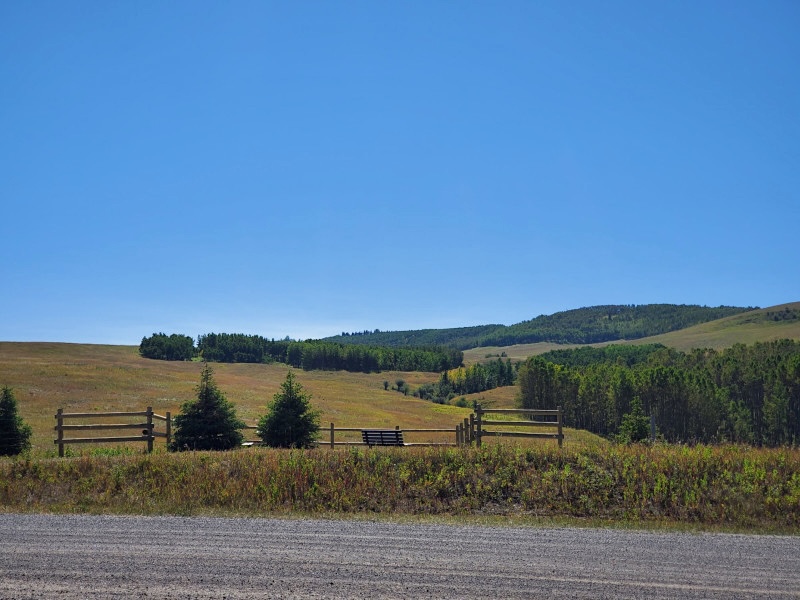
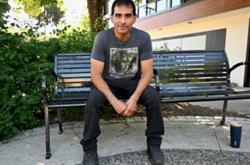
As Jacob Fercho walked through native prairie in an Alberta conservation area where he worked, he recognized something was wrong.
Fercho was tasked with mapping the site to prepare for a Calgary funeral home’s tree-planting project. But instead of the marginal land described in plans shared with the public, he found a delicate, rare ecosystem.
Roughly 40 acres of land in a northern section of the Ann and Sandy Cross Conservation Area is slated to be converted into a memorial forest in partnership with McInnis & Holloway Funeral Homes, which charges people $39.95 to have a tree planted in memory of a loved one.
But the location overlaps with native grassland previously identified in conservation area research and planning documents as “by far the most threatened environment” on the property.
Fercho, who had worked as the land and habitat co-ordinator for the conservation area for four years, said he began raising the issue of the memorial forest location with the area’s CEO, Ryan Caswell, in September, but his concerns were brushed aside.
“I had expressed to Ryan in very clear terms that me having been requested to map out the site without there having been any ground-truthing performed or any environmental assessment of the ecology of the site led to me having quite serious internal moral and professional conflict — and I would say mental distress — due to having felt like I was roped into mapping an environmentally harmful project,” Fercho said.
Grasslands are among the most threatened ecosystems globally, and the Alberta Prairie Conservation Forum estimates that only about 37 per cent of the province’s once vast grasslands remain intact. Less than two per cent of Alberta grasslands are located in parks or other legally protected areas.
Between four and eight per cent of the land in the Ann and Sandy Cross Conservation Area is native grassland, according to the organization. Around half of the land in the conservation area consists of pastures of introduced grasses, which Fercho said could be used for the memorial forest to avoid impacting threatened ecosystems.
“In fact, if we were to put the memorial forest in one of the old, historic hayfields that are now just degraded... it would actually improve the area somewhat,” he said.
There is already one McInnis & Holloway memorial forest in the conservation area, which was planted in 2020 and 2021 in pasture land a few kilometres south of the new site.
After Fercho raised concerns about the chosen location, the conservation area website was updated to remove reference to the memorial forest site not being especially ecologically sensitive and a section was added providing a rationale for planting trees in the open prairie pockets. The plans for the memorial forest itself weren’t changed.
Fercho says he was fired without cause on April 13.
“It’s very difficult to ignore the timing regarding me having escalated concerns with this project,” he said.
The conservation area’s website states that in the coming months “the area will be developed to include a walking path, sheltered rest area and signage to direct visitors, all with as minimal an impact on the land and habitat as possible.”
Caswell told the Investigative Journalism Foundation that the project details and approvals haven’t been finalized, and they “are undertaking due diligence with subject matter experts as part of the planning and evaluation process for the proposed memorial forest project.”
Caswell did not directly respond to questions about why the location for the new memorial forest was chosen or the change to the conservation area’s website regarding the location not being ecologically sensitive.
“As part of our review process, we are consulting with qualified professionals and subject matter experts with education and experience in this field before any decisions are made or work is completed. We recognize and respect that individuals may hold differing opinions regarding land management priorities, including questions related to habitat, restoration and cultural use of landscapes,” he said.
Caswell did not respond to questions about details of the arrangement with the funeral home, including what revenue the project is expected to generate for the conservation area.
Caswell said that as a matter of policy, the conservation area does not comment on employee or personnel matters.
On May 26, Caswell notified Fercho that he had been formally prohibited from entering the conservation area and that law enforcement would be called if he set foot on the grounds.
The conservation area about 35 kilometres southwest of Calgary operates on 4,800 acres of public land leased under Alberta Environment and Protected Areas, and the organization has authority as the leaseholder to restrict access to lands and buildings under its control.
Habitat destruction or natural process?
A “Frequently Asked Questions” section of the memorial forest web page acknowledges concerns about planting trees in grassland. It says that these areas were historically maintained “by natural fire and Indigenous stewardship,” which are less common today, and that interventions like controlled burning required to manage open grasslands aren’t feasible near communities.
“As a result, grasslands naturally transition to shrubs and trees over time, a well-established ecological process across Alberta and North America,” the conservation area website states.
The grasslands are unique among the world’s major biomes, said Eric Lamb, a professor at the University of Saskatchewan who studies plant and fire ecology and grassland conservation. While you can reliably predict the location of a rainforest or arctic tundra by looking at average temperature and precipitation, the places you find prairies could just as easily be woodland, shrubland, forest or desert.
“The thing that keeps them grasslands is recurring disturbance,” such as regular grazing or fire, Lamb explained. And if one or both of these factors are absent, there is a risk that the plains will be taken over by shrubland or forest.
“I would not describe this as a natural process, because grasslands naturally have large herbivores on them, and grasslands naturally burn on a fairly regular basis,” he said. “The reason why these sites are reverting to forest is because we as humans have removed a natural process from the landscape.”
Practices like using cattle grazing to mimic these natural processes have been effectively adopted by conservation agencies in Canada to keep prairies healthy, Lamb said. But in general, grasslands and the species that rely on them are threatened by encroachment. Lamb is currently researching the population decline of rough fescue — the official grass of Alberta and one of the species found in the Ann and Sandy Cross Conservation Area grasslands — which he and his colleagues suspect now meets the criteria of the Species at Risk Act.
“There’s lots of grassland species that are very vulnerable. And so, any piece of grassland habitat is of value. And if it’s never been plowed, it may be of extremely high value,” he said.
The conservation area’s adaptive management plan for 2015 to 2040 recommends that strategic rotational grazing be used for vegetation management, with care taken to protect native grasses and the land from erosion. As early as 2005, strategy documents show the conservation area had considered controlled burning to mimic wildfires but ruled the technique was “too fraught with public relation issues” to be feasible and opted to focus on grazing and active weed control to preserve grasslands.
Jeff Hagel, president of McInnis & Holloway Funeral Homes, said the company’s tree-planting program is an important part of how they support families and site selection has always been done with environmental considerations front of mind.
“The planting sites are meaningful to thousands of families who have experienced loss. Supporting the healthy growth of new trees and being able to walk amongst them on natural trails matters. Spending time in nature is an important and healthy part of the grief journey for many of the families we serve,” Hagel said.
Hagel said planning considerations are still under review and no development or physical work has taken place to date. ![[Tyee]](/design-article.thetyee.ca/ui/img/yellowblob.png)
Read more: Alberta, Environment






Tyee Commenting Guidelines
Please note that email notifications for replies are not currently working due to a software issue which may be resolved in a future update.
Comments that violate guidelines risk being deleted, and violations may result in a temporary or permanent user ban. Maintain the spirit of good conversation to stay in the discussion and be patient with moderators. Comments are reviewed regularly but not in real time.
Do:
Do not: