


 SHARE:
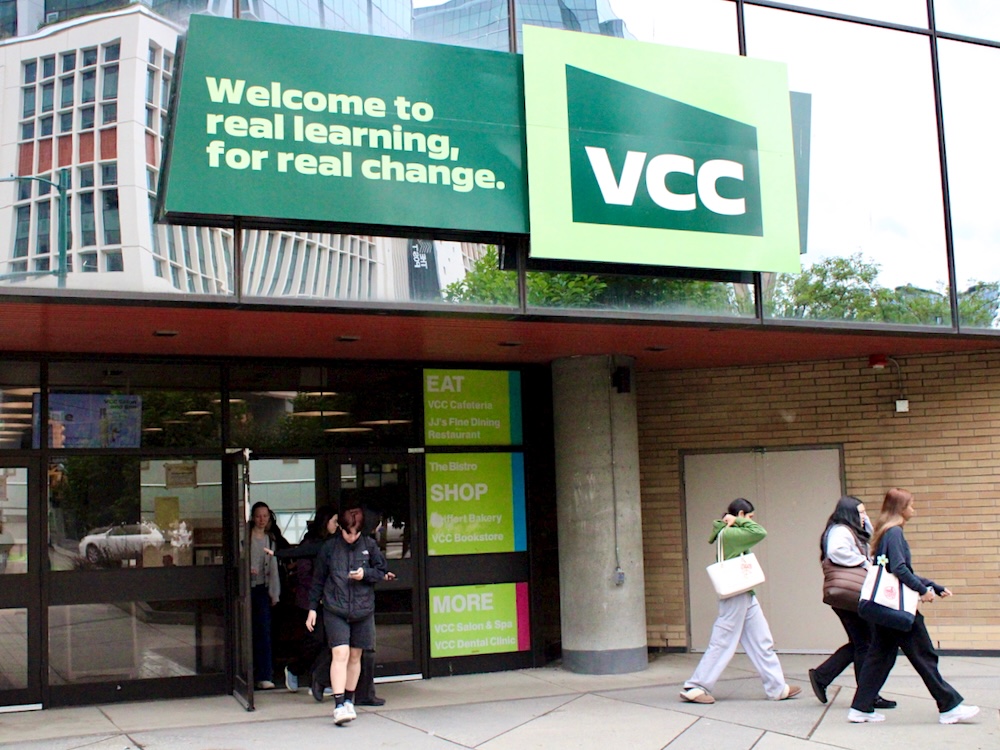
Four years after the province announced a review of the public post-secondary funding formula, the Vancouver Community College Faculty Association got tired of waiting.
Last fall they commissioned BC Policy Solutions to write their own report, with a focus they did not trust the province’s long-awaited review would take: reinvesting into public colleges and universities. The review comes as post-secondary schools across Canada are struggling financially after dramatic federal government cuts to the number of international students they can accept.
With 19 out of 25 B.C. institutions reporting a collective $300-million annual budget shortfall, the VCC Faculty Association report argues the B.C. government should treat public post-secondary education as public infrastructure by funding at least 75 per cent of their annual operating costs.
At the same time, B.C. should maintain the two per cent cap on increases to domestic tuition, while introducing a similar cap for international student tuition increases. The report also calls on the province to work with Indigenous leaders and communities towards designing a decolonized post-secondary education system.
“There’s been no vision or master plan for post-secondary in B.C.,” said Frank Cosco, president of the Vancouver Community College Faculty Association.
Nor has there been significant investment in the schools, Cosco added, especially at the college level, including Vancouver Community College, since the Ujjal Dosanjh-led NDP government in 2000 to 2001.
“Seventy-five per cent is arbitrary. Please, give us something,” he said. “There should be a royal commission, like the McDonald [report] in the late ’60s, early ’70s that set up the system in B.C.”
Since the federal government announced a reduction and cap on international student visas in early 2024, the province’s public institutions have cut 180 programs and laid off 1,300 faculty and “countless support staff,” the report says. Forty-five student services have also ceased operations.
While research universities like the University of British Columbia — with its $6.9-billion endowment — have significant savings to rely on, it’s the teaching universities and community colleges that have been hardest hit.
Langara College has had the most layoffs, with a loss of over 200 faculty members, and the suspension or cancellation of three programs.
Other colleges and teaching universities have lost fewer staff members but cut or suspended more programs: 35 programs at Capilano University, 32 at Vancouver Island University and 26 at North Island College.
Véronique Sioufi, author of the report and BC Policy Solutions’ racial equity researcher and policy analyst, estimates it would cost the province about half a billion dollars annually to stabilize B.C.’s public post-secondary institutions. But she argues it would be money wisely spent.
“It would be a boost to the economy at many local levels, particularly for rural communities” with public post-secondary institutions, Sioufi said, adding that increasing progressive taxation levels would cover the costs.
“I spoke to almost 28 people, not counting all of the literature that I looked at. And there’s not a lot of conflict here. I would say there’s quite a bit of consensus.”
How did we get here?
When public B.C. student and faculty associations talk about funding issues in B.C., they will tell you provincial funding was 90 per cent of institutions’ operating budgets in the 1970s. Today government funding is 40 per cent of public institutions’ operating budgets.
But the VCC Faculty Association report, called “Rebuilding Post-Secondary Education as Public Infrastructure in B.C.,” goes back much further, to the first University Endowment Act in 1907 that established funding for UBC by selling two million acres of unceded land.
Then, post-Second World War, the province created 10 vocational schools and funded veterans to enrol. The federal government was directly investing in the country’s universities, too, until introducing provincial per capita grants in the 1950s.
The federal Technical and Vocational Training Assistance Act of the 1960s pledged up to 75 per cent reimbursement for provinces’ investment in new buildings and equipment for post-secondary education, for six years.
In the 1980s, provincial cuts started with the Social Credit government’s 10 per cent budget cut for universities. Simon Fraser University would become the first school to charge international students higher tuition rates than their domestic counterparts.
Former prime minister Brian Mulroney reduced and capped post-secondary funding transfers in the late 1980s.
Then, former prime minister Jean Chrétien merged education, health and social assistance provincial transfers into one fund in 1994. This gave the provinces more autonomy on how they spent their money but forced public sectors to compete for funding.
In the mid-1990s, then-premier Mike Harcourt’s BC NDP government granted the province’s “university colleges” the power to grant degrees. But they did not compensate the schools for the costs of needed infrastructure expansion such as labs or libraries, or for hiring more support staff.
Later in the 1990s, the BC NDP government froze students’ tuition for five years, in response to skyrocketing tuition increases — but without offering compensatory funds for institutions to cover for the loss of revenue.
Gordon Campbell’s BC Liberals changed the provincial funding formula in 2002 from one of per-course funding to block grants, pushing schools to increase enrolments without additional funding to support the additional students.
The BC Liberals ended the tuition freeze, which the report says in some cases resulted in tuition increases of 200 per cent between 2002 and 2005, when government introduced the two per cent annual increase cap.
Schools that hadn’t inflated their tuition fees during the thaw found themselves stuck at comparatively lower tuition levels, the report argues, setting them back financially compared with other schools.
Later in the 2000s, B.C.’s university colleges became teaching universities, but again without any additional government funding for associated infrastructure and staffing expansion and upgrading costs.
The provincial government under BC Liberal Premier Christy Clark argued institutions could fund themselves by increasing their reliance on international student tuition dollars.
The introduction of the federal post-graduation work permit in 2005 created a new immigration pathway that began with enrolling as a post-secondary student. By 2012, the B.C. government had passed its own International Education Strategy, echoing a similar federal strategy, pushing for a 50 per cent increase in international student numbers.
By 2023, international students were paying an average annual tuition of $32,909 in B.C., compared with $6,256 for domestic students.
A lack of regulation enforcement over private degree-granting institutions led to complaints of defrauded students and falsified documents. At the same time, it was common to hear complaints that an increase in international students was responsible for a long-standing national and provincial housing crisis.
In 2024, the federal government cracked down, reducing the percentage of international student visas approved for B.C. from 30 per cent of the national total to 10 per cent.
Investing in human infrastructure
After B.C.’s first post-secondary funding review was quietly shelved in 2024, the province announced a new review in 2025, due out this year.
But this new review was launched with a foregone conclusion, says the Vancouver Community College Faculty Association’s Cosco: no new funding for post-secondary education.
BC Policy Solutions had thought the province’s review would be published by this point, which is why they’re releasing their report today. Now the province’s review isn’t expected to become public until this fall.
But the provincial government’s select standing committee on finance and government services has begun its 2027 B.C. budget consultations. The Vancouver Community College Faculty Association will be bringing this report to the committee this week.
The Tyee requested an interview with Post-Secondary Education Minister Jessie Sunner, but she was not made available.
As the report had not yet been shared with the minister, in The Tyee’s email request to the minister’s office we referenced the report’s key points — specifically, recommending that the province provide 75 per cent of operating funds for public post-secondary institutions, and how Canada’s post-secondary system compares with those of other countries in the Organization for Economic Co-operation and Development, or OECD.
In an emailed statement sent to The Tyee, Minister Sunner did not reference these points or the Vancouver Community College Faculty Association’s report.
Instead, Sunner noted provincial post-secondary funding has increased by more than $1.2 billion since 2017, though she did not specify if this was operational or capital funding. Nor did she discuss how costs facing institutions have changed over the last nine years.
“Sector sustainability is a primary focus of my mandate,” Sunner’s email to The Tyee read.
“That’s why our ministry has launched an independent review to establish a clear pathway to stabilize institutions in the short term and set the sector up to be financially sustainable and operationally resilient over the long term.”
Sioufi told The Tyee her report doesn’t dictate how the province should fund post-secondary institutions, to avoid being too prescriptive.
But in the report, she compares OECD countries on how they fund their post-secondary institutions.
Sioufi found Canada and Poland were unique in how little they invest in public post-secondary, while also charging high tuition fees. Especially when compared with countries like Croatia, France, Germany and Switzerland, which provide more public funding to keep tuition fees “moderate” at US$150 to US$2,000 annually. Or like Denmark, Finland, Luxembourg, Norway, Sweden and Turkey, where tuition is below US$500 annually, with nearly half of students receiving financial support through grants and loans. Public funding for post-secondary education in these countries is covered by progressive income taxation.
“I think the ideal models would be either the ones that have moderate tuition fees, combined with targeted student support, or low or no tuition fees, combined with high levels of [public] financial support,” Sioufi said.
While both Cosco and Sioufi have plenty of criticism of how the province has handled the crisis in post-secondary education, they also criticize the federal government, including current Prime Minister Mark Carney, whose federal investments in infrastructure in the face of challenging relations with the United States have focused on national resource extraction and military investments. But there has been no new federal money for public post-secondary education.
“From our point of view, this is a human infrastructure issue,” Cosco said, adding investing in colleges and universities brings less controversy and pollution than new oil and gas pipelines.
“You can actually get to it pretty quick, and it will create huge benefits to society.” ![[Tyee]](/design-article.thetyee.ca/ui/img/yellowblob.png)
Read more: Education


Tyee Commenting Guidelines
Please note that email notifications for replies are not currently working due to a software issue which may be resolved in a future update.
Comments that violate guidelines risk being deleted, and violations may result in a temporary or permanent user ban. Maintain the spirit of good conversation to stay in the discussion and be patient with moderators. Comments are reviewed regularly but not in real time.
Do:
Do not: