


 SHARE:
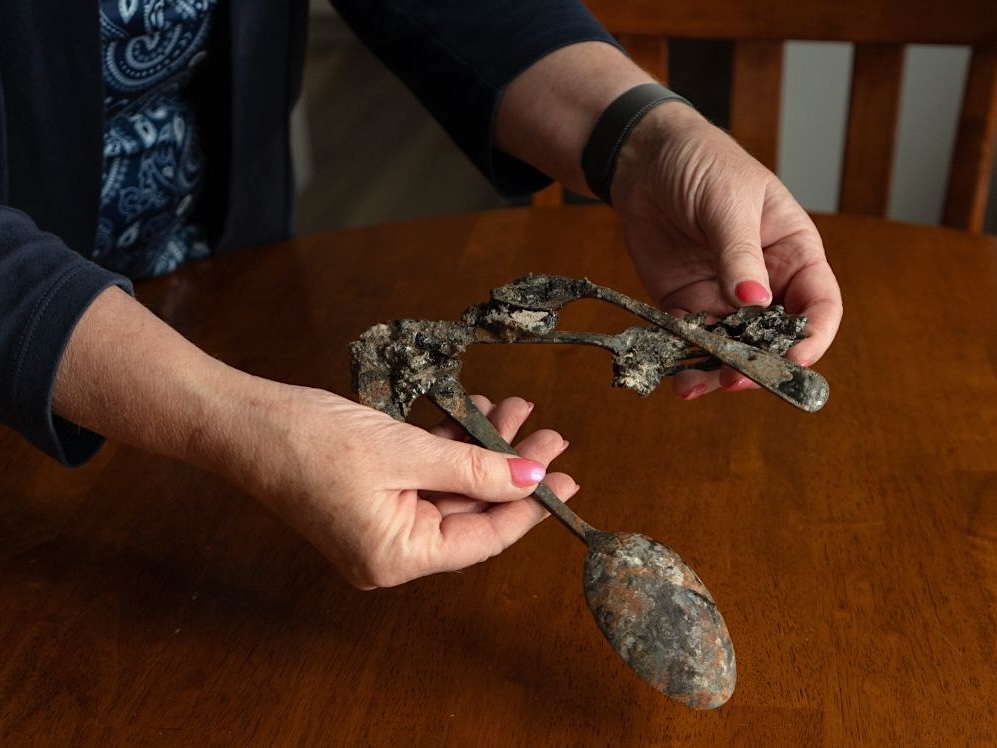
Five years after the 2021 western North America heat wave and the fires it kindled, The Tyee presents the stories of five survivors, as told in their own words. Their testimonies were created with the Climate Disaster Project at the University of Victoria.
Some of what they share can be difficult to read. But the survivors want you to know what happened to them for a reason. So we can be closer together. So we can feel less alone. So you know what to do when one of the worst days of your life happens, without warning. Reading their testimonies now isn’t just about memorialization. It’s about preparation. An opportunity to change what will happen today and tomorrow. — Sean Holman of the Climate Disaster Project
‘That history piece is gone’
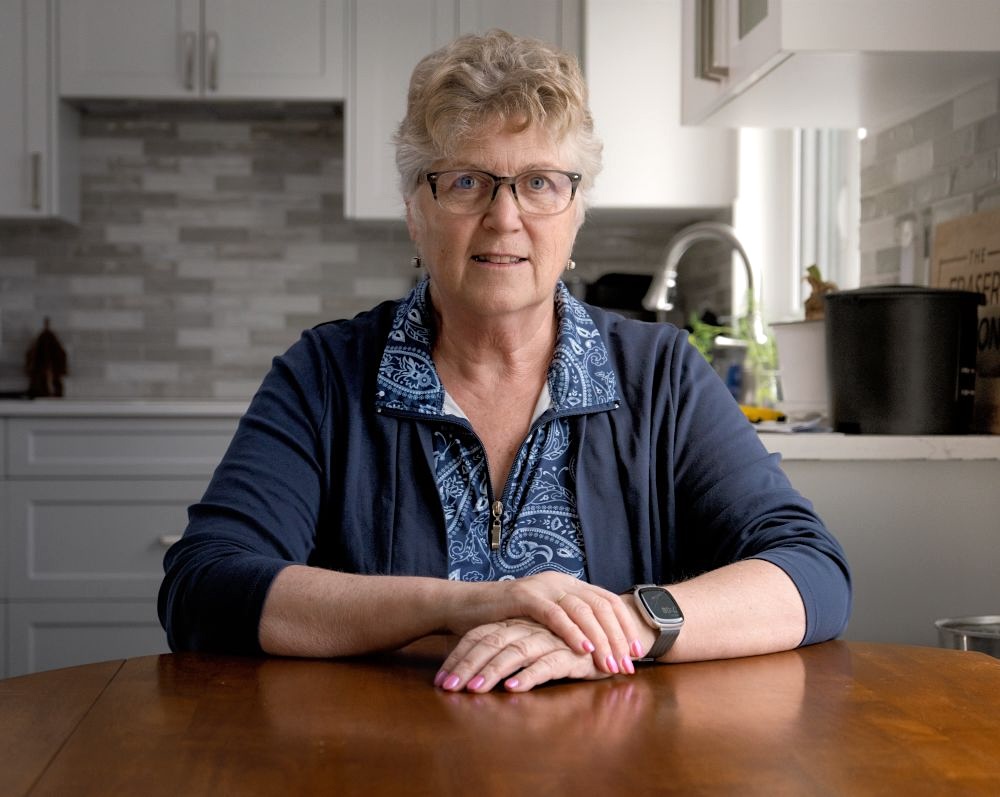
Denise O’Connor has lived in Lytton, B.C., since 1965, yet still thinks of herself as a newcomer. Her parents moved there when it was a bustling town with young families and businesses, including the sawmill they started. Denise left to earn her teaching degree, then returned to work as a kindergarten teacher and principal, raising a daughter with her then-husband, Chris, in a downtown home. They bought that home 30 years ago, but Denise still thought of it as the ‘O’Dwyer’ house, after the family who lived there when she was a little girl. Retired, she spent her days socializing at the coffee shop and setting up the village's visitor centre. Before the fire, she and Chris watched Lytton repeatedly break temperature records with excitement. In the photo above, O'Connor sits at the kitchen table of her new home in Lytton — five years after the fire that destroyed her old home.
This is Denise’s story as told to Aldyn Chwelos in 2022.
For years and years, we've had a competition between Lillooet and Osoyoos and other places that get really hot. And we were the ones breaking the records. We were getting phone calls from all over, we were getting media stopping in. This little, tiny, sleepy town. It was almost as if we were becoming famous. We'd rush home after the visitor centre to watch the news to see: What are they saying about Lytton today?
During the heat dome, there was no wind. It was calm. Almost eerie for Lytton because we are known for our winds. That morning of the fire, the wind came up. They were gusting at 90 kilometres that day. It was a strange feeling. It felt like you open an oven door and the hot air comes out. I remember the baby's breath and the bachelor buttons were waist-high, dry fuel. It wouldn't have taken much, a little spark.
I had just been down to the store. I looked on my phone, and somebody had put up on Facebook that there was a fire at the south end of town. I didn't believe it. Lytton's not a very big community, seven blocks long. I went out the front door and I could smell it. I looked down the street and I was in disbelief. I saw plumes of smoke. I saw flames. It looked like trees on fire. The smoke was all sorts of colours: grey, black. The wind was blowing ash toward us. I thought to myself, “Buildings are on fire.” It happened so fast.
My husband was out reading on the deck, facing north. He didn't even know. I said, "You've got to get down here." So he got in his other wheelchair, came down to the street, got in the car.
I ran back in the house. I went in the bathroom and I grabbed my cosmetic bag because there's a toothbrush in there. I grabbed my husband's shaving kit. I ran in the bedroom and grabbed a nightgown and a shirt. I grabbed my husband's medication off the shelf. I was just grabbing. I had a drawer with important things like my passport. But, for some reason, I didn't grab my passport, I grabbed the little box with my mom's rings that my dad had given me. I remember standing in my kitchen thinking I could grab a million things. But I just left.
We headed out of town. We ended up at Jade Springs Restaurant. There was a whole bunch of people parked outside. You could see the ash and the smoke. The cloud like an atomic bomb had gone off. There can't be anything left. Sitting at Jade Springs, I knew that our home was gone.
I don't know how long we were there, quite a while. Then our cell service went out. RCMP came along and told everyone to get going. We went on to Spences Bridge and to the Cook’s Ferry Band Hall. They were amazing. They had water there for us. They didn't have power, but they opened their hall for washrooms.
We hung there for a long time. We didn't know what was happening, where to go, what to do. We were in a daze. Numb to everything. We just floated along. Finally we decided to go to Cache Creek. We knew we had to do something for the night. Partway to Cache Creek, my husband said, "Did you get my insulin out of the fridge?" Didn't even think of that. So off to Kamloops we went. We phoned ahead to a pharmacy and they were open late.
In Kamloops, I heard about the Emergency BC check-in station. They got us a hotel and vouchers for meals and incidentals. The hotel was full of Lytton people. The Kamloops Indian Band had meals for anybody that wanted to go. The First Nation people were just, "Come on, you've got to come. Come have a meal with us." We were always welcomed. I saw so much kindness come out of people that probably have always had it, but this was an opportunity to show it.
We stayed in the hotel for three weeks. It felt a lot longer. I knew we had to do something different. We found an Airbnb in Merritt. The Airbnb had everything we needed. It just wasn't home. We didn't have a home. We didn't have a town. Didn't know what we were going to do. It was lots of sitting and wondering and not knowing.
On July 6, Premier [John] Horgan and Minister [Mike] Farnworth flew over the fire. Premier Horgan said that Lytton would be rebuilt as a model community for the world to look to. And then we went for months without communication. At COP [the UN climate change conference] in Scotland, Prime Minister [Justin] Trudeau started using us like an example for climate change. To say there was a town called Lytton and never talked about trying to rebuild it, or anything positive for us. They didn’t talk about the people or about the community. It was them using Lytton for their own benefit.
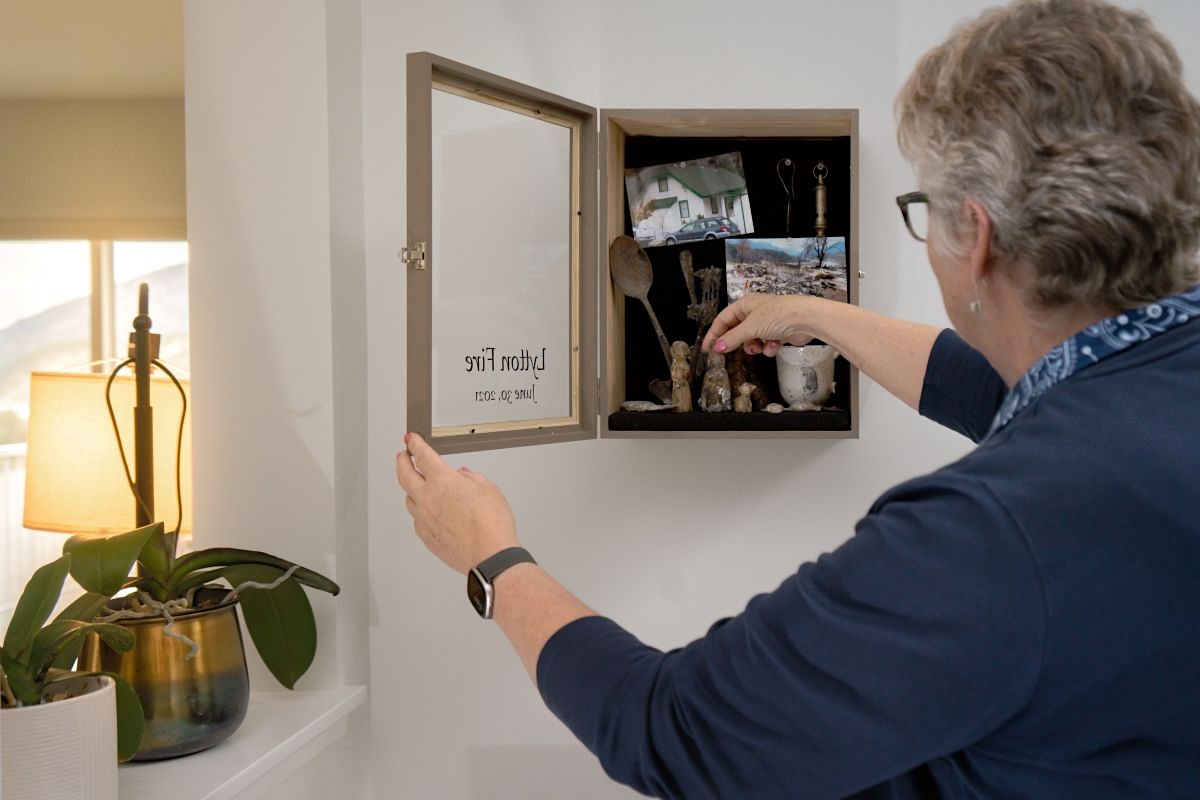
I was angry for a long time. The fire took a piece of my life away. I lost everything I owned. It changed my life. Changed my life completely. One day I'm working at the visitor centre, enjoying walks, working in my garden. And the next minute it's all gone. I don't know what else to say.
My sister mailed me some photos of when we were young and I saw a picture of us as kids inside my family home in Lytton. That's where I want to go. It didn’t burn down. It had been rented out for the last four years. In October, the renters gave their notice to my brother that they were leaving. My brother and sister reached out to me and said, “If you want it, it's yours.”
As soon as I knew I was coming back to Lytton, I made sure I got the basic things. I knew the closest store was an hour away. I bought myself dishes. I got myself a bit of furniture, a bed. I got all the things that I knew I needed here. Nothing extra, nothing fancy. I moved in, and then three days later, the atmospheric river happened and washed out the roads to Lytton.
It's a year later now; my property still sits exactly like it did after the fire. There's been nothing done. I could never imagine a year later and it not being cleaned up. Never in my wildest dreams.
I have this vision of the town back to normal and everything looking the same. And it's absolutely not going to be. There's going to be empty lots for a long time. There's going to be people rebuilding but their homes aren't going to be the same. Who knows if they'll even return. I have friends that have purchased homes in other communities. They're not coming back. It's still so many unknowns, and I have to remind myself I can't control that. I could still get mad and jump up and down and scream and yell once in a while, but it's probably not going to move things along any faster.
Our village council did not have the capacity to manage this. Our council was traumatized. It wasn't just the residents. For the people sitting in Victoria not to recognize that and not to step in is just beyond my comprehension. The province, as far as we're concerned, didn't step in to help.
The help we have received is not from any level of government. It's individuals, it's small organizations. A friend of mine said to me, “Denise, nobody's going to fly in and save us. We have to take the bull by the horns and look after ourselves.” And we've done that. The people from Lytton, as a collective we've been communicating, staying in touch, gotten to know each other better. That's providing hope. We know we have to move forward and we have to move in a positive direction to get things going in the village.
When I came back to Lytton, somebody heard that I'd returned and reached out to the recovery manager. They said that I was retired and would be a good person to volunteer at the Resiliency Centre that they were starting up. So I got a phone call. There were five of us that volunteered, and we took turns keeping it open.
With Lytton having burned down and no coffee shop, no post office to say hello to people at, no place to gather, it became a hub. When the atmospheric river happened, we became even more isolated. People were craving that social experience. They used it as a place to stop by and see people. Now that the Resiliency Centre is closing, I said to a number of people, “Please reach out.” If I can, I'll help. I have no reason not to.
Living our quiet little life in Lytton, climate change is something I've seen over the years. I guess time will tell how that will affect me. Was this year a fluke? That we had a fire and a flood? Or is this something that we are going to be seeing? I know the scientists are saying that we will see more of this and I believe them, but to what extent?
The history of Lytton being gone really saddens me. When I grew up there, I knew who lived in what house and what business used to be there. I tell those stories to my daughter, but she can't tell the stories to her children now. There's still memories there, but it's not the same. That history piece is gone. And we were the newcomers compared to many of the families. The ladies that lived up and down the street, they had more history.
In November 2021, I went to my property and I dug my potatoes out of my garden. I got my garlic out and I tried to look for some bulbs. It was really nice being in the yard. I've been back a number of times since.
I don’t want Lytton to be forgotten. I just have this sense that I want to keep our story out there.
After Denise shared this testimony, she successfully ran to be Lytton’s mayor in 2022. Since then, the Lytton area has experienced numerous fires, with the village being threatened by the Saw Creek fire in 2026. This is one in a five-part series, ‘Surviving BC’s Hottest Summer.’
This testimony was co-created by the Climate Disaster Project, a newsroom co-ordinated at the University of Victoria that works with climate-impacted communities to document and investigate their stories. Subscribe to the project’s newsletter here. ![[Tyee]](/design-article.thetyee.ca/ui/img/yellowblob.png)
Read more: Environment








Tyee Commenting Guidelines
Please note that email notifications for replies are not currently working due to a software issue which may be resolved in a future update.
Comments that violate guidelines risk being deleted, and violations may result in a temporary or permanent user ban. Maintain the spirit of good conversation to stay in the discussion and be patient with moderators. Comments are reviewed regularly but not in real time.
Do:
Do not: