


 SHARE:
British Columbia is one of the most remarkably diverse places in North America. The province celebrates its ecologic biodiversity as “Super, Natural,” and Destination BC posters use the mountains, oceans and forests to draw visitors from around the world.
But the provincial territory is much more than its ecological splendour. What is often undervalued in the story we tell of British Columbia is how it is home to more than 35 distinct Indigenous languages, and dozens of legal orders and governance traditions. All told, British Columbia is an unparalleled mosaic of cultural and linguistic diversity.
Recently, the tenor of conversations in media, on Facebook and among politicians has encouraged British Columbians to see this diversity as a threat. But it is actually our collective inherited wealth.
Viewing Crown-Indigenous relations from an abundance mindset addressing the outstanding land question offers us a way to see the more spectacular story of what British Columbia could fully become.
Manufactured crisis and escalating rhetoric
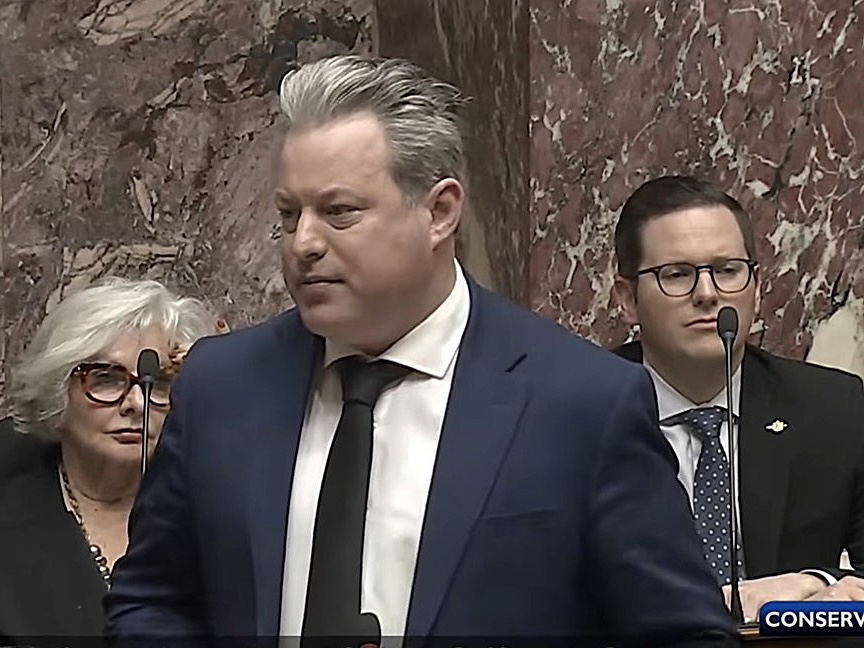
The British Columbia legislative assembly has now adjourned for the summer. Unfortunately, the centre for politics in our province has turned into an engine of anti-Indigenous racism. Some members have chosen to use the chamber, and the iconic building, as a content farm for the social media outrage machine.
I, and others, have written extensively on how Crown-Indigenous relations have deteriorated over the past several months. This is the result of a variety of reasons including a lack of broad public awareness of British Columbia’s history, the evolving Indigenous law through key B.C. Supreme Court and Court of Appeal decisions, and a B.C. Conservative Opposition party that decided that rather than focus on the overlapping social, environmental and economic crises facing our province, they would use their time to persistently attack Indigenous rights and title.
But the problem is that recent court decisions did not create a crisis. Instead, they exposed the reality of the “Indian land question” that was already lurking under the splendid facade that British Columbia has constructed and maintained every day since the province joined Confederation.
By treating the current conditions as a crisis, the provincial government escalated and reinforced the fearmongering rhetoric of the opposition parties.
Depoliticizing Indigenous rights and title
Question period is not the right venue for elected leaders to investigate, prosecute and defend Indigenous rights and title in British Columbia. For the past two years the B.C. Conservative and OneBC opposition parties have used their precious 30 minutes at the start of every day of the legislative session to hammer reconciliation and relentlessly attack the Declaration on the Rights of Indigenous Peoples Act, or DRIPA. But question period creates political heat — not public policy resolution.
In my experience, select standing committees are a much more appropriate space to undertake work that requires a more precise and surgical response in good public policy-making. No matter who sits in the premier’s chair, they will confront the reality of Crown-Indigenous relations. No single party should feel they carry the full weight of the issue, nor should they take sole credit for reconciliatory efforts.
The cross-party work of parliamentary committees removes the responsibility from any one political party. They report to the whole legislative assembly through clear terms of reference, and it is a space where they can inform their work by inviting the testimony of historians, constitutional experts, academics, First Nations leaders and community members. Their reports are consensus-based, reflecting only what all members can find agreement on. There is no other space in the legislature that reflects this approach.
The Aboriginal affairs committee is one of 11 permanent committees of the British Columbia legislative assembly. But the government never leverages this tool for its full benefit. I was an appointed committee member for the seven years I was an MLA. But the committee never met — not even while B.C. was developing DRIPA.
Indigenous rights, title and reconciliation are not the governing party’s problem to solve alone. In fact, it substantially weakens the work when the only place for opposition members to raise important questions is question period.
It is long past time the government share the responsibility across the whole legislative assembly by removing the issue from the bombast of question period and by placing it in the far more constructive and calm venue of a parliamentary committee.
Indigenous rights are not the liability
In a December 2025 speech to the British Columbia Chamber of Commerce, Premier David Eby said DRIPA is necessary to the work of Crown-Indigenous relations. But, he added, “it could also be the undoing of our province as a place to do business.” Through statements like this the premier frames Indigenous rights as the source of the province’s liability.
The problem is not that Indigenous people have rights. The land question has been accumulating since the founding of the province, and it grows every day it remains unresolved. The liability is the lack of resolution and the leadership required to pursue that resolution fairly and in accordance with the province’s own laws.
The government’s evasion of its responsibility is what has created uncertainty for industry, for investors and for all British Columbians who rely on the systems built on top of that unresolved question. Reconciliation is not the risk; Indigenous rights have not created the uncertainty. Reconciliation is the remedy.
Grounded through hope
With the legislative session adjourned for summer, the pressure is off. This is a moment for government to move thoughtfully and deliberately.
It is time for elected leaders in British Columbia to stop treating its greatest asset as if it were our greatest liability. The diversity of the province — ecological, cultural and linguistic — is not a problem we inherited from history, but rather the foundation of strength and resilience. In the end, the land question will be answered. But will it be negotiated or litigated?
My late grandmother reminded me that I come from both parts of the Indigenous-Crown relationship. She encouraged me to use my complex social location to be a bridge. In all my political work I have tried to do that. British Columbia sits at the same crossroads, between what it has been and what we could fully become. I am hopeful that British Columbians will choose the collaborative path forward. ![[Tyee]](/design-article.thetyee.ca/ui/img/yellowblob.png)
Read more: Indigenous, BC Politics





Tyee Commenting Guidelines
Please note that email notifications for replies are not currently working due to a software issue which may be resolved in a future update.
Comments that violate guidelines risk being deleted, and violations may result in a temporary or permanent user ban. Maintain the spirit of good conversation to stay in the discussion and be patient with moderators. Comments are reviewed regularly but not in real time.
Do:
Do not: