

 SHARE:
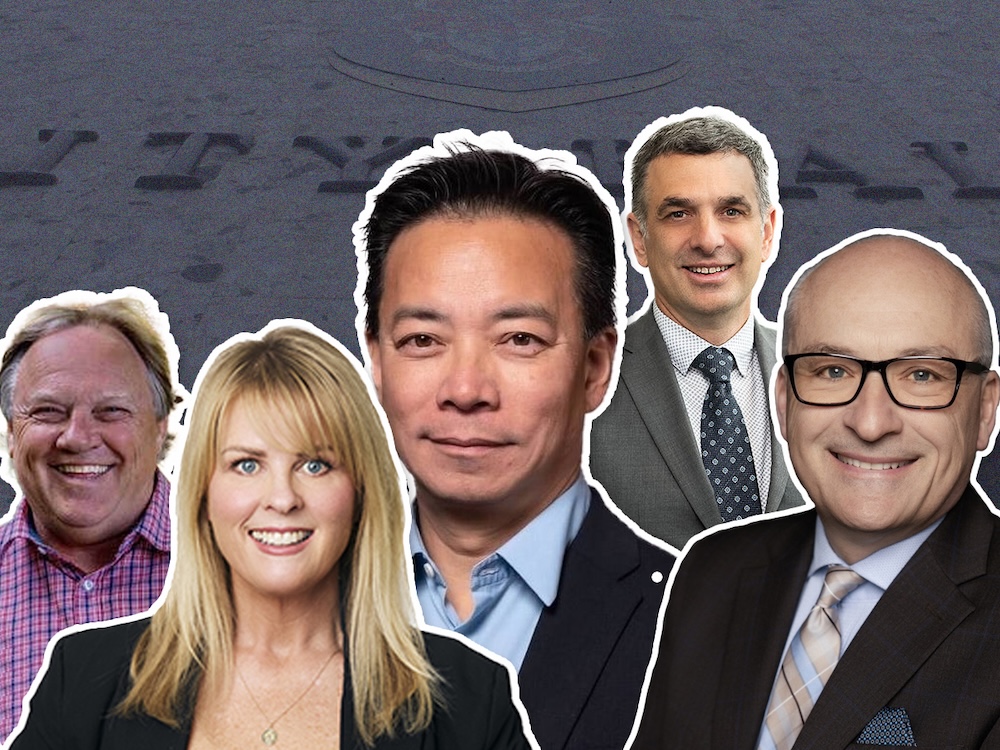
The final ballots won’t be cast for another 365 days, but big personalities and big questions across British Columbia are driving an early start to next year’s municipal elections.
In Kamloops, a local councillor has taken the initiative to unseat the city’s controversial mayor. On Vancouver Island and in Langley, chatter about municipal mergers is ramping up. In Kelowna, one councillor has suggested introducing a ward system. And in Sooke and Mission, voters might greenlight — or kill — major infrastructure projects.
It’s very early for municipal election season in B.C. In 2022, for example, Ken Sim was selected as the Non-Partisan Association’s mayoral candidate just four months before election day. But politicians are already laying the groundwork for next fall’s elections.
Mayoral challengers and controversies
A century ago, mayoral election campaigns lasted weeks and a mayor’s term was just a single year. Now, a combination of factors has left mayoral races in several communities starting earlier than ever in 2025.
In B.C.’s two largest cities, high-profile mayoral candidates have already announced their intentions to challenge the incumbent. Vancouver Coun. Rebecca Bligh will challenge Ken Sim, while Surrey Coun. Linda Annis will challenge Brenda Locke.
Early big-city campaigns may be influenced in part by campaign finance rules that cap maximum annual donations to municipal politicians, University of British Columbia political scientist Stewart Prest told CBC last month. By starting their 2026 mayoral campaigns in 2025, politicians can get two years’ worth of donations from big-money supporters.
In Kamloops and New Westminster, on the other hand, three years of political battles have inspired two councillors to start their campaigns to unseat incumbents sooner rather than later.
As The Tyee chronicled in depth last week, Kamloops council has spent the last three years at odds with the city’s mayor, Reid Hamer-Jackson, who has made headlines for breaking with convention in myriad ways. Hamer-Jackson has repeatedly breached the city’s code of conduct, found himself at the centre of various other controversies and twice sued a member of council. The mayor, meanwhile, has maintained he has been unfairly targeted by his colleagues and has sued one of his fellow councillors.
More than a year ago, Hamer-Jackson announced he would hold a press conference about “resignation consideration,” only to vow to run again. With opponents hoping the anti-Hamer-Jackson vote will coalesce behind a single candidate, Coun. Mike O’Reilly announced this month that he would run for mayor in a bid to “end the chaos.” O’Reilly, who was first elected in 2018 and runs a local development company, has lined up endorsements from two former mayors.
Political discord has also triggered an early start to the 2026 campaign in New Westminster.
In that city, Coun. Daniel Fontaine is challenging Mayor Patrick Johnstone. Both are leading their own municipal political parties. Fontaine has criticized the city’s administration and bureaucracy, while Johnstone has pointed to advances in housing as evidence of progress during his first mayoral term.
As in Kamloops, personal clashes may be as fundamental to the race as policies.
Johnstone and Fontaine have repeatedly clashed in meetings, and a more than four-hour meeting in July devolved into yelling and allegations of threats. Fontaine later apologized for his conduct.
To borrow or not to borrow
Voters won’t just be electing new leaders next fall. In some communities, they will also be asked to endorse — or reject — plans from their current municipal politicians.
In Sooke and Mission, the local governments are setting the stages for potential referendums on major public works projects.
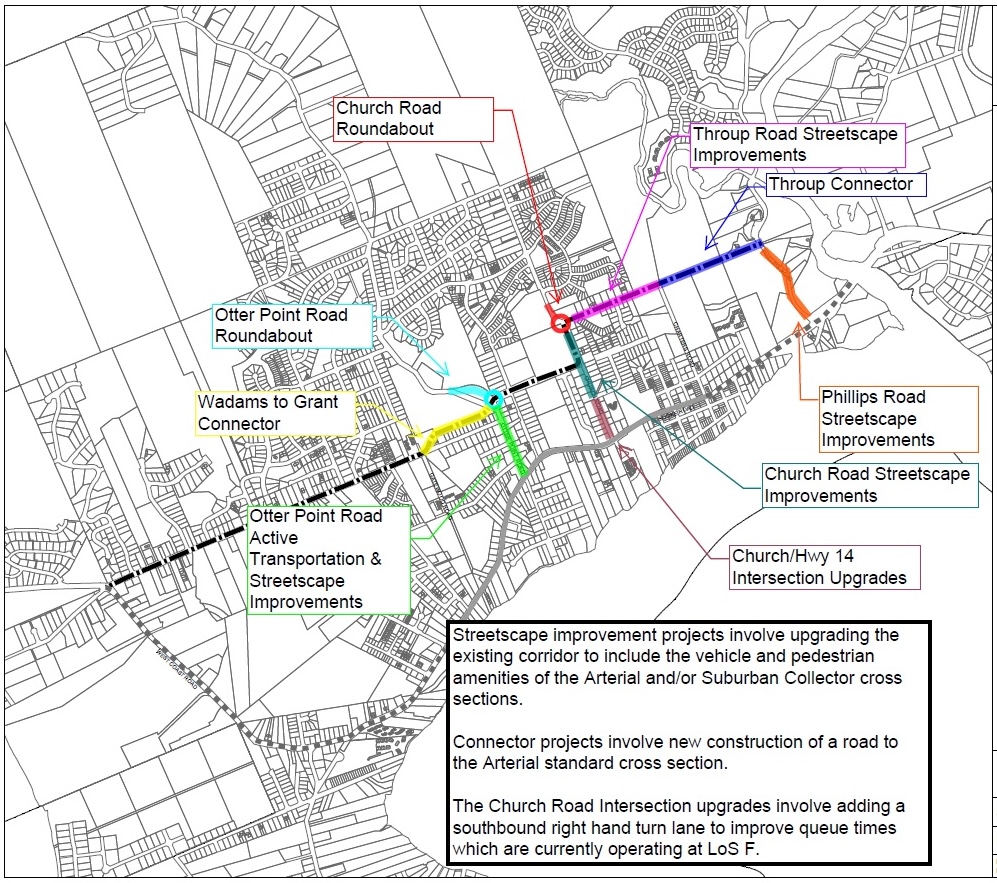
In Sooke, residents will vote on whether to borrow tens of millions of dollars to fund road improvements in connection with the Throup/Phillips Road Connector project, which would allow residents to use a different interchange to get between Highway 14 and the north part of town.
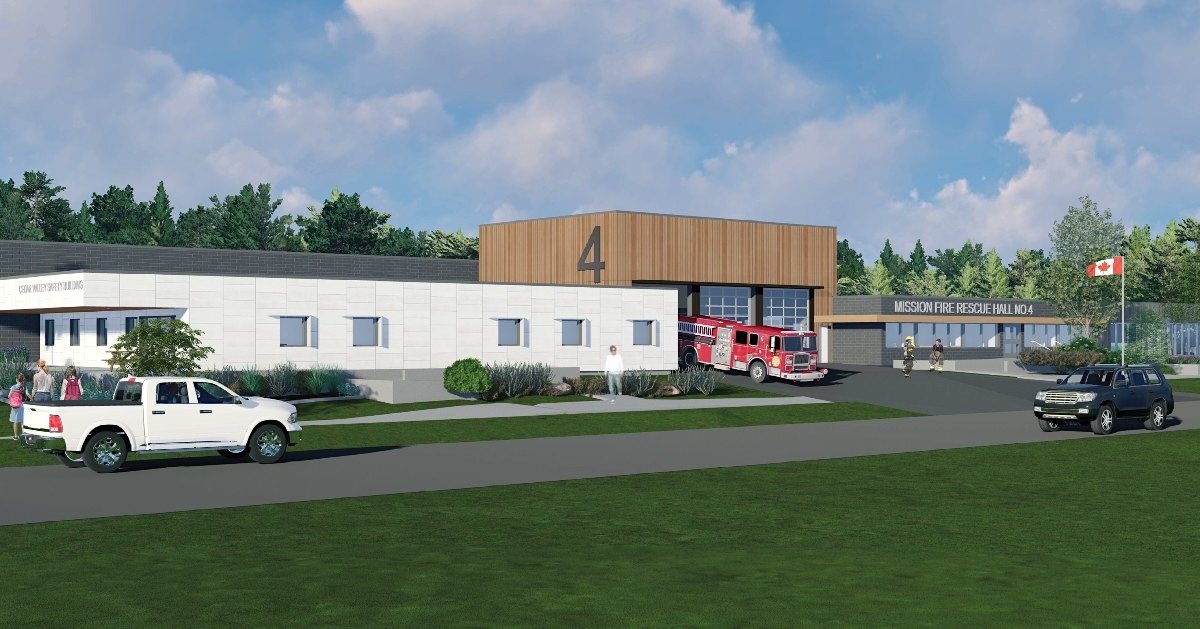
In Mission, meanwhile, residents may be asked to make a decision their elected leaders keep punting down the road. Earlier this year, the city announced it planned to borrow tens of millions of dollars to finance the purchase of a new municipal hall and firehall, only to back away from the city hall project after public backlash. It has also wavered on plans to borrow $36 million to build a new public safety building that would include a firehall, emergency operations centre and headquarters for the local search and rescue society.
The city doesn’t need a referendum to go through with the project — its low debt load would enable the government to use the “alternate approval process,” a sort-of reverse referendum that triggers a full referendum if 10 per cent of electors sign a petition. Given local opposition, however, council has tasked staff with considering whether to hold a full referendum.
Amalgamation hesitations
In a few B.C. communities, the next municipal election may go beyond policies and personalities and redefine what entire municipalities look like for decades to come — and how voters elect their representatives in the first place.
On southern Vancouver Island and in Langley, the next election may bring pivotal votes centring on amalgamation.
The City of Victoria and District of Saanich are co-operating on a referendum that could lead the two municipalities to become one. Saanich has just under 120,000 people while Victoria has a little more than 90,000. The two communities already share some government services like waste disposal and wastewater treatment through their mutual participation in the Capital Regional District but have different police forces, councils and municipal administrations.
Seven years ago, residents of each municipality gave their local governments the green light to study the benefits and costs of amalgamating. That led the two municipalities to create a citizens’ assembly that, after months of study, recommended amalgamation.
If residents approve amalgamation and the two municipalities become one, the resulting municipality would become the fifth most populous in British Columbia.
In Langley, amalgamation may also be a key topic come next fall. But any discussions about a potential merger between the City of Langley and the Township of Langley will come with far more political baggage.
The last three years have seen increasing acrimony between the municipal governments and councils in the two Langleys. The Township of Langley has five times the population of the smaller, more urban City of Langley. After becoming mayor of the township in 2022, Eric Woodward and his Contract with Langley party moved to end the policing relationship between the two municipalities. Woodward said the city paid too little toward policing, given the amount of time officers spent in the small municipality.
The end of the joint policing agreement is about more than a policy dispute, with Woodward telling CBC the City of Langley existed so its politicians had jobs and that they “wouldn’t last 10 minutes” in his community. With the Surrey-Langley SkyTrain extension set for completion in 2029, Woodward has questioned the city’s preparedness. City of Langley Mayor Nathan Pachal, meanwhile, has said he believes the township’s interest in amalgamation is driven by its quest for revenue from the city’s casino.
Woodward has registered a new political party in the city and told CBC that if like-minded politicians are elected in the city, he would be interested in pursuing closer ties, saying the area isn’t “well served” by having two local governments.
Wards in Kelowna
The next 12 months could also see voters in one of B.C.’s biggest cities consider overhauling how they elect councillors.
Former Vancouver mayor Kennedy Stewart has made news recently by filing a lawsuit challenging B.C.’s at-large council elections. Kennedy has argued that the at-large election of councillors deprives minority communities of appropriate representation.
And in Kelowna, Coun. Ron Cannan has suggested his city’s city staff look into the potential benefits of a ward system. Currently, Kelowna, like nearly every other B.C. municipality, elects councillors at large. (Only Lake Country, the municipality immediately north of Kelowna, currently has councillors who represent wards.)
Across Canada, though, most larger cities hold council elections by ward, with each part of a city electing councillors dedicated to representing that area. Cannan told the Kelowna Daily Courier that a ward system could reduce voting confusion and potentially improve the chances of new candidates to win election.
The idea has not yet been tabled at council, and Cannan himself says he is not yet sure of his own perspective. But he suggested the city should explore the idea and, potentially, hold a referendum on the topic next fall.
Wards are more common for school districts, many of which have trustees who represent specific areas. In March, Esquimalt council called on the province to consider reforming the Greater Victoria school board so that trustees are elected through a ward system.
Conservatives... everywhere?
Finally, one group hopes to bring provincial partisan politics to your local council.
In an unprecedented move, an organization calling itself the Conservative Electors Association has filed papers to run candidates next fall across 15 different municipalities.
Those municipalities include most of B.C.’s largest cities, such as Abbotsford, Chilliwack, Kamloops, Kelowna, Langley township, Maple Ridge, Prince George, Vancouver, Delta and West Vancouver. The only town on the group’s list with fewer than 20,000 people is the northern community of Vanderhoof.
Although municipal parties are common in many Lower Mainland cities, parties that run candidates in more than a single municipality are extremely rare. B.C. has not, within recent memory, seen an organization effectively run candidates on a region- or provincewide basis.
The president of the Conservative Electors Association, David Denhoff, is a former director of the Conservative Party of BC. In a press release, Denhoff said the organization hopes to build on “the enormous momentum of the conservative movement” in recent years.
Conservative Party of BC Leader John Rustad said the group was registered while Denhoff was working for the party and that the Conservatives told Denhoff he couldn’t be involved in both groups.
Rustad opposes running municipal party slates that might be confused with his party. Former Conservative and now-Independent northern BC MLA Jordan Kealy also posted a long statement on his Facebook page decrying the move and stating, “Our municipalities are not staging grounds for provincial party politics.”
Have a question or story tip? You can reach Tyee senior editor Tyler Olsen by email here. ![[Tyee]](/design-article.thetyee.ca/ui/img/yellowblob.png)
Read more: Municipal Politics






Tyee Commenting Guidelines
Please note that email notifications for replies are not currently working due to a software issue which may be resolved in a future update.
Comments that violate guidelines risk being deleted, and violations may result in a temporary or permanent user ban. Maintain the spirit of good conversation to stay in the discussion and be patient with moderators. Comments are reviewed regularly but not in real time.
Do:
Do not: