


 SHARE:
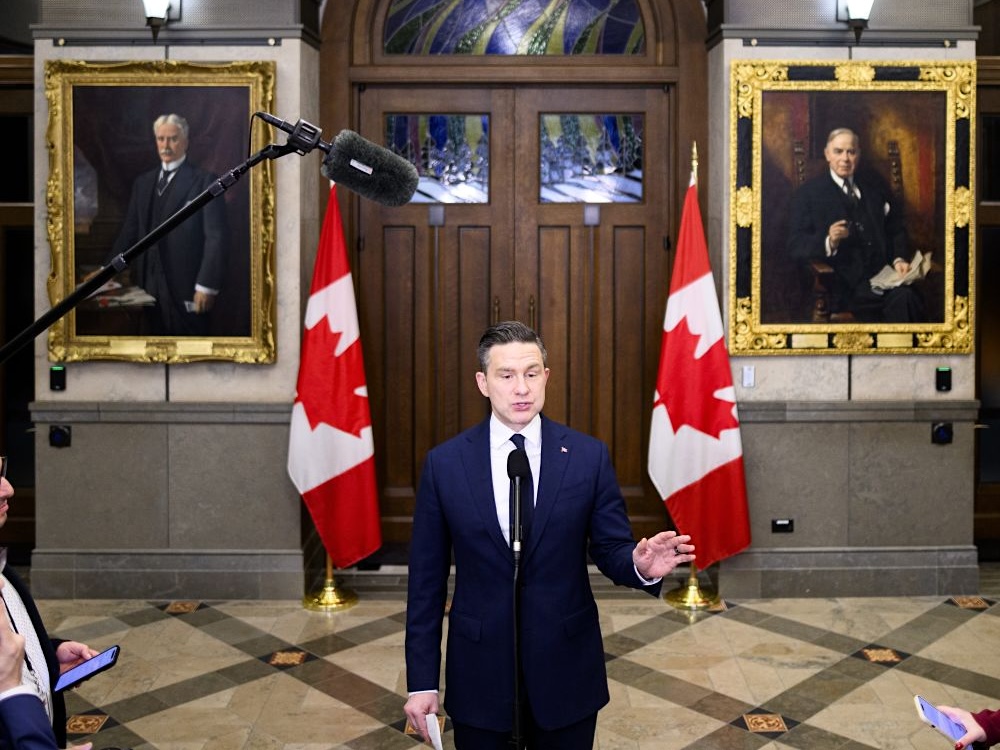
When a coach loses control of the locker room, his team falters.
And so it is in the ultimate team sport — politics. Pierre Poilievre is no longer in charge. As a result, the Conservative Party of Canada is in danger of unravelling before the eyes of the country. In just a matter of days, the CPC lost three members from its parliamentary caucus. That is not the end of the world. But it may well be the beginning of the end.
Conservative MP Matt Jeneroux opted for early retirement, while his two colleagues chose to make the longest walk in political life — from one side of the House of Commons to the other. A change of team jerseys.
First Chris d’Entremont crossed the floor, quickly followed by Markham-Unionville MP Michael Ma. With Ma’s decision to join the Liberals, Mark Carney is just one seat shy of having a majority government.
That would be a crucially important development in the country’s national politics, and very bad news for Pierre Poilievre. It would give the Liberals clear legislative sailing for three years, while consigning the CPC to the status of a token opposition.
Poilievre can only hope that there will be no more defections. But the bleeding is not likely to stop with the departure of d’Entremont and Ma. Government House leader Steven MacKinnon says that other Conservative MPs are “extremely frustrated” and open to switching sides. Count on the Liberals to take full advantage of the restiveness in the CPC caucus.
Normally, partisans don’t abandon their own ship. So why do the Liberals think that more Conservatives might be ready to defect? The answer is becoming increasingly clear: deep doubts about the leadership of Pierre Poilievre.
Poilievre lost the April election, he lost his seat in Carleton, and now he is losing the confidence of his own MPs. Politicians are basically salesmen of hope. Poilievre isn’t making the sale.
It should be noted that Poilievre’s dubious leadership isn’t the only factor affecting his party’s unity. Prime Minister Mark Carney, with what has been described as a steady and practical approach to governing, is attracting a measure of support from Conservatives. The PM has broadened that appeal by adopting key Conservative policies, like spiking the consumer carbon tax.
Given doubts about Poilievre’s leadership, and Carney’s increasingly bipartisan appeal, the only reasonable course of action for the beleaguered Conservative leader is to resign. When — not if — another Tory MP bolts to the Liberals, Poilievre will have delivered a majority to the party he is committed to replacing. Not exactly what the leader of the official Opposition is supposed to do.
So far, Poilievre is refusing to see the writing on the political wall. Instead, he has downplayed the defections, blaming them on Liberal skulduggery. That is denial in hot pursuit of delusion.
The Tory leader is not alone in that approach. CPC House leader Andrew Scheer recently accused the Liberals of “undemocratic” distractions, claiming that the government was playing up the defections from his own party to avoid facing criticism over the recent budget.
Pierre Poilievre can bob and weave to his heart’s content in an effort to downplay the significance of his shrinking caucus. He can continue to declare that he expects to lead the party into the next federal election and win it.
But in a few short weeks, it will be up to others to decide his fate, when Conservatives gather in Calgary to review Poilievre’s leadership. It remains to be seen whether that process will be a hyperpartisan love-in or an honest assessment of how far the party can go with Poilievre at the helm.
This is an existential moment for the Conservative Party of Canada. Will the party ignore the recent defections from the Conservative caucus?
Will it overlook Poilievre’s fatal attraction to legislative gimmicks and games rather than substance?
Will the party rally around the leader who lost an election the party was widely expected to win?
Or will it do the “soul searching” in the wake of that loss that the Progressive Conservative premier of Nova Scotia, Tim Houston, says is needed?
Will the party support a leader who, according to a recent Angus Reid poll, is viewed favourably by just 34 per cent of respondents? The same poll also found that only 58 per cent of those who voted Conservative in the last election want Poilievre to remain as leader. No one can win a federal election in Canada with those numbers.
If the party backs Poilievre, which is the most likely outcome of the January review, it will spare itself the unpleasant task of dumping the leader. But there are serious problems with opting for the status quo.
Does the CPC really want to be seen as the party that rewards failure? No matter how you candy-coat it, Poilievre is the leader who lost a federal election and his own seat just a few short months ago. Having a chance at winning is the heart of the matter. As the late John Crosbie once observed, unless you win in politics, you don’t get to implement the policies you stand for.
And there is another hazard for the CPC in extending the Poilievre era. With such mixed levels of support for the current leader, even more MPs could bolt the party if he remains in the top job.
How many defections can the CPC absorb before Canadians conclude that if Poilievre can’t manage his caucus, how can he manage the country?
When the coach loses control of the locker room, it’s time for a new coach. ![[Tyee]](/design-article.thetyee.ca/ui/img/yellowblob.png)
Read more: Federal Politics









Notice about commenting changes
The Tyee’s commenting system will be moving to a new platform on Nov. 12. If you’re already a Tyee commenter you must register with the new system on or after Nov. 12 with your preferred username.More information can be found here.