


 SHARE:
In his 2025 book, The Genius Bat, Yossi Yovel, an Israeli ecologist, describes experiments he conducted with six Egyptian fruit bats, including an exercise in which he trained them to land on a target and wait for him to approach with a reward — a slice of banana.
These were wild animals, so the work required hundreds of hours spent in dark rooms with a night-vision device attached to his forehead. After six months the bats displayed varying levels of trust. Some took flight the moment they had the banana in their mouth, while others calmly sprawled on the target and munched on the fruit. The smallest bat never waited. As soon as it touched the target, it would turn, fly toward Yovel and land on his hand.
Occasionally, Yovel fell asleep on the floor in mid-experiment. In response, his subjects would fly over him and empty their bladders on his head just to remind him that they were still hungry.
Many readers will find the image of bats as trainable, friendly and possessing intelligence, distinct personalities and perhaps even a sense of humour to be quite jarring. But this effect is exactly what Yovel is striving to achieve. His goal with the book is to dispel the many myths surrounding bats and to convey what remarkable and endlessly fascinating creatures they actually are.
Bats may be Earth’s most misunderstood and underappreciated creatures. Public ignorance is fuelled by the fact that most people will never see a live bat in their lifetime. On TV documentaries perhaps, but up close and in person, it’s not likely. And yet bats comprise 20 per cent of the world’s mammals with some 1,400 species. We don’t see them because they are creatures of the night. They sleep during the day and hunt after dusk.
Scientists believe that bats made the switch from day to night about 50 million years ago to escape a losing competition with birds. The move to a nocturnal existence opened a new niche that was unpopulated by rivals. At night the only predator bats must worry about are owls.
It’s this association with the night that causes people to fear bats and promulgate myths about them, such as the belief they are blind. In fact, they can see quite well. Some believe they drink blood. In fact, only three species have this habit. It is claimed that they will fly into your hair, which ignores their uncanny echolocation abilities. It is also believed that they are aggressive. In truth they are quite shy and prefer to avoid humans. It’s true that in British Columbia bats are the only animals that carry the rabies virus, but just one in 200. (So don’t touch bats, and if one bites or scratches you, soap the wound and go straight to a health provider.) Bats are the only flying mammal species. They have fur, give birth to live young, drink milk from their mothers and are warm-blooded. However, contrary to what many suppose, they are not related to rodents.
Due to such misinformation many people are unaware of the benefits bats provide by eating massive amounts of harmful insects, producing guano, which is an important natural fertilizer, and pollinating plants and spreading seeds. Without bats, humans would be in deep trouble.
The race to gulp insects
Cori Lausen, director of bat conservation with the Wildlife Conservation Society Canada and co-author of Bats of British Columbia, began studying bats two decades ago and has been an outspoken advocate for their protection. A few years ago she launched a program with a probiotic treatment designed to help B.C. bats fend off white-nose syndrome, a fungal disease that has killed millions of bats across North America in the last 20 years. To date, B.C. bats have not been afflicted by white-nose syndrome, though it’s unlikely that Lausen’s probiotic can claim total responsibility for this phenomenon.
Lausen says she was drawn to bats by the extremes of their behaviour and their edge-of-disaster lifestyle.
“They break all the rules,” she says. In other words, they confound traditional expectations.
One rule they break relates to their size. Small animals normally live short lives but produce multiple young. Bats live a long time, up to 40 years, but have much lower survival rates — only about 50 per cent of young make it to adulthood.
“They are the slowest-reproducing of all mammals. That is what makes them so vulnerable, because their population just can't bounce back,” says Lausen.
Unlike birds, which leave their eggs at a nest, female bats must fly while pregnant, which isn’t easy, and after giving birth they have to carry the pup with them when hunting. The pups latch on to one of their mother's teats when this occurs. That’s why most bats have only one pup per year.
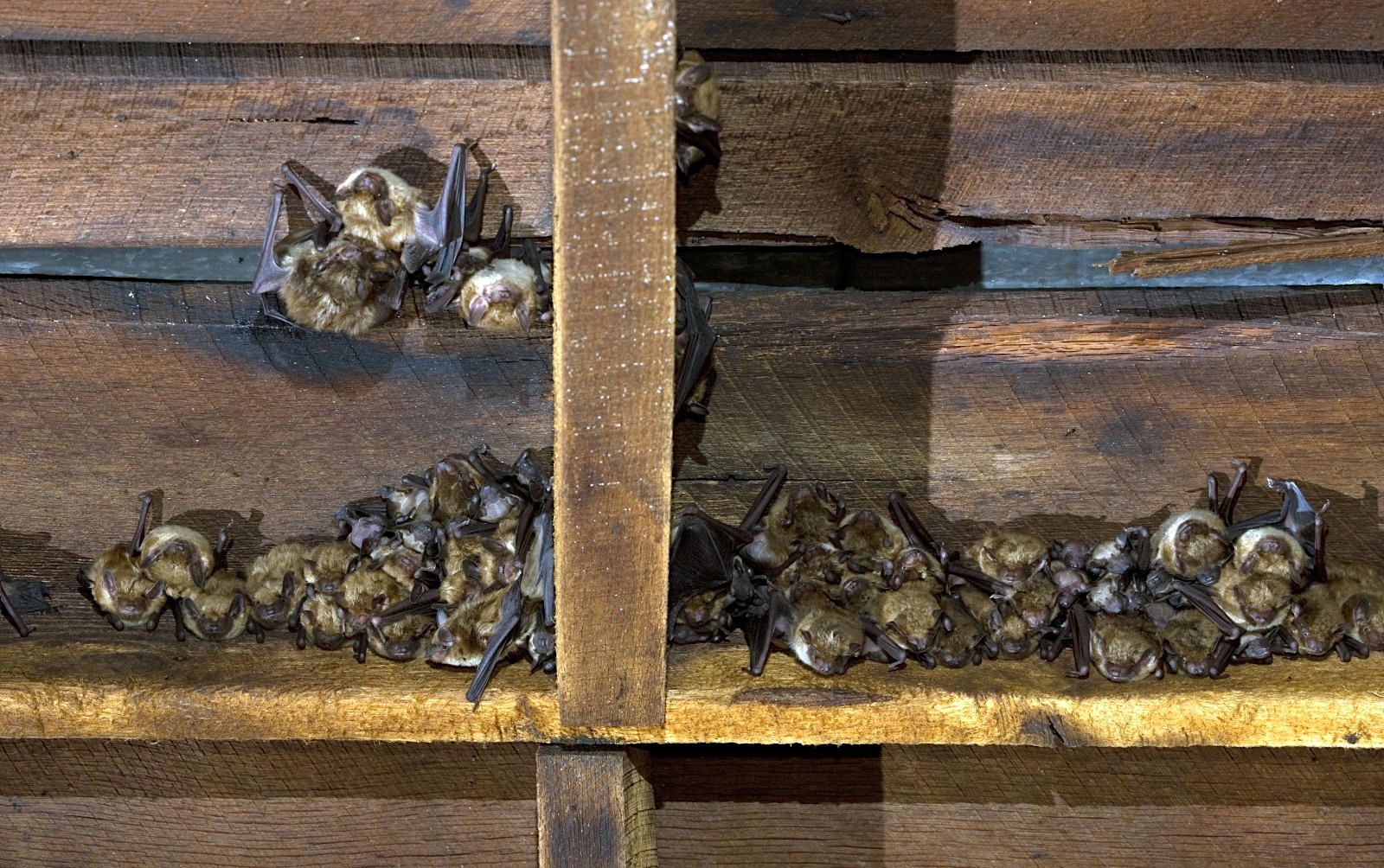
Bats need to maintain a body temperature of 37 C to develop a fetus and make milk. Females raising young typically do not have enough fat reserves to do this, so they will congregate in maternity roosts with other females to help boost body heat.
Life is tough for a newborn bat. Born from late May to mid-July, they must learn to hunt and pack on enough fat in a few months to survive a winter’s hibernation.
“Bats walk an energetic tightrope,” explains Lausen. “And it doesn't take much to slip off because they can only carry so much fat and still fly.”
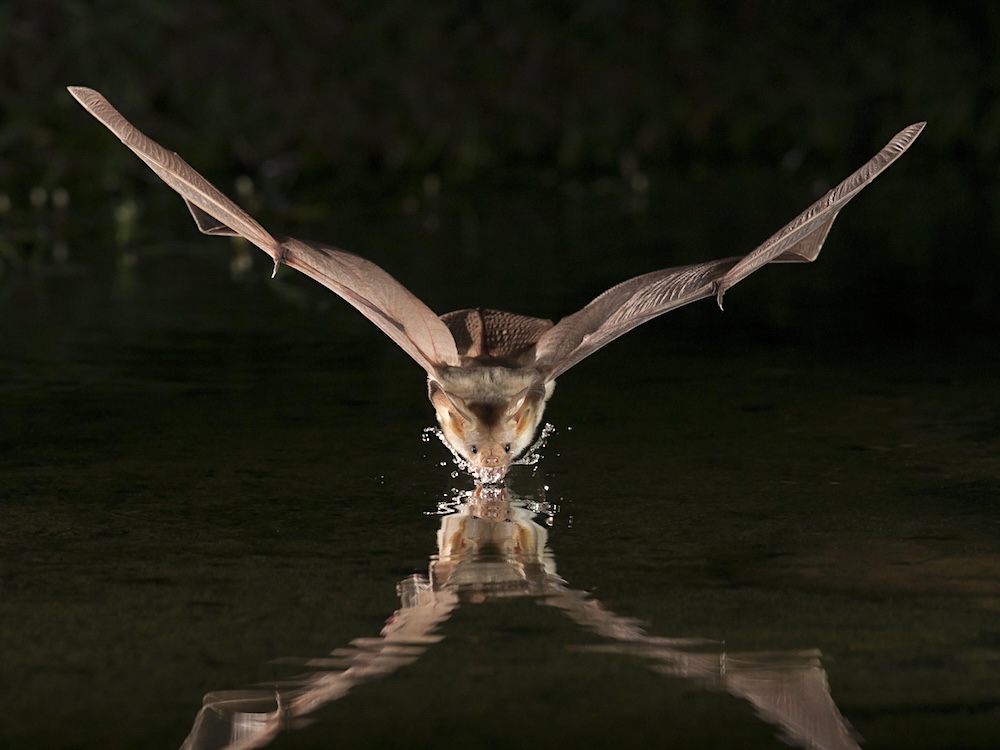
The power of flight demands an enormous amount of energy and a unique physiology. When a bat is airborne, its heartbeat can soar to 1,000 beats per minute and its body temperatures rises several degrees. To maintain that high metabolism, bats need to eat an enormous amount of food and drink a large amount of water. All bats drink “on the wing,” meaning they approach the surface of a pond or lake while flying, swoop low enough to skim the water surface with their open bottom jaw, and scoop a mouthful of water.
Experiments done with the little brown bat, which is common in B.C., have revealed that they catch insects at a rate of one every 10 seconds. They will consume between 100 and 500 insects per hour and can gain 20 per cent of their body weight in that time span.
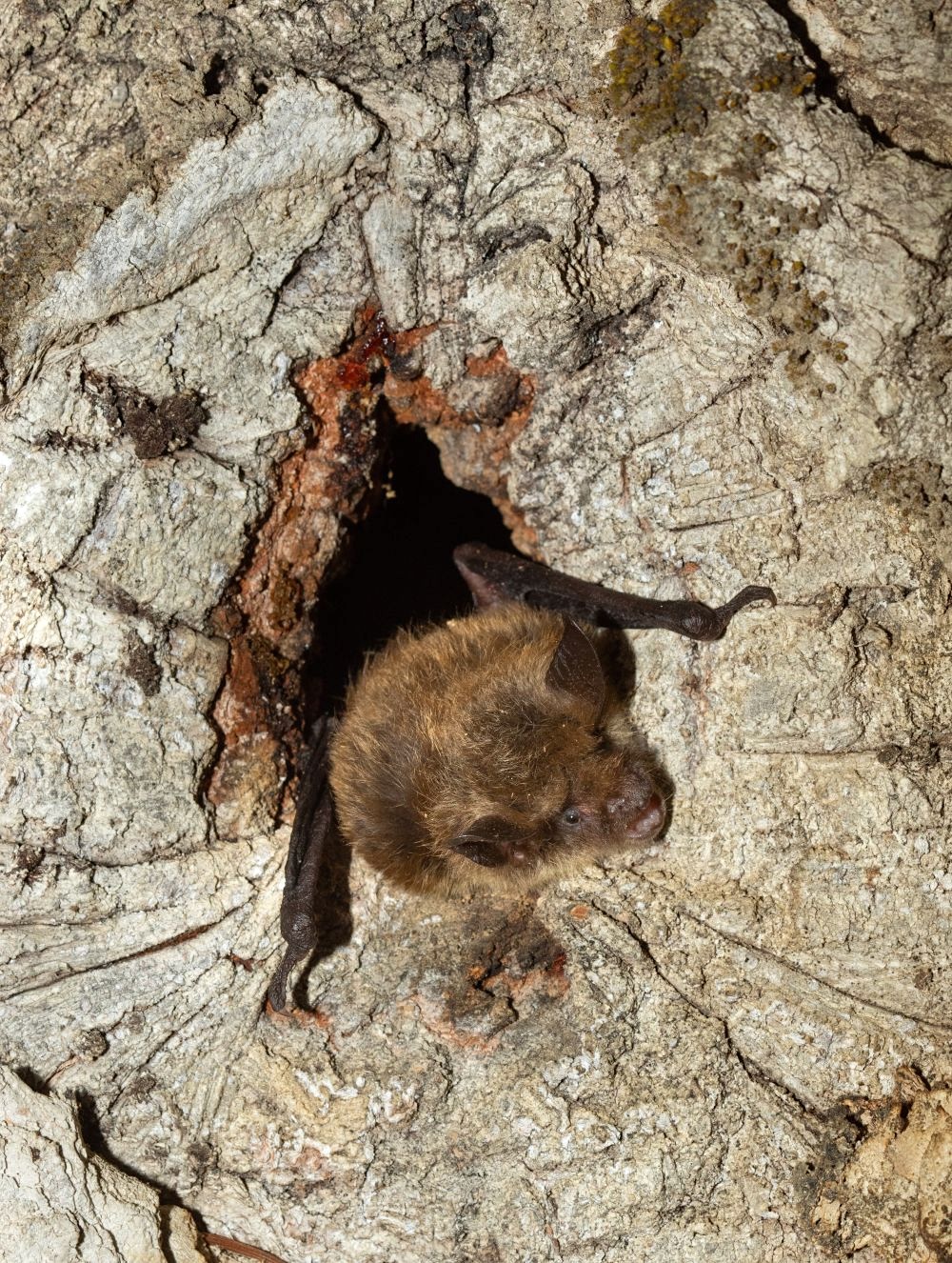
British Columbia hosts 15 of the 17 bat species found in Canada, far more than the other provinces. B.C. bats range in size from the western small-footed bat, which measures a mere eight to 10 centimetres in total length with a wingspan of 24 centimetres and a weight of four to five grams, to the forest-dwelling hoary bat, whose body is about 15 centimetres and weighs 26 to 31 grams with a wingspan of 35 to 40 centimetres. These bats have soft, greyish-white fur and hairy tails and prefer to hunt while flying over wide-open areas or lakes. They are known to travel up to 40 kilometres in a single night to gather food.
Lausen thinks B.C. has more species because of the province’s varied topography and ecosystems. There is a great variance of behaviour and habitat. “Certain species will only roost using cliffs. Others will only roost under boulders. Some will only roost in old hollow trees.”
Summer is the season for the annual B.C. bat count. Volunteers stake out roosting sites at dusk to help biologists track bat populations. The first phase ended June 21, and Round 2 runs from July 11 to Aug. 5, when pups are taking to the skies with their mothers.
In winter, Canadian bats cope with the cold by hibernating, a condition in which the body shuts off most of its activity to conserve energy. Their heartbeat slows from about 300 beats a minute to as little as one beat per minute, while their body temperature plunges to a few degrees above the ambient temperature. In winter this may mean to just above freezing. Bats often choose caves in which to hibernate. Unfortunately, when they are hibernating their immune system also shuts down, which makes them vulnerable to attack by predators or, in the case of white-nose syndrome, the spread of a deadly fungus.
Bats are also able to slip into torpor, a temporary state of reduced metabolic activity that they use to conserve energy when conditions are unfavourable, such as during cold days or when insect prey is scarce.
Rad radar
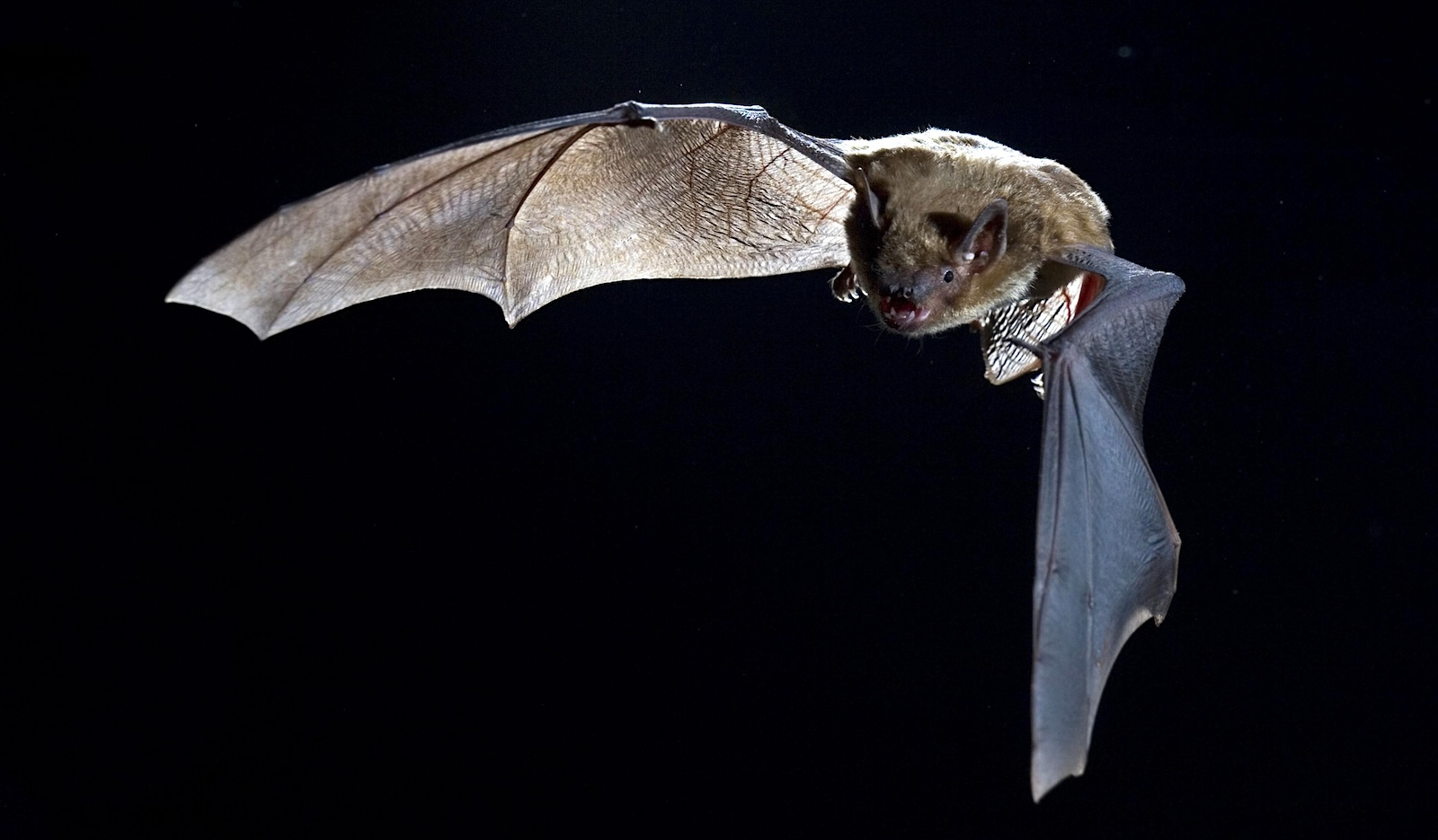
When heading out at night to hunt, bats employ a sophisticated tracking system known as echolocation. As they fly, they emit an array of whistles, clicks and chirps by passing air over the vocal cords and making them vibrate. Bats can measure the distance, size, shape and even the texture of insects and moths in the night air, as well as the distance that separates them from their prey, simply by analyzing the returning echo. The skill is so refined that scientists believe bats can judge their distances from objects to within 1.5 centimetres.
Interestingly, when echolocating, bats estimate distances from objects by an assessment of time rather than distance. So, a target that is 1.7 metres away is actually 10 milliseconds away from their perspective.
While hunting, bats may produce three to 10 calls per second, but when they are attacking this will increase to an incredible 200 calls per second. The sound of echolocation has been described as a put-put-put that accelerates into a buzz resembling the thrum of a gasoline engine.
Most bat echolocation calls are so high-pitched that humans can hear them only by using an electronic bat detector. It’s fortunate that we can’t hear these sounds because if we could, the night would become an angry cacophony of noise.
The decibel level attained by the echolocation calls of big brown and little brown bats is comparable to that of a smoke alarm. Hoary bats have a call as loud as a jackhammer. Noctule bats, the largest bat in the United Kingdom, have the loudest call. Carrying up to 500 metres, it rivals the roar of a jet engine. In contrast, the calls of long-eared bats are as quiet as the clicking of a computer keyboard.
Bats can be broadly characterized by their echolocation calls as shouting bats and whispering bats. Shouters tend to forage for food in open spaces, while whisperers glean insects from the foliage of trees and forage in the cluttered environments of forest interiors.
Even if bats can echolocate, some turn that power off and use their ears to locate prey. The long-eared myotis, a straw-coloured B.C. bat with a black face and black ears and wing membranes, has such keen hearing that it can detect the flutter of a moth wing against the backdrop of a rushing stream. They will hover in front of vegetation and, once they detect motion, they will grab an insect off the surface of a tree or a branch.
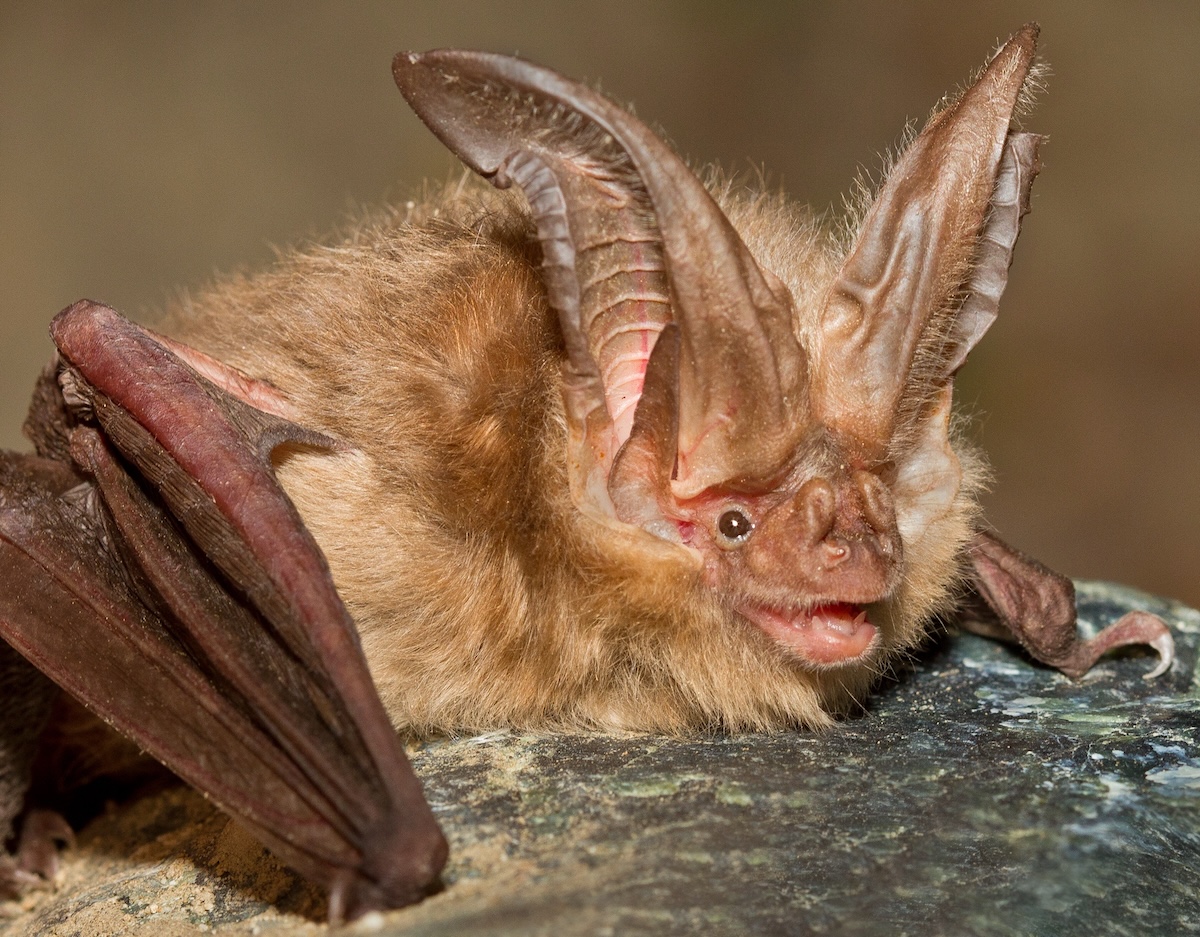
The pallid bat, whose range includes the Okanagan and the western United States and Mexico, has long, forward-pointing ears, a blunt pig-like snout and pale brown fur on the back with a lighter underside. They typically hunt close to the ground, swooping low and sometimes scurrying after their prey, which includes Arizona bark scorpions, the world’s most venomous scorpion. Evidently, the pallid bat is immune to the neurotoxin.
“They love Jerusalem beetles and when they hear one scurrying in the grass, they’ll drop down and run to get the beetle,” says Lausen. “They've got these huge, clawed thumbs, and that's what they use to run. They run on their legs and use their thumbs, just like a chimpanzee would on their knuckles, the same motion. And when they finally get the beetle, they cover it with their wings so that it can't run anymore, and then they'll chomp it.” After eating, the pallid bat will use its legs to bounce off the ground directly up into the air and take flight again.
Although insects comprise much of the diet of Canadian bats, in the tropics there are bats that feed just on fruit, some that dine on frogs, and others, such as the greater bulldog bat, that supplement their insect diet by plucking fish out of the ocean using large claws attached to their hind feet. These bats always hunt in packs, combining their echolocation abilities to pinpoint fish swimming in the open sea.
There are also bats that feed on plant sugars, such as the lesser long-nosed bat and the Mexican long-tongued bat, which flap from plant to plant, collecting nectar and spreading pollen as they go. Among their favourites are the night-blooming flowers of the blue agave plant. The blue agave produces a juice that is the main ingredient in one of Mexico's most iconic exports: tequila. Without these bats tequila would not exist, as they are responsible for pollinating the elegant yellow flowers that emerge from the plant once in their 10-year lifetime.
Bats belong to the order Chiroptera, which translates to “hand-winged” in Greek — a clue to their unique anatomy. Their wings are essentially elongated fingers stretched over a thin membrane called the patagium, supported by a skeletal framework. This design allows them to glide, manoeuvre and even hover with precision. Bats don’t just flap their wings — they use a combination of wing articulation, membrane tension and finger movement to achieve flight. This wing membrane also has the fastest healing time of all mammals.
Some bats migrate, and they can cover long distances. In 2022, a banded Nathusius’s pipistrelle — which weighs less than 10 grams, the weight of two sugar cubes — flew 2,486 kilometres from Russia to the French Alps in 63 days. Researchers think the bat may have navigated using the Baltic Sea coast, since other bats are commonly found along this coastline during migration season. In that case, it could have covered more than 3,000 kilometres.
The tender sex lives of bats
Another enchanting bat behaviour was exposed in a groundbreaking 2025 study published in the Annals of the New York Academy of Sciences. Researchers from the Museum für Naturkunde in Berlin revealed that greater mouse-eared bats, Europe’s largest native species, exhibit a surprisingly intricate mating system known as a lek — a strategy more commonly observed in birds like peacocks or sage grouse than in nocturnal mammals.
Researcher Lisa Printz, who spent countless hours watching and listening in six church attics across Europe, described how each male stakes out a small roosting spot high in the attic and then emits complex trill vocalizations designed both to fend off rival males and to seduce listening females. Females, meanwhile, travel great distances during the mating season to visit these hidden concert halls.
Interestingly, the arriving females seem to make their choices even before landing, flying directly to a specific male. Even the mating behaviour itself is surprising. After a female lands beside her chosen male, the two will often rest quietly side by side before the mating begins. In many cases, the male wraps his wings around the female after copulating in a gesture of intimacy, and the pair remain in close contact before copulating again. The longest recorded mating session lasted over 34 hours.
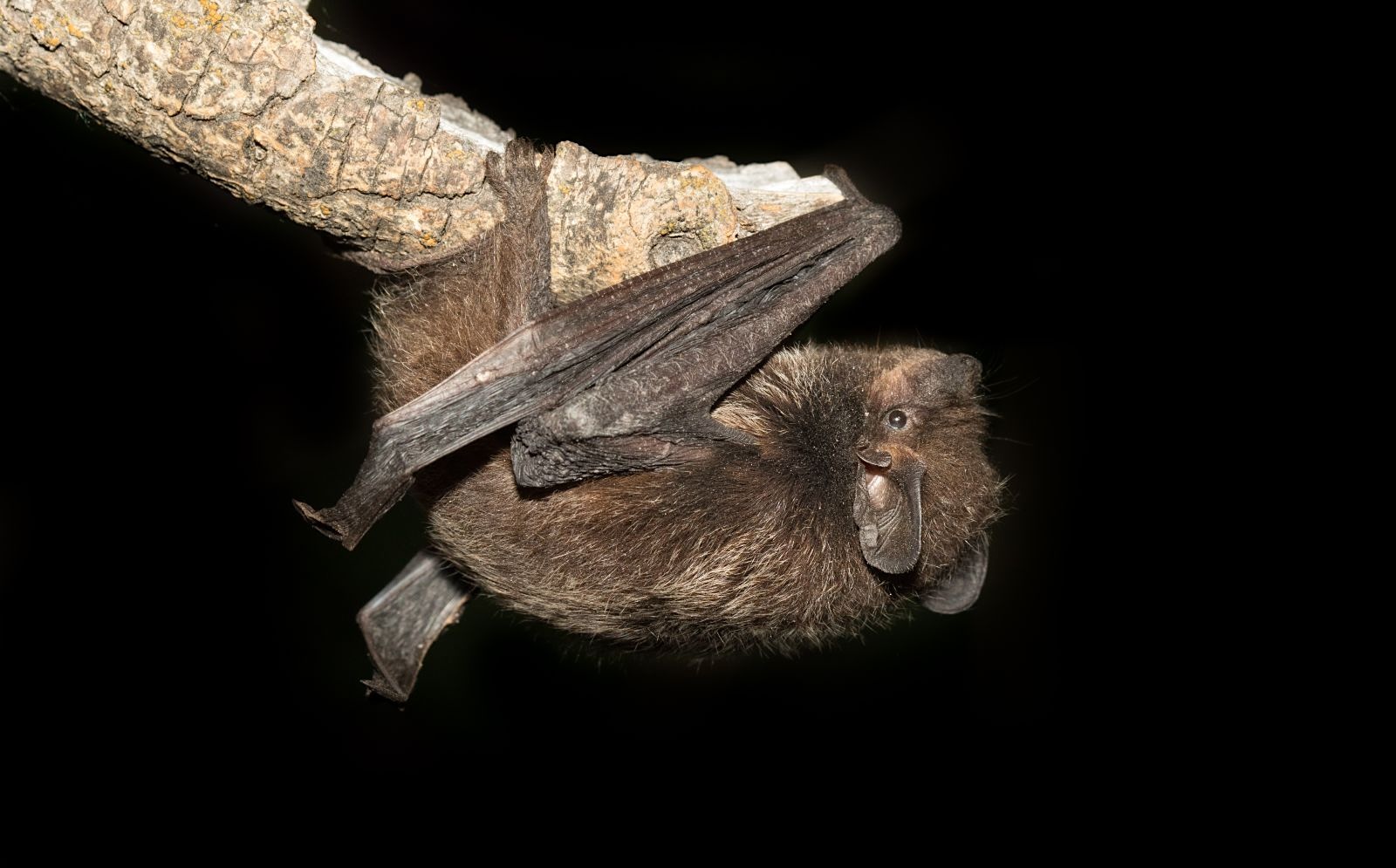
A similar form of singing was recently documented in B.C. when scientists discovered that mysterious chirping sounds emanating from abandoned mines were being produced by silver-haired bats. They are only the second such species in North America to be identified as singing. Lausen, one of the authors of the 2023 study, says the function of the songs is unknown, although it is likely related to courtship or mating. “The song patterns were relatively consistent with each song phrase consisting of a lead call, followed by a droplet call, and finishing with a series of multiple chirp calls,” the study reads.
Ecologists know that bats play a crucial role in reducing crop loss and insecticide usage since they consume vast amounts of insects and other pests. Their contribution to pest control has been estimated at billions of dollars per year in the United States alone. Aside from eating insects that would otherwise decimate food supplies, bats pollinate the plants of 300 fruit species, including durians, mangoes, guavas, lychees, papayas and certain types of bananas, as well as carobs and cloves.
Bats also play a key part in forest health. Exactly how much has never been determined, as it’s a neglected area of study. Lausen notes one recent experiment conducted in a hickory-oak forest in Ohio, where researchers kept patches of the forest open during the day so they could be used by birds but closed off at night so bats couldn’t enter. The areas where the bats were banned suffered a fivefold drop in seedling growth because of defoliation from insect pests.
Unfortunately, the current outlook for bats is not too promising. In North America more than half of all species are at risk of severely declining populations in the next 15 years, according to a 2023 report by the Bat Conservation Alliance. The trend is mirrored globally. In addition to the spectre of white-nose syndrome, they face threats from heat and drought brought on by global warming, destruction of their habitat and a challenge from wind turbines, which kill hundreds of thousands of bats each year in North America and are globally known to harm more than 30 species.
It seems clear that we need to lose some of our biases regarding bats and start paying closer attention to how to better protect their environment and encourage their success as a species. We shouldn’t need a bat to pee on our heads to drive home the message. ![[Tyee]](/design-article.thetyee.ca/ui/img/yellowblob.png)
Read more: Environment











Tyee Commenting Guidelines
Please note that email notifications for replies are not currently working due to a software issue which may be resolved in a future update.
Comments that violate guidelines risk being deleted, and violations may result in a temporary or permanent user ban. Maintain the spirit of good conversation to stay in the discussion and be patient with moderators. Comments are reviewed regularly but not in real time.
Do:
Do not: