


 SHARE:
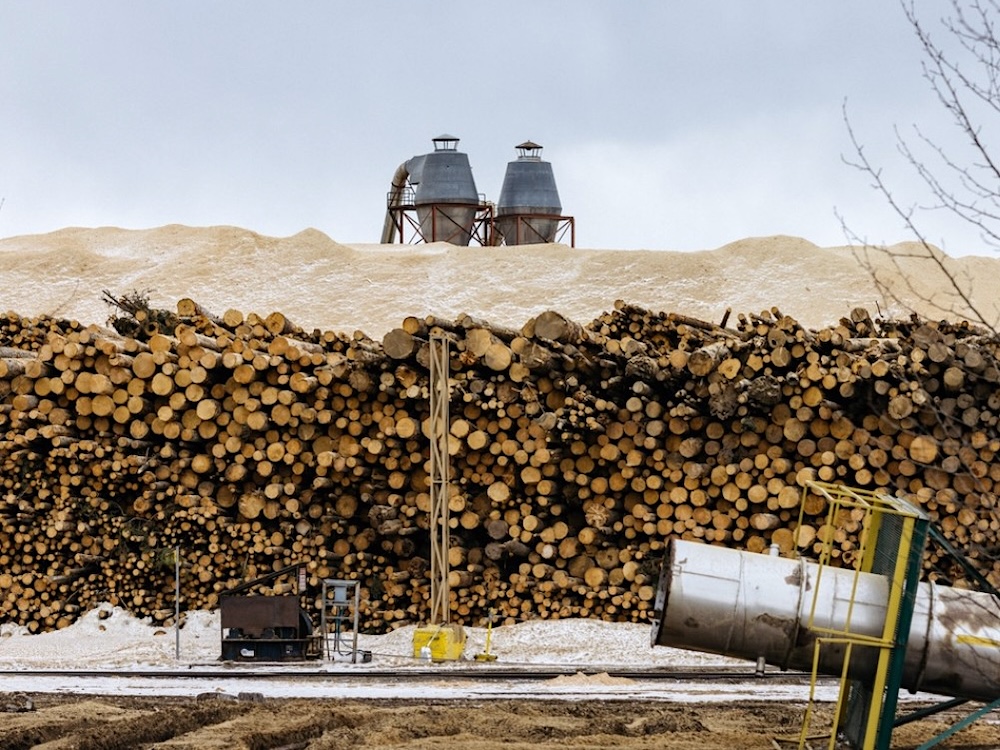
British Columbians are subsidizing the province’s forest companies to the tune of tens of millions of dollars each year under a government program that defrays the cost of shipping logs from remote forests to distant mills.
In 2023, the most recent year for which there is a published record, logging companies received nearly $33 million in public funds to underwrite the costs of hauling “low-value” logs to wood pulp and pellet mills. Unpublished figures obtained by The Tyee show those subsidies continue, albeit at a lower level, with some paying to ship logs hundreds of kilometres from increasingly rare coastal temperate rainforests to southern pulp mills.
The subsidies are enumerated in a document posted online by the Forest Enhancement Society of BC, or FESBC, an organization created and funded by the provincial government and that reports to Forests Minister Ravi Parmar.
The society’s mandate includes “preventing and mitigating the impact of wildfires” and “improving habitat for wildlife.” But many FESBC funds simply underwrite the increasing costs of hauling logs. Those expenses have been marching upward as logging activities push farther into the hinterland.
That has some questioning whether the funding is accelerating the logging of forests, rather than enhancing them.
Do transport payments subsidize logging?
The Forest Enhancement Society of BC was created in 2016 with a major focus on reducing wildfire risks and lowering greenhouse gas emissions. But Conservation North director Michelle Connolly says the subsidies could be facilitating the logging of remote and high-elevation forests that might otherwise go untouched.
“FESBC's stated purpose is partly to ‘improve wildlife habitat’ and they are instead doing the exact opposite — subsidizing the logging and shipping of the best wildlife habitat to pulp and pellet mills,” Connolly told The Tyee. “There is no ‘forest enhancement’ happening with this program.”
Connolly said many of the trees being cut down and transported at taxpayer expense originate in primary or natural forests. Although some trees may be dead, she said, they remain critically important for biological diversity.
Large, older trees along with dead trees play an outsize role in ecosystems. For example, they are magnets for woodpeckers that bore holes creating vital habitats for nesting or denning birds, ducks, bats, insects and mammals like martens and fishers.
“‘Low-value’ is a euphemism for dead or other commercially challenging trees,” Connolly said.
According to FESBC records, more than $7.1 million went to 15 companies in 2023 to lower the costs of shipping logs — sometimes whole, sometimes pre-chipped — to the Harmac, Crofton and Howe Sound pulp mills on B.C.’s south coast. Crofton has since closed, in part, because it had become too expensive to obtain enough logs to stay afloat.
Another 21 projects funded by FESBC in 2023 benefited pulp mills, wood pellet mills and wood-fired energy facilities in the Interior of the province. The combined value of those subsidies was $25.2 million. They benefited Canfor’s three pulp mills in Prince George and Skookumchuck, a West Fraser pulp mill in Quesnel, another Quesnel pulp mill operated by Millar Western, Kruger’s pulp mill in Kamloops and Mercer’s pulp mill in Castlegar.
Other beneficiaries included the Houston wood pellet mill, one of many in B.C. owned by U.K.-based Drax Group, and BioNorth Energy, a Fort St. James company that generates electricity by burning waste wood as well as wood from ground-up whole logs. The power is then supplied to BC Hydro.
Canfor receives the most subsidies
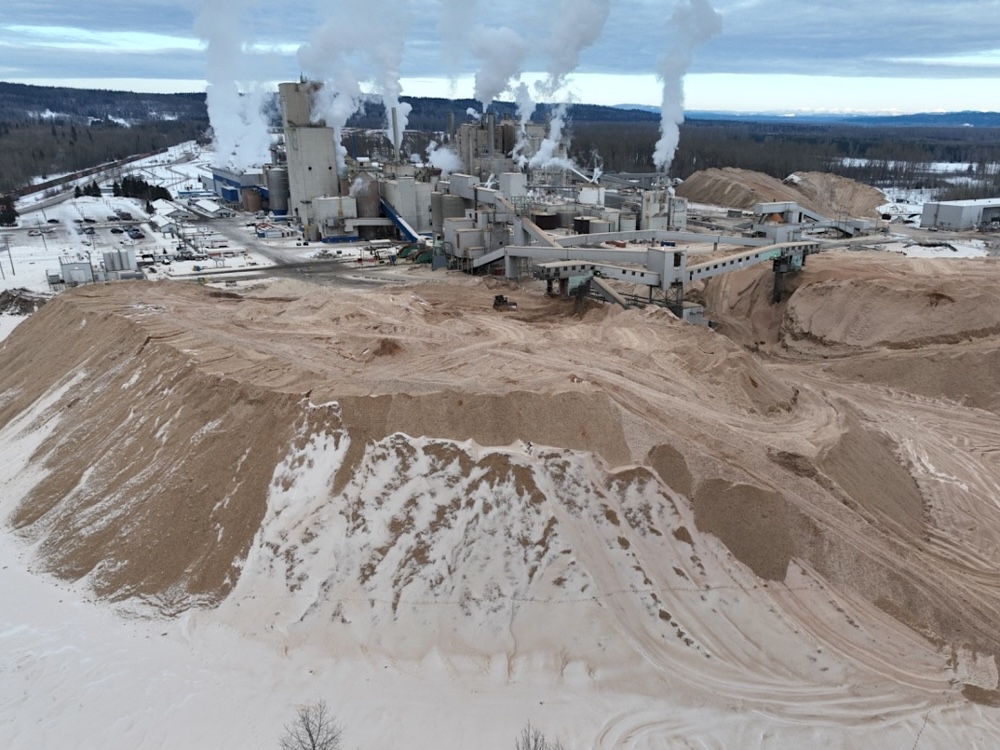
Canfor Pulp was the biggest beneficiary of the subsidies, with four FESBC grants underwriting the costs of shipping logs to the company’s three pulp mills. The combined value of those grants was more than $6.2 million.
FESBC approved those subsidies to Canfor and other companies because the trees being logged allegedly fell outside “the current economic range” or “fibre recovery zone” and were therefore unprofitable to transport without the financial support of taxpayers.
In response to emailed questions, Mina Laudan, Canfor’s vice-president of corporate affairs, said the grants helped get more wood fibre to the company’s pulp mills, which faced disruptions in supply due to sawmill curtailments and closures. Laudan said the subsidies were only “supplemental,” amounting to just “one per cent of our total fibre costs.”
West Fraser, the other company that dominates the Interior’s forestry industry, said the funds were instrumental in underwriting the costs of trucking logs nearly 500 kilometres from the Smithers region to its pulp mill in Quesnel.
Joyce Wagenaar, West Fraser’s director of communications, wrote that a $2.5-million FESBC grant “was fully utilized to support the delivery of non-economical pulpwood, helping address gaps in the mill’s fibre supply requirements.”
“By accessing low-value pulp logs from within the region including Smithers and Burns Lake, West Fraser has been able to maintain mill operations and support local jobs, while also improving fibre utilization and aiding wildfire risk reduction,” Wagenaar wrote.
She said moving the logs aligned with the company’s broader environmental goals and that the subsidies delivered “tangible benefits for local communities, the forest sector and the long-term health of B.C.’s forests.”
Subsidies reduce log-burning, companies say
Among the coastal companies receiving subsidies was Taan Forest, a forestry business owned by the Haida Nation. The company received more than $862,000 in 2023 from FESBC to help subsidize the shipment of logs from Haida Gwaii.
In an email to The Tyee, Taan’s chief forester, Jeff Mosher, wrote that the subsidies were used to ship approximately 48,000 cubic metres of low-value pulp logs from the archipelago to the southern coast’s remaining pulp mills.
Mosher said that without the transportation subsidies, only about one-tenth of those logs would have been shipped.
“The funding also helped with reduction of [greenhouse gas] emissions as prior to the FESBC funding, this low-value fibre would have been piled and burned as waste,” Mosher wrote.
In an emailed response to questions, FESBC executive director Jason Fisher said transportation subsidies generally applied to logs or “wood fibre that would cost too much to be transported for use by mills or energy producers under prevailing market conditions.”
He said that in the absence of such logs being hauled in from logging sites, they “would be burned in piles as part of government mandated slash disposal activities to reduce fire hazards after forest management activities.”
Fisher said “low-value pulp logs” are not suitable for making lumber and end up being chipped to make pulp and paper or wood pellets. But he stressed that “low-value” is a relative term. It “does not mean the wood fibre lacks value,” he said.
Fisher said the subsidies do not cover all of the transportation costs but “the gap between what a mill or fibre user can economically pay for the logs and the actual cost of processing and transporting them from remote locations.”
FESBC also provided to The Tyee unpublished summaries of other projects it has funded in the two most recent fiscal years. The summaries show that FESBC continues to subsidize the transportation of “low-value” fibre to pulp mills, pellet mills and bioenergy facilities, but at reduced rates from what was spent in 2023.
The lists indicate that over the past two years approximately $18 million in subsidies went to pay to move logs or ground-up woody material from remote sites to mill operations.
Fewer mills lead to longer hauls
The Tyee has previously reported that logs from the Fort Nelson region in B.C.’s remote northeast corner were being trucked more than 800 kilometres to Canfor’s Prince George facilities, where they were turned into lumber or chipped directly to make wood pulp.
The log exodus occurred as members of the Fort Nelson First Nation and their neighbours in Fort Nelson struggled to find work due to a prolonged economic slump triggered by Canfor itself.
In 2008, Canfor closed two large panel mills in the community, putting an end to 600 local jobs.
The job losses associated with those closures were briefly offset by a rapid increase in methane gas drilling and fracking activity. But that gas boom was quickly followed by a bust, and there has been little resource industry activity in the region since, except for limited logging and subsidized log-hauling.
Until recently, many of the region’s residents had placed hope in the prospect of a resurrected wood-processing sector following Canfor’s sale of its logging licence in the area to Peak Renewables, a company that proposed to build the largest wood pellet operation in Canada near Fort Nelson.
But that plan has fizzled. Equipment pulled from one of the gutted Canfor mills now lies in the open air outside the massive building where it was once housed. Peak, which did the work of dismantling the mill, has walked away both from plans to ship the equipment south to the United States for reconstruction and from its plans to build the pellet mill.
Logging figures available on a searchable Ministry of Forests database and analyzed by The Tyee show that more than 243,000 cubic metres of logs have come out of the forests of the Fort Nelson region since the start of 2025.
With no mill operating in the area, all the logs were trucked away. Some went to Canfor in Prince George, others were trucked to West Fraser’s Quesnel mills, more than 900 kilometres away, and large numbers of logs went to a trucking company in Fort St. John, for subsequent trucking to undisclosed mill sites.
Laudan told The Tyee that logs transported to Canfor’s mills from Fort Nelson were not subsidized by FESBC but that the program did pay to truck logs from “other regions” in northern B.C.
The database does not identify how many logs were transported thanks to FESBC subsidies.
But the unpublished summary of funded FESBC projects shows that last fiscal year nearly $1.1 million was granted to a community forest jointly held by the Fort Nelson First Nation and Northern Rockies Regional Municipality.
According to FESBC, the money went both to “deliver pulp and deciduous logs” to distant mills from recently burned forests and to underwrite the cost of “reducing fuel loads” in forests considered at risk of burning.
Lengthy, subsidized log hauls also prevail on B.C.’s coast and in the northwest’s remote forests, including in the Cassiar and Stikine regions.
“Low-value pulp logs” are being trucked to Stewart, B.C.’s northernmost port, before being transported via water more than 800 kilometres south to the last two remaining coastal pulp mills in Howe Sound and Nanaimo.
FESBC is also underwriting transportation costs to move logs cut down in temperate rainforests on Haida Gwaii, B.C.’s mainland coast and northern Vancouver Island. The logs either go directly to pulp mills or are sent to chipping facilities before later being barged as chips to coastal pulp operations.
Are the logs really ‘low-value’?
Mike Morris, the former BC Liberal MLA for Prince George-Mackenzie, says he has trouble squaring the subsidized shipping of low-value logs with FESBC’s stated goal of improving wildlife habitat and reducing wildfire risks.
The longtime trapper spends plenty of time in the province’s backcountry and chafes at the notion that the trees being logged and transported with subsidies have little or no value.
“These low-value areas are generally high-value areas for raptors and birds, bears and other small animals,” Morris told The Tyee.
When he is in the bush, Morris said, he looks in vain for the large stick nests built by eagles and other raptors.
“I have never located one despite the fact it is illegal under the B.C. Wildlife Act to destroy a stick nest at any time,” he said. “Owls, goshawks and other birds have disappeared.”
If FESBC funds are being used to log forests deemed to be at risk of burning, Morris said, the logging of those forests will not only eradicate habitat for moose and other ungulates but increase, rather than decrease, fire risk.
Citing the work of Australian forest ecologist David Lindenmayer, Morris said the science indicates that logged forests soon become at risk of burning in future fires and that those risks are long-lasting.
“Science now terms any area that has been clear cut or disturbed by logging as ‘disturbance stimulated flammability,’ and that these areas are far more flammable than primary forests and will remain highly flammable for decades to come,” Morris said. He said it’s “hard to see any science in FESBC's claim to prevent and mitigate the impacts of wildfire.” ![[Tyee]](/design-article.thetyee.ca/ui/img/yellowblob.png)
Read more: Labour + Industry, Environment








Tyee Commenting Guidelines
Please note that email notifications for replies are not currently working due to a software issue which may be resolved in a future update.
Comments that violate guidelines risk being deleted, and violations may result in a temporary or permanent user ban. Maintain the spirit of good conversation to stay in the discussion and be patient with moderators. Comments are reviewed regularly but not in real time.
Do:
Do not: