


 SHARE:
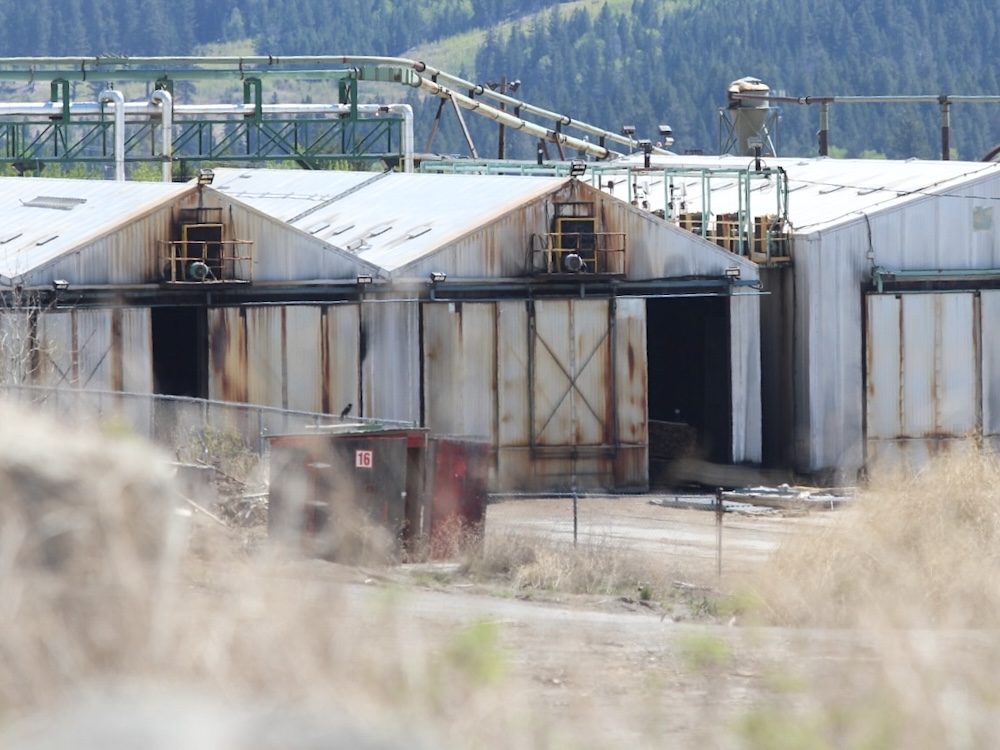
In September 2024, the Tsay Keh Dene Nation and McLeod Lake Indian Band bought a logging licence near the town of Mackenzie from Canfor for $69 million.
It was a hefty price, with one of the happiest sellers being Canfor’s majority owner and British Columbia’s wealthiest man, Jimmy Pattison. And it brought to an end a sorry chapter in the life of the town.
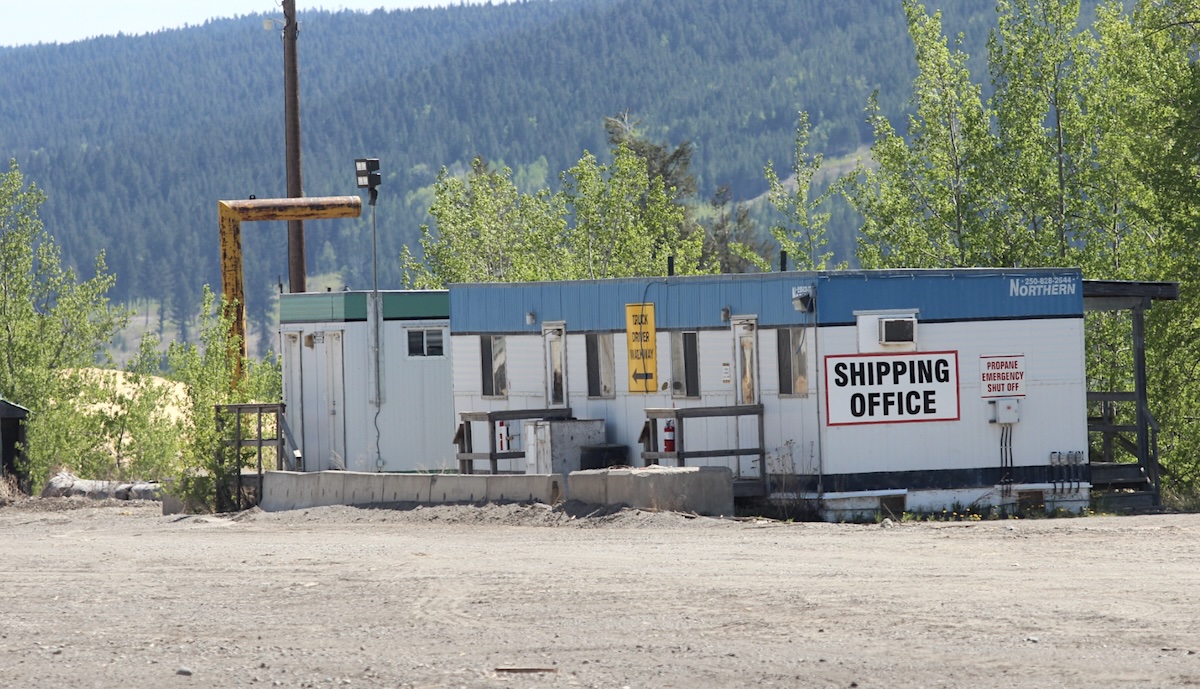
Nearly five years earlier, 187 workers in Mackenzie had lost their jobs when Canfor closed a sawmill in town. But because it had retained the logging licence granted by the provincial government, Canfor had continued to log the forests near Mackenzie and send those logs down the highway for processing in Prince George. The move angered Mayor Joan Atkinson and many of the town’s residents. The news the company had sold the licence brought relief.
"It's just a huge step to have some local Indigenous nations who are vested in our community step forward, as opposed to Canfor, who have shown no loyalty to us with the number of jobs that have been lost," Atkinson said upon the completion of the sale.
The sale, which also included the transfer of Canfor’s idled sawmill assets, came at a pivotal time.
Canfor and other companies had closed sawmills and pulp mills across B.C., while investing billions of dollars in mills in the United States.
Yet Canfor has continued to hold numerous logging licences. On paper, those licences give the company and others like it an “allowable annual cut” that entitles them to log vast swaths of publicly owned forests each year. The higher those allowable cuts are, the more valuable those licences are to the companies that hold them.
But what if Canfor and others aren’t logging at rates close to what their licences say they can? If they sell such licences, what should those licences be valued at? And what role should the B.C. government play as the party that issues those licences and must approve any future sales?
Timber monopolies
Atkinson is not alone in feeling burned by Canfor. In recent years, the company has delivered economic gut punches to Houston, Vanderhoof, Prince George, Chetwynd, Fort St. John, Taylor and Fort Nelson as it closed sawmills, panel mills and pulp mills in those communities and others.
Canfor is now a shadow of its former self. Yet it remains a major player in one significant regard: it holds more government-granted logging licences than any other company — and those licences have value. Just ask Jimmy Pattison.
All but one of Canfor’s 19 government-granted licences are renewable and have allowable annual cuts associated with them. Those allowable cuts, which are determined by the Forests Ministry, set out how many trees Canfor and other companies may log each year.
In Canfor’s case, the licences allow it to log up to 6.4 million cubic metres of timber per year.
Only two other B.C. forest companies come remotely close to holding as many logging rights in the province’s publicly owned forests. West Fraser Mills is second, with combined licences that allow it to log 5.1 million cubic metres of timber per year, while Western Forest Products is firmly in third place with more than 4.7 million cubic metres under its control, including a licence it co-owns with the Huu-ay-aht First Nation on Vancouver Island.
Those three companies alone control 39 per cent of the timber that the government has firmly committed to logging companies. If the list is expanded to include the top five companies, the share rises to 53 per cent.
With so few companies controlling so much, the market is distorted. New players face a steep uphill climb when just five companies have sewn up more than half of the committed timber volumes.
The situation means that a select few companies can outcompete just about anyone else for any additional logs they might wish to buy, including logs sold by community forests, a dynamic that sometimes leaves small local value-added mills starved for wood.
Quid pro quo
All of this matters when you consider what gave rise to the issuance of those licences in the first place.
For decades, successive provincial governments granted logging licences to companies on the requirement that the public get something in return.
The quid pro quo was that the companies would build mills.
In this way, publicly owned forests would be logged to benefit local citizenries and the province as a whole. Local communities would get new jobs where workers pulled down good wages, municipalities would reap hefty property tax payments, and the province would receive a steady stream of “stumpage” revenue generated with each tree cut down.
For years the requirement to operate local mills paid handsome dividends, with some communities such as Port Alberni on Vancouver Island boasting among the highest per capita incomes in all of Canada.
All of that came to a crashing halt with the passage of the Forestry Revitalization Act of 2003.
Swiftly enacted by a BC Liberal government that held all but two seats in the legislature, the new law scrapped local manufacturing requirements. Logging licences could now be bought and sold with no restriction on where the logs linked to those licences went.
The unravelling
Fast-forward to today.
A select few companies have a stranglehold on licences and allowable cuts. Primary forests (forests that have never been industrially logged) are plummeting in number. Old-growth trees deemed critical to blunting a deepening biodiversity crisis are on the chopping block. More than 50,000 jobs have disappeared in the province’s forest industry since 2000 as logging rates were halved. First Nations are still largely on the outside looking in even as logging continues on public lands that overlap their territories. And a social contract meant to promote manufacturing jobs in local communities lies in tatters.
A significant component of that social contract was the provincial government’s expectation that most companies would fully use their allowable cuts.
But that isn’t happening and hasn’t for some time. Many companies — Canfor among them — aren’t logging anywhere near what their licences entitle them to, a sign that they’ve logged the best and most readily accessible forests and are now left to log the dregs.
Data available on a public website and analyzed by The Tyee shows that in 2025 Canfor logged just under 3.2 million cubic metres of timber — less than half of what it was entitled to.
West Fraser, Canfor’s biggest competitor in the Interior of the province, logged close to 3.2 million cubic metres, about 63 per cent of its allowable cut.
Meanwhile, Western Forest Products, the biggest licence holder on the coast, logged 2.1 million cubic metres, or just 45 per cent of what it was entitled to.
What the companies don’t want
The gap between a company’s allowable cut and how much it actually logs has significant economic consequences, says Jennifer Houghton of the Boundary Forest Watershed Stewardship Society, a group campaigning for forestry reforms following devastating flooding that occurred in Grand Forks in 2018.
The society maintains that the flooding was aggravated by the extensive logging that took place in the Kettle and Granby watersheds in the preceding decades.
In a recent video, Houghton explains that the market value of a licence is tied to its allowable cut. If allowable cuts drop, then licence values drop as well.
“When licence value falls, equity falls, or shareholder value falls and debt-to-equity ratios get worse,” Houghton says. “That’s something companies and lenders plus shareholders don’t want.”
In its 2024 annual report, Canfor states that the combined value of its timber or logging licences is $323 million.
But are those licences actually worth what Canfor says they are?
It’s a question that provincial Forests Minister Ravi Parmar should consider.
Use it or lose it
Among Parmar’s earliest pronouncements as forests minister was that he was going after companies that did not log what they were entitled to.
“If you have fibre and you’re not using it, we’re coming for it,” Parmar told John Brink, a long-standing independent mill owner in B.C.’s value-added forest products industry, in April 2025.
Since becoming forests minister, Parmar has been under pressure from Premier David Eby to increase logging rates. He has also been tasked to do two other things: increase First Nations’ participation in the forest industry and conserve more old-growth forests.
One way to meet the first of those two objectives would be to take back existing logging licences and use the freed-up timber to forge new licence agreements with First Nations and other parties. New logging licences could be issued with lower allowable cuts attached to them, reflecting the reality that there is not the timber on the landscape that there once was.
Imperilled old-growth and primary forests could also be removed from logging equations before the new licences were either put out to tender or assigned, making it easier for the province to fulfil its forest protection promises.
Would there be a cost?
Absolutely.
The companies would seek compensation based on “lost” logging opportunities.
But the compensation paid could be drastically reduced if the government lowered allowable cuts, which are and always have been in flux. They change according to circumstances. And when they do, companies may not have any claim to compensation.
A case in point occurred last year when the Supreme Court of British Columbia rejected a claim by Teal Cedar Products Ltd. that it was owed $75 million in compensation for the alleged loss of logging opportunities after a local management board on Haida Gwaii placed limits on harvesting locations.
Licences may confer rights to harvest. But those rights do not extend to logging wherever and whenever a company may wish. Logging permits are still required.
In commenting on the ruling by Justice Brenda Brown, Allan McDonell, a retired lawyer, told The Tyee that the language in forest licence and tree farm licence documents is similar across the board, and that there is nothing special about Teal’s circumstances.
Licence or tenure holders are not protected from reductions in permissible logging “where the province acts in good faith to accommodate Aboriginal interests and advance reconciliation,” McDonell said. “Such actions are mandated by the province’s constitutional responsibilities, and they take precedence.”
A moment of reckoning
In the view of former Prince George-Mackenzie MLA Mike Morris, BC Liberal and BC NDP governments alike have failed to deal with the elephant in the room. Morris is a former BC Liberal cabinet minister who became intimately familiar with Mackenzie’s struggles as Canfor and others abandoned the town. He says logging rates that were too high did grievous harm to biodiversity and rural economies alike.
“There is a moment of reckoning coming,” Morris warned.
He noted that a recent independent analysis conducted by professional forester Martin Watts and ecologist Dave Radies found that the Ministry of Forests grossly overestimated how many trees there were to log in the Mackenzie region.
A big beneficiary of that overestimation was Canfor, Morris said.
The analysis, which was written in 2024 and leaked to Business in Vancouver late last year, concluded that the allowable cut for the Mackenzie area was likely twice as much as what could be sustained in the short term.
Part of the reason for the disparity, Radies and Watts asserted, was that Canfor and others responded to the massive mountain pine beetle outbreaks of the past 20 years not by logging dead pine trees as they were supposed to, but by logging living trees instead.
Why? Because healthy, living trees have more economic value than dead trees.
Radies and Watts estimated that two-thirds of all the pine trees attacked and killed by the beetles remained unlogged.
“Consequently, these dead trees, combined with climate change, are fuelling unprecedented wildfires,” Watts and Radies warned. They added that such fires will only further diminish the allowable cuts.
Morris believes that what Radies and Watts found in the Mackenzie area likely applies across the board: allowable cuts are too high and should fall.
Nobody who has paid attention to what is going on in our forests should be surprised by this, Morris said, least of all Canfor.
“I think that Canfor logged what they could and the rest is not there. I think the [allowable annual cut] has been overestimated. The Timber Supply Reviews have been fatally flawed for at least the last two decades, maybe more. The wood is simply not available,” Morris said.
“When you are running a multimillion-dollar company, you do your own research. I think Canfor has seen the writing on the wall. They just logged the hell out of everything. And then, when it’s gone, they say the government screwed up everything and we’re going to leave.”
Turning the corner, Morris believes, begins with the government lowering the boom on allowable cuts as quickly as possible. Doing that could save First Nations money in the future, bring some certainty to hard-hit rural communities and make it far easier for the government to implement some badly needed reforms that protect what remains of the province’s imperilled primary forests.
Better to do that, Morris says, than to stay the course and reward the few at the expense of the many. ![[Tyee]](/design-article.thetyee.ca/ui/img/yellowblob.png)
Read more: Labour + Industry, Environment





Tyee Commenting Guidelines
Please note that email notifications for replies are not currently working due to a software issue which may be resolved in a future update.
Comments that violate guidelines risk being deleted, and violations may result in a temporary or permanent user ban. Maintain the spirit of good conversation to stay in the discussion and be patient with moderators. Comments are reviewed regularly but not in real time.
Do:
Do not: