


 SHARE:
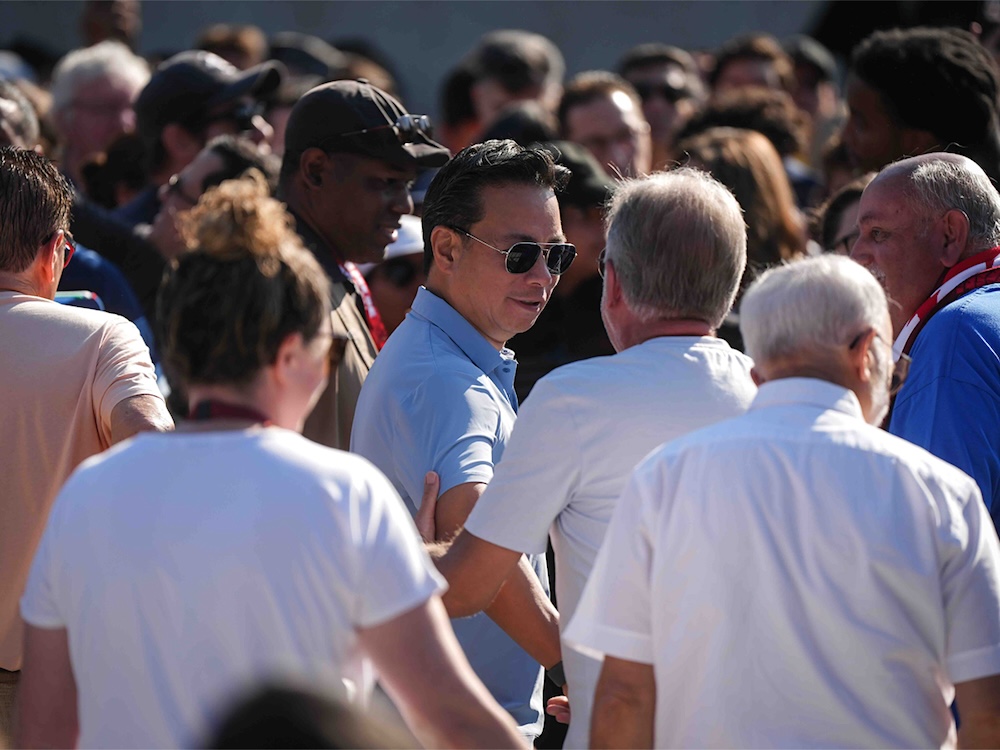
While Ken Sim won’t replicate the popularity that swept him into office in 2022, the Vancouver mayor has carved out a political lane that could still carry him in October’s election.
In 2022, Sim decisively won Vancouver’s mayoral election with over 50 per cent of the vote. Three years later, more than two-thirds of Vancouver residents say that he should not be re-elected.
It is a dramatic fall from grace, marked by an equally dramatic inversion of the Ken Sim brand.
His party, ABC Vancouver — whose colours symbolized a “big tent” coalition that brought together New Democrats, Liberals and Conservatives — has shed five elected members across city council, park board and school board. The architect of ABC Vancouver’s 2022 election campaign, Kareem Allam, is now assembling a slate of disaffected former ABC members in a bid to directly unseat Sim. Meanwhile, another former ally, Coun. Rebecca Bligh, has launched her own mayoral campaign, promising to “actually deliver” the ABC Vancouver platform she ran on under Sim in 2022.
However, internal party politics may be the least of Sim’s image problems.
What he once sold as “swagger” and “vibes” is now widely mocked as a lack of seriousness, from his makeshift gym at city hall to his “frat boy” attire at a Remembrance Day ceremony. The entrepreneurial instincts he touted have provided little relief to the wave of businesses across the city that shut their doors over the past two years.
He was billed as a forensic financial manager. Instead, Sim is often reduced to a disinterested mascot, even as a director on the Vancouver Police Board who could not, when asked, name a single Vancouver police budget request that he had denied.
Sim’s three-year brand inversion was laid bare in the 2025 Vancouver byelection, where ABC Vancouver’s two council candidates humiliatingly finished dead last among party-backed contenders, collecting barely a quarter of the winners’ vote totals.
In 2022, Sim promised to “unite the whole city together.” And he did — just against himself.
And yet, despite the collapse, Sim’s path to re-election is clear.
Pulling the tent to the right
By no means is Vancouver ripe for a conservative or right-wing sweep in 2026.
ABC Vancouver won in 2022 by positioning itself as a pragmatic, moderate ballot option that appealed to orphaned Vision Vancouver voters from 2008 to 2018 who had yet to find a new municipal party to call home. Its platform spoke of reconciliation, equity, diversity and inclusion, social and supportive housing, climate action and other distinctly left-coded priorities.
Even ABC’s signature promise — 100 cops and 100 nurses — was not a blunt, tough-on-crime appeal. It emphasized mental-health-care supports, safety for marginalized people and a more holistic vision of community wellness.
Since then, the party has steadily lost credibility with progressive voters, choosing instead to double down on key “conservative” priorities: a police-centred approach to public safety and property tax stabilization (at least, in time for an election year).
The shift has been as much about branding as about policy, perhaps even more so over the last year. ABC Vancouver has loudly and deliberately recast itself as the party of public safety where senior levels of government have failed. Most notably, Sim touted Task Force Barrage — a Vancouver Police Department initiative targeting organized crime — as a success that reduced Vancouver’s violent crime rate to its lowest levels in 23 years.
In defending his decision to pause new supportive-housing projects, Sim blamed the “poverty industrial complex” for poor health outcomes in Vancouver’s Downtown Eastside. The rhetoric alone was a far departure from his promise to work in partnership with service providers in the area.
The mayor has also repeatedly challenged “the status quo” from senior levels of government, even blaming the province for the closure of the London Drugs location in the Woodward’s building.
Moreover, after three consecutive years of property tax hikes (10.7 per cent in 2023, 7.28 per cent in 2024 and 3.9 per cent in 2025), ABC Vancouver is finally delivering a zero per cent property tax increase for 2026. While user fees and utility fees will rise, and it is unclear where $120 million of savings and new revenue will come from, the “zero means zero” budget is an unmistakable appeal to Vancouver property owners.
The merits of ABC Vancouver’s public safety initiatives and its claims of fiscal restraint can be debated. What is clear, however, is that ABC Vancouver has, so far, successfully monopolized the political lane among voters for whom public safety and property taxes are the overriding concerns.
The competition is crowding itself out
The erosion of progressive support from ABC Vancouver’s “big tent” coalition may not even matter in 2026.
In the 2025 federal election, Conservatives captured 27.8 per cent of the vote within the city of Vancouver. In a recent municipal poll, 31 per cent of Vancouverites said they want Ken Sim re-elected. These figures suggest that Sim’s electoral ceiling sits at roughly 30 per cent, enough to win in a crowded field.
That math is not theoretical. In 2018, running under the Non-Partisan Association’s more conservative-coded banner, Ken Sim received 28.16 per cent of the mayoral vote, losing to Kennedy Stewart by less than a thousand votes.
Former ABC Vancouver allies Kareem Allam (Vancouver Liberals) and Rebecca Bligh (Vote Vancouver) are already pitching themselves to Sim’s left, shadowed by their past association with him. Bligh bears that history twice over, having run alongside Sim in both 2018 and 2022.
The established progressive parties, meanwhile, appear committed to their long-standing tradition of fragmentation. OneCity will declare its mayoral candidate on Feb. 11 while Green Coun. Pete Fry will (apparently) confirm his own mayoral bid by the end of this week.
These four parties draw from distinct bases but will compete for largely the same voters. All have heavily criticized Task Force Barrage and the “zero means zero” budget, effectively surrendering the ground of public safety and fiscal restraint to ABC Vancouver.
With no clear principal rival to Sim, the opposition is on track to spend much of the election’s runway — and probably the campaign itself — fighting one another, not ABC Vancouver.
Sim, meanwhile, remains unchallenged on the right. This could change if TEAM for a Livable Vancouver or an upstart, municipal conservative slate enters the race.
Nonetheless, ABC will likely frame Sim’s opponents on the left as tax-and-spend, soft-on-crime throwbacks to the past status quo. For disaffected ABC voters, that may be enough to hold their noses and stick with Sim, rather than risk a Mayor Pete Fry or Mayor Amanda Burrows.
While more democratic choice is a net positive, first-past-the-post elections create conditions where a mayoral candidate can win with less than 30 per cent of the vote. Kennedy Stewart did that in Vancouver in 2018. Brenda Locke did the same in Surrey in 2022.
At this early juncture ahead of October’s election, Vancouver Mayor Ken Sim appears well positioned to do the same in what is shaping up to be a truly nasty, hard-fought and, at times, deeply personal mayoral campaign.
Collaboration among his opponents may seem like the obvious antidote, but it is also the least likely. Instead, one challenger will need to break decisively from the pack, pairing a compelling message with inspired retail politics that rise above singular opposition to Sim — capturing not the entire opposition vote, but just enough of it. ![[Tyee]](/design-article.thetyee.ca/ui/img/yellowblob.png)
Read more: Municipal Politics




Notice about commenting changes
The Tyee’s commenting system will be moving to a new platform on Nov. 12. If you’re already a Tyee commenter you must register with the new system on or after Nov. 12 with your preferred username.More information can be found here.