


 SHARE:
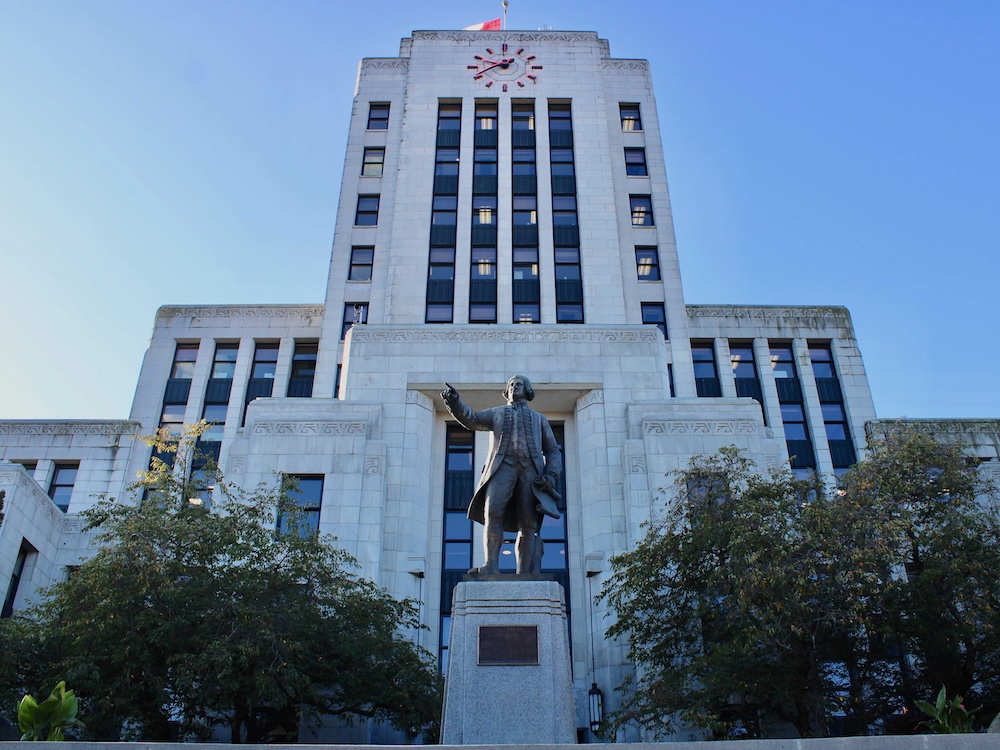
Opposition party COPE called it “the most opposed budget in Vancouver history.”
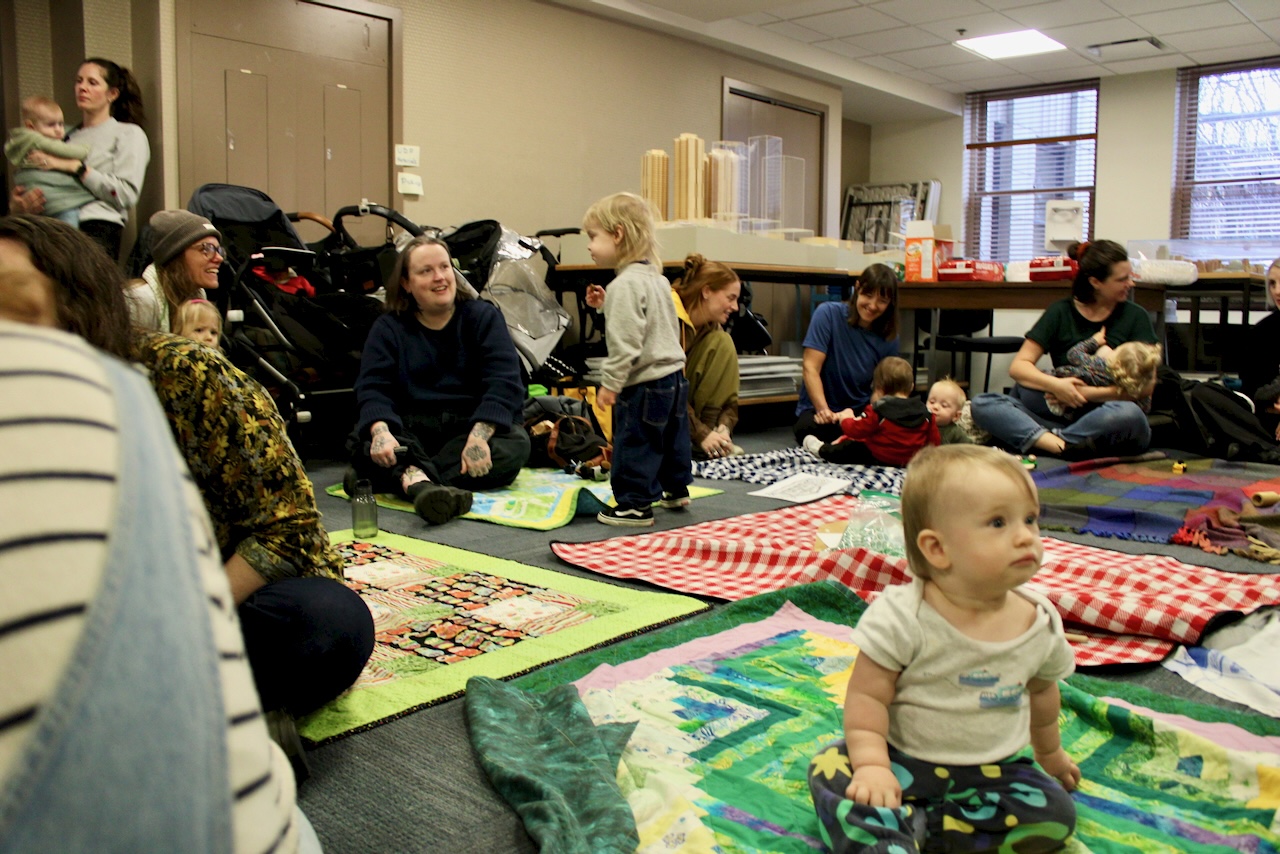
Parents brought their crying babies to protest it, following a marathon public speakers’ session that saw more than 600 people sign up to give council a piece of their mind.
But on Tuesday Vancouver city council passed a budget that promised to give homeowners a zero per cent tax increase, finally fulfilling a 2022 election promise.
The ruling ABC party promised the new budget would protect core services and maintain affordability for everyone in the city.
But councillors with the Coalition of Progressive Electors or COPE, OneCity and the Vancouver Greens warned it would result in savings for wealthy homeowners while services, grants and jobs are cut.
The devil is in the details of next year’s $2.4-billion operating and $894-million capital budgets. But staff won’t be providing those details to the council until the new year.
This left councillors and Mayor Ken Sim to vote on the “zero means zero” budget without knowing where the city will find $120 million in “revenue opportunities and expenditure savings” needed to pay for their zero per cent property tax increase. Utility fees, including water and sewer charges, will increase by 4.2 per cent on average.
With a majority on council, A Better City Vancouver, or ABC, passed the 2026 capital and operating budget, despite opposition votes from Independent Coun. Rebecca Bligh, Green Coun. Pete Fry, COPE Coun. Sean Orr and OneCity Coun. Lucy Maloney.
ABC councillors stated repeatedly that core services in the city would be protected without, as Coun. Brian Montague put it, “using property taxes as an ATM.”
ABC Coun. Sarah Kirby-Yung criticized opposition party members for “fear mongering” and spreading “misinformation.” Her evidence was the testimony of the residents who spoke to council about the budget, the vast majority opposed.
For example, Kirby-Yung cited a rumour that the city would be cutting its child-care spending by $18 million, which city staff have said is not the case.
“I think there’s been misinformation that Vancouver is not a family-friendly city,” Kirby-Yung said. “Child-care operating grant funding is proposed to be maintained at last year’s budget levels, in alignment with council’s direction to maintain community grants in the 2026 budget.”
Staff also confirmed that the city’s leisure access pass, a subsidized recreation pass for low-income residents, will not be affected by the budget.
As well, despite city staff raising the idea of removing baby changing tables and menstrual product dispensers from areas where they are subjected to vandalism during a budget discussion on Nov. 12, Coun. Lisa Dominato stated that was never a budget proposal but actually a past staff report recommendation.
Dominato’s motion to amend the budget to prioritize replacing broken change tables and invest in more durable materials passed unanimously. Menstrual product dispensers were not mentioned.
Clara Prager, civic engagement and advocacy manager for Women Transforming Cities, pushed back against comments from Dominato and ABC Coun. Peter Meiszner that fears about the removal of baby changing tables was “spin.” Prager helped organize parents who brought their babies to a “diaper change-in” protest at city hall Tuesday.
“The revelations about change tables came up because of the budget process, and the [deputy city manager] Armin Amrolia said this very clearly in response to a question about the budget,” Prager said, referring to an earlier council meeting when Amrolia made the comment in response to a question about the budget from Orr.
ABC councillors also maintained that media reports and public statements saying 400 city jobs would be cut, child-care funding would be slashed and the city’s sustainability department would close were not true.
ABC Coun. Lenny Zhou also rejected the results of the city’s budget survey, which found that only 10 per cent of respondents favoured a property tax freeze, because of an underrepresentation of residents whose first language is not English.
“Claiming that the survey results represent the entire city is not only factually wrong, it’s discriminatory, it’s colonial mentality,” he said, adding only eight out of the 6,400 responses were completed in a language other than English. Yet six per cent of the city’s population does not speak English.
Opposition councillors repeatedly said the lack of detail on where the $120 million would come from and the impact an austerity budget would have on the city’s most vulnerable residents were their reasons for voting against the budget.
“Budgets aren’t just numbers on a page; they’re moral documents. They reflect our priorities, values and the tangible impacts on our communities. When a budget lacks clarity and detail, it becomes impossible to fully understand those impacts,” said Fry.
“Approving a budget without sufficient transparency isn’t just a procedural risk,” he said. “It’s a risk to the people who rely on us for employment, and the public who rely on us for things that make our city livable.”
Exactly how the budget will be cut is unknown
Despite running in 2022 on a campaign that included a promise to provide line-item budget information, ABC councillors defeated an amendment from COPE’s Orr that would have seen staff redo the public budget survey with a zero per cent tax increase as its basis and provide a new line-item breakdown of the proposed 2026 budget.
Coming in at just 23 pages, compared with the 2025 draft budget’s 373 pages and 2024’s 506 pages, the 2026 draft budget has scant details on where city money will be spent.
It does include spending increases: 10 per cent or $46.2 million for police; six per cent or $12.2 million for fire services; one per cent or $1.2 million for parks and recreation; and three per cent or $2.1 million for libraries.
Orr noted library staff and their union have said the three per cent increase is not enough to offset their increasing costs.
“We will likely see cuts to hours, staff and services,” he said.
Further amendments to the budget saw $800,000 directed to the park board from elsewhere in the budget to offset fee increases for services like community centres; redirecting $8.3 million earmarked for energy retrofits in non-city buildings to street infrastructure repairs; and cutting a $300,000 patio fee increase for restaurants.
OneCity’s Maloney, who choked up when speaking about the 619 people in B.C. who died during the 2021 heat dome, noted the city’s energy retrofit program includes offsetting cooling costs and helping with energy-use reductions for non-profit housing. This includes single-room occupancy hotels — which house the poorest people in the city — that aren’t eligible for provincial energy retrofit programs.
“That’s pretty extraordinary, and highlights why I can’t possibly support this,” Maloney said, adding street infrastructure repair could be covered by fully funding the city’s engineering department, which will be cut by one per cent or $800,000 next year.
City staff also confirmed that federal energy retrofit funding often comes after the city has pledged money to a project, that they expected anywhere from 30 to 40 applications for the retrofit money in 2026, and that the majority of the city’s carbon emissions come from transportation and buildings.
“I hope history will be kind to this decision and we’re not faced with another heat dome and a catastrophic loss of life because we didn’t think that retrofits for cooling grants was worth it,” said Fry, who voted against the amendment.
In addition to the one per cent cut for engineering, cuts outlined in the budget include: 12 per cent or $6 million from arts, culture and community services; 14 per cent or $5.5 million from planning, urban design and sustainability; six per cent or $300,000 from mayor and council; and one per cent or $100,000 from the auditor general’s office.
In response to a question from Maloney, city staff confirmed a one per cent increase in property taxes would bring in $12 million in city revenue. A two per cent increase would bring in $24 million.
This budget will be the first in the last 25 years to achieve a zero per cent property tax increase, Coun. Mike Klassen said.
“You don’t have to go all that far back to see pictures and stories of cleaner streets, reliable services and a civic infrastructure that worked with clarity and purpose. In recent decades, we’ve seen the city of Vancouver has been moving away from that mentality,” he said, without detailing how the city has changed.
“The cumulative effect has been significant. Vancouver has been carrying responsibilities that belong to other levels of government, full stop. And our systems have become stretched in ways that they were never designed to manage.”
A zero per cent property tax increase was an ABC 2022 municipal election campaign promise. But past budgets under the ABC-dominated council have seen property tax increases ranging from 3.9 per cent to 10.7 per cent.
With councillors and the mayor facing voters again in fall 2026, ABC was finally able to bring that election promise to fruition.
With files from Jen St. Denis. ![[Tyee]](/design-article.thetyee.ca/ui/img/yellowblob.png)
Read more: Municipal Politics


Notice about commenting changes
The Tyee’s commenting system will be moving to a new platform on Nov. 12. If you’re already a Tyee commenter you must register with the new system on or after Nov. 12 with your preferred username.More information can be found here.