

 SHARE:
Gin 'wáadluwan gud ahl kwáagiidang (Northern)
Gina 'waadluxan gud ad kwaagiida (Southern)
“Everything depends on everything else.” — Haida proverb
In October, the Haida proverb above appeared as the epigraph to a major report, the “British Columbia Disaster and Climate Risk Assessment.” It’s a very apt summary of a complex and nuanced report on the risks British Columbians face in a century of accelerating climate change.
But by focusing on B.C. alone, the report ignores the disasters that will reach us from everywhere else.
We know disasters happen here and require careful preparation, whether to prevent them, mitigate them or recover from them. The report expresses a thoughtful, evidence-based attitude, enriched by many references to Indigenous experience and knowledge.
The assessment discusses the risk of five climate-related threats: riverine floods, coastal floods, extreme heat, wildfire, and drought and water scarcity. It adds a geological threat — a major earthquake, comparable to the magnitude 9 subduction quake that struck the B.C. coast on Jan. 26, 1700. And it examines how everything depends on everything else when, for example, an earthquake hits during a wildfire or extreme heat event.
This is not a prescriptive report. It simply looks at serious events that have happened before in B.C. and estimates the likelihood that they will happen again. It also examines their effect on “what we value,” including our communities, our ecosystems, our health and our prosperity.
That in turn gives governments, and voters, a sense of priorities for preparation, mitigation and resilience. How much should we expect to spend to prepare for and mitigate a major flood in the Fraser Valley? How much will it cost us to retrofit dwellings with air conditioning and strengthen the electric grid to keep those air conditioners running reliably? What spending is urgent, and what can be postponed — or even reserved — for post-disaster recovery and resilience?
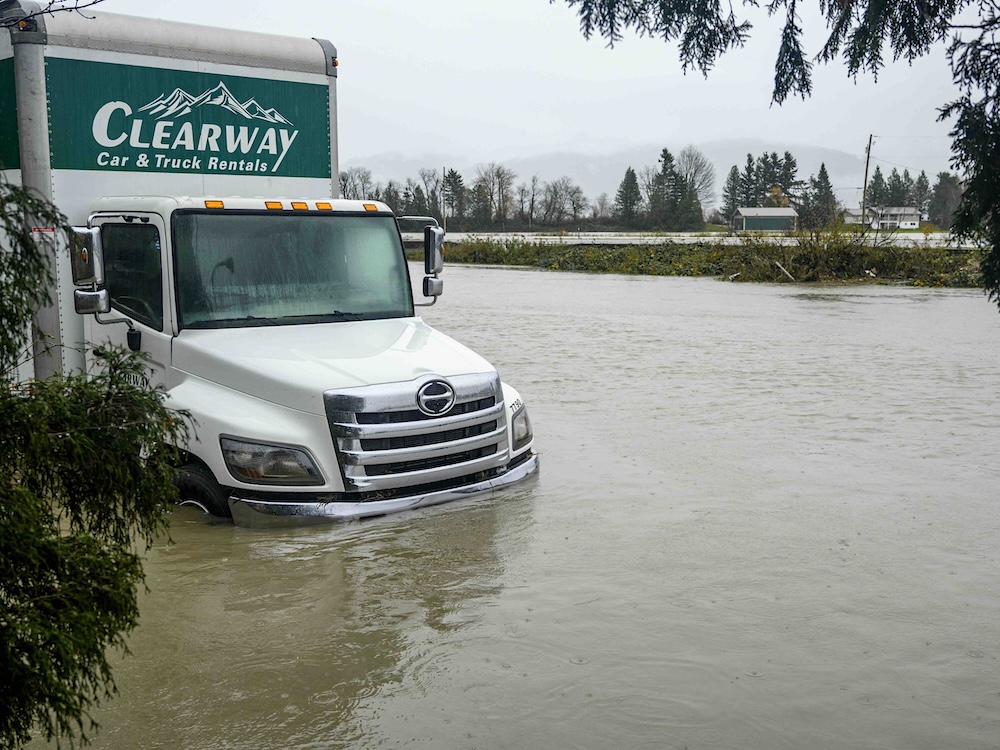
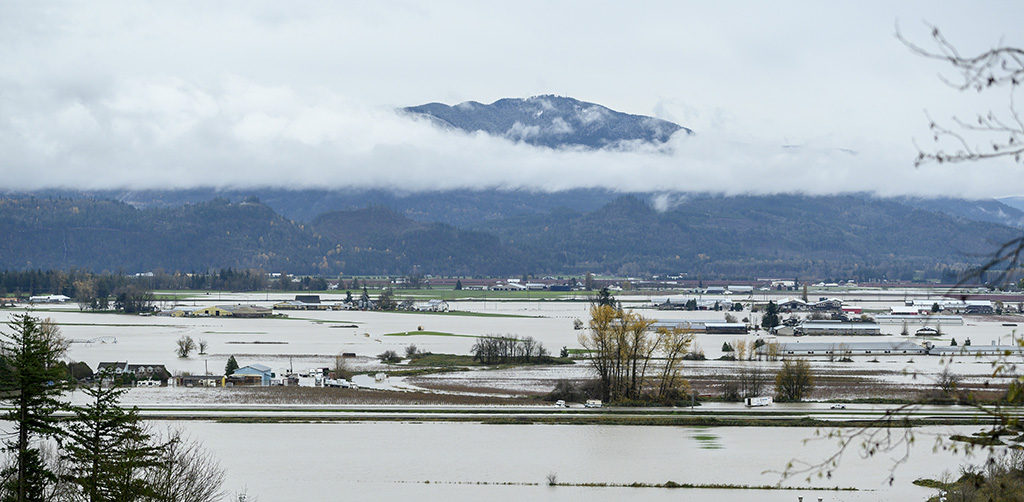
The “British Columbia Disaster and Climate Risk Assessment” report gives us a pretty good sense of the relative risks we face. Riverine flooding, for example, has happened so often that we should obviously never stop spending on building and maintaining dikes and drainage systems. (I think it would also be a good idea to stop building homes and whole communities on floodplains.)
Waiting for the ‘Big One’
A magnitude 9 subduction quake has hit the B.C. coast 19 times in the past 10,000 years, for an average of about 500 years between events. Our last such quake was on Jan. 26, 1700, so on average the next one isn’t due until sometime early in the 23rd century.
The report points out that such a quake would be more destructive and costly than all other disasters, combined, that B.C. has seen since the arrival of the Europeans. But its likelihood, the report says, is “remote.” In any case, whatever quake-proofing we might do today would likely be obsolete by the time a quake occurred. Better to leave it to the science and technology of our great-great-grandchildren.
Still, we should also remember the Fukushima disaster of 2011. Japanese engineers, using data from the 1960 magnitude 9 quake in Chile, built a seawall of about 3.1 metres, or 10 feet, between the sea and the Fukushima nuclear reactors. That seemed adequate for a worst-case scenario.
But the magnitude 9 quake of 2011 produced a tsunami of 15 metres that easily swamped the wall and resulted in the worst nuclear disaster since Chernobyl.
Like Fukushima, a magnitude 9 megathrust subduction quake off the B.C. coast is a low-probability, high-consequence event. If we can’t prepare for it, we can at least mitigate it. For example, the report says that in such a quake, “tall buildings and bridges in areas of deep soft sediments, such as the Fraser River Delta, will be shaken particularly hard.”
So a moratorium on further construction in such areas would at least reduce the number of people at risk. If older buildings in communities like Ladner and Delta can’t be seismically upgraded, they should be gradually demolished and not replaced.
This would be far easier said than done. People living in those areas, especially owners of homes and businesses, would resist being removed right up to the moment when the ground liquefied under their feet.
The report lists climate disasters far more likely than a megathrust quake: floods caused by heavy rain or sudden snowmelt are described as “frequent,” and the same is true of coastal flooding from storm surges and wind and wave action.
‘Low and slow’ heat waves
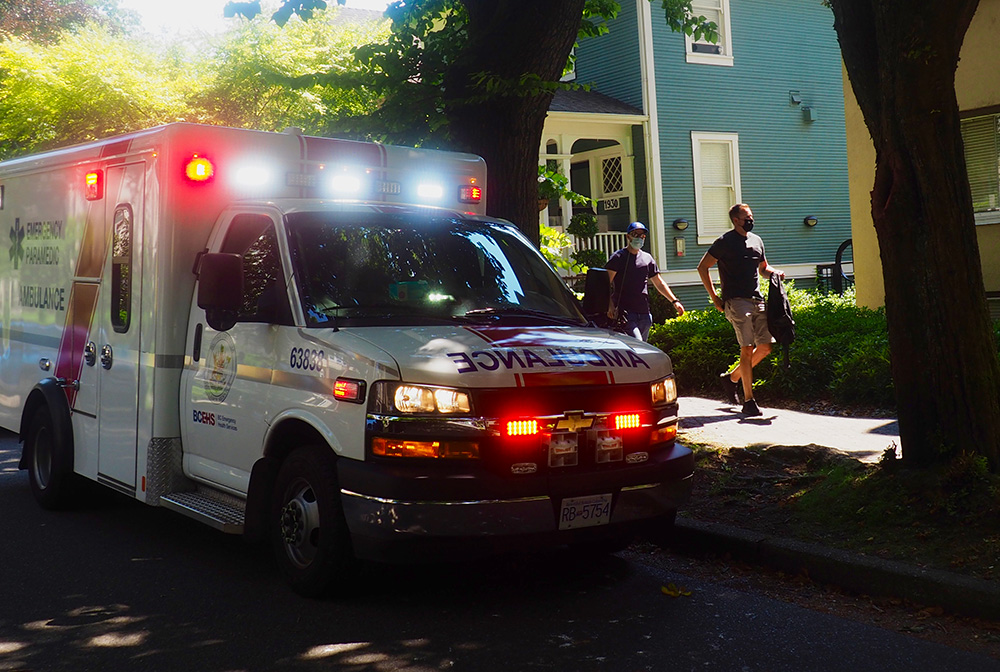
Sea level rise due to climate change, the report says, is a low-likelihood event. But “low and slow” heat waves lasting six or more days are highly likely and can result in wildfires, poor air quality, violent thunderstorms — and power loss over wide areas.
But in arguing for the likelihood of such events, the report makes some dangerous assumptions. In the report’s summary for policymakers, it considers events caused by global warming rises of 2.5 C and 4 C.
And it goes on to say:
“At the projected increase of 2.5 C (predicted to occur in approximately the 2050s), extreme heat events become possible or likely over about half the province and almost certain in some areas. At 4 C of warming (approximately the 2080s), extreme heat events become likely to almost certain throughout most of the province.”
Now we need to stop and reconsider these forecasts very carefully.
Everything depends on everything else, and reaching those temperatures depends on global emissions continuing to increase rapidly.
How hot, how soon?
According to the 2023 UN Climate Summit, “On a high emissions pathway, temperatures would rise 1.5 C by around 2026, 2 C by around 2039, 3 C by around 2060 and 4 C by around 2078.”
But a 2025 report by the UN Environment Program finds we are currently on a “medium-high” emissions pathway that will take us to somewhere between 2.6 C and 2.8 C by the end of the century.
This is still very bad. According to Mark Lynas in his 2020 book Our Final Warning: Six Degrees of Climate Emergency, at two degrees warmer, the Arctic Ocean will be ice-free in summer, melting permafrost will release 60 billion to 70 billion tonnes of carbon dioxide and methane, and the West Antarctic Ice Sheet will begin to slide into the Southern Ocean.
At three degrees warmer, Lynas predicts, both West and East Antarctic ice sheets will collapse, raising sea levels by 15 metres. From North Africa to Southeast Asia, high-humidity heat waves lasting weeks will make it impossible to work outside. Meanwhile, says Lynas, Eastern and Western Canada will still have enough rain to grow crops, while the Prairies will dry out.
Air pollution from Siberia
So B.C. will not be alone in suffering climate disasters, but we may well be alone in dealing with them. If B.C. enjoys the summer of, say, 2036 with little wildfire, Siberian wildfires could cause air-quality problems across Western Canada. And when we do have serious wildfires, don’t expect help from Australian or U.S. firefighters; they’ll have their hands full at home.
Drought on the Prairies in the late 2020s could sharply reduce grain exports from the Port of Vancouver while raising the price of wheat worldwide. And if temperatures make Saudi Arabia and the Gulf states uninhabitable, cargoes may have to go by sail power because fossil fuels will be too expensive.
We can also expect enormous social and political stress resulting from millions of climate migrants (many of them Americans) seeking safety in Canada. The stress could be even greater if we become climate migrants ourselves.
It’s very likely that we in B.C. will continue to suffer disasters magnified by climate change. And it’s even likelier that we will be affected by worse disasters happening around the world.
If we want to be both prepared and resilient, we will have to plan for disasters caused by others. Everything, after all, depends on everything else. ![[Tyee]](/design-article.thetyee.ca/ui/img/yellowblob.png)
Read more: Indigenous, Environment

Tyee Commenting Guidelines
Please note that email notifications for replies are not currently working due to a software issue which may be resolved in a future update.
Comments that violate guidelines risk being deleted, and violations may result in a temporary or permanent user ban. Maintain the spirit of good conversation to stay in the discussion and be patient with moderators. Comments are reviewed regularly but not in real time.
Do:
Do not: