


 SHARE:
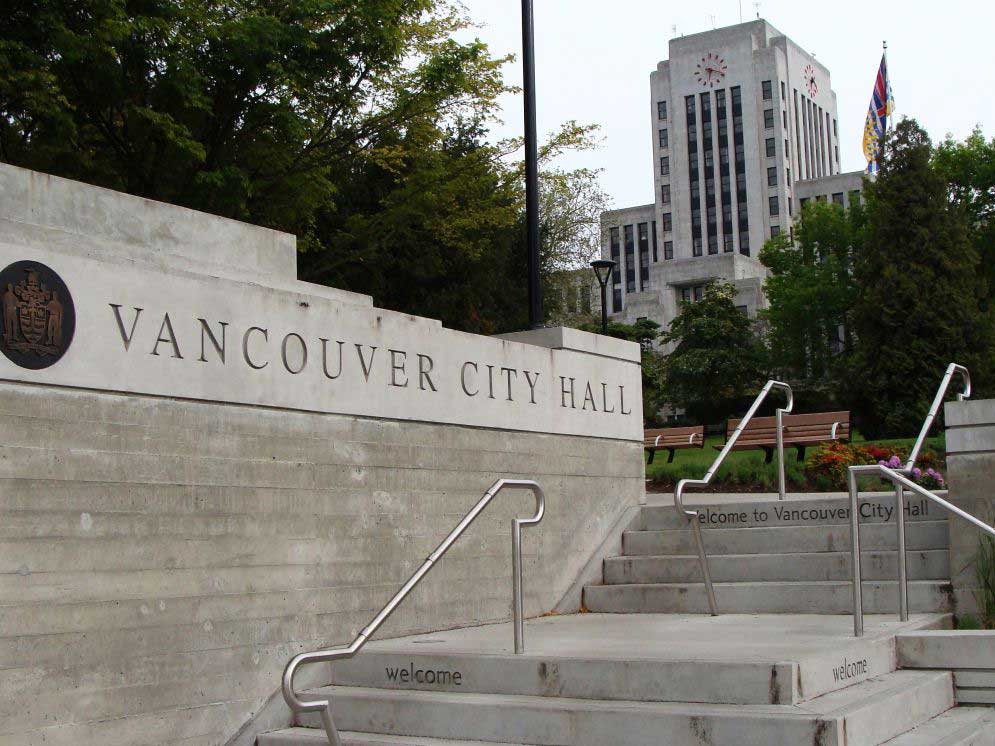
On March 10, Vancouver city council will hold a hearing on the adoption of the city’s first-ever Official Development Plan.
While that might seem routine, the stakes are far larger than they may appear.
The Official Development Plan is not simply another policy document. It represents a fundamental shift in how land-use decisions will be made in Vancouver. Because of recent provincial legislation governing housing approvals, the adoption of this plan could quietly but greatly change the way citizens can register their views about what gets built in the city, and for whom.
In fact, Tuesday’s hearing is not only about a plan. It is also about the future of public hearings in Vancouver.
A proposed critical change in citizen input
For decades, Vancouver’s planning system has relied heavily on project-by-project public hearings for rezonings. When a developer sought additional height, density, or a change in land use, council would hear from residents before making a decision. These hearings were often messy, sometimes exhausting and occasionally contentious. But they served an important democratic function: they created a visible space where citizens could participate directly in decisions that shape their neighbourhoods.
The system, of course, had its flaws. Public hearings could privilege those with time, resources and confidence to speak. Organized opposition sometimes dominated the conversation, and the process often stretched projects into long and unpredictable timelines.
But hearings also have served as one of the few formal moments when the public could see planning decisions unfold in real time — when councillors had to explain their reasoning, and residents could challenge assumptions directly.
The Official Development Plan signals a shift away from that model.
Under recent provincial housing legislation, rezonings that are consistent with a municipality’s official plan — particularly those involving residential development — can proceed without a public hearing. In some cases, hearings are explicitly prohibited.
In other words, once a city-wide plan establishes the general direction for growth, many individual projects that align with that framework may move through council without the familiar ritual of a public hearing.
This change reflects a broader transformation in planning systems across North America and beyond. Rather than debating each project, cities increasingly attempt to settle the big questions — where growth should occur, at what scale and in what form — through comprehensive plans. Individual developments are then evaluated primarily on whether they conform to that plan.
There are reasonable arguments for this approach.
A plan-led system can offer greater predictability for housing delivery. It can reduce the uncertainty that discourages investment or delays projects. And it can move debate away from the emotional intensity of individual projects toward broader discussions about citywide goals.
But a system that concentrates decision-making at the plan level carries its own democratic risks.
If individual project hearings disappear, the legitimacy of the entire planning system increasingly rests on the clarity, transparency and public understanding of the plan itself.
This is why Tuesday’s hearing is so significant.
Less transparency, fewer moments to check in
Once adopted, the Official Development Plan will serve as the framework for evaluating future rezonings. The plan’s Generalized Land Use designations — essentially broad categories describing the expected scale and intensity of development across the city — will function as the primary test of whether a project is considered “consistent” with the plan.
Projects deemed consistent may move forward without a public hearing.
That does not mean residents lose all opportunities for input. There will still be staff review, development applications and other points of engagement. But the nature of public participation will change. Instead of debating specific projects, residents will increasingly be responding to decisions already structured by the plan.
In practical terms, this means much of Vancouver’s future land-use debate is being relocated from hundreds of individual hearings to a single city-wide framework. Yet cities rarely emerge from a single act of design; they evolve through thousands of smaller decisions made over time.
This makes transparency and clarity more important than ever.
If residents are to accept fewer opportunities to debate individual developments, they must understand the framework guiding those decisions. They must know how land-use designations will be interpreted. They must be able to see clearly how staff determine whether a project is consistent with the plan.
Otherwise, the planning system risks creating a perception — whether accurate or not — that decisions are moving further from public view.
Placing trust at risk
Trust in planning institutions has never been more important. Housing affordability pressures, climate adaptation, infrastructure demands and population growth are forcing cities to make consequential decisions at unprecedented speed. Governments understandably want tools that allow them to respond more efficiently.
But efficiency must not come at the expense of democratic legitimacy.
Cities function best when residents believe that planning decisions, even difficult ones, are made through processes that are transparent, understandable and accountable. This does not mean that every project should trigger a prolonged public hearing. Nor does it mean that comprehensive plans are inherently undemocratic. Many cities operate successfully with plan-led systems that reduce discretionary approvals. But such systems depend on two conditions.
First, the plan itself must be clearly understood by the public. Residents should be able to see how its land-use framework affects their neighbourhood and what kinds of development it anticipates. Currently, this is not the case.
Second, the interpretation of the plan must remain transparent. When decisions move from council chambers to administrative determinations of “consistency,” the public must be able to see how those determinations are made. Without that transparency, residents may reasonably worry that planning decisions are moving further from public view.
The Official Development Plan represents Vancouver’s attempt to move toward a more structured, long-term planning framework. In many ways, that shift is understandable and necessary. Cities facing severe housing shortages cannot rely indefinitely on project-by-project negotiation.
But as Vancouver enters this new planning era, it must also recognize the democratic responsibilities that come with it.
The March 10 hearing, therefore, carries an unusual weight. It is not simply another policy adoption. It is a moment when Vancouver is deciding how planning will function for decades to come.
The question before council is not whether the city should plan for growth. That is inevitable.
Nor is it whether housing should be built. Vancouver clearly needs more homes.
The deeper question is how decisions about that growth will remain visible and accountable to the public.
Public hearings have never been perfect instruments of democracy. But they have long served as one of the few places where the relationship between planning decisions and the public interest becomes visible. As Vancouver shifts to a plan-led system, the challenge will be ensuring that transparency and accountability do not fade alongside those hearings.
Because in the end, the legitimacy of any plan rests not only on what it promises to build, but on whether people believe they still have a meaningful role in shaping the city that emerges. ![[Tyee]](/design-article.thetyee.ca/ui/img/yellowblob.png)
Read more: Municipal Politics, Urban Planning











Tyee Commenting Guidelines
Please note that email notifications for replies are not currently working due to a software issue which may be resolved in a future update.
Comments that violate guidelines risk being deleted, and violations may result in a temporary or permanent user ban. Maintain the spirit of good conversation to stay in the discussion and be patient with moderators. Comments are reviewed regularly but not in real time.
Do:
Do not: