


 SHARE:
President Donald Trump can cajole and bully in trying to convince everyone there will be a quick economic rebound from his shambolic war in Iran. The reality will deliver something different.
The war not only humiliated the United States’ standing in the world but casually unleashed global shortages of critical fuels and materials, including those essential for generating renewable energy and building electric vehicles.
Although many commentators have predicted that the rise in gas prices spurred by the closure of the Strait of Hormuz will accelerate the so-called “green” transition, try building an EV without aluminum. Or without copper, which can’t be mined without sulphuric acid. And try producing either aluminum or sulphuric acid without fossil fuels. It simply can’t be done without producing markedly less stuff or at much higher cost.
The Spanish physicist Antonio Turiel asks us to see modern civilization as a complex system that “depends on an industrial megamachine that produces everything that is needed for the industrial production” of daily life — and that includes technologies we like to think are hastening a transition to a time when we can live our current lifestyles while producing far fewer emissions.
In fact, Turiel notes, because the manufacture of renewables depends on the consumption of fossil fuels, they represent just another embedded compartment of the megamachine. China’s global domination of EVs, solar cells and rare earth metals, for example, is a calculated industrial strategy to dominate global markets currently reliant on coal-fired power.
As a result, Turiel has two words to describe the economic road ahead, whether a country has invested in renewables or not: “no normal.” A new reality is coming, he says, and it may rudely slap us in the face.
Follow the aluminum
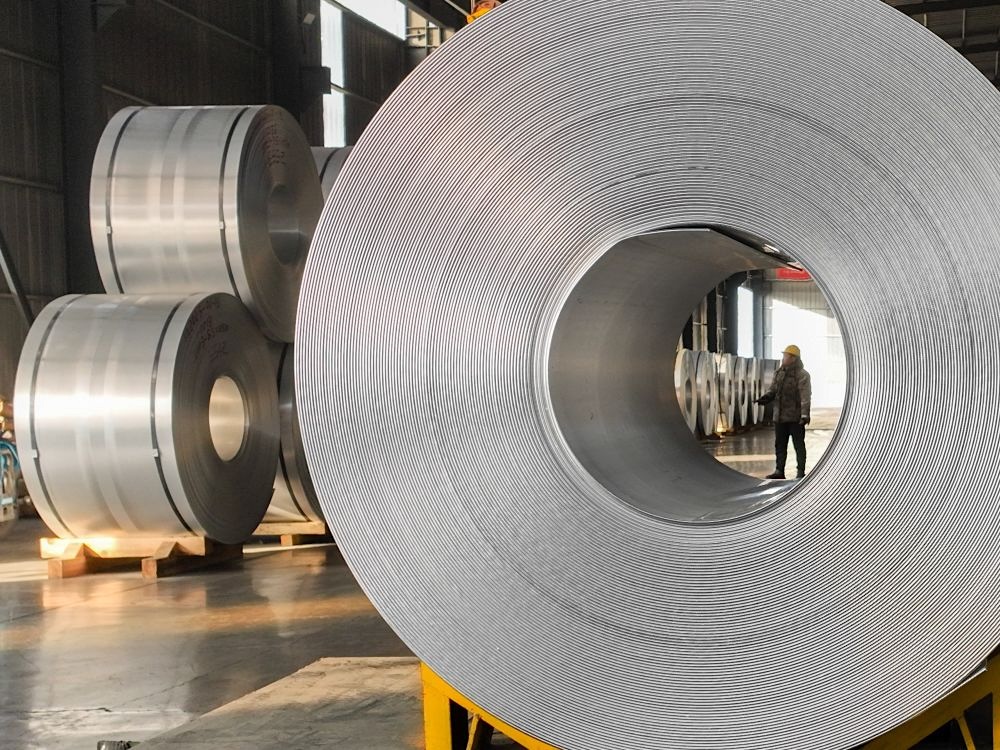
Aluminum, the light shiny metal that adorns electric vehicles and solar panels, has already delivered one slap.
The Persian Gulf processes nine per cent of the globe’s aluminum at six of the world’s most technologically advanced smelters and two alumina refineries — all powered by cheap and highly sour natural gas. It takes a lot of energy to make a sheet of aluminum. In fact, aluminum is the most energy-intensive of all metals, generating the highest carbon dioxide emissions at about 15 tonnes per tonne of metal produced. Fossil fuels, largely coal and methane, provide the energy for 70 per cent of the metal’s production.
Trump’s war upended production when Iranian missiles, in response to the bombing of Iranian steel plants, damaged two of the world’s largest production facilities: a United Arab Emirates smelter and another one in Bahrain.
As a result, seven million metric tonnes of the critical metal stopped passing through the Strait of Hormuz. So too did the raw product alumina, supplied by tankers from Australia. Which caused aluminum prices to rise to a four-year high at $3,672 a tonne on April 16 and even higher in June.
Aluminum is key to the construction of solar photovoltaic cells, transmission lines, windmills, batteries, military equipment and every smartphone.
A typical EV uses 25 per cent more aluminum than a combustion car, which means the war has just made these vehicles more expensive.
“The aluminum price impact is the most concerning coming from the war,” noted Alan Taub, a U.S. engineering professor, in the Wall Street Journal. “We are having an automotive affordability problem, with average sales prices north of $50,000.”
The United States gets about one-fifth of its primary aluminum from the Persian Gulf. Or used to. Automotive and packing industries are already scrambling and paying higher prices, which means more inflation for all of us.
Meanwhile China, which has a metals strategy and controls 60 per cent of the globe’s aluminum production, is buying more alumina and smelting more aluminum at premium prices. Coal-fired power dominates Chinese smelting.
The International Aluminium Institute now warns that global recovery from the aluminum shortage won’t be quick or tidy. “Even after an orderly shutdown, restarting a potline [the heart of a smelter] can take weeks or months, so supply chains may need many months to normalize. For facilities that sustained damage, recovery will take longer still.”
The sulphuric acid test
What about sulphuric acid? It is the most-produced industrial chemical on Earth — over 300 million tonnes a year. “The king of chemicals” was once so cheap and ubiquitous that the corrosive acid kept the technosphere humming in unexpected ways from water treatment to metal smelting.
But the chemical isn’t mined from the ground. It is the byproduct of other industrial activities. More than 60 per cent of the globe’s sulphuric acid is produced from raw sulphur that comes from refining of sour oil and natural gas. (Alberta’s tarsands make mountains of sulphur.)
The rest comes from mining and metal-making operations. The roasting of sulphide ores not only liberates nickel or copper but turns the sulphur into sulphur dioxide. The smelter captures the SO2 and converts it into sulphuric acid. Every nickel and copper smelter then operates as an acid factory.
Trump’s war blew up this supply chain. With the closure of the Strait of Hormuz, the world lost 50 per cent of the seaborne trade for sulphur, the key ingredient for the manufacture of sulphuric acid. As a result, prices rose by as much as 50 per cent in some regions of the world.
The disruption immediately extended to food production. Sulphuric acid, a cornerstone of modern fertilizer production, helps to convert raw phosphate rock into bits that plants can readily absorb. About half of the globe’s sulphuric acid goes to make fertilizer for industrial agriculture.
The blockage also had other consequences for metal processing. Sulphuric acid leaches Chile’s copper, feeds Indonesia’s battery-grade nickel production and helps to extract Kazakhstan’s uranium. Subtract the volume of sulphuric acid from these operations and global metal production declines. Period. Hardrock lithium processing illustrates the point. Sulphuric acid used to account for three per cent of its operating costs; now it’s 11 per cent.
In response to the Iranian supply shock, China, the world’s largest exporter of sulphuric acid, placed a full export ban on the product. To ensure its own food security, Russia also banned sulphur exports. Those bans and the Hormuz blockage sent shock waves through Chile and Indonesia, leaving their metal miners scrambling for product. As a consequence, Indonesia has curtailed nickel production because the high cost of sulphuric acid now makes mining nickel uneconomic in some cases.
One global firm, Kpler, noted that sulphur production can’t be easily ramped up in response to price surges. The market, it added, was “experiencing a supply shock with no short-term supply response mechanism — a rare and particularly dislocating dynamic for downstream industries with no alternative feedstock.”
Craig Tindale, an Australian entrepreneur and astute commentator on the material world, lays it out:
“The global energy transition is structurally dependent on the continuous, cheap supply of sulphuric acid. The diversion of acid to agricultural preservation, combined with extreme transport premiums and import dependencies, will chronically throttle the output of critical minerals.” The result? “Automakers and green-tech manufacturers must prepare for extended supply chain delays and radically revise cost assumptions for their electrification targets through 2030.”
Living in the polycrisis
The suddenly crimped flows of aluminum and sulphuric acid highlight the world’s new geopolitical drama where might makes right and a raw power struggle between the United States and China is unfolding in real time, adds Tindale.
While the United States uses oil as a cudgel to protect its interests, China has monopolized and weaponized rare earth metals. Iran, of course, stands in the middle as a critical supplier of fossil fuels and essential minerals to China. The ill-conceived war represents another skirmish over the control of what Tindale calls “the physical substrates of power: energy, metals, refining, grids, shipping, computing, and the industrial systems that make military and economic life possible.”
In a recent interview, Helen Thompson, a British historian and the author of Disorder: Hard Times in the 21st Century, reckons the world is now moving from a trajectory of economic growth to polycrisis because of dramatic geopolitical changes in energy, financial and material flows. “In one sense there is more risk-taking now because there are only high-risk options, especially geopolitically,” notes Thompson.
What she finds interesting about Trump “as a political phenomenon is that he seems psychologically to thrive on risk-taking and aims to bring about change by the sheer capacity to disrupt, regardless of where the change lands.”
Wherever the change goes, and even if the dubious Iran "deal" holds, it plants us precariously in the land of no normal. ![[Tyee]](/design-article.thetyee.ca/ui/img/yellowblob.png)
Read more: Energy, Politics, Environment







Tyee Commenting Guidelines
Please note that email notifications for replies are not currently working due to a software issue which may be resolved in a future update.
Comments that violate guidelines risk being deleted, and violations may result in a temporary or permanent user ban. Maintain the spirit of good conversation to stay in the discussion and be patient with moderators. Comments are reviewed regularly but not in real time.
Do:
Do not: