


 SHARE:
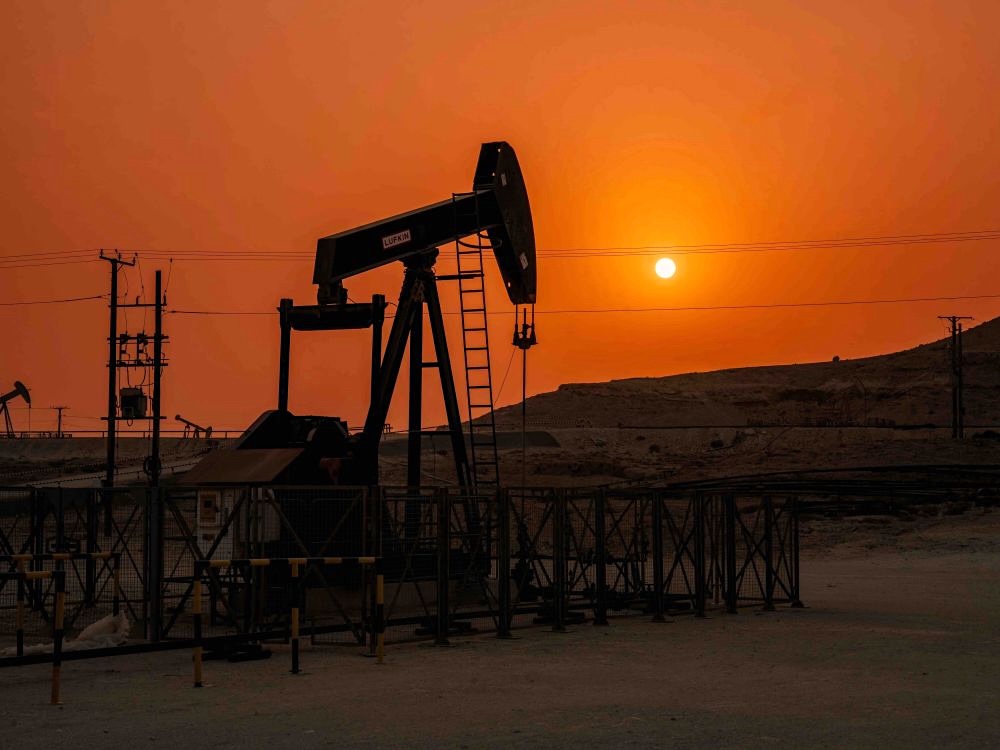
While residents of Iran suffer the consequences of a senseless war, the impacts ripple across the globe in the form of price spikes for gas and other commodities. And the Canadian oil and gas industry has been laughing all the way to the bank.
Since the war began when the United States and Israel attacked Iran on Feb. 28, Canada’s oil industry has been making an extra $170 million every day. In the first month of the war alone, those profits exceeded $6 billion, three times what the industry made before the war began.
And if oil prices remain this high for the next 12 months, Canadian oil companies are set to make $90 billion in net profits.
What are Canada and B.C. doing to address this sudden explosion in earnings by the industry responsible for torching our planet?
As of now, nothing. True, provincial revenues will see a boost due to higher royalty incomes, as these are linked to oil and gas prices, and both provincial and federal revenues will benefit from higher corporate income tax payments. But this extra income comes at the expense of households facing higher prices for anything oil- and gas-related.
In response to these higher prices, the federal government instituted a temporary cut to federal fuel taxes, but this reduction is often quickly hoovered up by the oil and gas companies, with little benefit to consumers.
Former Canada Energy Regulator chief executive officer Gitane De Silva recently noted that the current high price of oil is a “double-edged sword” for Canada. While the government is bringing in greater royalty revenues, she notes, higher prices make a recession likelier over time. And Canada’s pausing of the federal fuel tax will be difficult to undo.
De Silva emphasizes the importance of helping Canadians in the long term, perhaps through a GST rebate program or other avenues that would “recycle money through the economy.”
What we desperately lack is a policy that redirects some of the excess oil profits back to the public.
A windfall profits tax could rein in these exorbitant numbers and reallocate the funds towards public services and income transfers for lower-income households.
Canada has done it before. Why not now?
This tactic has been deployed throughout history, most recently during the COVID-19 pandemic, when the federal government implemented a windfall profits tax on the financial sector. This was a one-time 15 per cent levy on taxable income above $1 billion to ensure that banks and life insurance groups were doing their part to support pandemic recovery.
If Canada implemented a 15 per cent tax on excess oil industry profits over the next 12 months, it could generate $9 billion. A 75 per cent tax — the percentage applied to excess corporate profits at the start of the Second World War — could generate $46 billion.
And take note: four of Canada’s biggest oil producers are 60 per cent U.S.-owned. Continuing to let these profits accumulate unchecked means pouring more funds into the very economy our leaders are supposedly adamant about distancing ourselves from.
Windfall, or excess, taxes become relevant in exceptional circumstances, such as wars or pandemics. In such times, when companies or industries begin to make profits above their norm (profits unrelated to individual business acumen), government intervention becomes necessary.
The good news for our governments is that windfall taxes are politically popular.
New polling conducted by Elbows Up for Climate, an alliance of nearly 300 climate-concerned mayors and councillors representing more than half of all Canadians, shows national public support for a windfall tax on oil and gas at 66 per cent.
While support is highest in Quebec (73 per cent) and Ontario (69 per cent), support is also high in B.C., at 63 per cent.
Even in Alberta, a province dependent on oil and gas revenues, over half of residents like this idea, as do 55 per cent of Conservative voters.
The polling indicates that, were the oil and gas industry to be taxed, respondents’ No. 1 preference for reallocating those revenues is a direct rebate to households. These funds could also be put towards public transit improvements, building retrofits and other future-forward investments that transition us away from fossil fuel reliance.
Civil society groups are already organizing around a windfall profits tax, as are municipal elected leaders.
This is a political winner.
The illegal war in Iran needs to end. In the meantime, our governments need to take the initiative to rein in corporate greed, invest in the well-being of Canadian families and urgently shift our country away from a dying industry. ![[Tyee]](/design-article.thetyee.ca/ui/img/yellowblob.png)
Read more: Energy, Politics, Environment








Tyee Commenting Guidelines
Please note that email notifications for replies are not currently working due to a software issue which may be resolved in a future update.
Comments that violate guidelines risk being deleted, and violations may result in a temporary or permanent user ban. Maintain the spirit of good conversation to stay in the discussion and be patient with moderators. Comments are reviewed regularly but not in real time.
Do:
Do not: