



 SHARE:
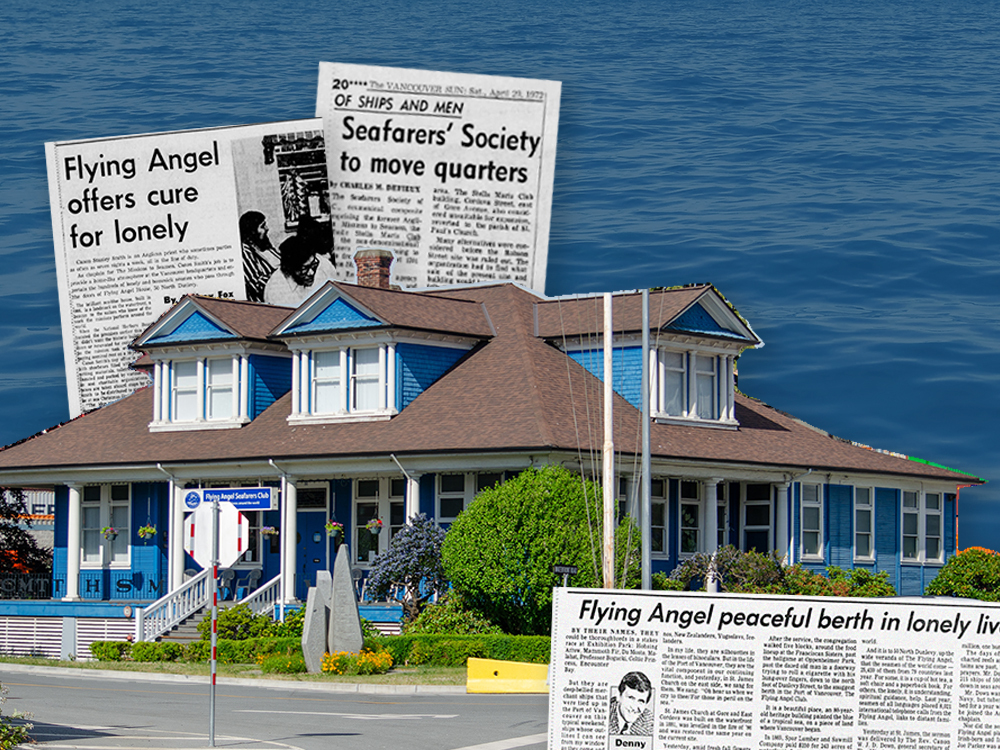
Down by the water of Burrard Inlet, past a barbed-wire fence and along the bustling industrial road that runs across the Port of Vancouver, sits a sea-blue two-storey house.
It seems a little out of place, sandwiched between the industrial scaffolding of DP World terminal and rows of colourful metal shipping containers on railcars.
But the 120-year-old house is one of the oldest buildings at Canada’s biggest port, and for more than a century the site has played a central role in the growth of Vancouver and its port.
For the past 52 years, the building has been home base to the Vancouver chapter of the Mission to Seafarers — also called the Flying Angels Club — and serves as a gathering place for international seafarers who pass through the Port of Vancouver.
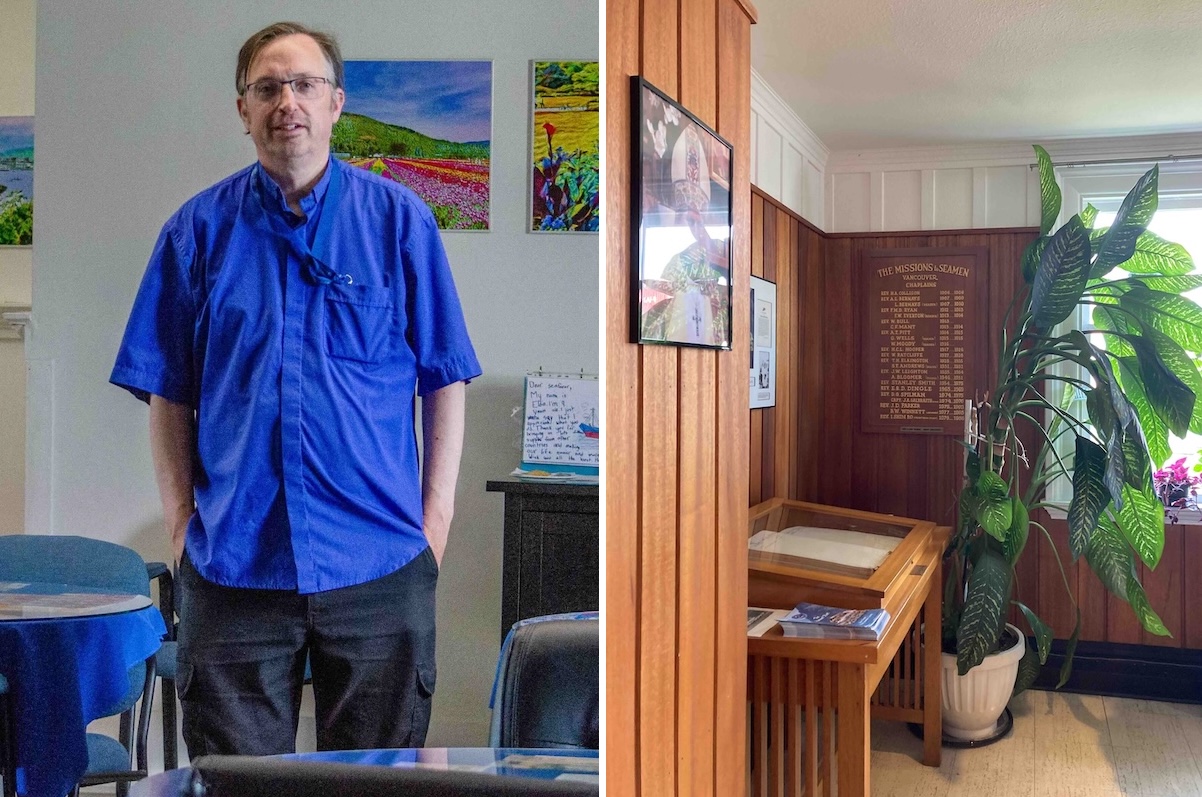
“I call it the big blue house,” said Rev. Peter Smyth, senior port chaplain.
Smyth helps run the Vancouver mission alongside a team of volunteers and two other chaplains. These days, they work to support and advocate for seafarers of diverse backgrounds, regardless of faith.
“We’re about caring about seafarers’ welfare and the betterment of their situation.”
A school, a mill and a port authority
The site has a long history steeped in international sailing and timber.
The land falls within the traditional and unceded territories of the səlilwətaɬ (Tsleil-Waututh), Sḵwx̱wú7mesh (Squamish) and xʷməθkʷəy̓əm (Musqueam) nations.
These waters are significant to the Tsleil-Waututh Nation’s history and culture. Called səl̓ilw̓ət, the inlet yielded schools of herring, salmon and clams.
With colonization came industrial development — as reported by the Narwhal, settlers tossed dynamite into the waters while industrializing the waterfront, destroying habitat and decimating the herring population.
As settlers developed Vancouver, the waterfront site would become central to the burgeoning city.
The Spar, Lumber and Sawmill Co. paid $250 for 243 acres of the waterfront in 1865, according to a Sept. 23, 1985, column in the Vancouver Sun. The site was later renamed Hastings Mill and served the BC Mills, Timber and Trading Co.
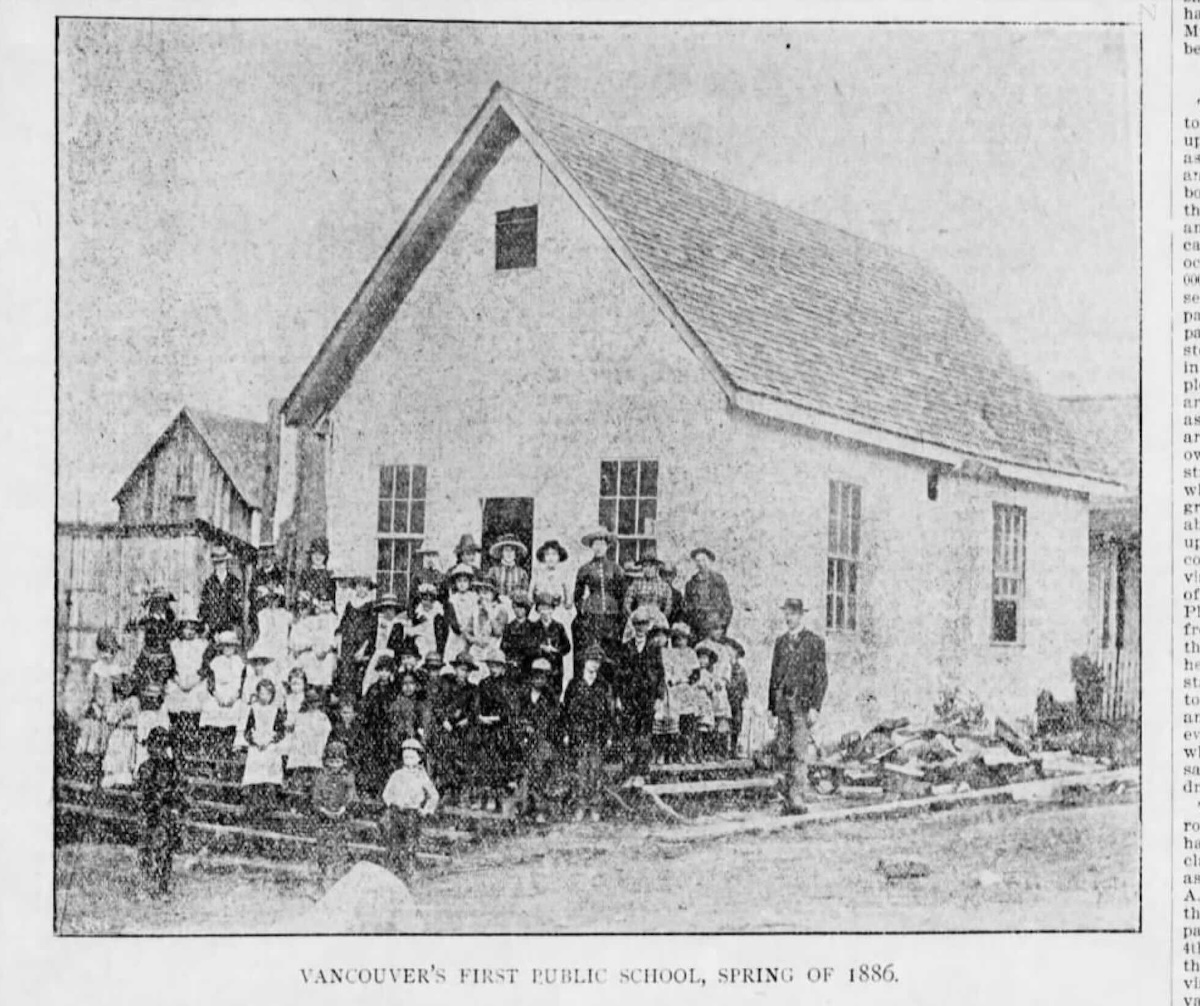
Vancouver’s first public school was built on the same site, according to an 1894 Vancouver Daily World article.
The two-storey house that now stands at the site was first built in 1905 or 1906.
While today the house stands next to a busy grain terminal and industrial dock, Smyth said that when it was first built the house stood right next to the ocean, with a front-row view to timber being loaded onto ships for export.
The BC Mills, Timber and Trading Co. built the house to demonstrate the uses of B.C. wood to prospective lumber and home buyers, according to a plaque from the City of Vancouver heritage conservation program.
The building served as the office for the Hastings Mill Co., with some of the individual rooms panelled in a different type of wood, including fir, hemlock, red cedar and balsam. The rooms were painted white in the 1920s, according to the conservation program.
The Vancouver Harbour Commissioners — now called the Vancouver Fraser Port Authority — bought the land and the building and turned it into its headquarters in 1930, according to the plaque.
It quotes a Vancouver Harbour Commissioners 1930 monthly report, saying that “the site on which these offices are located is one of historical value, for around it was built the City of Vancouver.”
The National Harbours Board — later a Crown corporation called Ports Canada — took over the building when it was established in 1936.
Enter the Flying Angels Club
Anglican Rev. John Ashley established the charity Mission to Seafarers in Bristol, England, in 1836, according to the organization’s website. A number of Anglican ministries followed, opening up charities dedicated to supporting seafarers experiencing isolation at ports across the world.
“It is a lonely job,” Smyth said. “You’re away from your families for long periods of time.”
According to Smyth, the mission evolved out of the St. James Anglican Church around the end of the 19th century. The chapel within the Mission to Seafarers in Vancouver has a list of chaplains going back to 1906.
While the mission had previous homes on West Hastings Street and at 1301 Robson St., in the early 1970s it moved down to the port, according to the Vancouver Sun.
The mission settled in its new location when the National Harbours Board vacated its office in 1973.
More than 50 years ago, the building looked similar to today, according to a 1973 Vancouver Sun article.
“The brilliant sea-blue house, built in 1906, is a landmark on the waterfront, a beacon to the sailors who know of the work the missions perform around the world,” wrote reporter Audrey Fox.
Volunteers staffed a small canteen selling coffee and snacks, Fox wrote. The main floor was furnished with tables made from cut-down beer barrels and decorated with nautical-themed tablecloths.
There was a television room, a lounge, three or four games rooms and an office for seafarers to make phone calls. The mission operated a souvenir shop where sailors could buy Canadian-made goods.
“Canon Stanley Smith’s tiny office is piled high with shoeboxes filled with small gifts, writing materials, toiletries and candy,” Fox writes.
“The boxes are taken aboard ships by Canon Smith to be distributed to men who will be at sea Christmas Day.”
In the first four weeks since it opened, Fox writes, 782 seafarers from 17 countries signed the guest register. Women from Vancouver would come down to the mission to spend time with the sailors, who had spent weeks or months isolated at sea, Fox wrote.
The mission would put on dances — complete with a disco ball hung in the main foyer — sell beer and host holiday dinners for sailors away from home.
Two years later, 12,711 seafarers had signed the club’s guest book, according to a 1976 article in the Province. The mission would help similar numbers of sailors until the turn of the century.
Over the next decades, the mission would become a space for seafarers to rest, relax and socialize. It’s now on the port’s private property, behind high metal-wire gates that make it more difficult to visit.
When COVID-19 restrictions left seafarers stuck on board ships in the Port of Vancouver during Christmas 2020, the Mission to Seafarers brought food and gifts to the workers.
Then-Mission to Seafarers chaplain Rev. Gary Roosma told CBC that winter that travel restrictions were blocking seafarers from travelling home — noting one man had been stuck on a ship for 17 months without a single day off.
Today, the building does not look much different than it did 50 years ago. It still has a sea-blue coat of paint over its original structure made of B.C. timber. The mission still sells snacks, beer and Canadian souvenirs.
In one room on the ground floor is a pool table that Smyth estimates has been in the building as long as the mission has. In the corner is a small library of donated books, and through another doorway sits a foosball table.
One of the building’s offices is still piled high with boxes — although these are filled with snacks, or sport the Amazon logo.
But there have been changes, too. The tables in the main hall are glass-topped, no longer fashioned from beer barrels, and decorated with paper money from countries across the world.
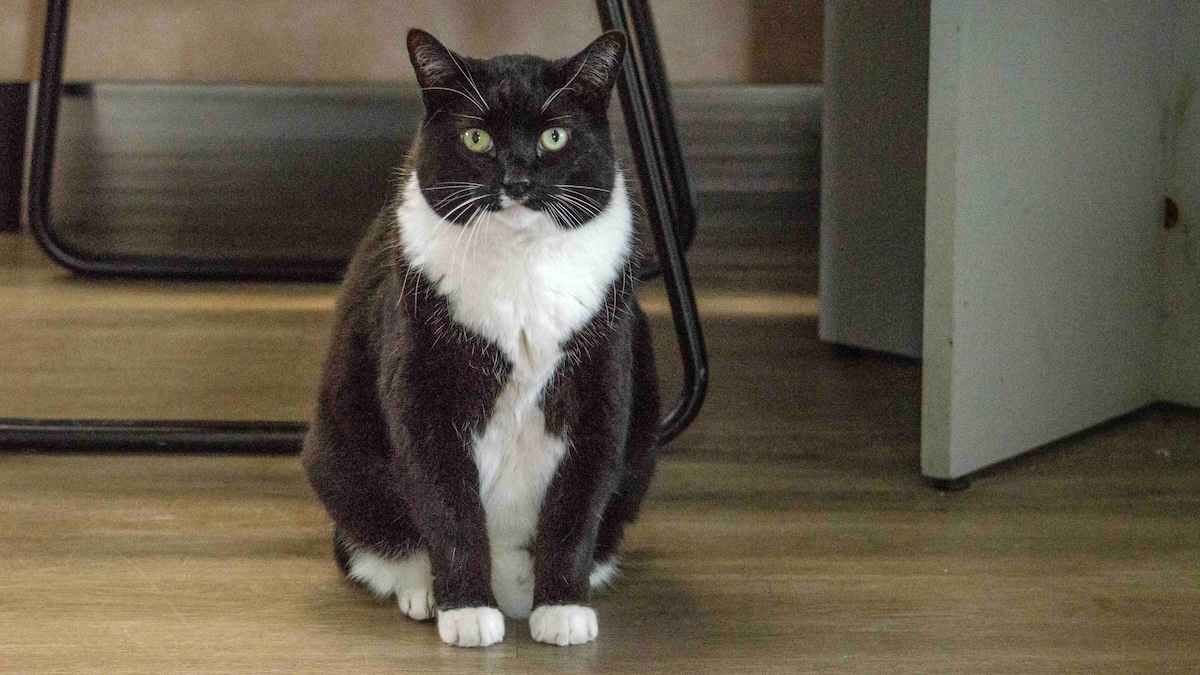
It’s now also home to a black tuxedo cat named Archie.
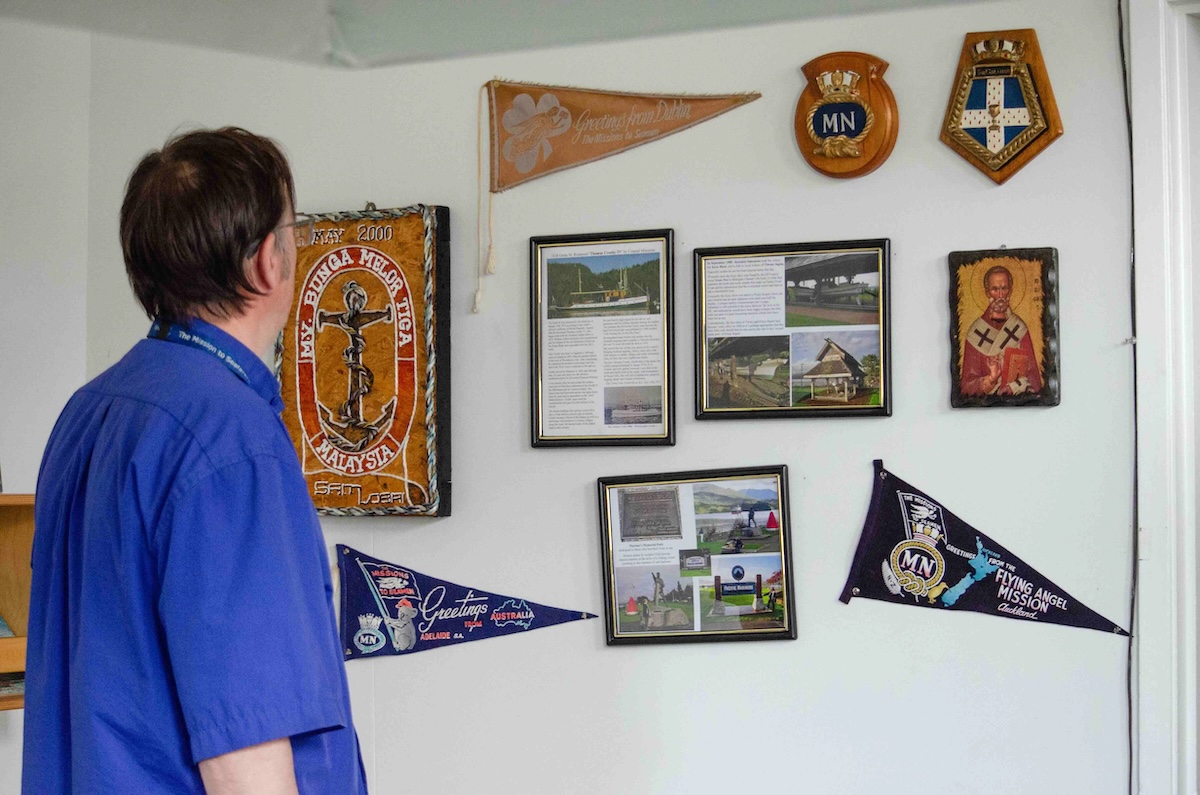
A disco ball has been taken down from the main hall, and the house no longer hosts dances or large parties. Instead, Smyth said, seafarers use the space to connect to Wi-Fi, sleep or just pass through on their way into the city.
“They don’t have the time to come ashore like they used to,” Smyth said. “It’s a different generation of seafarers nowadays, a new generation.”
International ship crews have shrunk from approximately 40 people to fewer than 20 — meaning they have more work to do, with less downtime to spend ashore. While a few decades ago ships would stay at shore for weeks, Smyth said now they dock for only a couple of days.
Smyth has worked at the mission for about nine years, he said. He estimates that these days, he sees approximately 4,000 seafarers pass through the mission annually.
The charity has also become an advocate for seafarers’ issues in Canada. When seafarers run into visa trouble or have workplace issues, it’s often Smyth who raises the issue to the federal government or their union.
Other services are more banal. Smyth said that the day before sitting down with The Tyee, he helped one seafarer get a document home to China by dropping it off at a FedEx and making sure it was sent to the right place.
The mission’s religious services have changed too. Smyth said he’s often giving seafarers directions, or rides past the port gates into the city. If seafarers are religious but not Anglican, Smyth helps them find temples, mosques or other places of worship, he said.
He said he rarely gives services at the mission’s chapel anymore and instead leads worship on board boats at seafarers’ request. He often provides services for seafarers who die at sea.
Smyth also goes to visit sailors on board ships just to check on them.
“We go on there for them, whereas everyone else is going on board for the cargo or for inspections,” Smyth said. “We’re concerned about their mental, spiritual well-being.”
That concern is one reason the mission goes by another name — the Flying Angels Club. Its logo, a flying angel, was inspired by a verse from the Book of Revelation about an angel flying through the air bringing good news to all.
An image of an angel adorns the stained-glass panel above the mission’s front door.
“It’s a symbol of going out and being a carer,” Smyth said. “It's our mandate to care for all seafarers. It doesn’t matter what religion they are or anything — they’re a person, and we care about them because they’re seafarers.” ![[Tyee]](/design-article.thetyee.ca/ui/img/yellowblob.png)
Read more: Health, Labour + Industry










Tyee Commenting Guidelines
Please note that email notifications for replies are not currently working due to a software issue which may be resolved in a future update.
Comments that violate guidelines risk being deleted, and violations may result in a temporary or permanent user ban. Maintain the spirit of good conversation to stay in the discussion and be patient with moderators. Comments are reviewed regularly but not in real time.
Do:
Do not: