



 SHARE:
[Editor’s note: The Tyee has secured permissions to republish this article from Magic Canoe, a storytelling platform that publishes narratives of a bioregional future, a future where communities are woven deeply into nature, place and one another. The purpose of Magic Canoe is to be a champion of What Works by uplifting stories of bold changemakers and communities within Salmon Nation.
Magic Canoe is guided by Indigenous values, while each story organizes around watersheds and across boundaries, following life systems within Salmon Nation to exchange ideas, practical solutions and abundance.
Magic Canoe demonstrates this future through exciting narratives and learning resources, to illustrate that transformation is not only possible — it’s happening now.]
Want to draft a letter to your secret crush? AI can probably help you. Want to know what your dog would look like as a middle-aged man? There’s an AI tool for that, too — one that can mock a picture up to show you. Want help diagnosing a slurry of mystery medical symptoms your doctor can’t figure out? Ask AI.
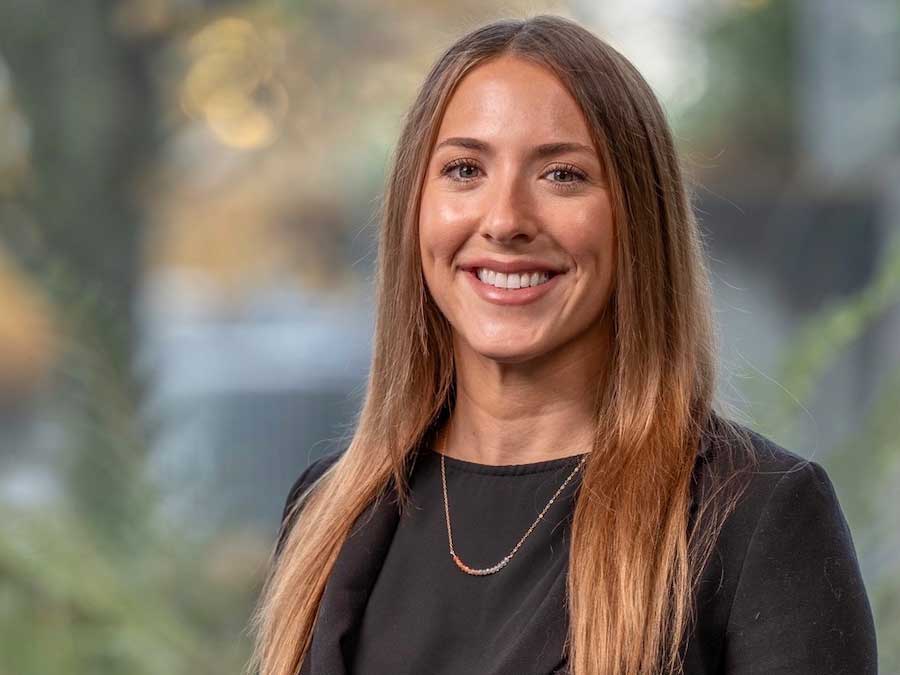
But if you want to write an algorithm that can build trust with Indigenous Peoples, you might have to ask Ashley Cordes for that.
Cordes, an associate professor of Indigenous media at the University of Oregon, has dedicated her career to researching how emerging technologies like AI, cryptocurrency and blockchain can be leveraged in service of Indigenous sovereignty.
For her, a citizen of the Kōkwel/Coquille Nation, the connection between complex codes and Indigenous knowledge systems was obvious.
“Indigenous people have been working on these technologies [of encryption] for thousands of years,” Cordes says. “A woven basket is an algorithm, a step-by-step method of production that aligns with and communicates decentralized messages.”
These complex codes are, at their core, Indigenous technologies, and we’d do best not to forget that now that AI has become ubiquitous, Cordes warns.
The Kōkwel/Coquille Nation is located near what is now called Coos Bay on the central Oregon coast. But Cordes grew up in the Simi Valley, outside of Los Angeles, where her family had lived for three generations.
Southern California had become an area of diaspora for many Kōkwel women in the decades after Oregon gained statehood and colonialism started to feel inescapably entrenched. Cordes’ great grandmother was likely the first person in her lineage to leave the Kōkwel Nation’s territory in at least 13,000 years.
Cordes returned to Oregon in 2014, when she began a PhD at the University of Oregon in Eugene. She had worked in journalism and media studies, focusing mostly on practices or representation — but had come to understand that academia and government policies were, themselves, forms of storytelling. Both were ways of describing the past and articulating the future.
When she arrived in Eugene — a town a few hours away from the Kōkwel Nation but close enough to share the same camas flower ecology and salmon-relative-bearing streams — storytelling took on new meaning. She decided to write her PhD on Indigenous currencies.
“I chose currency as an object [of study] because these are connective belongings,” Cordes says. Back on her family’s traditional homelands, she felt a renewed sense of belonging everywhere. Her late aunt and sister of the late Kōkwel Chief/Head man took turns driving her to sacred spots around the territory. Here, she collected shells, learned old stories, and put her feet in the water every chance that she could.
Returning to these ancient landscapes, she says, “I feel place-based knowledge surging through me. The materials from that earth are in my body. They live inside the genetics that my people have developed over tens of thousands of years” — genetics that had shifted and responded to their material inputs, much like an AI algorithm would.
When Cordes first began working on transformative technologies, AI was all over the news.
Now, the slurry of headlines seem to fall on a spectrum that ranges from Quirky to Extremely Bad.
That these technologies come with inherent risk isn’t lost on Cordes. Their current mainstream uses, Cordes says, are being “perverted by bad actors in a broken, capitalist system,” that Silicon Valley’s ethic of move fast, break things, build for obsolescence has encouraged developing AI at the expense of slowing down long enough to think about “the data storage, the energy demand, the land and waters being impacted by these servers.”
Current power structures are feeding AI to the biggest cash cows, like the U.S. military, which signed a $200-million contract with OpenAI this June.
As it is currently being built, “AI will be used to control, surveil and enact racism,” Cordes says.
“But it doesn’t have to be this way.”
Abundant intelligences
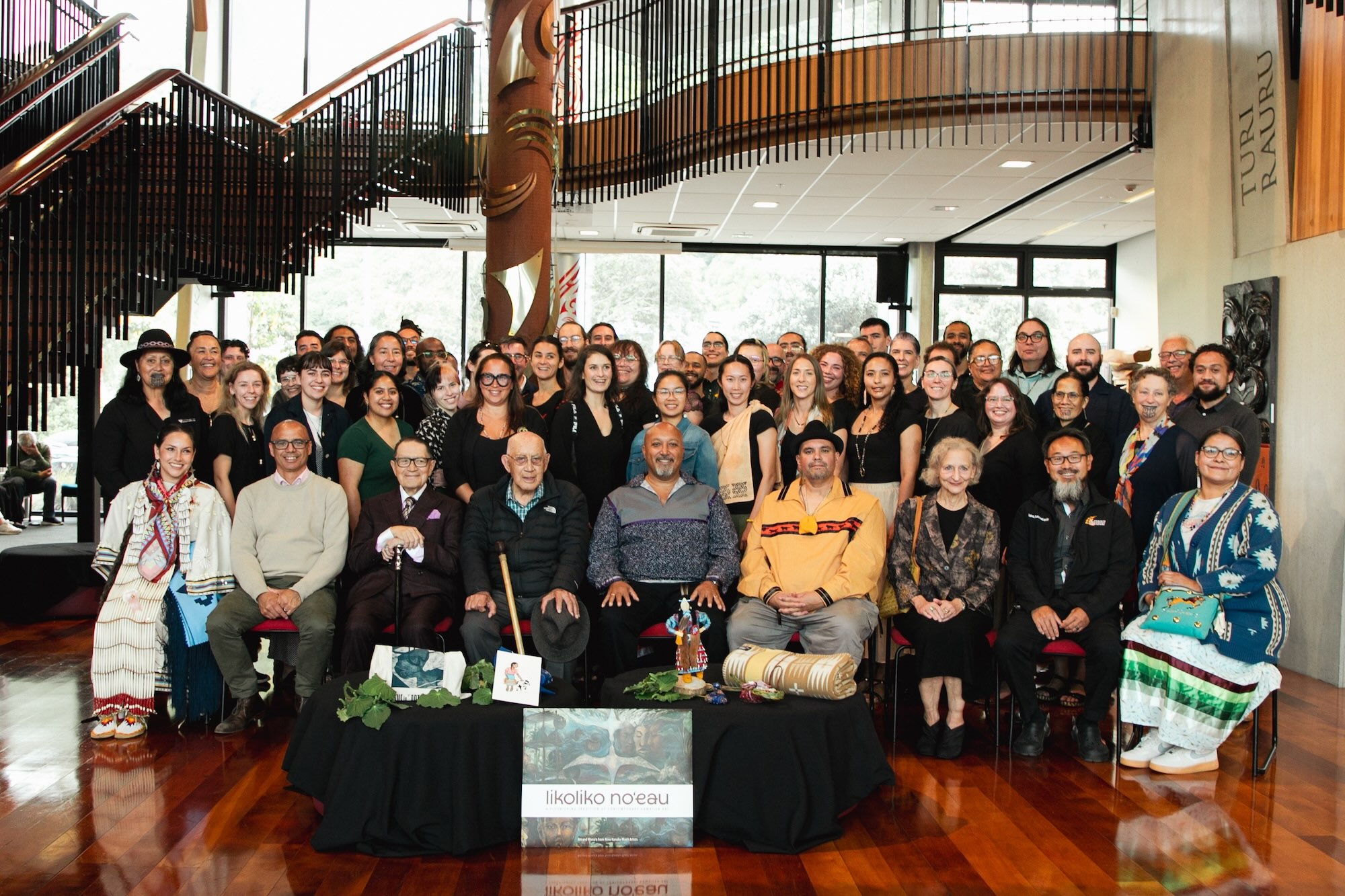
Cordes is part of a growing movement of Indigenous thought leaders — including the Abundant Intelligences Research Collective, of which she’s a co-investigator, based at the Indigenous Futures Research Centre at Concordia University in Montreal — who see technological advances like AI, blockchain and cryptocurrency as opportunities.
She grew up hearing Elders warning her about the unintended consequences of technology — but the lesson hidden within these legends wasn’t that one should run from the changing world. Rather, it was that the consequences could be tended to, as one would tend to any other aspect of life.
AI is a wildly consequential technology, but its consequences have not yet been crystallized into irreversible certainty. Any transformative shift in society’s economy is also a potent opportunity for a transformed society.
Every new technology is an invitation, and, in Cordes’ view, each innovation presents an opportunity to reassess colonial legacies, to assert Indigenous knowledge systems that have been disenfranchised by existing socio-technological systems.
In other words, Cordes knew that anytime a code was written, a new algorithm developed or a cryptocurrency exchanged, there was a new chance to encode Indigenous epistemology.
“Economies become templates for how we live our lives,” Cordes says. “The things we exchange have a profound impact on how we structure our lives, how we structure the environment.”
Any piece of technology — which includes currency — is a critical carrier of cosmology. A person’s place in the world is re-asserted in every exchange.
In the capitalist economy, Cordes explains, this potential for multiple meanings is eclipsed. A dollar is a dollar. Its exchange reasserts a world where abstraction reigns supreme. But in many traditional economic systems, currencies are polymorphic: any given material might have multiple meanings beyond its value as cash.
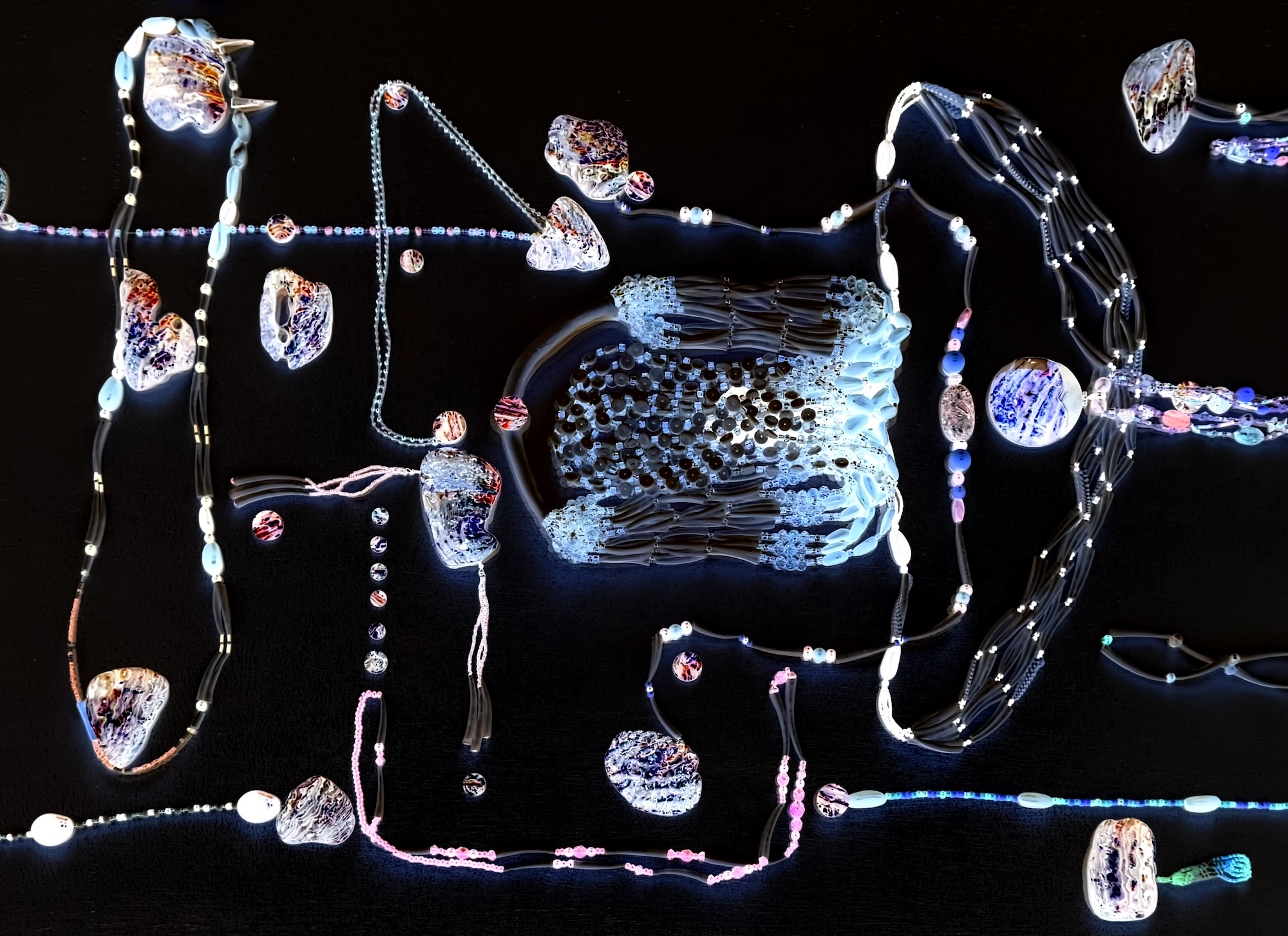
For example, dentalium — a culturally significant category of tusk or tooth shell — is exchanged as a currency, but it’s also worn as sacred jewelry. It’s a gift in potlatch. It’s a multifaceted object.
Other forms of Indigenous currencies are used to create maps, make art or store environmental data.
In such economic systems, everything is tied to everything else. These are economic systems where the universe — and our responsibilities within it — expand rather than collapse.
New book, new possibilities
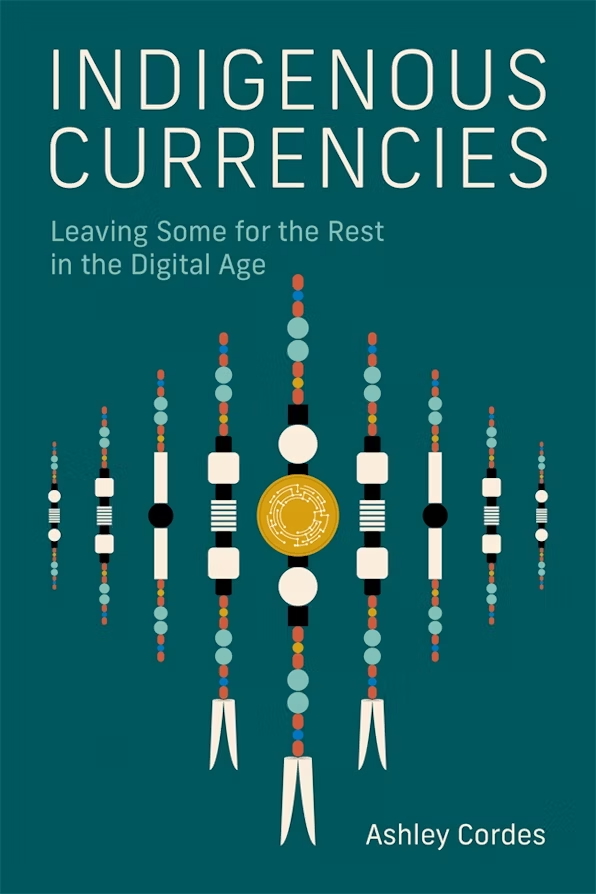
In her new book, Indigenous Currencies: Leaving Some for the Rest in the Digital Age (MIT Press), Cordes takes to task the idea that any of these technologies are truly new — or that any of them might be incompatible with Indigenous knowledge systems.
Instead, she describes how Indigenous peoples are already living in kin with technology in order to support livable futures to come.
“Capitalism is not an inevitable thing that will last forever,” Cordes says. But Indigenous economic systems — like the potlatch, which is the economic backbone of many Indigenous Nations in the Pacific Northwest, including the Kōkwel — have lasted for tens of thousands of years, and have proven that they can create cultures of abundance.
“In a potlatch, the more you give, the richer you are,” she says. “Debt was the most prestigious thing a person could have.”
When Indigenous data scientists build their own AI or blockchain algorithms, they’re building technologies that are based in this older, more durable economic system.
The ethic of care presented by potlatch has possibilities that extend beyond the pseudo-care offered by tech billionaires, digital companions or VR headsets creating the illusion of a living room full of friends.
Instead of creating a holographic version of intimacy, Indigenous tech creators are investing in material realities of care. Cordes shares some of these examples with enthusiasm, barely taking a breath:
Groups like Looty are creating NFT-based art to create new notions of ownership, value and authenticity among peoples whose art has historically been stolen to languish in museums other people own. Another group is using a blockchain application to allow incarcerated people to sell art while they’re in prison.
Then there’s the Native Hawaiian team, ĀinaQuest, that is building an application that has encrypted Traditional Ecological Knowledges and is using Indigenous protocols to govern their data storage practices.
Or there’s the Catawba Indian Nation’s Digital Economic Zone that has created a Nation-to-Nation digital economy based on distinct blockchain products.
IndigiDAO is using an open-source, Decentralized Autonomous Organization-based financial co-operative that allows community members to make collaborative decisions about resource redistribution.
And Cordes’ own Tribe, the Kōkwel Nation, is participating in research that uses AI to map out carbon stores across their lands.
For Cordes, cyberreality is not a replacement for lived experience, but a mechanism for reasserting relationships built in the material world.
She talks about and travels between blockchain and potlatch, computer codes and salmon streams. Here, data exists alongside other forms of knowledge — like the knowledge Cordes holds from standing in the same camas fields, the same coastal sands, that her ancestors have stood in for 13,000 years.
It’s a vision of technology that exists as a continuation, rather than a rupture — that the underlying code can function as another piece of connective tissue, instead of as a society-obliterating threat. And that, for Cordes, offers an exciting, reciprocal currency of possibility. ![[Tyee]](/design-article.thetyee.ca/ui/img/yellowblob.png)
Read more: Indigenous, Books, Media, Science + Tech












Tyee Commenting Guidelines
Please note that email notifications for replies are not currently working due to a software issue which may be resolved in a future update.
Comments that violate guidelines risk being deleted, and violations may result in a temporary or permanent user ban. Maintain the spirit of good conversation to stay in the discussion and be patient with moderators. Comments are reviewed regularly but not in real time.
Do:
Do not: