

 SHARE:
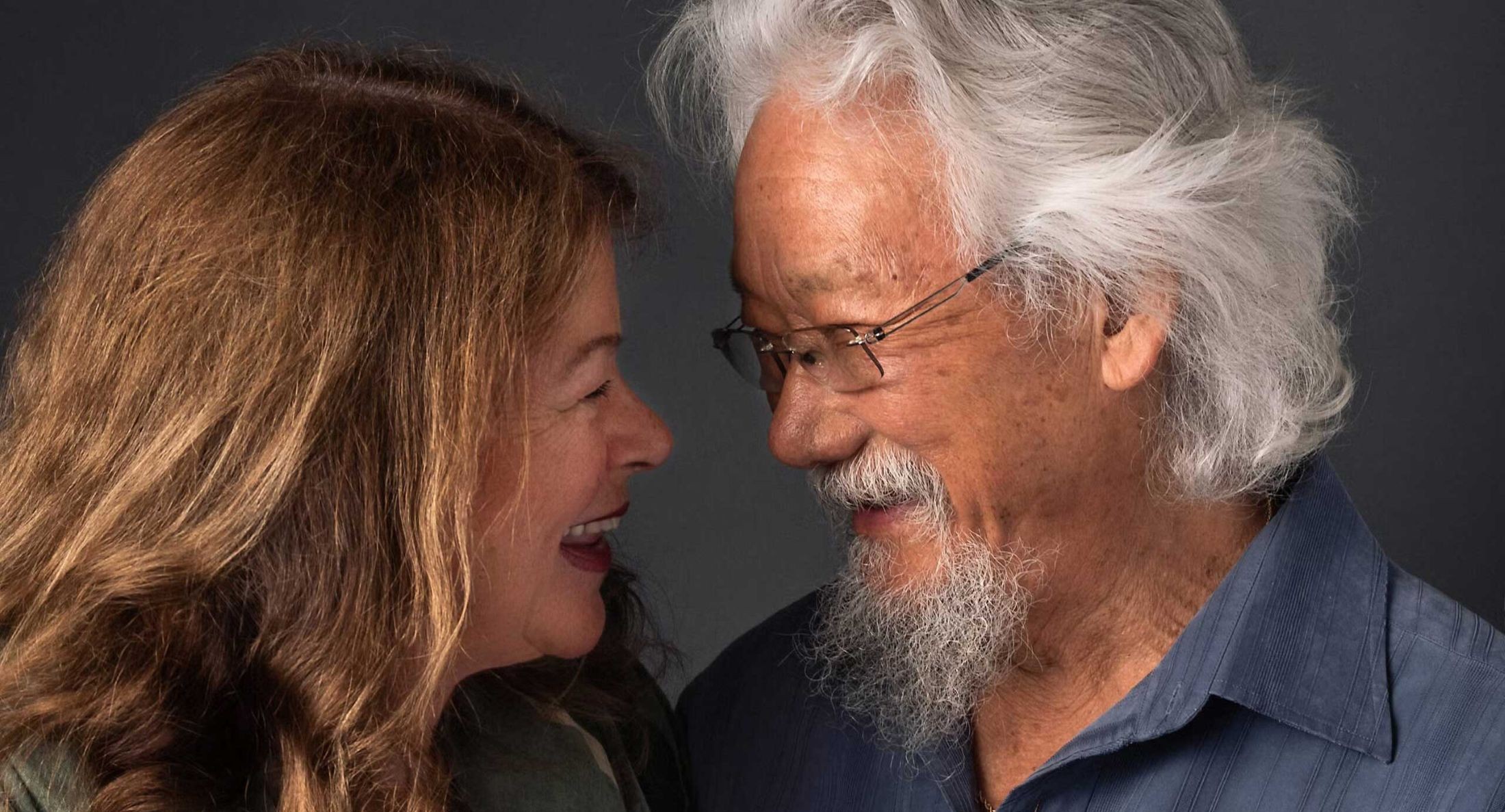
“I just want to live through 2026,” said David Suzuki in a recent interview with The Tyee.
“I say to all my friends who believe in God to please pray for me and pray for my health through the end of 2026.
“Then I don’t give a shit.”
The legendary Vancouver-born science broadcaster, environmental activist and avowed atheist will turn 90 on March 24, 2026, in a busy year during which he will hit the road as an actor in a play. He will also be the subject of a biopic and documentary in the early stages of production.
The David Suzuki Foundation, or DSF, has declared 2026 Suzuki’s “birthday year” with events planned to mark his birthday in Vancouver, Toronto and Montreal. Suzuki founded the environmental non-profit with his wife, Tara Cullis, in 1990. It was originally headquartered in Vancouver’s Kitsilano neighbourhood, where Suzuki has lived for the past half-century.
Vancouver-based Greystone Books is also releasing a book next year to mark Suzuki’s milestone. The book, Lessons from a Lifetime: 90 Years of Inspiration and Activism will be out the week before his birthday next year and is authored by Suzuki and frequent collaborator and DSF senior editor Ian Hanington.
Suzuki said Lessons will draw from David Suzuki: The Autobiography, also published by Greystone in 2007, and Metamorphosis: Stages in a Life, published by Toronto’s Stoddart Publishing in 1987. The new book will also include a final chapter written by Suzuki.
“It’s just another step,” he said, about reaching the age of 90 a little more than four months from now. “I’m way past best-before date, but as long as I’m healthy, knock on wood.”
For Suzuki, an avid gym goer, turning 90 is more about celebrating a long life well-lived than dreading the end.
He noted another nonagenarian — his friend and fellow conservation legend, Jane Goodall, recently died at 91, and his “wombmate,” twin sister Marcia Aoki, passed away in April this year. “She wasn’t even expected to live when she was born,” Suzuki said of his sister. “I celebrate that she had 89 years.”
‘It’s my last big attempt at getting a movement going’
Of his late friend Goodall, “Holy cow,” Suzuki said. “She gave her whole life to the cause. She was on tour when she died. What a life — and thank goodness that she lived until 91.”
Like his friend, Suzuki will be on tour soon, too.
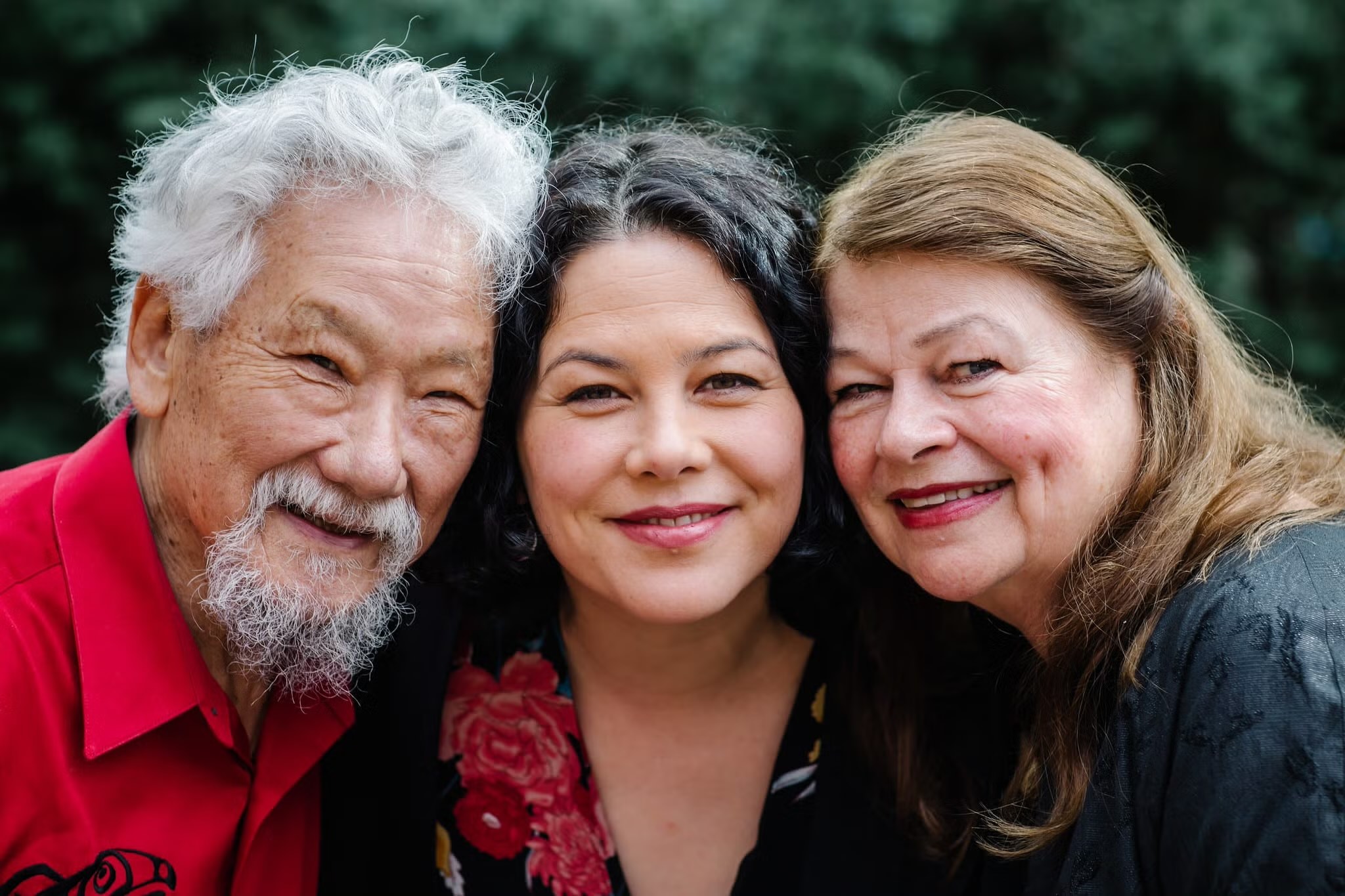
Beginning in February, he and Cullis will bring the 90-minute play, What You Won’t Do For Love, in which they star, to 15 cities in Ontario through to the end of March.
Beyond their performances, the couple will attempt to engage each community visited to act on any climate emergency at a local level as part of a $300,000 DSF initiative.
“It’s my last big attempt at getting a movement going,” Suzuki explained. “This one is all about localism.”

Based on a government program underway in Finland, the idea is to get neighourhoods to become “more self-sufficient” and “self-reliant” by inviting them to identify “important or valued elements beside people within the area to be saved or protected” as a result of a climate-related event, according to a proposal Suzuki and Cullis wrote and shared with The Tyee.
“Mother Earth is finally going to hammer us so badly that we’re going to have to act — and governments will not be able to respond with the speed and the scale that is going to be needed,” Suzuki told The Tyee. In response, he and Cullis hope their play will inspire people to connect more deeply with those in their surrounding communities so they can band together in the event of a climate-related emergency.
He plans to pitch the act-local project to the audience in a question-and-answer session following each performance.
The day after each play, Suzuki and Cullis will meet with anyone interested in continuing the dialogue. Activists from different areas of the community, such as Indigenous leaders along with representatives from food banks and organizations involved in social justice and health care will be invited to attend the meeting that the couple hopes will also include mayors, city councillors and chambers of commerce members.
“I hope that my celebrity — for what it is — will fill every seat wherever we go so that we can make a small profit, and the money we make will use to seed some kind of organization that comes out of the community,” explained Suzuki.
He hopes to present the play and his latest movement idea to audiences in Australia and New York City before returning to Canada and launching a tour of the rest of the country from September to December next year.
This community-centric approach is not something new for Suzuki.
In 2014, the DSF launched the Blue Dot Movement, with its stated goal of enshrining “the right to a healthy environment — the right to clean air and water” under Section 7 of the Canadian Charter of Rights and Freedoms.
That didn’t happen. However, as the foundation highlighted, the advocacy of that movement — which involved a two-month, 20-city tour featuring Neil Young and Margaret Atwood — resulted in the passing of Bill S-5, the Strengthening Environmental Protection for a Healthier Canada Act in 2023, as well as 176 municipalities across Canada adopting “declarations recognizing their citizens’ right to a healthy environment,” according to the DSF.
A life in pictures
As Suzuki prepares to embark on the next chapter of his life, a movie is planned to look at the previous chapters from his childhood to becoming Canada’s best-known scientist as host of CBC’s The Nature of Things from 1979 to 2023.
Serge Noël, who runs Montreal-based film company Possibles Média, will produce the biopic in which Simu Liu, a Chinese Canadian actor, has been approached to play the lead, according to Suzuki, whose grandparents were born in Japan.
“Suzuki has a complex relationship to authority in Canada that comes from both his strong connection to the land and a sentiment of rejection from his family’s experience of internment [during the Second World War],” Noël told Variety last month.
Shooting is expected to begin late next year or in early 2027.
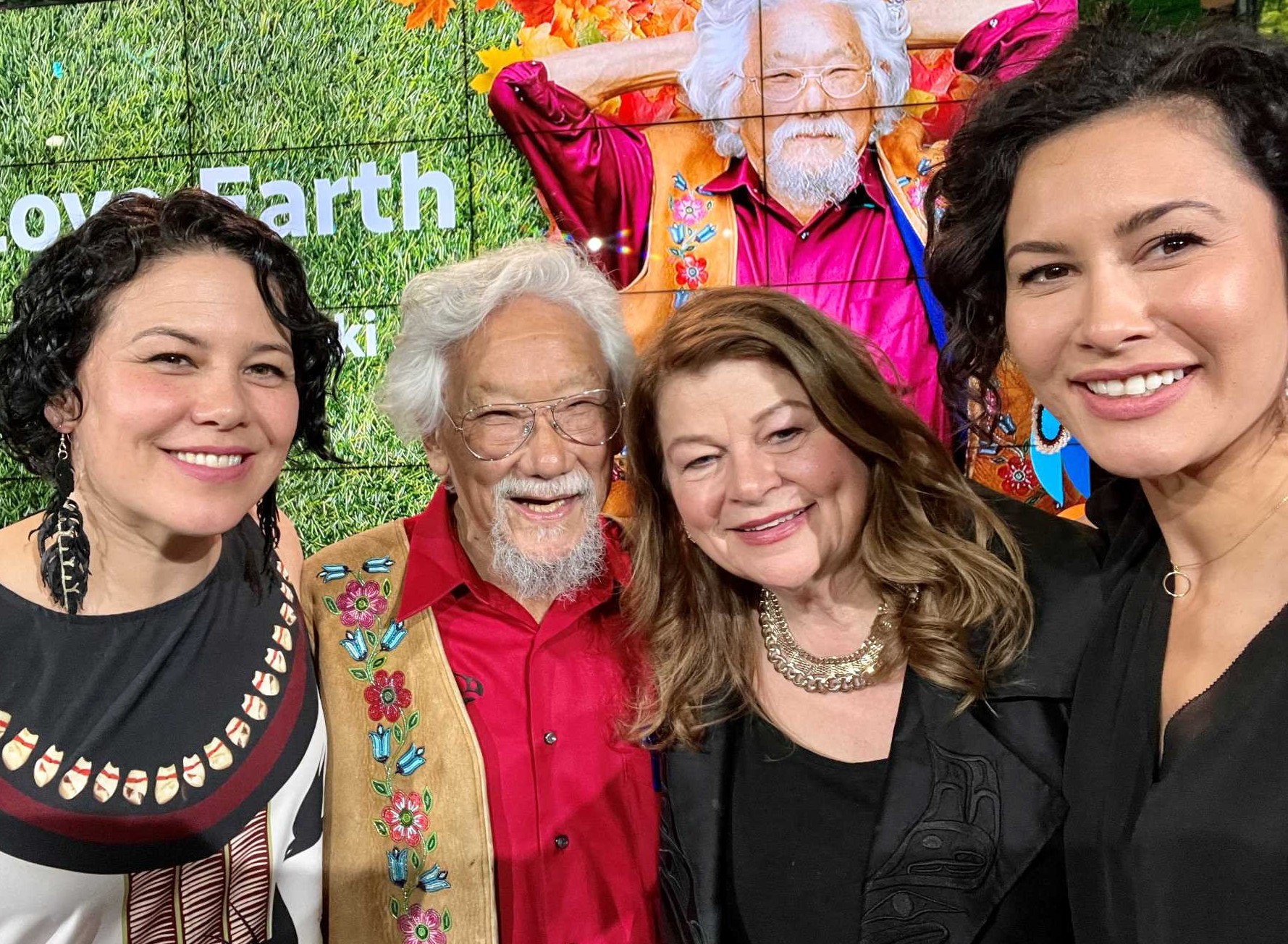
A 90-minute documentary, also on Suzuki’s life and career, will, as he explained, build on the lessons learned in his life that he sought to convey in his final, sign-off episode of The Nature of Things. The show is now co-hosted by his daughter, Sarika Cullis-Suzuki, a marine biologist.
Toronto-based Primitive Entertainment, led by brothers Michael and Kevin McMahon, is behind the documentary. The brothers recently produced two programs for The Nature of Things.
‘We have run out of time’
For Suzuki, it’s also time to set the record straight on at least one major point raised this past July when he told iPolitics that it was “too late” to reverse global warming and climate change.
Suzuki told The Tyee that he wishes he had said that “many years earlier,” and essentially did in a private email, which he sent to former federal environment and climate change minister Steven Guilbeault two years ago in which Suzuki said that “we have run out of time to delay making big cuts in emissions.”
“If climate change and species extinction continue to be constrained by political pragmatism, they will not be solved,” Suzuki wrote to Guilbeault, noting that he “went into politics because the environment and climate change were your highest concern.”
Suzuki said that he supported Mark Carney before he entered politics.
“Carney was always very generous — came to things for our foundation, helped us raise money,” he said, who interviewed the then-governor of the Bank of England for The Nature of Things.
Last October, he and the future prime minister participated in a discussion in Toronto on climate change and biodiversity loss as part of a fundraising event called “Why Not Fall in Love with the Planet?” The event, which raised over $300,000 for Why Not Theatre, the production company behind the 2026 play in which he will star with his wife. That evening, Suzuki endorsed Carney should he ever run for office.
In his letter to Guilbeault, Suzuki railed against Justin Trudeau’s government “immoral” acquisition of the Trans Mountain Expansion Project from Kinder Morgan in 2018. In his meeting with U.S. President Donald Trump on Oct. 7, Carney reportedly raised the idea of reviving the Canada-U.S. Keystone XL oil pipeline.
But as Suzuki told The Tyee, there have been warnings about the need to take emergency action on climate change since 2018, when the Intergovernmental Panel on Climate Change released a report that said: “Limiting global warming to 1.5 C would require rapid, far-reaching and unprecedented changes in all aspects of society.”
As Suzuki noted: “We hit 1.5 this year!” In 2019, the United Nations released a report that found about one million animal and plant species were threatened with extinction, “many within decades, more than ever before in human history.”
“Over half of the species that were on this planet when I was born in 1936 are now extinct,” said Suzuki, who holds a PhD in zoology and was a genetics professor at the University of British Columbia from 1963 until his retirement in 2001.
“If you look at the biosphere now, it’s very, very clear that it is being assaulted by a predator — the human species — that is very, very powerful, but absolutely out of control, and undermining the life support systems of the planet.”
But as he underscored, “the planet isn’t dying. The planet did very well for four billion years before we appeared, and after we’re gone, the planet will continue to be what it is.”
It’s just that we may not survive.
“Extinction is normal: 99.9999 per cent of all species that have ever existed in the four billion years that life has been on the planet are extinct. Extinction is necessary for life to evolve,” said Suzuki.
“We’re the only animal that knows that we’re going to go extinct; that knows what’s causing it; and knows what has to be done, and we’re not doing it.”
‘I tried to hold onto certain values’
When asked whether he’s thinking about his legacy, Suzuki, a grandfather of 10, referred to the book he wrote in 2015, Letters to My Grandchildren, published by Greystone in partnership with DSF.
“In my life, I did what I did. A lot of things didn’t work, but I tried. I’ve done the best that I could. And I’ve been an asshole and done stupid things, I guess. But I tried to hold onto certain values,” he said, adding that he would like to be viewed now as an elder with some wisdom to impart in a society — an approach embraced within First Nations communities.
“In terms of my life lessons, it’s all the stuff that I learned from Indigenous people,” said Suzuki. “We are the air, we are the water, we are the soil — and every bit of the energy in our bodies is sunlight coming from plants.”
He said his father, Kaoru, was a “huge” influence in his life. Kaoru encouraged his son to pursue public speaking, and when Suzuki was a self-described nerd at London Central Secondary School in London, Kaoru urged him to run — and win — an election to become the high-school student president in 1953.
“There’s no shame in trying and losing,” Suzuki said of what his dad tried to convey. “The shame is not trying at all.”
Suzuki is also “ever grateful to CBC for giving me the chance,” and particularly to the late Jim Murray, who as executive producer of The Nature of Things recruited Suzuki to become the storied series’ first permanent host in 1979. “He taught me so much about television and taught me a lot about the values of deep ecology,” said Suzuki, who noted that Murray also regularly pushed back at the networks’ attempts to have Suzuki taken off the air over his public comments, such as when he spoke up against the expansion of Alberta’s oilsands and the use of animals in research.
In 2004, Suzuki was named the fifth “greatest Canadian” in a CBC contest where former Saskatchewan premier Tommy Douglas, considered the father of Medicare, topped the list.
As for regrets, Suzuki has a few. Not highlighting the imminent threat facing humanity regarding climate change soon enough is one.
Another is “about things I’ve said to people,” particularly to Cullis, that “I know hurt her.”
“She’s everything,” he said.
When asked how he would like to be remembered, Suzuki responded: “I really don’t give a shit. I’ll be dead.”
‘There’s nothing he would love more than to be wrong’
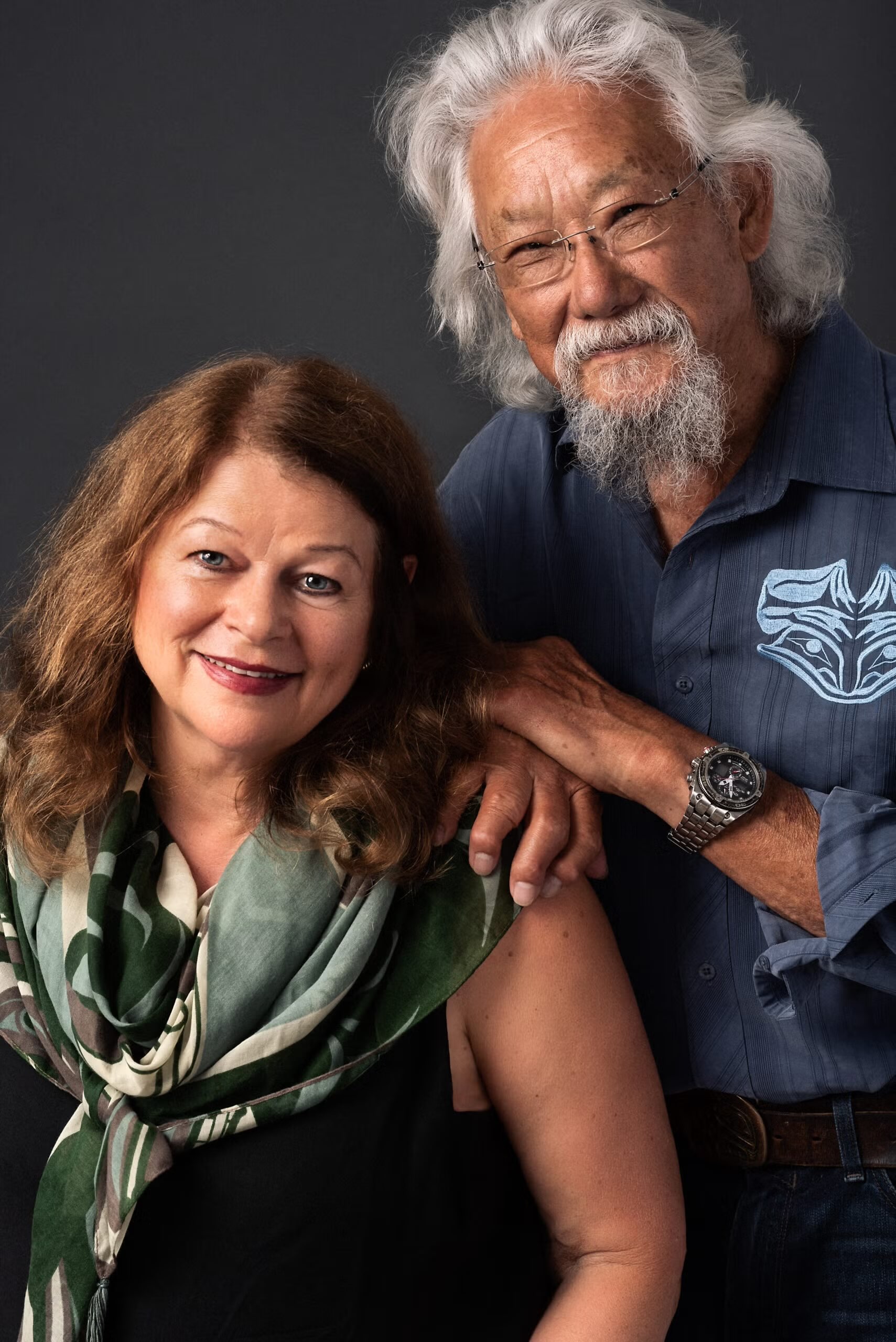
Cullis, 76, has been married to Suzuki since 1972. They have two daughters, Severn and Sarika, and Cullis has worked alongside her husband for 35 years with the DSF. She has long heard his regular regrets about the human impact on the planet.
“He’ll say ‘it’s too late,’ but that’s his middle name. I should put that on his tombstone,” she said. “He doesn’t mean it’s too late that the game is over,” Cullis clarified. “He means it’s too late for all the old remedies — doing the same old stuff over and over. It’s time to really get serious and call things an emergency.”
Cullis, who holds a PhD in comparative literature and taught writing at Harvard University, said that while Suzuki received criticism that his iPolitics too-late-to-do anything comment this past summer was “too negative,” he has, in past speeches, “been talking about pretty well the same thing the whole time — and those things keep coming true.”
“There’s nothing he would love more than to be wrong.”
It was as at one of Suzuki’s speeches — on Dec. 10, 1971, in Ottawa — where their life partnership took root.
Cullis was born in England and raised in North Vancouver. Her father was a scientist, and so is her brother. She was pursuing a master’s degree in comparative literature at Carleton University when she attended Suzuki’s 90-minute talk in which he spoke about a wide range of subjects, including his family’s experience living in an internment camp for Japanese Canadians in B.C. during the Second World War. Cullis now believes that experience helped shape his character.
“He was absolutely fascinating, and I agreed with everything he said,” said Cullis.
She went to a party, post-lecture, and Suzuki — divorced from his first wife since 1965 — asked her to dance. As Cullis recalled, “that was that.”
They married on the same day a year later, on Dec. 10, 1972, in Vancouver.
Cullis said that her initial thoughts of their life together would be like “riding a rollercoaster” were largely borne out. “I never know what’s coming around the corner,” she offered.
But Cullis shares the frustration with Suzuki of his decades-long attempt at “sounding the alarm” to inspire stewardship of the Earth without enough take-up of the need to act.
“I know what impact he’s had — and it isn’t enough,” she said. “We haven’t turned the corner.”
Federal Green Party Leader Elizabeth May, 71, has long felt that way too and remembered first encountering Suzuki in the mid-1970s.
He was speaking about science and the environment in Halifax, and May wanted to talk with Suzuki about a grassroots campaign she was involved with to halt proposed aerial insecticide spraying on forests near her family’s home on Cape Breton Island.
May called “every hotel in Halifax and tracked him down.”
When Suzuki answered the phone, he said, “Who the hell is this? You got me out of the shower.’ I thought, ‘Oh Christ, almighty,” recalled May, who noted that “he immediately was helpful” with advice.
The two did not meet until a decade later at a Pollution Probe fundraising gala in Toronto in the mid-1980s, when a friendship between them was struck not long afterward.
May was a senior policy advisor to then-environment minister Tom McMillan in Brian Mulroney’s Progressive Conservative government when the Gwaii Haanas National Park Reserve was established in 1988 in Haida Gwaii (formerly called the Queen Charlotte Islands) off British Columbia’s mainland. At the time, Suzuki highlighted opposition to logging operations on Haida Gwaii on The Nature of Things — and according to May — was key in helping to block them.
The two are now like family, and as Suzuki approaches his 10th decade of life, May reflected on his legacy.
“He will deny that he has accomplished anything,” she said.
“People would not believe how incredibly humble he is and how incredibly he thinks he hasn’t done things that are important. But I think there’s no question that he has inspired many, many Canadians to care about the natural world, and understand more about science and conservation and complicated issues.”
“He’s helped raise generation after generation who watched him on TV and learned so much because of how good David was at connecting with people over the airwaves and inspiring people,” added May, the sole Green Member of Parliament, representing the B.C. riding of Saanich-Gulf Islands.
“But he’s very discouraged, and he looks down at his sleeping grandchildren and he weeps — and I know how he feels,” said May, who is working on a book that will address the same “too-late” points on environmental action, which Suzuki has raised.
She is also mentioned in the What You Won’t Do For Love play and plans to see it on Feb. 22 in Kitchener, Ont., and credited Cullis as being “a big part of why David is a good person” and calling him out “when he is a jerk to people.”
“He’s always been a challenge,” Cullis acknowledged. “He’s got high standards about a lot of things and you better measure up. And then if you don’t and you think he’s mad, he says, ‘I’m just raising my voice. It doesn’t mean I’m mad.’”
But she dismissed the mention of next year’s tour of the play as helping to cap Suzuki’s legacy. Instead, Cullis offered — when asked — what she thought would be an appropriate epitaph for him.
“I think it would have to be something like, he never let you down.” ![[Tyee]](/design-article.thetyee.ca/ui/img/yellowblob.png)
Read more: Media, Environment








Tyee Commenting Guidelines
Please note that email notifications for replies are not currently working due to a software issue which may be resolved in a future update.
Comments that violate guidelines risk being deleted, and violations may result in a temporary or permanent user ban. Maintain the spirit of good conversation to stay in the discussion and be patient with moderators. Comments are reviewed regularly but not in real time.
Do:
Do not: