


 SHARE:
There is something about the work of the late British Columbia landscape painter E.J. Hughes that I can’t quite put my finger on.
Yes, it’s beautiful: carefully composed, rich in colour and deeply compelling, all the obvious things that still elevate painting to the lofty place it has long occupied in the visual art world. Having seen Hughes’ work in books, films and in the flesh, I am still hard-pressed to explain exactly why it gets me on a gut level.
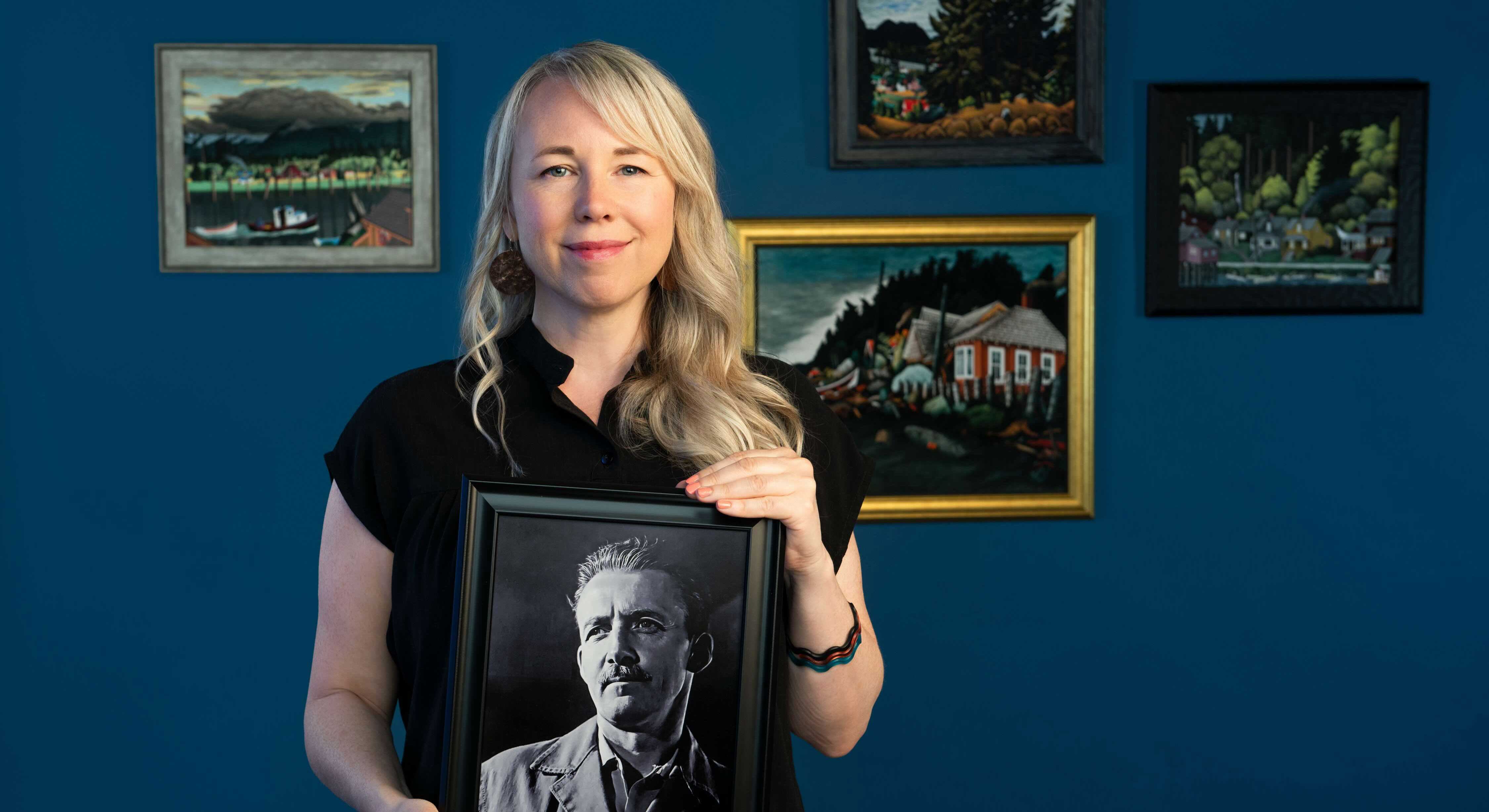
A viewing of Vancouver filmmaker Jenn Strom’s documentary portrait The Painted Life of E.J. Hughes offers some clues. The film premiered at the Vancouver International Film Festival last fall, and is currently on the festival circuit with upcoming screenings in Victoria, Whitehorse, Duncan and Salt Spring Island, plus a Vancouver run at the VIFF Centre.
Strom brings a gentleness of approach that befits the man at the centre of the story. A deeply introverted person who was painfully shy, Hughes’ complete commitment to his art meant that he was terrible at marketing himself. He lived in poverty for most of his life, enduring struggles both big and small while maintaining a steadfast dedication to his work.
The central relationship in the artist’s life came about quite by accident. While Hughes was sketching trees in Stanley Park, a young woman named Fern introduced herself and asked if she could see his drawings.
“That’s how I met my wife,” Hughes wrote in an unpublished manuscript.
The pair became inseparable, but at the time, the young artist didn’t have a job or any means to support a family. He turned his hand to gillnet fishing, which gave him access to the beauty of the landscape, but as a fisherman, Hughes was a terrible failure, barely breaking even after a summer of hard work. It was a pattern that recurred across many areas of his life whenever he tried anything other than making art.
The Painted Life is a relatively straightforward documentary portrait setting out the major chapters and events of the artist’s life. But along the way, more complex matters emerge.
Country is one of them. Hughes painted British Columbia and the places where he lived including Vancouver, Victoria, Shawnigan Lake and Duncan. He also painted communities across the province, from Kamloops to Kaslo. His landscapes and seascapes capture B.C.’s spectacular, staggering beauty, forcing one to see anew just how extraordinary this place is.
But more than that, the humility, tenderness and love poured into his work leaps out and gets you in the gentlest part of your heart.
Whenever I look at his images depicting Vancouver Island, I think about my Woodend grandparents who lived in Metchosin, just outside Victoria, and cry.
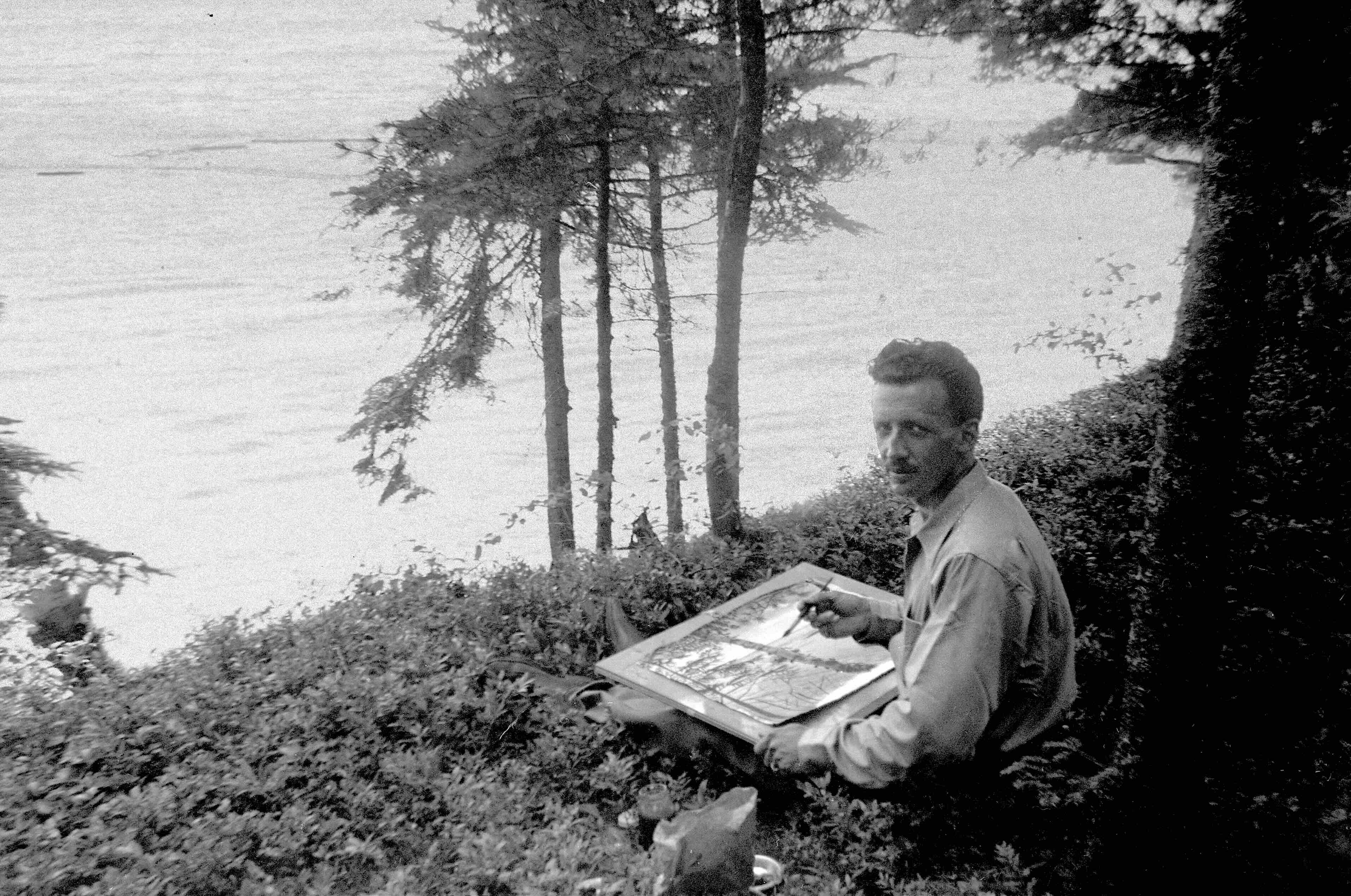
Painting for love, not money
The film also offers an interesting exploration of the role of money in the lives of artists.
Last November, Hughes’s painting Entrance to Howe Sound sold for $4.8 million at auction, the highest price ever paid for a painting by a B.C. artist.
The recent record-setting sale contrasts sharply with the less glamourous facts of the artist’s day-to-day life. He was a realist painter during a period when abstract painting ruled. That meant little success, only awful poverty. After living a good portion of his life in penury, Hughes was only able to afford a second-hand car when he was a much older man.
The turning point of his career occurred in 1951, when famed Montreal gallery owner Max Stern tracked the painter down where he was living with Fern in an old house by Shawnigan Lake. Stern introduced himself, toured the artist’s upstairs studio and bought Hughes’ entire body of work for the grand sum of $500.
The exchange with Stern reminded me of the story of Vincent van Gogh piling a wheelbarrow high with his paintings, offering it to his then-landlady in lieu of rent, and being soundly rejected. At least Hughes lived long enough, to age 93, to see his work attain significant value.
Stern’s support afforded a modest measure of financial success that enabled Hughes to live a little more easily. Commissions soon followed, including a sketching trip up the Pacific coast on an oil tanker called the Imperial Nanaimo. The paintings and drawings generated from this journey of remote water-access-only communities remain some of his most beloved work.
A Group of Seven mentee
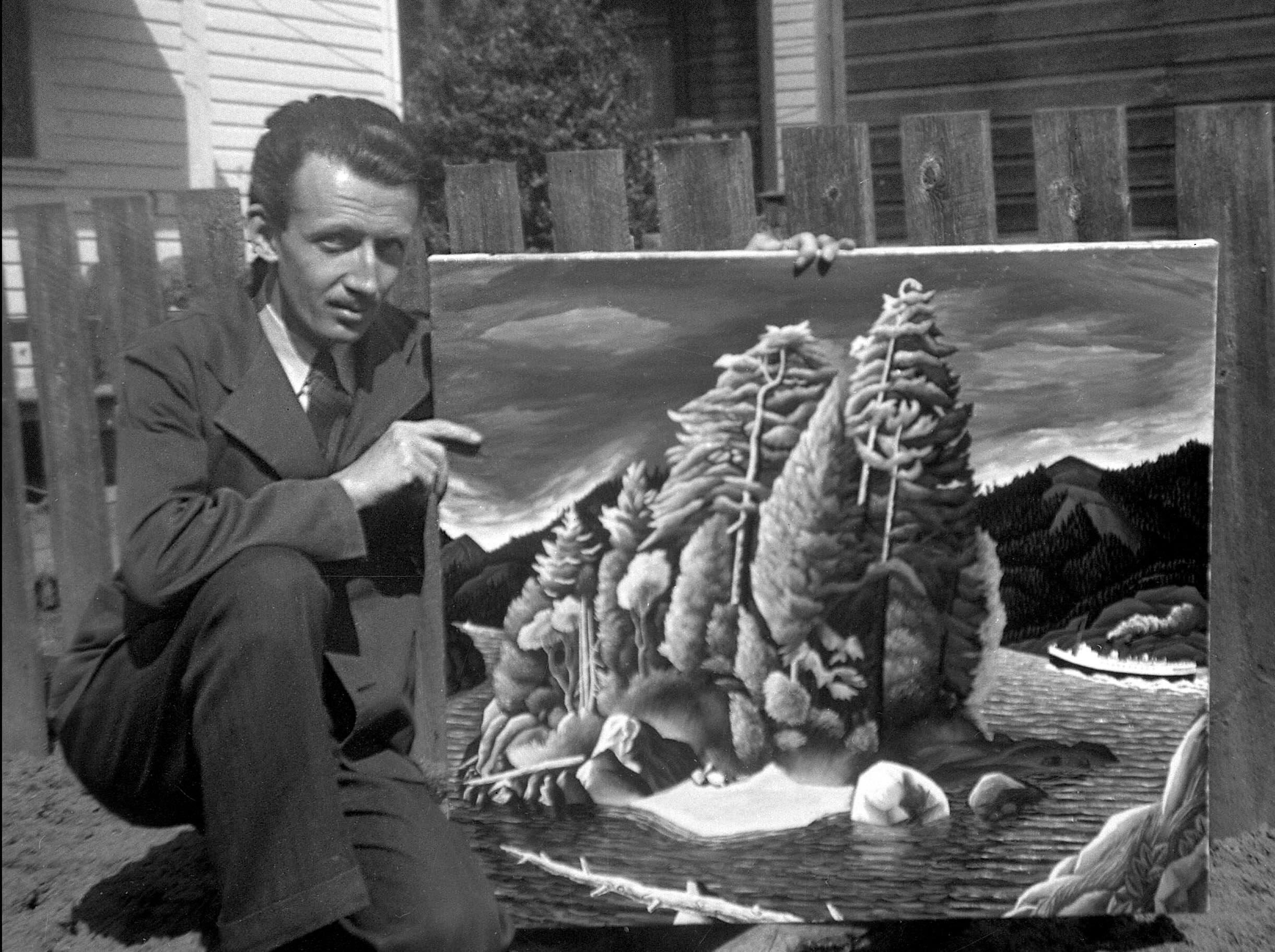
Born in North Vancouver in 1913, Hughes grew up in Nanaimo on Vancouver Island. A terrible student (he failed to graduate from high school) with no interest in sports or other activities, art was the one thing he was genuinely good at.
Things looked up when his two uncles offered to pay his tuition at the newly opened art school in Vancouver. At the time, Vancouver was decidedly a backwater place in the art world, lacking even a gallery. But an art school was a step forward in the cultural evolution of the city.
The Vancouver School of Decorative and Applied Arts (now Emily Carr University of Art + Design) was a pretty staid place until Fred Varley showed up to teach. A founding member of the Group of Seven, Varley fully embodied the ethos of anchoring the national imagination in the landscape of the country to create a uniquely Canadian artform.
Both Varley and his Group of Seven colleague Lawren Harris were enormous influences on the young Hughes. Varley’s methods including taking his students outside to create work en plein air. School painting trips to Savary Island to sketch the landscape, as well as his classmates, proved instrumental.
Despite the fact that he worked quite differently from Varley — Hughes’ paintings took months to complete, as opposed to the heated rush often employed by the Group of Seven painters — the training Hughes received in art school informed the rest of his life’s work.
After graduating in 1933, Hughes tried his hand at teaching and was an abject failure. To make a living, he set up a commercial art company with two former classmates with the aim of painting murals. In the 1930s, murals were big in every sense of the word. Mexican artist Diego Rivera had vaulted the form to greater attention and acclaim. In spite of this, Hughes and his colleagues weren’t terribly successful. They pivoted to making prints, but even an exhibition at the Vancouver Art Gallery didn’t make much money. Most of the modestly priced work remained unsold.
Hughes and his partners secured their most significant commission in 1939, when they were charged with painting a series of works celebrating B.C.’s major industries including forestry and mining. The 12 different scenes were exhibited at the Golden Gate International Exposition in San Francisco. These extraordinary works put the young artists on the map.
In the series, the cityscape of downtown Vancouver can be seen in all its robust splendor, the Marine Building and the Sun Tower rising up in the background like glamorous movie stars of old. The few copies that still exist are something to behold: bright, bold and muscular, as well as exquisitely composed and executed.
Uncompromising realism
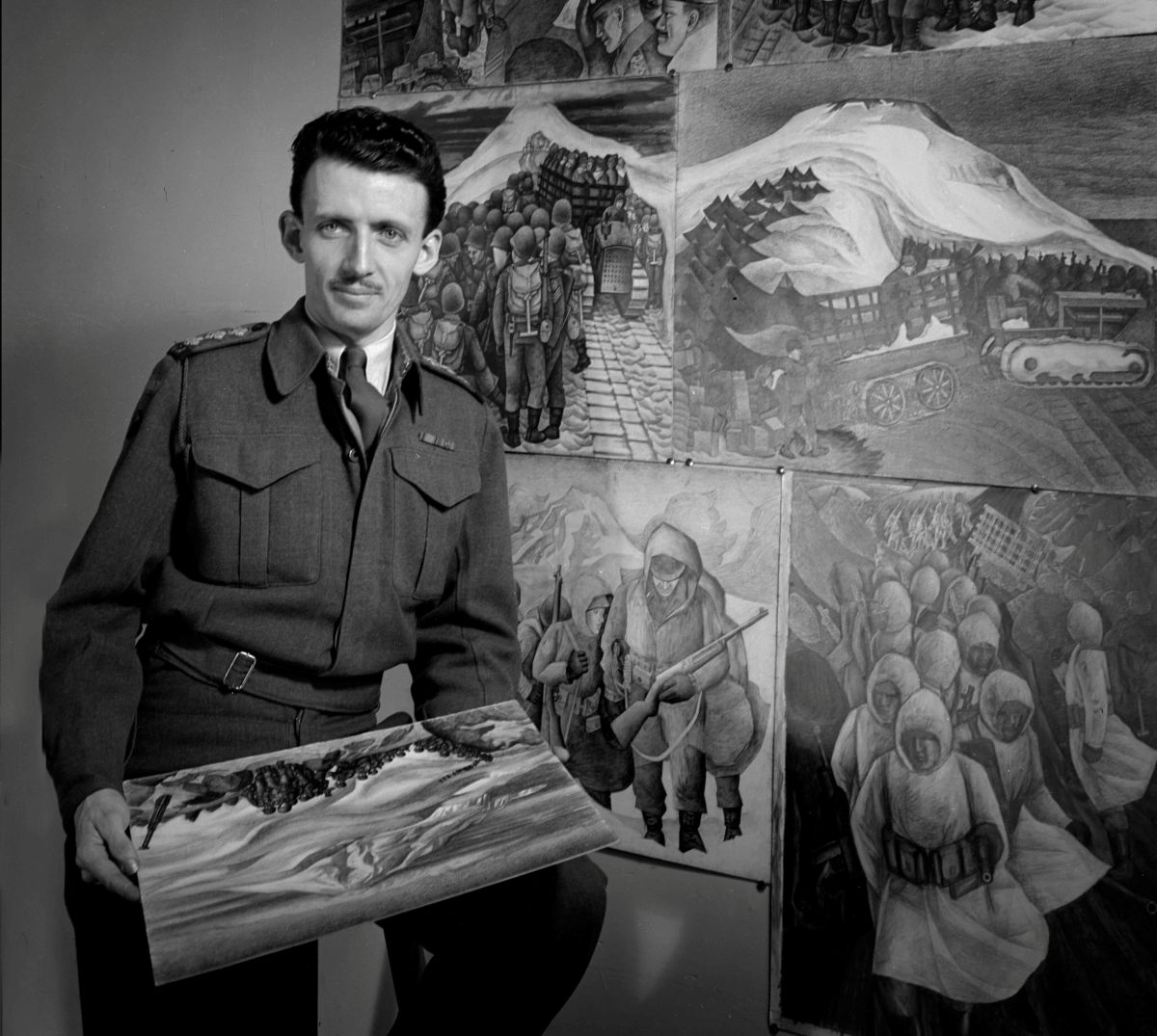
A few days before the Second World War was declared in Europe in 1939, Hughes joined the Royal Regiment of Canadian Artillery, initially as a gunner before he was appointed a war artist in 1940. At the time, the job of a war artist was to be as accurate as possible in order to officially document the proceedings. Here, finally, was an area where Hughes excelled.
Compelled to record every detail, Hughes painted everyday scenes like a mess hall, filling his images with telling details like bottles of hot sauce used to give army rations a bit of a kick.
His preparatory work, drawings and sketches from the war years are staggering in their exactitude, capturing everything from the nature of light to the casual downtime activities of his fellow soldiers.
In looking very carefully, he was able to closely detail the emotional reality and experience of the war for young men. The human cost is there in the thousand-yard stare of a young soldier, embodying pathos, courage and underneath it, something closer to an understanding of the futility of it all.
The work that Hughes made during the war years remains some of the most impactful of his career, none more so than the images he created during the campaign for the Aleutian Islands, a region taken by Japanese forces, then re-taken by Canada and the U.S. in 1943.
Hughes’ work from that time, colloquially referred to as the Kiska pieces, including The Lookouts at Barley Cove, were created in challenging conditions. Hughes had to use materials that wouldn’t freeze. He often employed one of the favourite techniques of the Group of Seven, using oil on board and materials that were tough and could be done extremely quickly.
After the war, Hughes and Fern bought a rooming house in Victoria, B.C., akin to what Emily Carr did in the same neighbourhood. The rooming house idea didn’t work out; boarders either didn’t pay or were noisy and disruptive. Despite their taking up a great deal of the artist’s time and attention, the period resulted in some of the most intense paintings of Hughes’ life, including Fish Boats, Rivers Inlet.
Post-war commissions, such as a painting to grace the cover of the telephone book, also brought him a level of attention and allowed the artist enough money to buy a second-hand car that he could use to go on sketching trips across the province with Fern.
After the Group of Seven’s Harris awarded him the Emily Carr scholarship by in 1947, Hughes undertook a series of painting trips to Comox, Courtenay, Ladysmith, Nanaimo and other sites across B.C. It is these works, proudly displayed in The Painted Life by people from the communities and places that he documented, that provide a fitting summation to his life’s work.
Robert Amos, the Victoria-based writer who has authored a number of books about Hughes, provides an overview of the painter’s life and work, while Ian Thom, former curator for the Vancouver Art Gallery, Laura Brandon from the Canadian War Museum and the National Gallery’s Charles Hill address the different creative periods in Hughes’ life. It’s all fascinating, adding up to a fully drawn portrait of the larger events that helped shape the artist.
But it’s the average folk who attest to his character who hit home, like the waitresses from the café where he was a regular, old friends and ordinary people who simply loved his work without pretense or preciousness.
In this, The Painted Life also functions as a depiction of the evolution of Canadian cultural identity.
Re-watching the film this week, the images that Hughes made hit me even harder. Maybe it’s because of the feeling of the world trembling on the precipice of enormous change. Thoughts about the painter and his plain and honest decency surfaced in the middle of watching Prime Minister Mark Carney’s epic speech at Davos.
It isn’t just the nostalgia and yearning for the places and time depicted in his work that seem more understandable, although that certainly plays a part. It’s the humbleness with which Hughes approached his subjects, capturing something ineffable, the anima mundi that bridges the ordinary world with something more infinite and wondrous.
Call it the divine.
‘The Painted Life of E.J. Hughes’ is screening at the Victoria Film Festival on Feb. 8; at the Available Light Film Festival in Whitehorse, Yukon, on Feb. 12; at the Cowichan Performing Arts Centre in Duncan on Feb. 28; at the Salt Spring Island Film Festival on Feb. 28 and March 1; and at the VIFF Centre in Vancouver from Feb. 7 through Feb. 17. ![[Tyee]](/design-article.thetyee.ca/ui/img/yellowblob.png)


Notice about commenting changes
The Tyee’s commenting system will be moving to a new platform on Nov. 12. If you’re already a Tyee commenter you must register with the new system on or after Nov. 12 with your preferred username.More information can be found here.