



 SHARE:
[Editor’s note: In collaboration with CreativeMornings/Vancouver, the Tyee launched its Creative Forces series last fall to showcase the people in our region who are using their creativity as a force for good.
We posted a call for nominations inviting readers to nominate a ‘Creative Force’ to be profiled in The Tyee. Nominations are still open and editors review them on a rolling basis.
Thanks to all who have sent submissions from across B.C. We’re pleased to feature a Creative Forces profile based on a community submission today.]
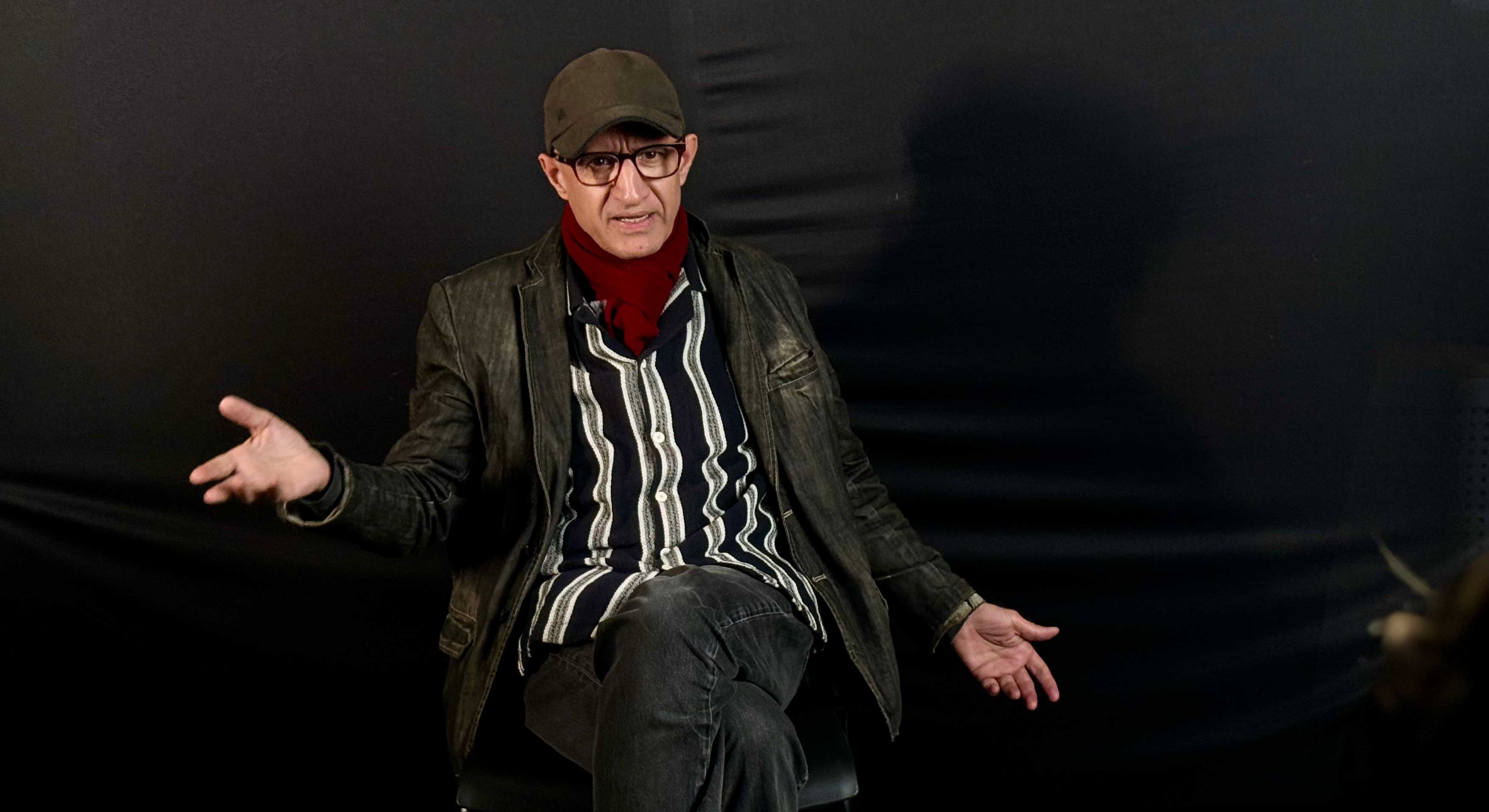
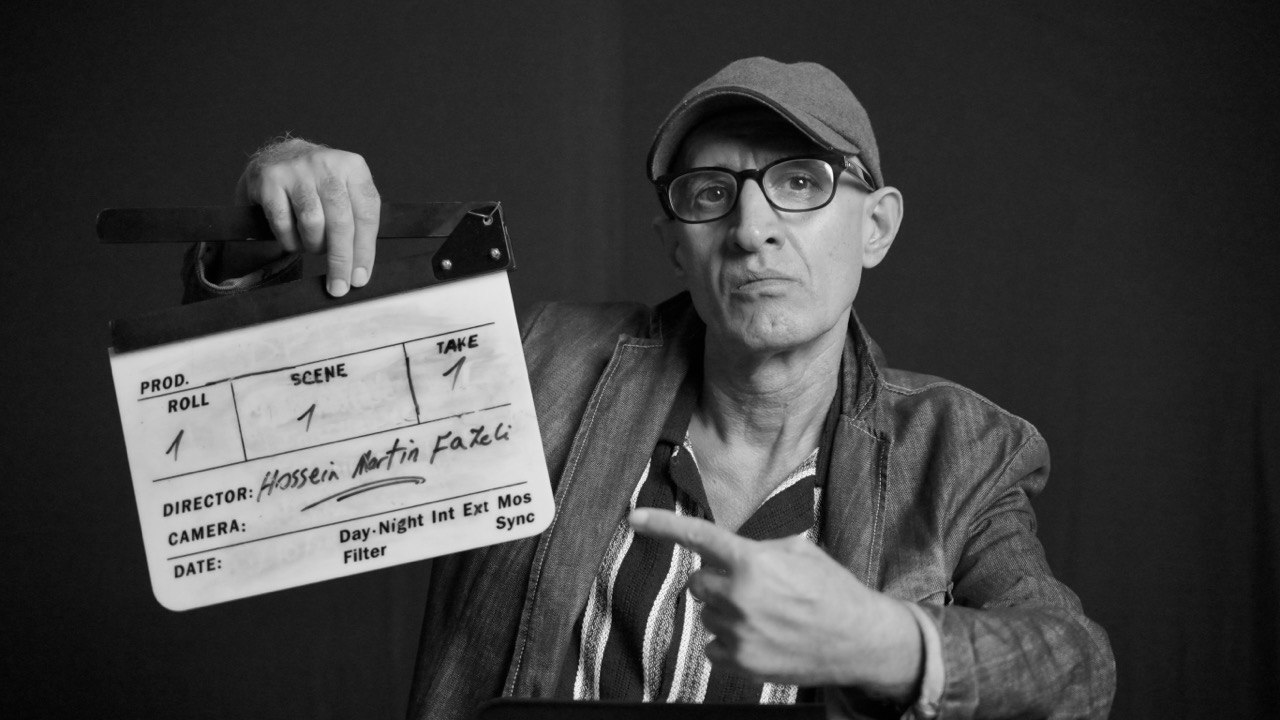
Hossein Martin Fazeli has worked as a filmmaker for 26 years, during which time he has also authored six books of poetry in Persian, his native language. He’s now at work on his seventh.
Born in Shiraz, Iran, Fazeli has lived most of his adult life in Canada. “Iran still occupies a very large space in my heart,” he said. “My relationship with Iran is layered and complex — and perhaps why three of my films focus on it. I care deeply about my roots.”
The turmoil surrounding the 1979 Iranian Revolution forced him to leave his home country for good in 1984.
“I lost friends and family members to firing squads for crimes as petty as distributing banned opposition papers,” he recalls.
“The initial years of post-revolution Iran were akin to a descent into inferno. My homeland seemed to have plunged into an unfathomable abyss. It was a time of profound confusion and despair. I had to leave. My beloved country had become unsafe, even for ‘kids’ like me.”
Hossein’s parents arranged for him to be smuggled out of the country through the waters of the Persian Gulf, a journey that took him across Asia, Africa and finally to Canada. His first brutal winters in Edmonton, Toronto and Montreal spurred him to seek out the more temperate climates of Metro Vancouver, B.C., where he now calls Coquitlam home.
“The city has a charm that defies the mediocrity, and superficiality of newer towns. Besides, it’s my base,” he said. “The place I return to recharge, see old friends, feed cats, watch black bears wander Coquitlam’s empty streets and rethink the future.”
Fazeli has dedicated his creative practice to social justice and spotlighting marginalized voices. His perspectives are informed by his experiences in the Iranian diaspora, which he says has helped him see both Iran and Canada with more clarity and criticality.
We caught up with Fazeli while he was in Berlin this winter touring I Am Gitxsan, his latest documentary film, on the international festival circuit.
This interview has been edited for length and clarity.
The Tyee: How does your Iranian identity, and particularly your experiences in the diaspora, contribute to your artistic practice?
Hossein Martin Fazeli: Exile is not just geography — it’s a mental condition. Being Iranian in the diaspora means you never fully belong anywhere, and that distance sharpens your vision. You see power more clearly. You distrust official narratives — both Eastern and Western.
I carry Iran with me, but I don’t romanticize it. I carry Canada with gratitude, but I don’t mythologize it. This in-between position forces honesty. It also creates friction — and friction is where art happens.
My work is controversial because I refuse loyalty to flags, ideologies or fashionable narratives. I side with people, not systems.
That makes everyone a little uncomfortable — and that’s exactly where I want my work to live.
In addition to working as a filmmaker, you are also an accomplished poet. Can you tell me about your writing life, and why some might consider your writing controversial?
Poetry, in its essence, is an act of defiance — the often futile attempt to capture the perfect moment, uncontaminated by time or history. It’s a rebellion against silence, conformity and the violence of indifference. Honest poetry is, by definition, controversial.
I write from a distance because I never fully belong. Canada has helped me see Iran critically; Iran has helped me see Canada the same way. It’s been a fantastically hellish ride, and I’ve loved every second of it!
One last note: Poetry is my core. Films are the footnotes. Someday, I hope to translate that poetic vision into cinematic frames with the same clarity, and honesty.
Let’s talk about your most recent film, I Am Gitxsan. What drew you to this subject?
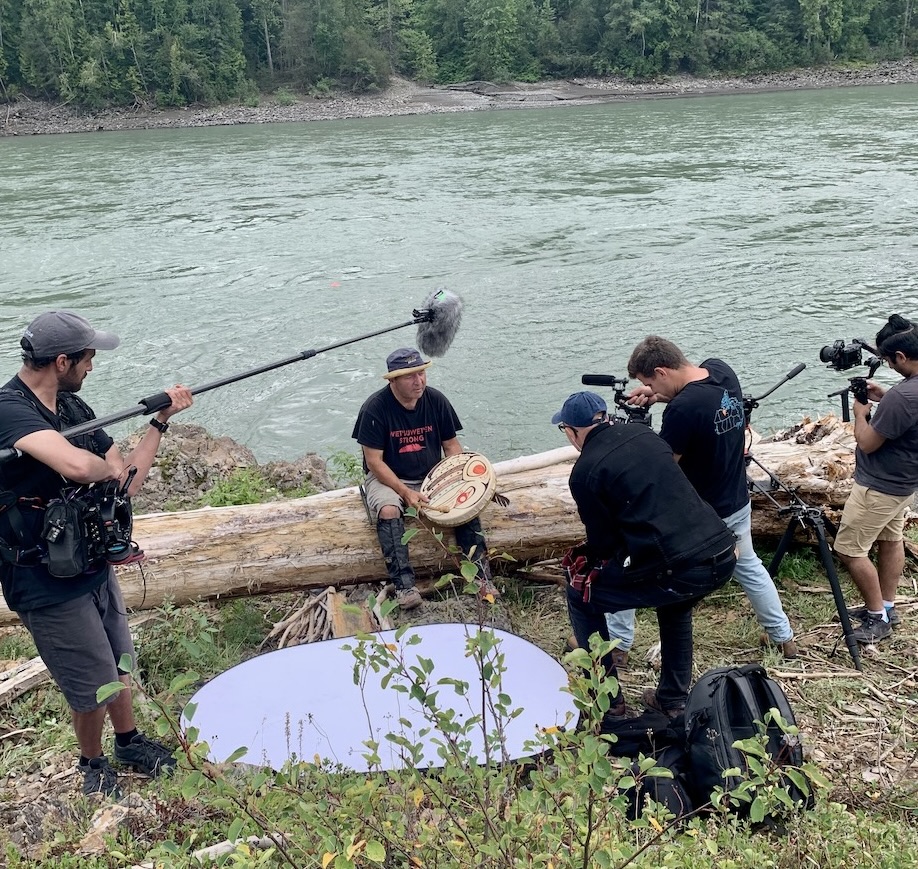
Everything began when a now-dear friend, Rick Tonita — whom I didn’t know at the time — recommended me to Gitxsan hereditary chiefs who wanted to make a film about their society. Rick has deep, long-standing relationships with Indigenous communities across Canada and has done tremendous work in support of Indigenous causes.
When the chiefs first shared the idea, I wasn’t sure I was qualified to take it on — and I told them so. They suggested I visit their laxyip (territories), meet community members and leaders, and then decide. I did — and what I encountered was so powerful that I knew I had to make the film. They had an extraordinary story to tell.
My main hope with this film — and with any social justice work — is not only to raise awareness, which is commonplace, but, more importantly, to inspire action. Now, one of the most effective ways to do that is through a strong festival strategy.
The festival circuit is the bloodline of films like ours. Once a film is selected by major festivals — and especially when it wins awards — the world starts paying attention. Podcasters call. Journalists write. Broadcasters become interested. Audiences show up.
Fortunately, the film has had a very successful festival run so far. Since early last year, it has won 24 awards for Best Documentary Feature.
A few weeks ago, we received the Edward Snowden Award from Festival International Signes de Nuit in Paris. In their congratulatory note, the festival wrote: “The Edward Snowden Award honours films that offer sensitive, mostly unknown information of eminent importance, for which the festival wishes wide international circulation.”
Reading that gave me goosebumps. I thought: yes — people are paying attention.
Ottawa may be indifferent, but Paris is not. Berlin is not. Tokyo is not. People around the world are learning — many for the first time — about the horrors of colonialism and the resilience of Indigenous communities, including the Gitxsan, in their fight to defend their sovereignty and uphold their inherent dignity. This kind of recognition empowers communities. It tells them their voices matter. It also builds an international audience you can later count on.
One should never underestimate the importance of foreign attention — think of influential films like Persepolis (directors: Marjane Satrapi and Vincent Paronnaud, 2007) or The Battle of Algiers (director: Gillo Pontecorvo, 1966), both of which were first embraced abroad before reshaping discourse back home.
Does bringing a place-based Canadian film abroad help you see its subject matter in a different light?
Absolutely! Audiences abroad ask questions you’d never imagine at home. Their questions expose blind spots, unsettle assumptions and force you to see your own film — and your own country — from unfamiliar angles. That distance can be incredibly enlightening, helping you re-examine your narratives with fresh eyes.
Back in 2013, you directed Women on the Front Line. Does the film hold lessons for how we in the West might understand Iran today?
The film follows Iranian women’s rights activists who endured years of interrogation, torture and imprisonment. These women are the pride of Iran’s struggle for equality — the spearhead of the largest nonviolent civil rights movement in West Asia.
If the film offers one lesson, it’s this: Iran is complex. Nothing is black and white, despite how corporate Western media often portrays it.
In the film, many of the activists — who are now fierce opponents of the Islamic Republic — were at some point supporters of the government. Some even worked within the system. They changed through a process (each woman explains her own journey in the film). This is what often gets overlooked.
Iran is usually portrayed as a society with clearly defined heroes and villains — like a classic John Wayne western! It isn’t. There is a vast gray zone in Iranian society. Very little is static. Alliances shift. Beliefs evolve. People change.
Yes, the Iranian regime is brutal and corrupt — among the worst in the world, actually. Yes, tens of millions want real change. But it also has a loyal and organized constituency. This is an uncomfortable truth that few journalists or activists are willing to confront.
Under such conditions, change requires organization, strategy and leadership.
Protests alone — even powerful, courageous ones — are not enough.
A credible opposition must be built, and that work remains unfinished. Artists, intellectuals and activists in the diaspora have a responsibility to help build that force through serious dialogue and sustained, committed action. If we fail to do so, we will continue to witness periodic bloodbaths like the latest uprising, when thousands of innocent people were killed in cold blood — a heart-wrenching tragedy of immense proportions.
That must stop — and stopping it requires long-term, homegrown, strategic civil resistance, built by a strong and popular opposition.
One final but very important point: foreign powers must stay out of Iran’s internal affairs. I condemn any attempt at regime change from outside. History shows where that leads: Iraq, Afghanistan, Syria, Libya. None are better off today.
Foreign intervention doesn’t bring freedom. It brings collapse, fragmentation and civil war. I am uncompromising on this.
What, to you, is the role of a documentarian?
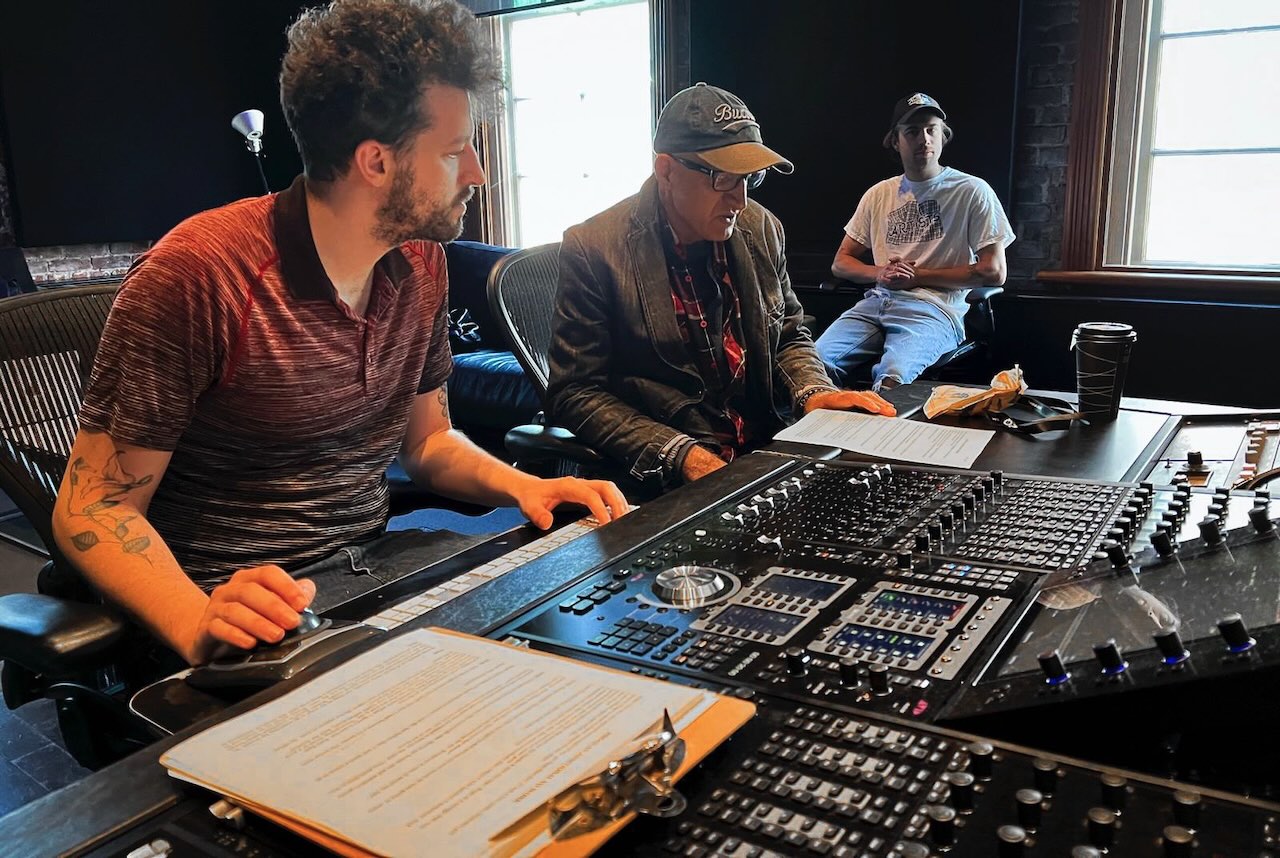
I’d prefer the term filmmaker. Documentary, to me, is not a category or a genre; it’s a way of engaging with reality through cinema. A documentary should first and foremost be a cinematic experience — something that moves you, unsettles you and stays with you. I’ve made both fiction and non-fiction films, but my intention has always been the same: to create cinema.
But cinema alone is not enough. We are translators between lived experience and public consciousness, and that translation must be honest, and hard-hitting.
As a social justice filmmaker, I don’t believe my job ends when the credits roll. In 2026, documentaries are no longer just records of what happened; they are interventions in what might happen next. Information is everywhere — what’s missing is meaning. That’s why it’s far more important to ask hard questions in a film than to offer easy answers. My hope is to create work that nudges people from empathy toward responsibility, and from responsibility toward action.
We’re no longer sitting in the back seat of history. We’re riding shotgun — and at times, we’re on the front lines. Not as heroes, but as witnesses who refuse to look away, and as storytellers who still believe that cinema, when done right, can help bend the moral arc in a more humane direction.
What are you obsessed with these days?
These days, my mind keeps circling back to one project in particular — a documentary I’ve been living with for several years about Phoolan Devi, known to many as the “Bandit Queen of India.” She was a social justice warrior and, quite literally, a female Robin Hood. Born into extreme poverty in a small village, she was punished from childhood for what the powers that be called a “big mouth” — in other words, an unyielding sense of justice.
At 17, after taking revenge on the men who had gang-raped her, she crossed a line that society had already erased for her. She became the leader of a band of outlaws, stealing from the rich, giving to the poor and dispensing rough justice to men who abused women and girls. Soon, she was at the centre of the largest manhunt in Indian history — and yet she couldn’t be captured. Ordinary people hid her, fed her and protected her. Her life doesn’t just read like history; it reads like myth.
I’m a nonviolent activist, and I don’t romanticize violence. But in Phoolan’s life, violence was not ideology — it was survival. After years on the run and a relentless pursuit by the police, she ultimately surrendered on her own terms.
Prison became an unexpected turning point. She read widely, practiced yoga, learned meditation and, after 10 years, walked out not broken, but transformed — with a heart emptied of hatred and a mind committed to nonviolent activism.
Later, she did something even more improbable: she ran for federal office and, after a campaign that sent shockwaves across India, won in a landslide — twice! Her story is extraordinary.
We were meant to finish the film in 2017, but our Canadian broadcaster suddenly went bankrupt, and overnight we lost 30 per cent of the budget. We had a choice: walk away or keep going. We chose to stay and fight on.
Today, the film is about 75-per-cent complete, thanks to the generosity of hundreds of socially conscious supporters who believe Phoolan’s true story deserves to be seen. What remains is the final stretch of an uphill road — and it’s one worth walking.
For those who feel drawn to this story — whether out of curiosity, solidarity or a desire to see it brought to life — our website shares the film’s journey, the history behind it and the people who have helped carry it this far.
This work can be heavy. How do you maintain a sense of lightness?
A great question! Well, I detox. Yoga, meditation, swimming, travel, screaming into empty spaces! Even so, the weight of suffering can overwhelm. But my work is about empowerment. People watch documentaries to feel inspired, to be moved to action. When I see audiences act on what they’ve seen, that is my confirmation. Social justice filmmaking is tough, but the world is tougher.
What advice would you give to young filmmakers?
I’d start by saying this: be patient with yourself. Filmmaking is not a straight line, and most of what really matters can’t be rushed or taught in a classroom. You learn it by failing, trying again and failing again! We don’t learn from our successes; we learn from our failures.
As a general rule, at the core of every great film is a great story. You can make a bad film with a good story, but you can’t make a good film with a bad story. The logic is obvious, yet it’s the very thing most film schools gloss over. Point of view and emotional truth matter far more than gear or technique. If you truly understand your story — what it’s about and why it needs to be told — you’ve already done most of the work.
The next essential element is people. Whether you’re working with actors or real-life participants, “casting” is destiny. Take the time to find the right voices, the right faces, the right energy. Once the human core is right, everything else — camera, editing, even budget — becomes secondary.
And finally, seek guidance. Not gurus, not gatekeepers — just mentors who are a few steps ahead of you and willing to be honest. Making a film is like walking through a dark jungle. You need an old hand beside you who has travelled that terrain before and knows the dangers: don’t go there — crocodiles; don’t step there — tigers.
Eighty per cent of a film’s success lies in avoiding the big pitfalls. Filmmaking can feel solitary, but it’s not a road you want to walk alone.
Hossein Martin Fazeli invites readers to get in touch with him directly. You can visit his website or email him. ![[Tyee]](/design-article.thetyee.ca/ui/img/yellowblob.png)
Read more: Rights + Justice, Media, Film







Notice about commenting changes
The Tyee’s commenting system will be moving to a new platform on Nov. 12. If you’re already a Tyee commenter you must register with the new system on or after Nov. 12 with your preferred username.More information can be found here.