




 SHARE:
[Editor’s note: In collaboration with CreativeMornings/Vancouver, The Tyee launched its Creative Forces series last fall to showcase the people in our region who are using their creativity as a force for good.
We posted a call for nominations inviting readers to nominate a ‘Creative Force’ to be profiled in The Tyee. Thanks to all who have sent submissions from across B.C.
Today, we’re pleased to feature a Creative Forces profile that arose from a community submission. Nominations are still open and editors review them on a rolling basis.]
Brewster Kahle is a librarian — the internet’s librarian, more specifically, a role he took on after helping to build the whole thing in the first place.
The American-born tech whiz is one of the digital world’s early architects. In the 1990s, Kahle worked to develop WAIS, the first client server text search system that enabled users to search databases on remote computers. It was a precursor to the World Wide Web. He co-founded Alexa Internet, an early web traffic analysis company later sold to Amazon for a cool $250 million. And in 2012, he became one of the first inductees to the Internet Hall of Fame, hailed as a global connector for founding the non-profit Internet Archive in 1996, as well its invaluable archiving tool, the Wayback Machine.
The Wayback Machine has been a free staple of the internet since well before most of us knew what a web crawler was. Last fall, the public service reached a major milestone, preserving its one trillionth website — a remarkable achievement, especially as the average life span of a web page is 100 days, according to Kahle.
His Internet Archive, on the other hand, celebrates its 30th birthday on May 12.
The internet has changed a great deal since Kahle’s work began, and not always for the better. But his mission, Kahle insists, is still the same: universal access to all human knowledge, free of charge. There’s still a ways to go, especially as media institutions and publishers consolidate power, enforce onerous copyright laws and tighten their grip over digital lending, limiting what libraries like Kahle’s can even do.
The culture deserves better, Kahle insists.
“What you need to be able to do, to think critically, is compare and contrast,” Kahle told The Tyee. “You need to be able to go and say, this is what this document, or this person, or this video, or whatever, said, and then try comparing it against something else. If you can't do that, if you can't rearrange things, then you’re subject to whatever you were told, and it just washes over you.”
“It's very pervasive. If you take television or radio or podcasts, they all have this sort of characteristic. But now it’s e-books, journal literature, magazines. They can change anything at any time. And they do! We know because we record these things.”
This interview has been edited for length and clarity.
The Tyee: Before we get started, do you have any issues with Otter, the AI transcription software? I’m feeling self-conscious about it.
Brewster Kahle: We’re way into AI. But just not by the people you think.
Looks like we’ve already started. Say more.
So the Internet Archive Canada is a library, and we have enormous amounts of material from about 300 Canadian institutions. Digitizing books and pamphlets and newspapers, collecting web pages, Canadiana, going back and doing microfilm and microfiche. You’re too young to —
Hey now. I’ve heard of microfiche.
You’ve done your time. Did you enjoy it? No! But digital, it’s so good. So basically, we digitize a lot of this material and make it available through the Wayback Machine, and also on archive.org, where you can go and find all these materials and do a full text search. With AI technology, we can go and bring anything — river surveys, fish studies over decades — to life, and make them relevant to researchers, scholars and end users.
What we want is a game with many winners. We want to make it so that lots of people can use these tools to go and bring these collections to life. So we’re all for AI tools and technologies. It just has to be married with a set of policies, so you don’t end up with just a few gigantic winners. Or actually, how it might work in Canada: no one doing anything, and then Canadians have to depend on American or Chinese megaliths to provide this, rather than 300 different organizations in Canada, all working together to [make] their collections digital, using the newest and best tools to make appropriate use of the heritage that libraries have been shepherding for centuries.
So you’re a supporter of AI in some uses.
Absolutely. I’m not a big supporter of some of the industrial policies that [empower] Big Tech organizations and Big Tech companies that we don’t even control. But actually, a lot of the problems behind the curtains are the publishers and the publishing conglomerates that control things at a level that you’ll never really find out, except through independent channels like The Tyee.
The increasingly adversarial relationship between publishers and libraries is still hard to wrap my head around. E-books have changed everything. I get that. And I know libraries distribute books freely instead of charging $24.95 for them, but still. Libraries are important!
We need libraries for strong structural support of free and open societies. And they’re getting basically smashed. We’re starting to see our civic discourse dissolve. Everybody’s basically digital learners at this point. Basically, anybody under the age of 40 is raised pretty much on what they’ve read on screens. And what’s on screens is not the best we have to offer. Hooray for Wikipedia, but we’re missing the library. So things are kind of coming unglued.
I actually wanted to ask about Wikipedia. In college, my professors hated it, but now it seems like mostly fascists hate it. How do you feel about Wikipedia? Is it an institution worth protecting, in your opinion?
We love Wikipedia. And we have done a lot to try to support Wikipedia. The Internet Archive archives all of the footnotes, the citations. We archive it right away, and we have for decades. And then, in 2017 — you can probably guess why — we moved to integrate our support of Wikipedia into Wikipedia. A lot of those links are dead. They don’t go to a live web page. So we fix them. We have now fixed 26 million broken links. We fix about 10,000 a day.
And you do that through the Wayback Machine?
The web archiving collects it. Wayback Machine makes it available. And then we have robots that will go over all of the links in Wikipedia, test when they’re dead, and we just put a link into the Wayback Machine.
I’m a huge fan of the Wayback Machine. As an author and journalist, it’s remarkable how often I rely on the tool for my work. I’m pretty sure I owe you an enormous debt of gratitude. But I have to imagine you get that a lot.
All the time. It’s what gets me springing out of bed in the morning. Because, you know, we have no stock options. There are no Teslas parked outside. This is civic infrastructure. Another thing we’ve done with Wikipedia is we took all the links to books and we tried to find them, buy them, digitize them and make it so that if you click, [it opens] right to the right page.
Why? Because it's great. But if you want to try to get your assertion into Wikipedia, then it really helps if it’s from a strong source, and it’s one you can click on. So we’ll work not only to fix the broken websites, but also go to papers, newspaper links, books, and try to make all of those work — and stay working — to strengthen Wikipedia. So we did this. That’s part of why we got sued.
I don’t get it.
The book publishers don’t want to have people be able to fact-check from Wikipedia, apparently. But [my vision] is the universal access to all knowledge. Can you make it so that we have the Digital Library of Alexandria? Can we make it so all the published works of humankind would be available to anybody curious enough to want to have access to it? That’s the vision of the internet that I signed on to create, and Internet Archive Canada is part of that vision.
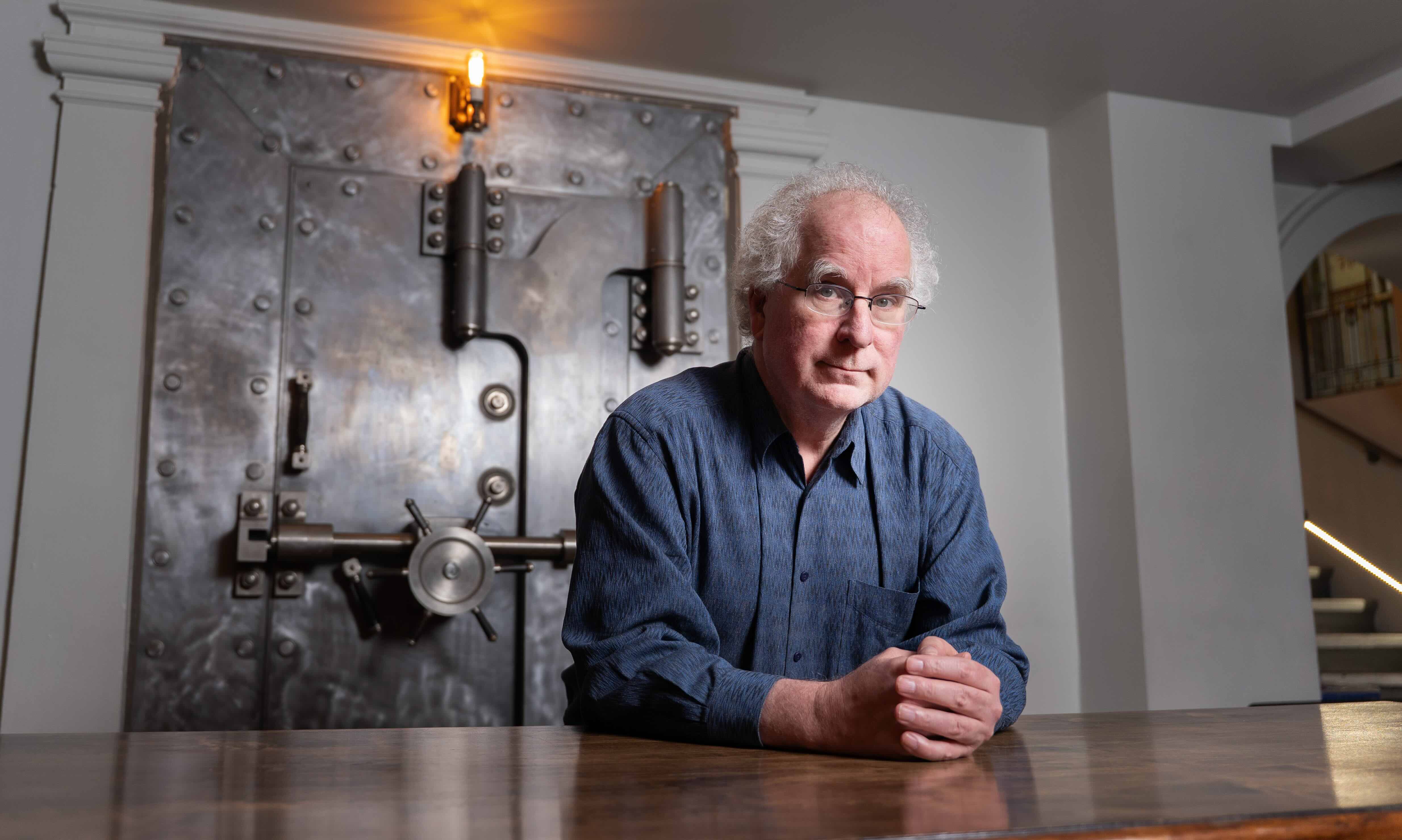
What drew you to this work in the first place? Why'd you do it, Brewster?
[Old man voice]: Well…
Are we going into a flashback?
Nineteen-eighty, in college, and a friend asks: You're an idealist? Yes. And a technologist? Yes. He says, tell me a future that's better because of your technology. I could only come up with two answers. One was to protect people’s privacy, even though they were going to just throw it away at any chance. The other was to build a library of everything. I tried to work on the first one but I couldn’t figure out how to do it cheaply enough, and to help the people I wanted to help. So I went to Plan B. And I've been working on that for, now, 46 years. We’re still not there. There’s no reason we shouldn’t be there. The technology exists. I thought this was long done. But basically, we’re getting massive pushback.
Especially now. I mean, the Trump administration is deleting data, I have to imagine, about as fast as you can preserve it. Have you, uh, heard from those guys?
The United States government is the largest publisher in the world. But you shouldn’t trust a publisher to do a librarian’s job. They change things. They always have, but nothing like what’s going on now. The websites, the datasets… And the only way that you know when things have changed is if it’s in a library. So this is democracy’s library. Worldwide, the Internet Archive works with 1,300 different libraries, archives and museums to build the web collections that are the Wayback Machine. You think of it as one thing, but it’s not. It’s our collective memory.
When did you launch Internet Archive Canada?
Internet Archive in the United States, 1996. Internet Archive Europe, 2004. Internet Archive Canada, 2006.
What motivated you to move to non-U.S. branches in the first place?
Not branches. We’re separate libraries. The idea is to try to have many legs to the stool, to have co-operating but distinct organizations so that there’ll be swap agreements between them, so that, if — when — there are either iron curtains or there’s destruction, there will be preservation and continuity of our digital record. Why? The Library of Alexandria, the great library, is best known for not existing anymore. I mean, it did last 500 years.
So having separate libraries protects you from encroaching governments, protects you from —
It’s actually corporations. It used to be church and King. Now it’s corporations that are really leading the way towards destroying our libraries. And then there are the governments that work for them.
I suppose this is why these projects all have a tinge of espionage. Doing my research, I learned you’re being somewhat secretive with the location of all your Canadian servers. Like, there are these ones behind me.
These are the cute ones.
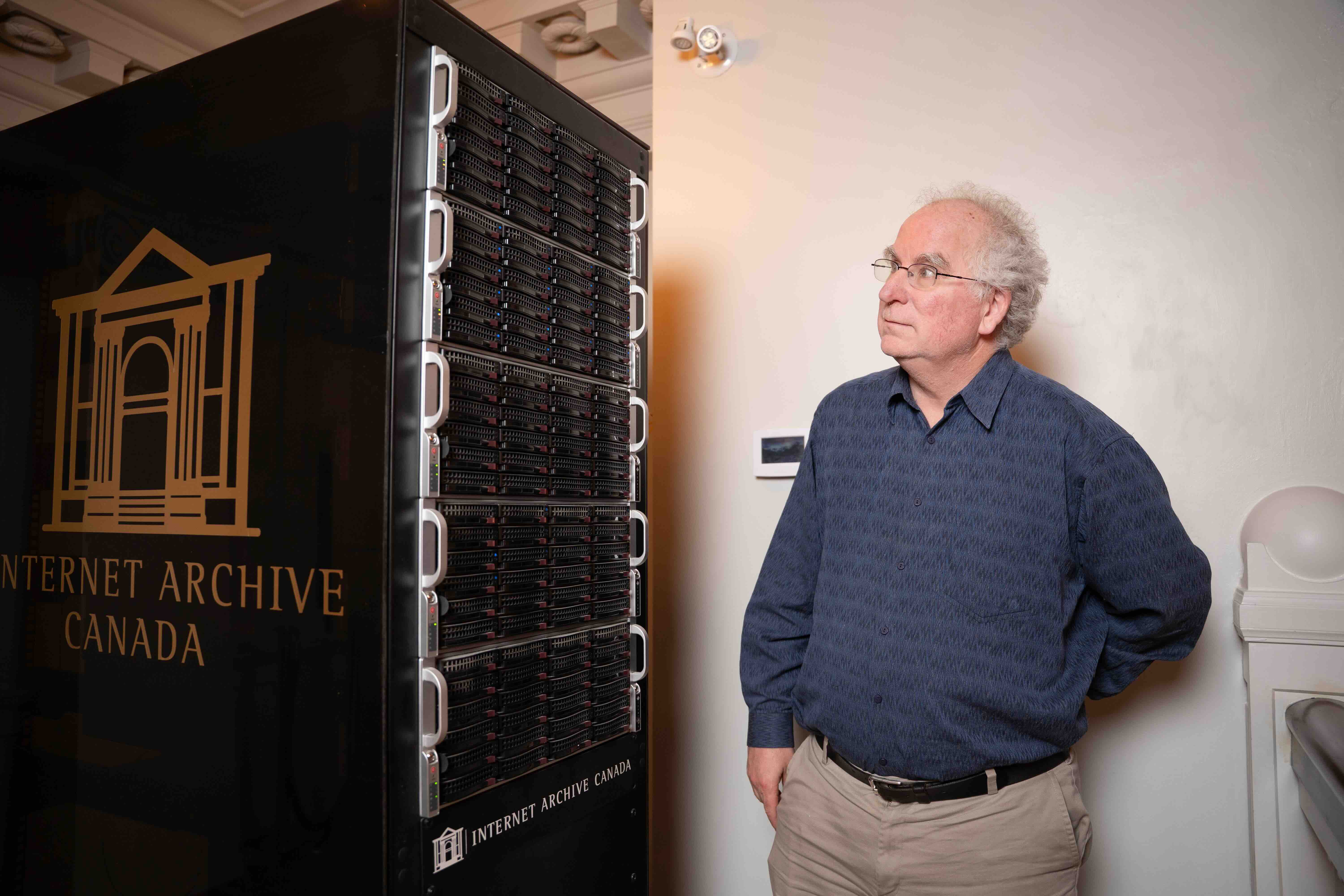
There’s something at the University of Victoria. But you’ve also got servers at an undisclosed third location. Any chance you want to tell me where that is?
No.
Why not, Brewster?
Okay, I’ll give you a hint. It’s in British Columbia. It’s a small place.
Seems like an important secret to keep.
I don’t know if it’s an important secret. It just doesn’t help us. I think where things might have seemed ridiculous a few years ago, people are saying it’s not ridiculous to think this way. Librarians have a long memory. We study history, and the history of libraries is that of destruction. Canada, I think, is good, stable ground.
For now, I suppose. How does it feel to be the only thing standing between the public and government and corporate censorship of the internet?
Our niche is, it’s probably unique, but we are embedded in the tradition of libraries. And all we want is to do our traditional function.
Not the last line of defence, necessarily. Just a library.
Just let us be libraries! And that’s a challenge. But people want access to these materials. The Internet Archive, in the United States, is about the 200th most popular website. There’s a couple million people a day using these services. It’s so encouraging to me. Just take the Wayback Machine, which hit a milestone last year, in October, of preserving one trillion web pages. By maybe over a billion people. There’s never been a library that’s had the voices of a billion people.
Hooray for the Internet Archive!
Really, it’s hooray for people. That’s what we should all be cheering about. These publishing conglomerates are all about restriction. But people’s interest is to make things available.
I have to imagine one of the problems with maintaining access to one trillion web pages is cost, and return on investment. How do you make money? I don’t understand how this stays afloat.
One way is to be really, really inexpensive. Probably way too inexpensive. But let’s take the total goal for the Internet Archive in the United States — about $30 million. It’s supported by three sectors. One third is libraries and museums paying to collect web pages and digitize books. That’s 10 million a year, and about 10 million comes from large foundations or individuals, and the final third comes from patrons, with those end-of-year pleas. They average $10 donations, but that adds up to, say, 200,000 people saying, ‘yes, right, keep going.’
Is that a big number or a small number in this context?
It warms my heart to know that 200,000 people take the time and effort to use PayPal or a credit card or Crypto or whatever, and donate. But the bigger societal message is that we need to invest as much or more in our digital, open ecosystem as we are in our closed, licensed lockdown ecosystem. And we’re not. The United States is not. Europe is not. And we are all suffering together.
So I didn’t think about this stuff much until this one night, when I was working on the web desk at the Vancouver Sun, and I received an email from a lawyer asking me to delete a story about a client’s indictment. He offered me money! I obviously didn’t accept. Not enough zeros. But that was, I think, the moment I realized the importance of digital preservation. I wonder how often that happens to you guys.
All. The. Time. A lot are just people’s blogs that they just don’t want around anymore. And that’s okay. We get these requests. They send them to [email protected]. And if they are the rights holder, the author, sure, it’s often small. The tough ones come when it’s government or bad actors that want to take things down. Things that they didn’t even write. And we’re starting to see these big publishers too.
How do you respond to that? Do you respond to that?
Sometimes they sue us. It’s a mess. I think we need functioning governments that understand what’s going on in our information ecosystem to try to combat disinformation, misinformation, spam, scams. And governments, often democracies, doing things that really hurt something like Wikipedia or the Internet Archive. Really hurt. Wikipedia, last I heard, at any particular moment, is being sued 40 times. So we need governments that want libraries to live. They have the power to be able to do it, and they’re not.
Do you think that governments should be playing this role, creating a backup of the internet, or just empowering libraries to do it and staying out of the way?
It’s a library’s job. The Internet Archive started up almost 30 years ago, trying to get the national libraries going. Some [governments] thought that they couldn’t collect the web. But they try to do what they can. At the national library of Switzerland, for 25 years, they’ve been trying to collect Swiss websites by asking permission. So they’ve gotten a total of about 15,000, which is a lot of permissions, but it’s out of five million they think they should have gotten. And if you want to see those 15,000 you have to go to Bern, to a particular building during the right hours, to a room, a single room, with a big sign over the door that says no cameras allowed, to the one terminal that will allow you to see those 15,000 websites.
Comically inefficient.
This is no way to run a culture! And this is common. So not only do we need libraries to be funded, we need them to have legal protections given to them by the government to do their job. The Internet Archive operates under U.S. law. Internet Archive Canada operates under Canadian law. And Canadian law has been bashed in ways that I don’t think most of your readers are aware of.
Tell me more about these so-called ways. Show me your ways. Let me count the ways.
Let’s take the public domain. In the United States, it’s 95 years. It’s been stretched and stretched and stretched. In Canada, it’s life plus 50 — until a few years ago, where the U.S. treaty pushed by the United States forced Canada to extend it to life plus 70. So now you have a 20-year drought, where nothing is coming into the public domain.
When I think about the public domain these days, my brain goes straight to Winnie the Pooh: Blood and Honey. Did we need that? Probably not. But it does seem problematic to learn that an entire generation just lost their public domain birthright. It sure would be nice to have that back.
There’s no public benefit. It’s just corporate benefit. Cory Doctorow, one of your fabulous citizens, argues that, with the geopolitical trauma that is going on right now, maybe it’s time for Canada to revisit some of these [limitations] put on Canada that are not necessarily for Canadians’ benefit. Let’s have rules and laws that respect libraries in Canada. Let’s have an educated citizenry that can turn to their libraries for a record of what happened digitally. Wouldn’t that be great?
And not only would that be great for citizens — you could then have startups here like you’d never believe. If you made it so that you can have startups go and use these materials to do socially beneficial things — still under copyright rules, but just allow them to exist — you would have a flourishing of economic activity in Canada. You would have sovereignty over your own educational materials for your children. You’d have new cultural institutions and small publishers start up because there can be open competition, and lots of small-scale publishers, because you have an ecosystem of selling rather than constraining it into the hands of very few monopoly organizations.
I know it seems like very difficult times with international relations, but Canada can now think more broadly about what would make the country function better from an information ecosystem standard.
Now is your chance. Now is our chance. And the Internet Archive Canada wants to be there to help as a non-profit library. ![[Tyee]](/design-article.thetyee.ca/ui/img/yellowblob.png)
Read more: Media, Science + Tech












Tyee Commenting Guidelines
Please note that email notifications for replies are not currently working due to a software issue which may be resolved in a future update.
Comments that violate guidelines risk being deleted, and violations may result in a temporary or permanent user ban. Maintain the spirit of good conversation to stay in the discussion and be patient with moderators. Comments are reviewed regularly but not in real time.
Do:
Do not: