

 SHARE:
Late in May, just over a hundred curious Calgarians congregated in Fort Calgary. Indigenous Elders, non-profit staff and civic officials gathered at the heart of the cultural centre amid scenes of early Calgary. A wide screen on the gallery’s side teased a big reveal.
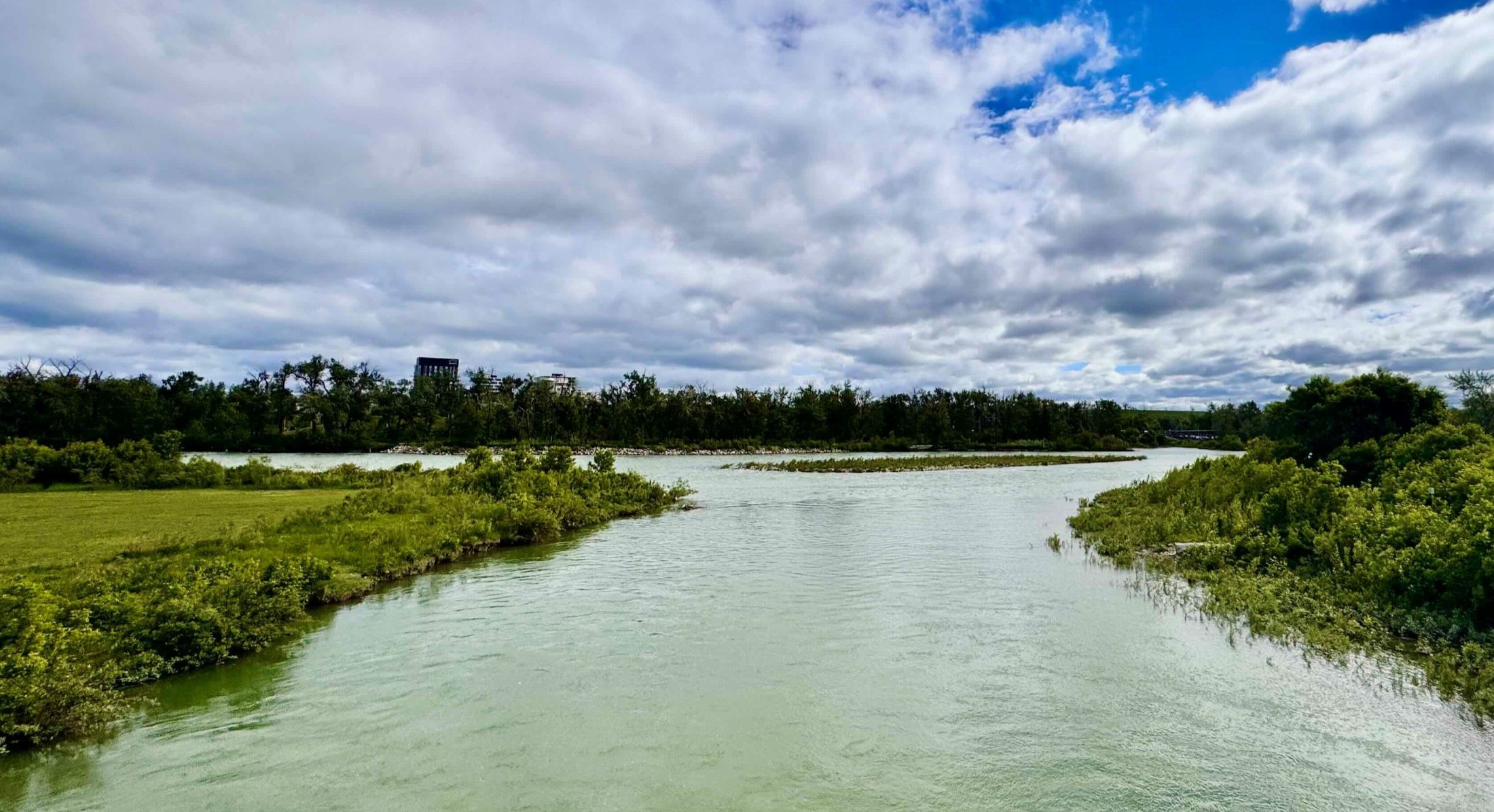
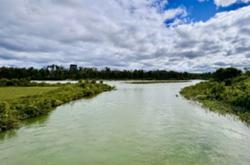
That morning, the Confluence Historic Site and Parkland Society, a charitable non-profit and civic partner of the City of Calgary, was about to unveil a 20-year plan for the 17-acre park that surrounds the historic North-West Mounted Police barracks replica near the confluence of the Bow and Elbow rivers.
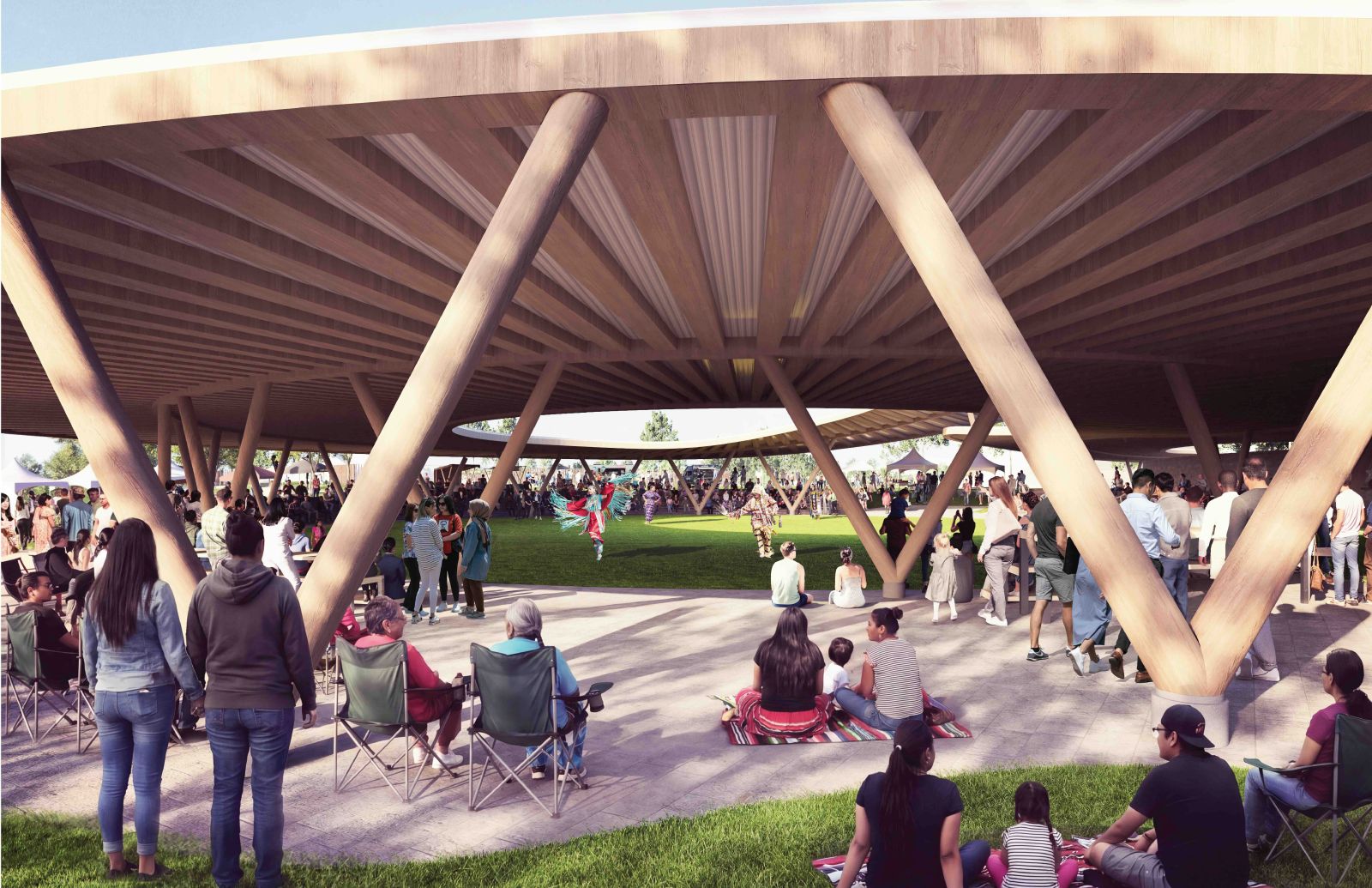
Designed by O2 Planning and Design with the feedback of more than 500 stakeholders, the plan for the Confluence: Historic Site and Parkland, or the park formerly known as Fort Calgary, proposes an array of distinct spaces that honour the city-owned site’s layered history, and enhance its potential as a vibrant urban hub.
At the southwest corner of the park, the plan envisions a covered stage and an open lawn, ideal for large outdoor music concerts and an array of cultural performances. Nearby, a circular arbour to host powwows is set to rise next to an Olympic-sized hockey rink.
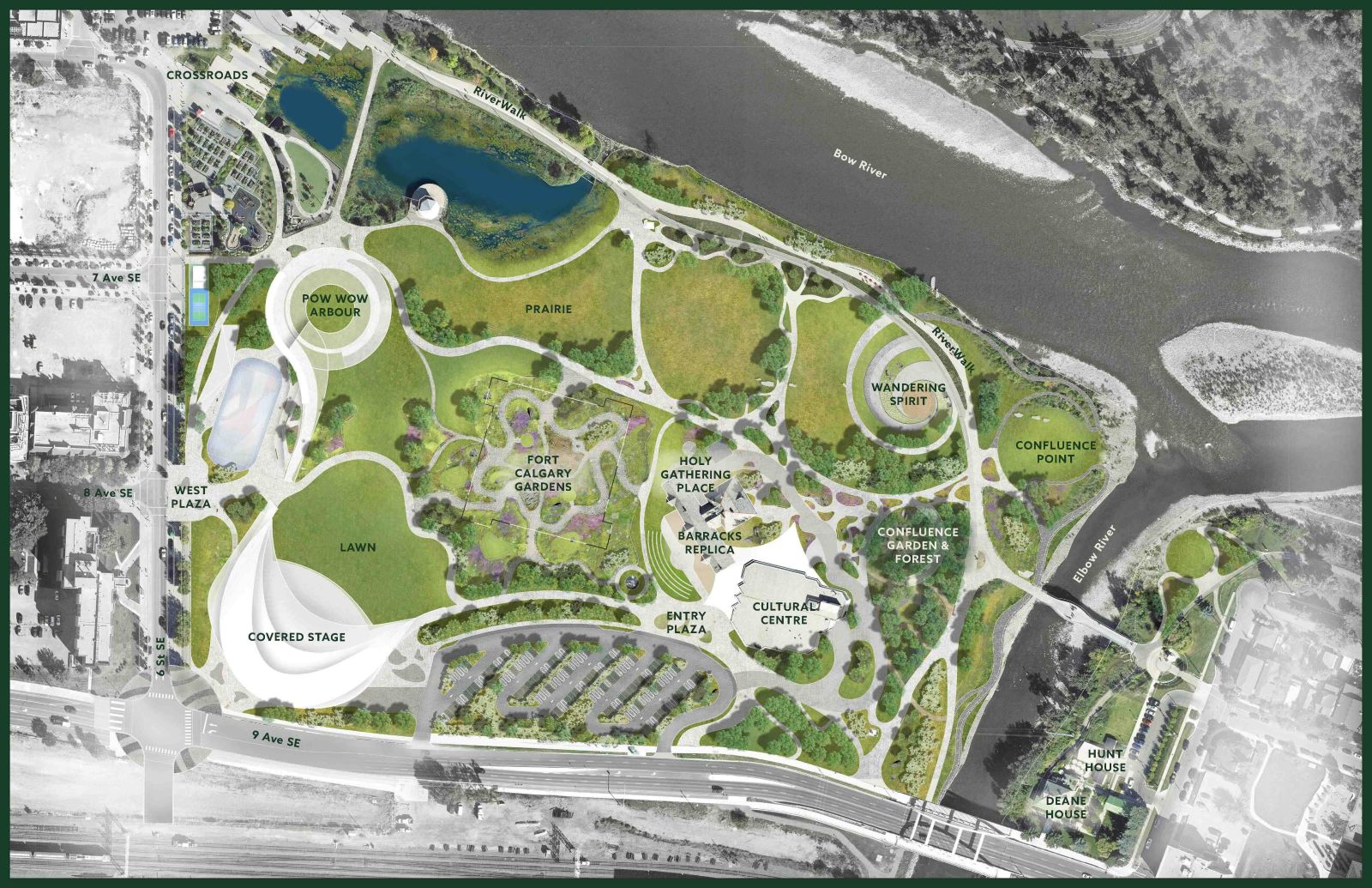
The location of these dynamic spaces along 6th Street SE is no coincidence. Soon, the road will lead to Calgary’s culture and entertainment district, where Scotia Place, the city’s contentious new arena, is being built.
At the centre of the confluence, a garden planted with native species is projected to bridge the park’s celebratory ethos with its complex history. Laid out at the confluence of the Bow and Elbow rivers, a residential school memorial and an outdoor gathering space should acknowledge the Indigenous significance of this place.
For millennia, the converging streams of the two rivers brought together Indigenous Peoples from across the region known today as Treaty 7.
Following the Bow and Elbow’s whimsy, Blackfoot, Stoney Nakoda, Tsuu T’ina and Métis peoples met at the rivers’ confluence to trade goods, tell stories, find kinship and partake in ceremony.
Over time, Indigenous Peoples stayed permanently on the site, farming the land and hunting for bison.
The Blackfoot gifted this place the name Mohkinstsis, alluding to the peculiar elbow-like shape that the rivers make.
But upon their arrival, the North-West Mounted Police renamed it Fort Calgary.
A commitment to reconciliation and truth-telling compelled the Confluence Historic Site and Parkland Society to develop a comprehensive vision for the park informed by Indigenous voices, Confluence Historic Site and Parkland Society president Jennifer Thompson told The Tyee.
For this reason, the civic partner retained Indigenous consultants to lead the Indigenous components of the master plan.
Paulette Fox, a Blackfoot associate of Hatlie Group, led the Indigenous engagement process. Similarly, O2 Planning and Design hired an Indigenous-owned design studio, Reimagine Gathering, to collaborate in the design process. “The vision of the site concept plan embeds Indigenous perspectives and it is centred on Indigenous voices,” Thompson said. “We imagine this to be a place for Indigenous Peoples to gather.”
But one group is notably absent from the master plan.
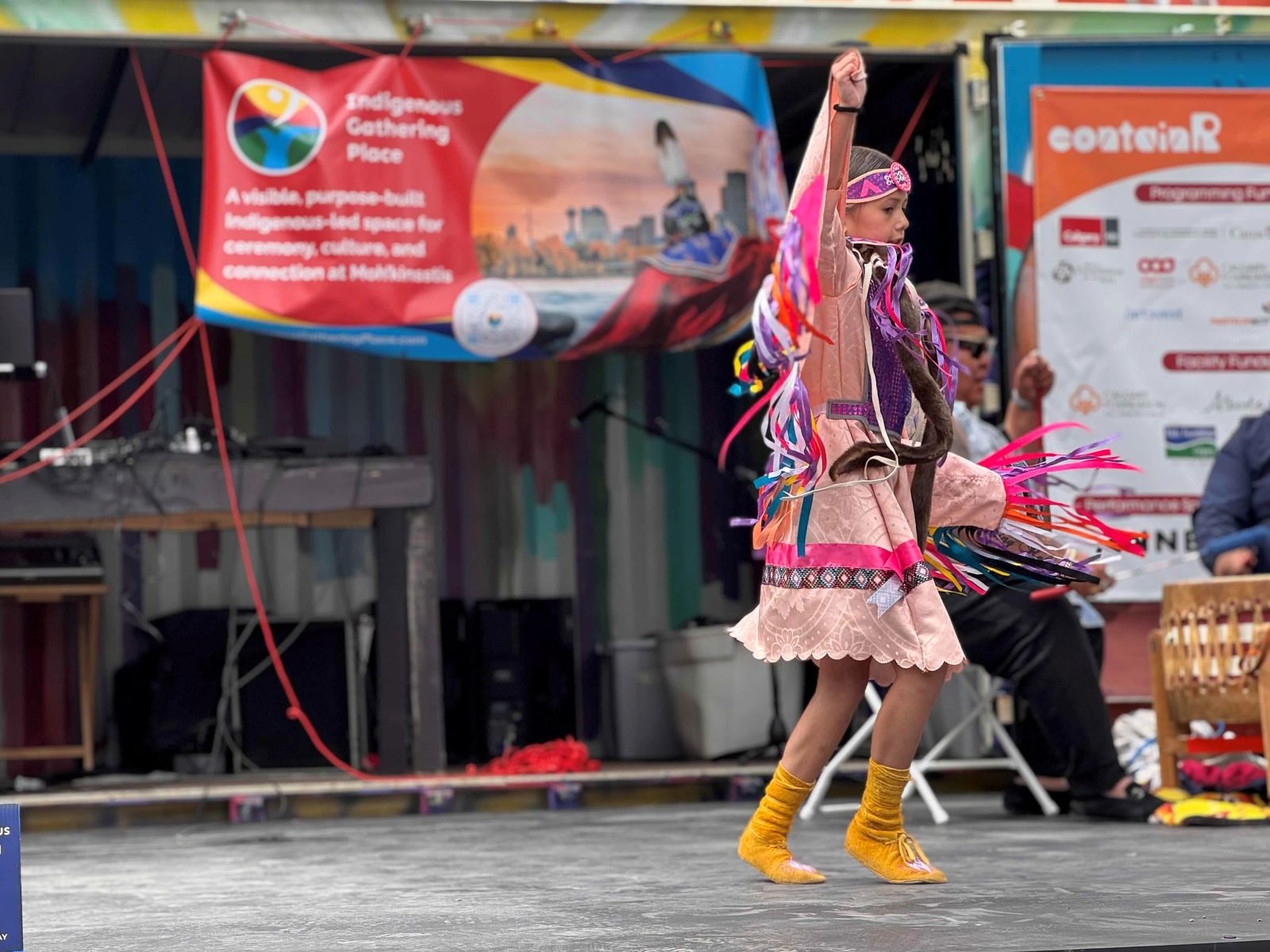
Since 2017, an Indigenous-led non-profit, the Indigenous Gathering Place Society, has sought an opportunity to lead the creation of an Indigenous gathering place at the confluence.
The group has been working to fulfill the City of Calgary’s requirements to secure a five-to-six-acre parcel of publicly owned land to build an Indigenous gathering place at the confluence of the Bow and Elbow Rivers.
“Many organizations have spaces for Indigenous people,” said Buddie Dixon, co-chair of Indigenous Gathering Place Society. “But these spaces are not led, designed, or developed by Indigenous people, with an Indigenous philosophy.”
Despite some promising momentum in the early going, the Indigenous Gathering Place Society is not part of the official plan for the confluence as it stands.
While the situation with the Indigenous Gathering Place Society is specific to Calgary, a June 2019 study published in the Journal of Urban Design suggests that the challenges Indigenous Peoples have faced in meaningfully influencing urban design is far from unique.
Even though cities actively engage Indigenous Peoples to inform decisions, conventional power structures remain unchallenged across Canada, said Heather Dorries, an assistant professor at the University of Toronto’s Centre for Indigenous Studies.
“Reconciliation is often depoliticized by reducing it to a set of box-checking activities,” Dorries said.
“But that really misses the mark in terms of what reconciliation means.”
‘For Indigenous people, this has always been the gathering spot’
Rather than retrofitting a space to accommodate Indigenous gatherings, the Indigenous Gathering Place Society seeks to build a visible, permanent place where Indigenous Calgarians can celebrate their culture, nurture relationships with one another and care for an ancestral landmark whose history flows into the present.
“For Indigenous people, this has always been the gathering spot,” said Indigenous Gathering Place Society co-chair Dixon, who is from Stoney Nakoda, Kainai and Tsuu T’ina Nations.
“We’re still connected to the confluence because of the stories that have been told to us of how our people have come to this area, and what they did when they were here.”
Initially, his group appeared to make progress.
In 2021, two years after the Indigenous Gathering Place Society presented its first business plan, the City of Calgary entered a memorandum of understanding with the Indigenous-led non-profit.
The city’s commitment to helping the group establish an Indigenous gathering place was enshrined by a pipe ceremony at the southwest corner of the confluence park.
By the fall of 2023, following council’s direction to identify an adequate site near the confluence of the Bow and Elbow rivers, city administrators reported having identified suitable areas, conducted site assessments and even established an alternative path to expedite changes to the land use policy.
Then the process stalled, until this year.
In March, city administration brought forward three parcels of land for the Indigenous Gathering Place Society to consider.
None of them are at the confluence, Dixon said, nor are they of historical significance for Indigenous Calgarians. While the Indigenous Gathering Place Society waited for city administrators to determine a suitable site for their initiative, the Confluence Historic Park and Society made significant strides.
Since 2023, the civic partner spearheaded the creation of the master plan unveiled in May.
The Confluence Historic Park and Society recently adapted a 1,000-square-foot section of the Fort Calgary replica for a space where Indigenous Calgarians can gather, free of charge, during office hours.
Other Indigenous groups were involved in the process of developing this space, but not the Indigenous Gathering Place Society.
Named naatowápitao’ohkánnao’p, Blackfoot for holy gathering place, the development of the space was guided by Elders and developed in partnership with the Aboriginal Friendship Centre of Calgary.
‘You have to be willing to change the way you do things’
For Dixon, such an outcome shows that decision-making processes still prioritize the goals of non-Indigenous organizations, relegating Indigenous Peoples to a stakeholder role.
“In reconciliation, whether you’re an organization or an individual, you have to be willing to change the way you do things,” he said.
“Make systems welcoming to Indigenous people.”
In 2015, the Truth and Reconciliation Commission of Canada described reconciliation as an ongoing process that demands Canadians not only acknowledge the harm inflicted and procure reparations, but also enable structural change.
To establish a respectful relationship between governments and Indigenous Peoples, the commission called for “dismantling a centuries-old political and bureaucratic culture in which, all too often, policies and programs are still based on failed notions of assimilation.”
Despite this, Canadian cities have been slow to overhaul the systems underpinning their political and financial power, said University of Toronto professor Dorries, who is also a member of Sagkeeng First Nation, in Treaty 1.
“Cities are willing to do a lot, but not go beyond the present frameworks of planning and decision making that they’re working with, they’re just not willing to disturb the status quo,” she said.
“Control of the land is the basis of political authority, if that is removed from the equation, then we’re not really moving the needle on reconciliation, it’s business as usual under a new name.”
When asked to comment on the absence of Indigenous Gathering Place Society’s initiative from the confluence master plan, Confluence Historic Site and Parkland Society president Thompson said that she couldn’t talk about the Indigenous-led organization’s project.
In an email statement, a spokesperson reiterated the City of Calgary’s commitment to supporting Indigenous Gathering Place Society’s efforts to establish an Indigenous gathering place. ![[Tyee]](/design-article.thetyee.ca/ui/img/yellowblob.png)
Read more: Alberta, Municipal Politics, Urban Planning



Tyee Commenting Guidelines
Please note that email notifications for replies are not currently working due to a software issue which may be resolved in a future update.
Comments that violate guidelines risk being deleted, and violations may result in a temporary or permanent user ban. Maintain the spirit of good conversation to stay in the discussion and be patient with moderators. Comments are reviewed regularly but not in real time.
Do:
Do not: