

 SHARE:
The theme of the Indian Summer Festival this year in Vancouver is “Ragas for a Ruptured World.” So, what does this mean exactly? The organizers answer with a further question: “How to suture the wounds that bind us?”
As part of the suturing process, Indian Summer has assembled a remarkable collection of performers, artists, writers and thinkers, with the aim of countering the divisiveness that threatens to tear the world into warring chunks. If you want to bring people back together, I would argue that one of the best methods of creating cohesion and community is humour.
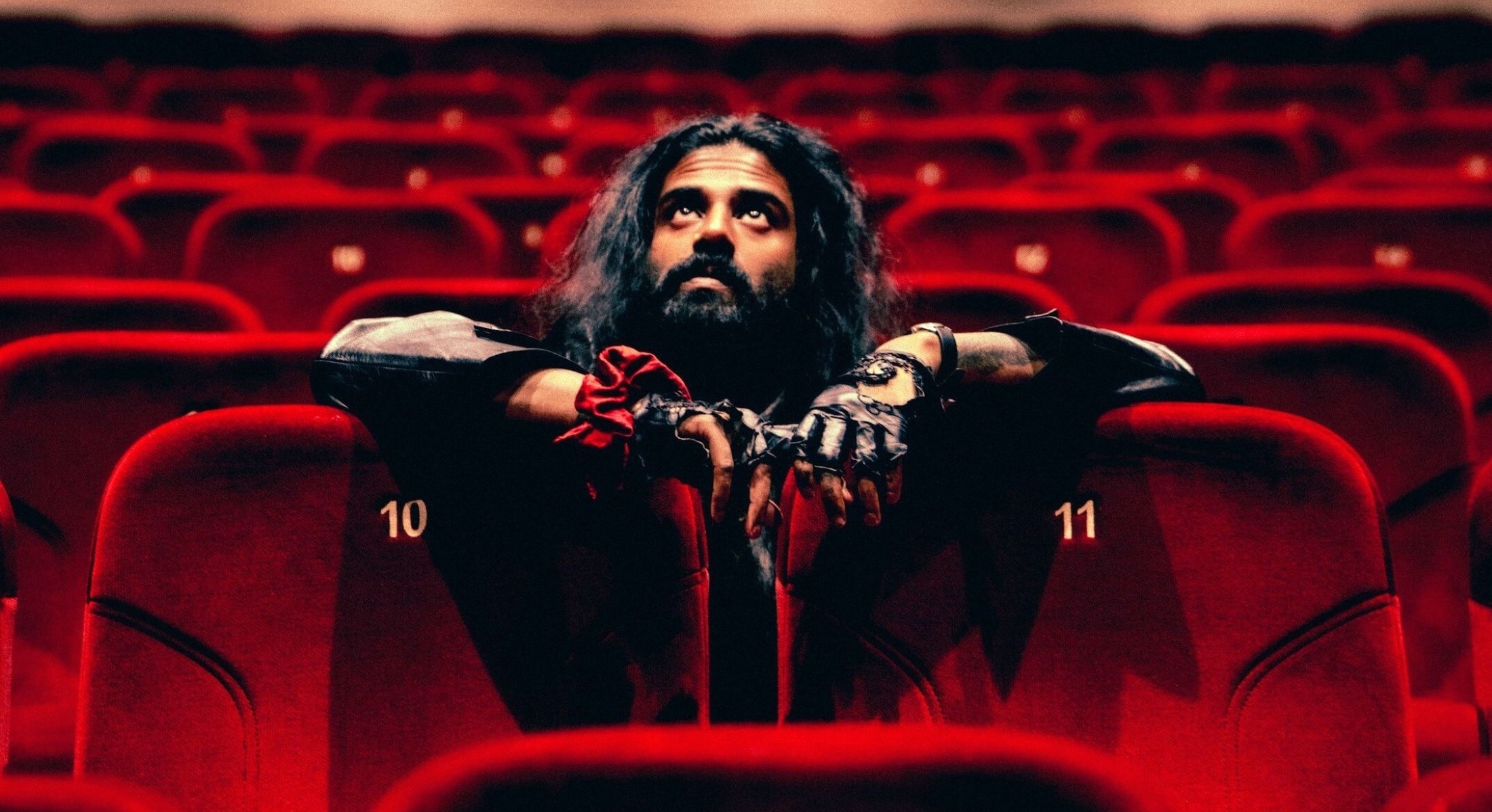
It is fitting, therefore, that the festival is opening with comedian Vidura Bandara Rajapaksa.
Born in Sri Lanka, Rajapaksa spent time in Maylasia, the U.S., and Europe and is currently based in London, England. This peripatetic life has given him a uniquely international perspective. Observations on the British drinking themselves into world domination, the German passion for recycling, as well as more personal explorations about work, relationships, and family are all the funnier for being so lightly offered.
Rajapaksa’s delivery, drier than sandpaper, flips the axis on touchy subjects like colonialism, racism and national identity. We see them anew as he gently brings all their absurdity and grotesquery into focus.
He kicks off one special by saying that when he mentions he’s from Sri Lanka “a certain segment of the population” keep telling him “about their life-changing volunteering trip though Southeast Asia. You know, like an angel that fell from Europe is building schools in rural villages because cheap labour is very hard to find in developing countries.”
After a few more twists and turns, he forges into conservative Christian foibles. Given his uncanny, long-haired resemblance to “chocolate Jesus,” he thinks about heading down to the local church to tell everyone “I’m back!”
Although his career in comedy is only a little more than a decade old, Rajapaksa has garnered acclaim from colleagues and fans around the globe. On the eve of his Vancouver debut, Rajapaksa spoke to the Tyee from an extremely warm London. This interview has been lightly edited for length and clarity.
The Tyee: I watched all of your specials, starting with the most recent and going back to your early days in Berlin. It’s interesting to see how you have used different mediums, whether it's documentary film, a literary essay or a stand-up special. Also, your work has sort of evolved from the personal into something that's broader and more political.
Vidura Bandara Rajapaksa: The work, at least with standup, tends to be whatever is on my mind in the time that I am given to write the next show, but as I've gotten older that has changed. When I watch the earlier shows, which I rarely do, I see a much younger man who had the narcissism of youth. I was dealing with a lot of internal stuff, and that showed in the work, whereas I think now I feel as though I've sorted out much of those things. Also, the circumstances of my life have become more stable to a point where I noticed my internal stuff is quite calm most of the time.
You have a brand-new Prime Minister in the U.K. The American president immediately leapt to disparage Andy Burnham. It must be best and worst of time to be a comedian because the level of ongoing absurdity in the daily news cycle is off the chain.
Absolutely. I feel like my standup rarely ends up being topical things, or if there is, it’s something very specific. Also with the news, I am a relatively disconnected person. I think I get away with it off the grace of my friends being very involved and informed people. I just use our group conversations as updates to what is going on, and then off the back of those I might go into my own reading. But just on a practical, pragmatic level it becomes trying to keep track of everything. It becomes too much of a task.
It feels like comedy is often at the forefront of this moment of social, cultural and political change. In testing ideas about free speech, for example, I’m thinking about the comedy festival in Saudi Arabia that set comedian against comedian. Is it strange having to navigate these fraught areas?
I think it's also the way comedy has grown to where it's come to be a mainstream art form. For the first time, people at that level are being offered scary amounts of money to do something. So, then it becomes more of will you act according to your principles or not? I think that's where a lot of people felt disillusioned. For some of the people that went to that festival it was like, “Okay, this sort of makes sense for this guy,” whereas more principles-focused people felt betrayed.
How much is enough? When I look at those big, big people that said yes, I don't know their personal financial situation, but I am assuming they're okay, that they don't need a cheque to pay rent or this sort of thing.
As a comedian, as your life has changed, so has much of your material. When you're in your 20s, it’s all about terrible relationships and things going horribly wrong. As you are growing older, how has that changed the content of your work?
I think the general process is about the same. I was doing the show in Berlin and a friend said, “Oh, I noticed, like, there's nothing about your parents in this one.” Those things have been settled for me. It's not on my mind so it doesn't make it into my work. And retrospectively, I can see, that it doesn't really live in my head the same way that it used to.
When one watches a lot of standup, you see comedians trying different approaches before they get to the final version of a routine. It's such a high wire act because you're doing it with real people who are indicating whether they think something is genuinely funny. Is that kind of immediate feedback useful to you?
Yes. I used to just put out the special on my own Instagram and then disappear for a year. Then I was told that I must be more consistent. I really feel bad for all the people that are trying to make me do the stuff I'm supposed to do, because I'm incredibly stubborn.
Your first one-hour special came out in 2020, which was a very weird time. Everybody was trying all these different things to keep doing what they were doing, without an actual stage and a live audience. That kind of enforced innovation can bring about some interesting stuff, because you wouldn't have done it otherwise.
I know that innovation is important at a conceptual level, but I really hate doing new things. I can look back at my work and see that it has changed and I've grown but I set out to do the same thing, but a little bit better, and then I guess because I've changed the work ends up changing.
It’s a fair amount of pressure to open a big festival like Indian Summer. How are you feeling about it?
When I'm lurking behind the curtain before I go on, if the audience is very, very quiet I'll get a little nervous because that usually means it'll just be a difficult night for me. But the show that I'm touring now is very well worked out.
In the early days, my self-worth was directly attached to how each and every show went, whereas now it's a positive thing, I judge myself on how well I did my job on a given evening and try not to think about too many of the other factors, because they tend to just be distractions most of the time.
Vancouver audiences can be highly unpredictable, as Canadians are usually fairly reserved by nature but when people here collectively lose their minds as an audience it's always interesting, because it feels slightly out of control.
That’s the fun thing about a live show, really, is like the possibility of that occurring.
Do you ever miss the earlier scrappier years of being a stand-up comedian? In watching the Open Mic documentary set in Berlin, I liked the rough and ready independence of it all and using failure as a tool to learn how to be better at what you're doing.
I'm very happy that I had those years, and that I had a very uncontrolled environment. I’ve noticed people that started doing stand-up in London from the very beginning are very methodical and career-focused, and that needs to happen at some point, of course. But it was nice to have the years of really not thinking about any of that and just, you know, being a part of the scene and getting good at the thing.
The standup comedy scene in Berlin seems so community-minded and quite supportive.
I don't think anyone, myself included, would have used the word community to describe it, but it sort of was. A bunch of similarly deranged or aberrant people slowly found each other through common interests, and there was like communal aspect to keep things going, and also little fights. Like one open mic [night] would have free pizza to get people to come, and then another open mic started doing free pizza, and then the first one called them and said, "Hey, free pizza is our thing!” Even the conflicts were very charming in hindsight.
What are you most interested in doing next?
Standup will always be the main thing. I'd like to write a book, maybe do an essay collection or a scripted project. I like that stand up happens in my head, at least the ideas happen in my head. I'm doing an animated stop motion short film for the museum back home. It’s nice to have something that doesn't need to be commercially viable. I have fun stuff planned to keep me occupied for the next year or two.
Indian Summer Festival takes place in Vancouver from July 9 to 19. Find tickets and scheduling info online. ![[Tyee]](/design-article.thetyee.ca/ui/img/yellowblob.png)
Read more: Theatre


Tyee Commenting Guidelines
Please note that email notifications for replies are not currently working due to a software issue which may be resolved in a future update.
Comments that violate guidelines risk being deleted, and violations may result in a temporary or permanent user ban. Maintain the spirit of good conversation to stay in the discussion and be patient with moderators. Comments are reviewed regularly but not in real time.
Do:
Do not: