

 SHARE:
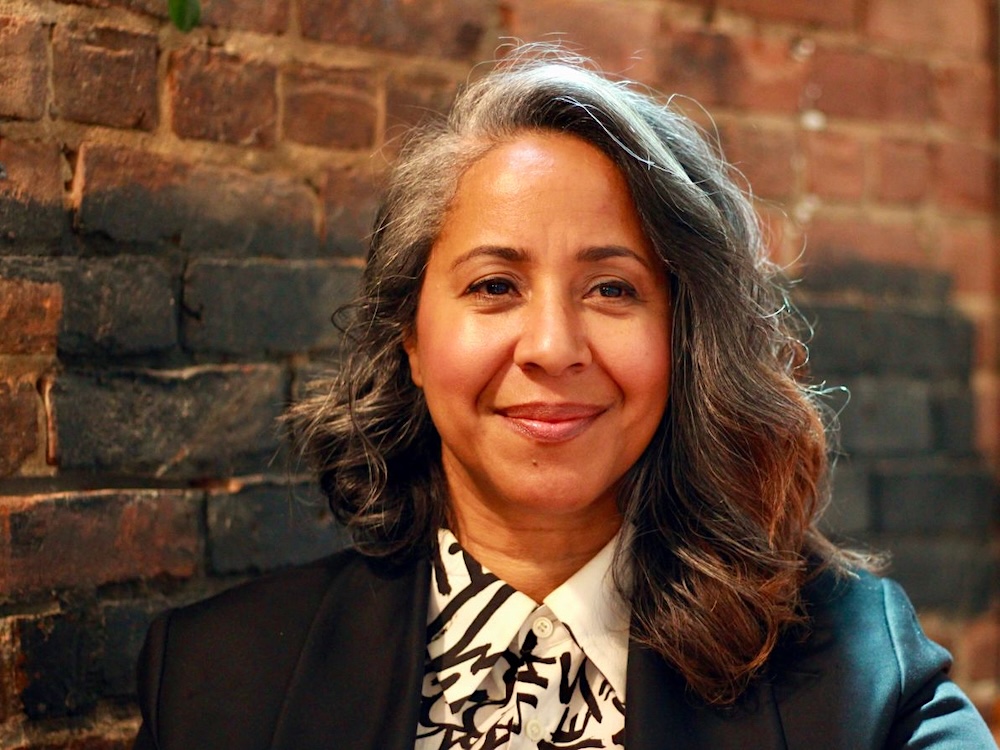
Stephanie Allen has been a community leader for a long time now.
For over 20 years, Allen has spent her career working in housing development in the province. From for-profit condominiums and multi-family homes to non-profit and later public housing growth through her decade-plus at BC Housing, Allen says she is dedicated to seeing every Vancouver resident living in a home they can afford.
She is also a founding board member of Hogan’s Alley Society, named after the predominantly Black neighbourhood in Vancouver that was bulldozed and replaced by the Georgia and Dunsmuir viaducts in the late 1960s.
Allen focused her 2019 master of urban studies graduation project at Simon Fraser University on how past and present urban planning led to the displacement of the city’s Black residents. The award-winning research project also examined how the city’s current planned redevelopment of the area could help achieve redress and justice for the Black community through affordable housing mechanisms like a community land trust.
But before the Coalition of Progressive Electors, better known as COPE, approached her to run as mayor in this fall’s municipal election, Allen never wanted to be a politician.
“It was never in my cards. I just didn't really feel a connection to that,” Allen told The Tyee in early June when we met for an interview at East Van Roasters in the Downtown Eastside.
“But what they wanted was someone to work with a party in a moment that needs and demands political courage. I think they recognize that we can’t depoliticize the moment we’re in.”
Allen moved to Vancouver from Kelowna in 2010. She was at a point in her career where she wanted a change from working in for-profit companies to working for non-profit and public housing developments.
“I really wanted to be in a big city with a lot of diverse people and cultures,” she said, adding that included a more diverse social scene.
Despite the 2010 Winter Olympics having an accelerating impact on Vancouver’s real estate and rental markets, Allen was lucky enough to find a one-bedroom apartment in Kitsilano in a pet-friendly building for just $1,100.
It’s an opportunity the mayoral candidate knows few in Vancouver have anymore — a reality she is hoping to start down the path towards changing, should she and the COPE councillor slate win enough votes this October election.
Heading into the civic election this fall, Allen is facing a crowded field on the left side of the political spectrum. William Azaroff, who also had a career in social housing development, is running for mayor with the centre-left OneCity party. Pete Fry, a longtime Green councillor with likely the highest name recognition heading into the election, has also decided to run for mayor. The three parties are in ongoing negotiations to try to avoid splitting the left-wing vote.
Also throwing their hats in race are Colleen Hardwick with TEAM, Kareem Allam with the Vancouver Liberals and Rebecca Bligh with Vote Vancouver. And sitting Mayor Ken Sim is expected to run for re-election with ABC Vancouver, which holds a narrow majority on council presently.
When we sat down for the interview at East Van Roasters, a social enterprise run by Atira Women’s Resource Society that trained low-income community members in coffee roasting, chocolate making and barista skills, Allen broke some sad news. The café providing valuable work skills, a reliable paycheque and reasonably priced lattes in the city’s poorest neighbourhood would close its doors for good before the end of June.
It’s not as though the need for entry-level, skill-building jobs has disappeared from Vancouver. Rather, East Van Roasters’ impending closure was another sign for Allen that the city isn’t going in the right direction under the current ABC-majority council and mayor.
“One of the most exciting things about this moment, winning with a COPE slate and [potentially] becoming mayor, is that we take the power we are given and give it back to people,” Allen said.
“I come from a people that have had a long tradition and history of demanding power for people. And this to me is this incredible opportunity to give power back to people.”
The following interview has been edited for clarity and length.
The Tyee: Everyone has a story of what kind of city Vancouver is. What kind of city is Vancouver to you?
Stephanie Allen: When I think about what the city is now, for younger people, people coming to the city to build a life, contribute and achieve things, we’re seeing that opportunity dry up and almost disappear. There’s these incredible, hard and tragic stories here. Also, there is this radical hope and commitment to making it better.
The city for me is also a place where I fell in love; I met my partner here. It’s a place where my mother spent her last years with us. It holds a lot of love for me. And it also holds this increasingly difficult challenge of making it a city where people feel like they are loved and taken care of.
Why are you running for mayor?
Because I deeply care about people, and I can see what is happening when systems and institutions are poorly managed. The impact it has on people’s lives, truly. What I bring to the table is a combination of wanting the city to win, and also understanding that good governance and a really effective management of governance is what it takes to help us to get there.
I want every community to win. I know that’s really complicated. But what I have found, and the success stories that inspire me, are always when people’s voices are brought to the table. We hear from the range of perspectives on matters, and a path is charted forward, considering everyone.
Why run with COPE?
It’s important that we don't have another mayor and council that gives us fake smiles, pandering, without actually delivering on what they’re saying they’re doing. There’s a dissonance and a complete disconnect with the words and our experiences. We need to stand for justice, for decency, for affordability for people.
COPE is a party that rocks the boat, and they know that I'm one, too. And we’ll do that if we need to, to make the changes happen. We know that none of the gains we’ve experienced as a society, whether it’s human rights, fair treatment or shared prosperity, have been won without fighting for it. So it’s our duty now to be good ancestors, recognizing the people that did that for us, and that we’ve got to do that for the next generation.
What sets you apart from the other mayoral candidates?
My track record. I really do have a deep and lasting care about people. And I’m unflinching when I describe what a system is doing, and the root causes. It’s very convenient to ignore the root causes of things that are driving us into greater and greater anger, greater and greater polarization. Especially if you can capitalize on it.
Right now with the collection of experiences I’ve had working across the entirety of the housing system, I take an entire-systems look at things. We won’t change the system in four years. We won’t even fully change the system in our lifetimes. But we have to set that North Star and walk with truth telling towards it. And make sure that people are included. I want to decrease polarization in this city. I want to see us mend fences, find where our shared values are and build from there.
Where do you think COPE sits on the city’s political spectrum?
They’re the most left, perhaps, on our current political spectrum. Particularly when we’re seeing a creep right now in who we used to consider left-leaning or centre-left political parties. Whether that’s locally, provincially or federally.
How do you respond to the criticism that because there are so many mayoral candidates right now, the vote will be split and Ken Sim will be re-elected?
I’m really encouraged by the unity agreement that COPE helped negotiate among the three progressive parties: the Greens, OneCity and COPE. It agreed that each party would identify and run a candidate for mayor over the summer. And there would be a series of metrics they would evaluate on who might be the best person to put everyone’s energy behind, when it comes time.
That is a sincere negotiation. In the meantime, we’re going to put forward our platform. We’re going to talk to voters, we’re going to be COPE, as COPE has always been. And we’ll see how that resonates with folks.
If there’s a clear winner, we all have to agree that we’re going to get behind who is the clear winner. And make sure that they have a path to success. Absolutely.
Do you feel confident that there will be an agreement between the parties on who should step down?
I do. We’re just so all laser focused on making sure we don't have another ABC majority. I think we’ll get there.
How should the city deal with Vancouver’s housing and homelessness crisis?
The housing issue is understandable, knowable and solvable. The solutions are absolutely knowable. However, I don’t think we’re seeing the kinds of movement towards those solutions that are necessary. We have to put the public back in housing. I’m really discouraged to see the City of Vancouver use public land for market housing.
It’s going to take significant public investment, significant use of city assets and a determination to make sure we have housing across the income spectrum. The city has a property endowment fund that is worth around $6 billion. The city also has an affordable housing endowment fund that’s worth about $2 billion. Both of those are significant leverage when negotiating with the senior levels of government for the kind of investments that we need to really deliver a substantial amount of housing.
We’re starting to look at numbers that we could lever with the public assets we have. [With] the other levels of government, working with the non-profit sector, co-op sector and developers that are keen to contribute to this, we could deliver 20,000 units of housing.
Do you have a timeline estimate?
It's not just the city delivering it. But we can look at the enabling power of the land assets we have and the financial opportunities to leverage those assets. It’s also bringing back inclusionary zoning, which this administration has cut. That was a very valuable source of below-market housing. I know at least two people I’ve met in the last while that both moved into below-market homes in these market buildings. That’s super important.
It’s not doing things like vast swaths of upzoning without negotiations. It’s taking the recommendations from the auditor that found the real estate department left millions on the table — money that would have gone directly into delivering cultural amenities, community amenities and affordable housing.
Why do you think past councils have not leveraged the city’s endowment funds and other assets?
I think it’s regarded as quite sacred and quite protected. Listen, it is important for our city to have assets. But I think we also see a lack of either understanding or a lack of care. The political will is not materializing to address affordability in the city in a meaningful way.
And as a matter of fact, we’ve just lost so much ground. Particularly on things like tenant protections or protecting the affordable housing that exists already. It’s out of all of those buckets where we see the opportunity to lever 20,000 units.
And the inclusionary zoning, would you keep it at 20 per cent of units set aside for low-income tenants or would that percentage change?
We’ve got to dig into the pro formas and see exactly what developers are making and what’s feasible. We’re not trying to put folks out of business, and we want to encourage, especially small builders in our town that have great local connections. So, yes, that’s at least the minimum. But I think it requires bird-dogging these financial analyses that developers are using to make these projects, instead of just relying on minimums that they’re willing to do.
What is your ideal housing form or forms for the city?
I like a leafy green neighbourhood, but I know not everybody does. Some people do love the feeling of being in a tower and having more expansive views. That’s why we need a better community-led planning process. Every bun has its cheese, right? Not everybody is going to be interested in the same thing.
The most important thing is cutting through the divide that has happened between the yeses and the noes of backyards. This has become such a flashpoint that we have stopped listening to one another. We’ve got to get back to community-led work, community engagement and recognizing our underlying values.
How should the city address our mental health and toxic drug crises?
These policies are deciding whether people live or die right now, whether they recover or whether they relapse. At BC Housing, I was advocating for day spaces for people that are on the street. They can get rest, respite, it could reduce the street activity that was affecting businesses and residences. It was supported by a lot of different organizations. But the city took a very sharp turn towards enforcement instead of care, when Ken Sim became mayor.
When people are ready to recover, they need some place to go then, instead of a wait-list. When they go through recovery, they need housing that will support recovery and not be preyed upon by dealers. That’s super critical.
Those of us that are not living these realities are suffering a significant moral injury every time we have to shut down our empathy and compassion. It’s not good for us mentally, spiritually. It’s not good for the collective soul of the city.
We have to demonstrate we care about people. We have to take care of them by meeting them where they are and making sure the resources for them to get well are abundant, available. And not continue to make them the villain, which is what’s being done politically.
Speaking of criminalization, there's been a lot of emphasis on crime and safety in the election campaign. But reported violent crime rates are going down. How would you address people's public safety concerns?
We have to recognize that policing is not the best way to deal with poverty or mental illness. The police budgets are decided by the province. So at a minimum we need improved transparency and accountability under how funds are being spent and what those impacts are returning to us as a collective. When it comes to poverty, let’s address poverty. And when it comes to people surviving, let’s address that as a separate matter.
I recognize these levels of street crime have become the political football. But what I’m also most interested in is to see our justice system address gender-based violence. The powerful who have been preying on women and children in our communities. That is one of the best investments we can make as a society, and in the long-term health of our communities. There’s often this terminology around public safety that might obscure these private crimes that are having these public impacts.
You mean what we’re talking about is crimes that we see on the streets, versus what’s happening in people’s homes?
Right. And for the majority of people I met in encampments in Oppenheimer and Strathcona in 2020 and 2021, a lot of stories of childhood trauma, a lot of stories of foster care, a lot of stories of abuse. These are the results of those crimes not being addressed, prevented or dealt with.
Speaking of the police, they make up a fifth of Vancouver’s budget. How would you respond to what seems to be their annual request for more money?
When council voted to freeze the budget, Jean Swanson of COPE stood up for that. And then years later we have hundreds of millions spent on overtime and military-level equipment, and how much safer are we? Yes, crime rates are dropping. But were those the reasons? Were there other reasons? We’re not clear.
We do need greater accountability. We can open the books and look for efficiencies in this budget. If the city is losing our ability to change police budgets, we need to make the people who are making these decisions accountable for property tax increases. It’s a bit of a shell game, because the city is taking the heat for budget increases. But they’re being imposed upon by higher levels of government.
It’s about engaging the public, about recognizing what works and what doesn’t. And addressing where crime is occurring, from the street level, caused by the mental health and addictions crisis. And then really let’s turn resources into protecting women and children in our communities [who] are not showing up enough in the conversation.
COPE was shut out in the last municipal election in 2022. But then the party came back in a big way during the 2025 byelection. What does that tell you about what Vancouver voters want right now?
Vancouver voters are attracted to people that are keeping it real, without the bamboozle. They responded so well to COPE because of the track record of the party. Because of Sean Orr’s unflinching commitment to that. We’re seeing people disengage with business as usual and really want people that tell them the truth. Even if the truth is hard. How do you fix something if you’re not willing to speak about it in terms that are honest and without politically misleading interpretations?
And people are getting more educated, as well. Social media has been such an important opportunity for people to hear directly from impacted communities. And independent media. Other sources that people are getting their information from, that may not have the same political influence as corporate media.
You spoke earlier about your time at BC Housing. You were there when the scandal with Atira Women’s Resource Society happened. Why should Vancouverites put their trust in you?
The scandal that happened at BC Housing named certain people. I was not one of the people that was named, but I was in leadership at the time. And I recognize how that can erode trust in institutions.
My track record at BC Housing and the departments that I was in charge of were much more on the ground with community. [That] allowed me to work very closely and build my relationships and demonstrate what I stood for.
I led two decampments for BC Housing in Oppenheimer Park in 2020 and then 2021 in Strathcona. I led the research into the heat dome deaths about how social housing was impacted and what preventions needed to be in place. I led BC Housing’s inaugural reconciliation strategy by fully empowering the voices of our Indigenous housing partners and First Nations we worked with. I led the initiation of our accessibility strategy by working directly with community.
I recognize that BC Housing as a legacy organization comes with a lot of pros and a lot of cons for folks. But where I have made relationships, demonstrated my integrity and been singularly focused on the impacts and the outcomes to people’s lives, I feel really confident and good about that, moving forward into this campaign. And happy to put my record out there.
Without really speaking to that investigation, which I didn’t even participate in, it was a forensic audit, so they had all of my documents. But I wasn’t even there.
What’s your hopeful big picture for Vancouver? And how do you pay for it?
The three areas for us: making the city affordable, protecting tenants and renters, and re-establishing community-led participatory processes that bring people to the table. We [want to] implement opportunities for people to have great world-class public services and infrastructure. Like libraries that are open and accessible seven days a week. [We want to] implement programs for grocery stores throwing out food. We can divert those into food programs, into schools for kids on a broader basis.
It’s OK to pay property taxes. We pay the lowest of any major city in Canada. And I think most people are happy to pay property taxes to have good public services and to make sure that we are taking care of everyone in the city.
But we can also do participatory budgeting. There are great ways to bring community-led planning into the budgeting process. Not everything can be done at once. But making sure that people have a hand in how it’s going, and therefore are supportive. The biggest win will be to be having public hearings with no one showing up, because most people are in agreement.
Are you a homeowner or a renter?
My husband and I bought our first condo recently with family help.
How would you run an annual budget process as compared to the most recent one last fall?
Not having 600 people show up to say “This is not right” and then ignore it. Participatory budgeting is critical to bring communities into this process. And make sure that we are spending where it has impact, spending where there is need, and that people feel their voices are included in decision-making.
Big organizations do this anyway. We ask everyone what's happening in their departments and what's needed. There's prioritization, that's another element of participation. But [we need to recognize] that cutting people completely out of the process has really had a massive impact on public trust.
What do you make of the perception that COPE doesn't have a serious economic plan for the city that would include the business and industrial sectors?
We care so much about a local economy. It's critical to make sure that local businesses, local artists can not only afford to open and sustain their business — hello, look where we're sitting — but also that their rents are affordable. The real estate speculation is impacting commercial real estate, as well.
There's a significant opportunity in the city's property endowment, which owns a lot of these assets, to invite organizations that support local business development, like the Community Impact Real Estate Society. That support local job creation, that are contributing to our local economy.
Where there are big corporations that we know are also important to the city as far as jobs and economic development, we just want to make sure that they're also good citizens of our city, that they're contributing. We don't want to see capital or private equity that just wants to squeeze this city. They have to be contributors. It's not optional.
Vancouver used to boast of becoming the greenest city. But we lost a lot over the last four years: the city’s sustainability department was dismantled, requirements for gas stations and parking lots to have EV chargers were eliminated, funding for energy retrofit programs was cut. How would you address these cuts and further the city's climate change preparations?
We not only want to reverse those things, but we also want to go further and build on them. We also want to make sure that we're not pitting money saving or cost against climate. That is one of the ways that those who profit from the continuance of emissions unchecked are benefiting from this kind of trade-off between what's affordable and what's for the climate.
We want to see incentivizing a change in behaviour. That's a great way to get better adoption. Talking to senior levels of government about the political will to drive the expansion of infrastructure necessary to transition to a green economy. Making it an end-user cost all the time is not always the best thing. When you build a bridge, you don't make the last person that drove over it pay the cost. It's a public investment.
How would you approach a relationship with both the urban Indigenous community and the three host nations: xʷməθkʷəy̓əm (Musqueam), Sḵwx̱wú7mesh (Squamish) and səlilwətaɬ (Tsleil-Waututh)?
We're in this really horrible moment where stale-minded bigotry is making a comeback in our public discourse. It's undermining relationships with First Nations and urban Indigenous populations. It's critical for the City of Vancouver not to backslide on human rights or on nation-to-nation relationships. The United Nations Declaration on the Rights of Indigenous Peoples is a very important, significant document.
The duty to consult is not an option. It comes from the Charter, from our courts. We have to stand up for what's right. That means partnership with First Nations and respecting their right to self-determination and sovereignty. Being a partner and advocate with urban Indigenous groups we know are overrepresented in low-income, homeless populations, populations that are still feeling the impacts of colonization. And we should really take the time to continue telling the truth.
The city is also where we can continue the education for our communities. And invite people to process the discomfort without using that as an opportunity to lash out at people. For the people whose ancestors fled to this country, they were given an invitation to escape what they were experiencing. But still to do the bidding of the powerful. So in that deal of getting access to stolen wealth, they had to still continue to side with people who they had themselves faced oppression with. Folks have called it the poison handshake.
We have to recognize that we have shared enemies and shared sources of our pains.
You've worked with a lot of different communities in this city. What has that taught you about navigating conflict and finding a path forward?
We have to embrace healthy conflict. Healthy conflict is: we both look at the issue and we share what we disagree about. We may have to accept we'll never agree on certain aspects. But let’s find the values underneath that we are both interested in. It’s very hard to find someone that says, “I don’t believe in safety for me and my neighborhood.” “I don't believe in having an affordable life.” When we find our values, we can build from there.
When people's values are “I would like the chance to exploit people for my personal profit,” I’m sorry, we won’t be working with you. You deserve to be put out of the village until you can find your senses and recognize that we actually need all of us to thrive, for all of us to thrive.
Vancouver is facing the possibility of losing the Whitecaps. And also the possibility of gaining a Major League Baseball team. What's your position on keeping or inviting major sports franchises, and their associated costs, to Vancouver?
It’s interesting to see the mayor veer into some of these conversations that are not about civic governance.
It’s really great to have the kind of recreation that brings families out and enjoy sport and enjoy spectatorship. It’s wonderful for our communities to have these things.
I also recognize that private businesses make private decisions. Where the city may have opportunities to improve facilities and make sure facilities allow local sports and community groups to stay and thrive, and for our communities to get out and enjoy those, I think that’s an area of important city governance. Especially working closely with our parks board.
However, it’s really important for a mayor to focus on things like affordability, tenant protections and improving democracy.
If you were elected mayor, and COPE councillors are also elected, would you require they vote the way that you vote?
No. We want to recognize where we have built a platform, a vision for this city together. Where we have disagreements, again, let’s have a healthy conflict and recognize where we’re all coming from, so that we can build to a decision.
I don’t believe, particularly because of the use of the word, in “whipping” people into something. I don’t think that's the way to work with colleagues and with people that you care about. We work from collaboration always and not expect a monolith.
Do you have any concerns about being a mayor by yourself if there are no other COPE councillors?
That would absolutely create different challenges. But I’d have to just dig deeper into my facilitation skill sets and how to bring people of different points of view together. It’s possible to do that. Especially when people who are running to become elected officials, particularly if there isn’t a majority, are going to have to work together. And no one would probably want to stand out as oppositional for no reason except for playing politics.
But again, we come together, we put the values we’re building on at the foundation. Someone may want to take a boat, someone may want to climb a mountain. Let’s talk about the journey to get where we’re going, but let’s keep values as the guiding force. ![[Tyee]](/design-article.thetyee.ca/ui/img/yellowblob.png)
Read more: Municipal Politics






Tyee Commenting Guidelines
Please note that email notifications for replies are not currently working due to a software issue which may be resolved in a future update.
Comments that violate guidelines risk being deleted, and violations may result in a temporary or permanent user ban. Maintain the spirit of good conversation to stay in the discussion and be patient with moderators. Comments are reviewed regularly but not in real time.
Do:
Do not: