

 SHARE:
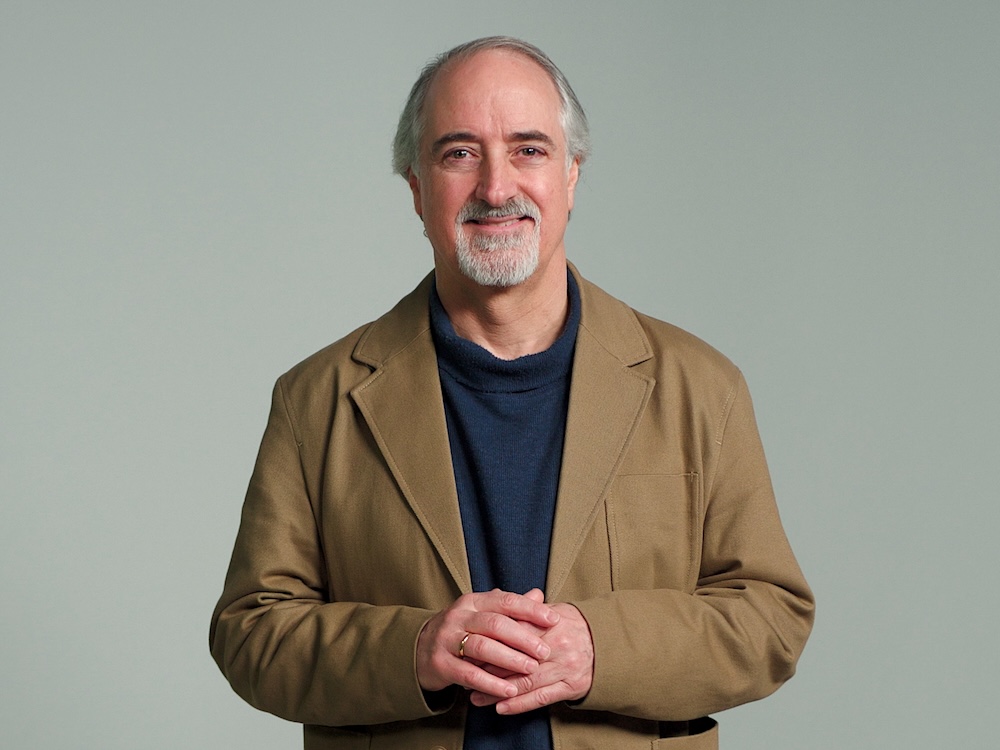
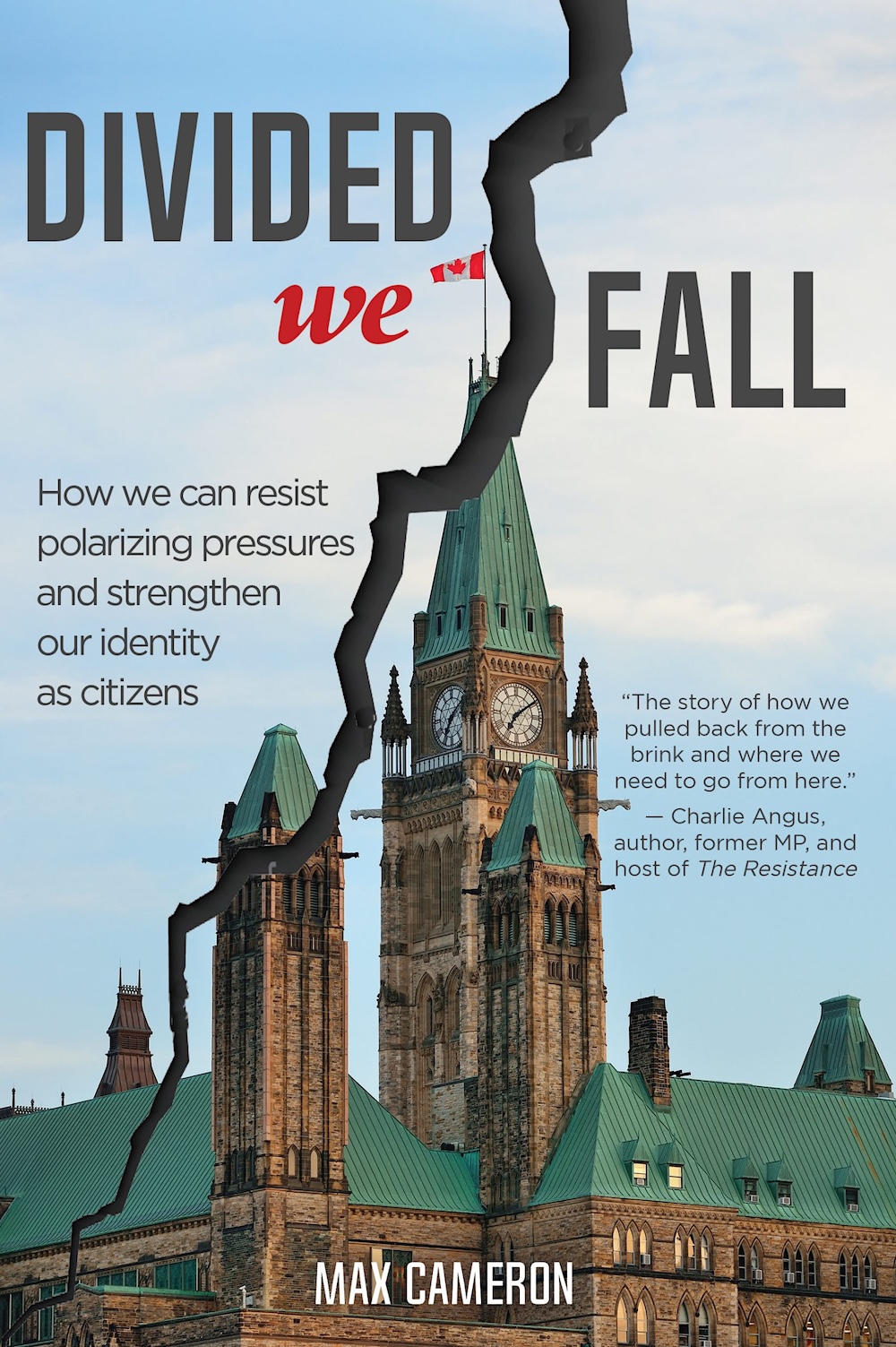
[Editor’s note: Max Cameron is a political scientist at the University of British Columbia. His new book, ‘Divided We Fall,’ considers how we can resist the pressures of political polarization while building a stronger national identity.
Ahead of his public talk Friday on uniting against the Trump administration, part of the Vancouver Institute’s fall 2026 lecture series, The Tyee sat down with Cameron to discuss the nuances of good citizenship in a tumultuous political landscape.]
Political scientist Max Cameron was still in the earliest stages of writing his new book, Divided We Fall: How We Can Resist Polarizing Pressures and Strengthen Our Identity as Citizens, when Donald Trump was re-elected.
The author or editor of more than a dozen academic publications, most of which concern democracy, Cameron was more than a little concerned about Canadian democracy back then. Specifically, “how we depolarize; how we resist the contagion that was coming from polarization south of the border into Canadian politics,” he told The Tyee.
He was hardly alone.
“If you look at the opinion polling, rising polarization was one of the things that most concerned Canadians,” he said.
And then, suddenly, it wasn’t. The tariffs. The trade war. The 51st state. President Trump was attempting to destabilize the country, and all of a sudden polarization was the least of what the United States was threatening to bring across the border. Neither was it something we were dealing with. The “elbows up” movement replaced — and, dare I say, erased — the U.S.-flavoured political polarization that Pierre Poilievre and the federal Conservatives were counting on to sweep them into power.
Amid threats of annexation, Canadians changed course, practically joining hands (or, in this case, elbows) and quite literally meeting in the middle to elect Mark Carney’s Liberals.
“Everybody was rallying around the flag,” Cameron said. “Canadians started to show precisely the thing I was trying to argue, which was: we need to be both capable of respectfully and civilly disagreeing with one another and reaching out across partisan lines, being open to hearing other perspectives and not getting stuck in our bubbles.”
But Cameron is not naive. The national fervour that Carney was able to foster, and harness, is nice, but the threat of division is not gone for good. Furthermore, patriotism and national pride can be problematic too.
Nationalism is having a moment in Canada. Many believe that’s a good thing. Others, however, see polarization and nationalism as opposite sides of the same loonie. Is there a middle ground?
In a wide-ranging interview held just a week after Cameron’s book release, the University of British Columbia political science professor and I tried to find it.
This interview has been edited for length and clarity.
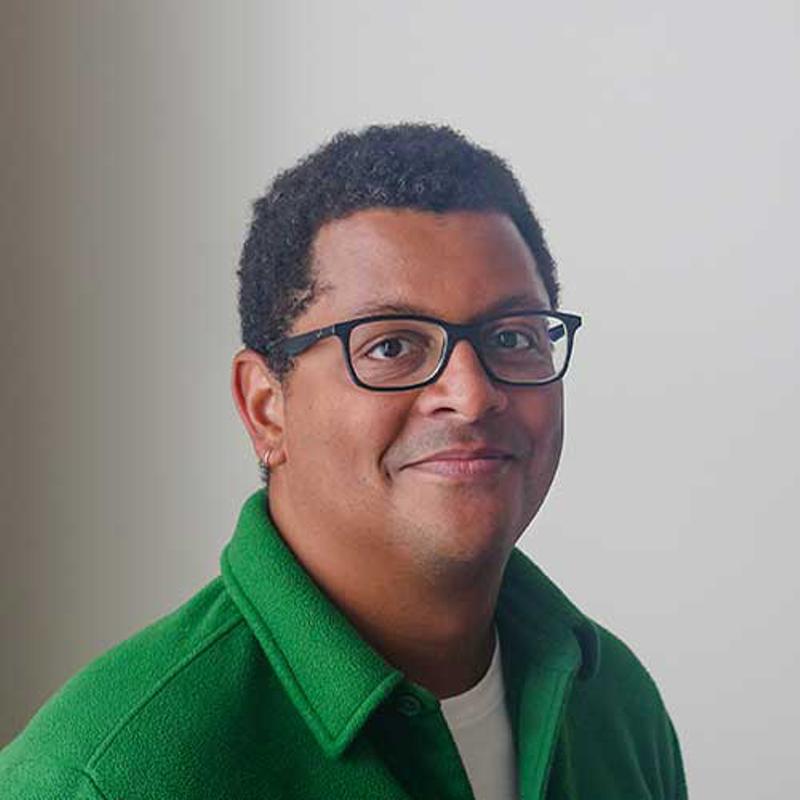
The Tyee: Many Canadians, you wrote in ‘Divided We Fall,’ are ‘patriotism-hesitant.’ When I read that, my first thought was: Why do you hate me, Max?
Max Cameron: No, that’s me too. [Laughs.] I’m patriotism-hesitant, although less hesitant now than I was before.
Aren’t we all. Nationalism is having a moment, rising around the world, being rebranded as good, even. Honestly, I find myself unsettled by how comfortable we all seem to be with this. That said, I enjoyed your book because you made a clear distinction between nationalism and ‘active citizenship.’ I got the sense the latter was a virtue, in your thinking, but the former... is it fair to say you share my hesitation?
Absolutely I share it. I think my disposition is to be cosmopolitan rather than nationalist. When I was a young person growing up in a rather parochial part of the country — Fredericton, New Brunswick — I got into trouble at school for refusing to stand for the anthem and writing a commentary in the school paper in which I argued that nationalism precipitates fascism.
I quoted Pablo Casals, who said, “Love of one’s country is a splendid thing. But why should love stop at the border?”
Canadians often resist the more jingoistic forms of nationalism. We can see how some folks in the United States drink too deeply of their own bathwater, and how their belief in their exceptionalism, providential mission, manifest destiny, leads them into error.
And so I think, as Canadians, we find expressions of nationalism “cringey.” That's the word that was used [recently] in the Globe and Mail with reference to [Premier David Eby] putting on his lumberjack shirt and standing at the border, saying, “Never the 51st state.” I think there’s a part of us that’s uncomfortable with that.
Our racial reckoning and our history of colonialism have, I think, caused us to take a second look at ourselves, our past, our culture and our institutions, and read them more critically.
Which is very welcome and very positive. But then, when we are faced by this threat to our sovereignty, something inside us says, “Hang on a minute, there’s something worth preserving in what we have created.” Some of that, in fact, is precisely this very doubt about ourselves, which should be a critical engine leading us to aspire to reconciliation.
Exactly. The Canadian identity is basically a disaffected stance. America camped out on patriotism. Canadians crafted a nuanced approach to ourselves in response. It’s contradictory at times. For example, ‘Divided We Fall’ has an anecdote where somebody texts ‘Happy Canada Day!’ to their kid, and their kid responds with two words: ‘Stolen land.’
I love that.
I loved it as well. But I took issue with where you went next: ‘“Canada is bad” is an unfortunate message for our youth.’ I feel like there’s a huge misunderstanding at the centre of that interaction. I don’t see saying ‘Stolen land’ as a way to make people feel shame, or feel bad about being Canadian, so much as a way to make people feel responsible for reconciliation and creating something better for us all.
But again, that’s complex. I’m patriotic in a way that takes a paragraph or more just to unpack. Meanwhile, Trump has given many of us cause to shift from disaffected stances to a three-point stance.
I think many of us were surprised by our own indignation, the spirit of outrage that swept the country when Trump started calling us the 51st state. Suddenly, people were booing the American anthem at hockey games, hanging flags outside their houses on Canada Day and on Flag Day. Unusual, right?
It is worrisome because, as Jonathan Haidt argues, we do have a tendency to be “groupish.” I think anyone critical of groupthink can see how that could be threatening. I thought Louise Arbour made a nice comment in her remarks when she became governor general. She said, you know, we don't want too much unity.
We don’t want to create a notion of what it means to be Canadian that demands people surrender their differences, that they become — that we become — homogeneous. We want to preserve our rich diversity. So it’s finding that balance.
For me, the core of that is that we have to be united around what makes us strong and free: citizenship. Our commitment to the idea that whatever rights and freedoms I insist that you respect in me, I offer back to you. That we are all equals in the sense that we are all entitled to the same consideration of our rights and freedoms.
I’m sure I’m not the first person of colour to raise the issue of ‘bothsidesism’ being a tough sell when my opponent wants to kill me. In ‘Divided We Fall,’ you write, ‘We might think another person's views are reprehensible, but as long as we can agree to settle our differences through the democratic process, we can learn to live together without killing each other.’ I agree, but the problem right now is that one side doesn’t really want to invest in the democratic process. They want to destroy it, and, after that, people like me.
That’s exactly right. We have to find a balance between reaching out to people who disagree with you, but, at the same time, calling out the bullshit.
When people are being divisive, and it could be sexist or racist or homophobic or misogynistic or anti-immigration, call it out, right? As that violates the foundation of our civic community, which cannot be whiteness, or Christianity, or Europeanness. It has to be... “we share a place.”
We share a set of practices and institutions that we’ve inherited from the past that are worth preserving, which have failed us in many respects, which are antiquated in many respects, which need to be updated and changed, but which provide us the foundation for creating a civic community of equals, of citizens that are equal before the law.
As you wrote in your book, the claim that ‘Canada is the best country in the world’ feels inauthentic. But your version, ‘Canada is the best country in the world for Canadians,’ doesn’t do much for me either. Here’s my slogan: ‘I don’t want to move!’ Not to some other country. Not farther away from the border. Not to the mushy political middle. How am I supposed to hold my disaffected power pose when things are getting this heated?
Especially when the danger is that we have an existential fight on our hands with a foreign power that wants to destroy our sovereignty. Therefore, we must unite and be shoulder to shoulder.
What differences then are we going to erase? In what ways do we then say, OK, so I used to oppose pipelines, but now I think we have to build pipelines because we need to mobilize investment. Or, you know, I really supported the carbon tax, but it’s causing division, and we need to be united. And Alberta, well, they want a new bargain with the federal government, and we can’t afford to let them go. They want to create their own ICE [U.S. Immigration and Customs Enforcement]. Do we have to be good with that? This is a dangerous, slippery slope that we're on.
But it’s possible to do two things at once. It's possible to recognize that this prime minister, this government, is doing some very good things. I thought the speech at Davos was superb. I thought that walking away from the trade talks was the right move.
But I also look at this big celebration of capitalism and foreign investment and privatization and moving major projects, and building pipelines, and stripping down regulations, and neglecting the need for appropriate consultations with a variety of stakeholders, including Indigenous people... we’re right to be worried about that stuff.
The trouble is that, I think, the government knows that its primary threat is on the right. As hapless and incompetent as [Poilievre] has been in terms of being able to pivot in the federal election, nonetheless, the Conservatives did very well.
At one point in your book, you say, ‘To embrace patriotism, we have to tap into the right kind of love of country.’ What is the right kind, and how is it different from nationalism?
I guess everybody has to answer this for themselves. But my answer is a commitment to social justice and democracy. That is what I would give my life for. That’s what I love about Canada. What I don’t love about Canada is where we fall short on that. So, to me, that’s what civic patriotism is all about. I am patriotic to the degree that we can rally as a country around a set of values in our civic community that are fundamentally democratic, that are fundamentally just, that are about citizenship.
But I’m not going to defend our history of colonialism or the other things that we have done. Our rapacious destruction of the environment, our awful mismanagement of resources, our wastefulness and so forth. There are all sorts of things to hate about Canada as well.
Bingo. I don't want to have to stop criticizing this country in order to justify keeping it sovereign. I always go back to that James Baldwin quote: ‘I love America more than any other country in the world, and for that reason, I insist on the right to criticize her perpetually.’
That is beautiful.
It really is! To me, responding ‘Stolen land’ is highly patriotic. I want to feel safe criticizing my country. I want to be free to complain about everything wrong and still feel like a citizen, like I belong. What I love most about Canada is that I'm allowed to be lukewarm about it.
Exactly.
Towards the end of ‘Divided We Fall,’ you introduce the concept of practising citizenship as an antidote to anti-democratic polarization. I’d love to leave readers with that. Max, how can I become a better citizen?
That idea comes from Aristotle, but Carney has picked it up. It’s in his book Value(s), and it’s in his campaign speeches. The idea is that we become good at a practice by practising it.
So you become a parent by parenting. You become a teacher by teaching. You become a soldier through battle. It requires learning by doing. The same is true of citizenship. We become citizens by being citizens, by doing the things that citizens do.
Obviously voting is an important part of it, but voting is only done periodically, and it’s the culmination of other activities: paying attention to public affairs, associating with others and learning to articulate our views, whether it’s in a public meeting or in a conversation over dinner with family at Thanksgiving.
These are all citizenship activities. We don’t do these things alone. A hermit is not a citizen, and a despot is not a citizen. We’re only citizens in community with others. And those skills, when they become habitual, form part of our character. They form part of who we are, and cultivating the character traits of wise citizenship, of good citizenship, is absolutely essential to preserving democracy.
Join Max Cameron at a Vancouver Institute lecture, ‘Divided We Fall: Why Canada Needs to Be Strong and United Against Trump,’ at the University of British Columbia’s Point Grey campus on Friday. Find event details online. ![[Tyee]](/design-article.thetyee.ca/ui/img/yellowblob.png)









Tyee Commenting Guidelines
Please note that email notifications for replies are not currently working due to a software issue which may be resolved in a future update.
Comments that violate guidelines risk being deleted, and violations may result in a temporary or permanent user ban. Maintain the spirit of good conversation to stay in the discussion and be patient with moderators. Comments are reviewed regularly but not in real time.
Do:
Do not: