


 SHARE:
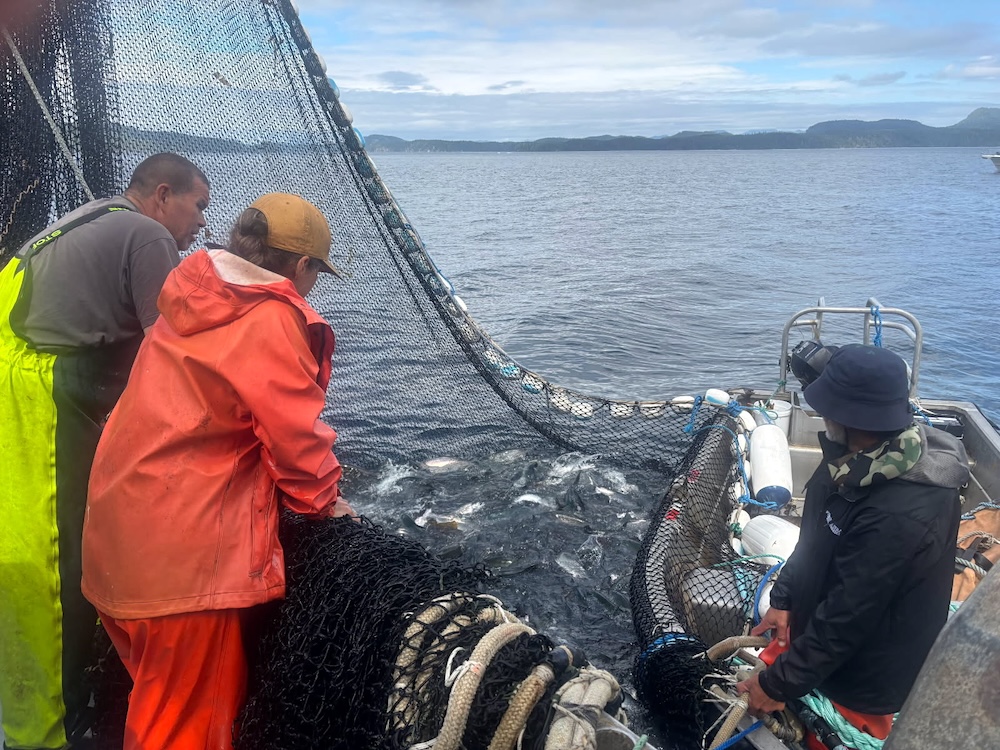
Wild salmon lovers in the province are expressing cautious optimism as Fraser River sockeye returns significantly exceed expectations — something that’s being attributed, in part, to the removal of fish farms in the area.
But there’s also frustration from commercial fishers as Fisheries and Oceans Canada, commonly known as DFO, appears unwilling to allow a meaningful commercial fishery after years of closures.
“We'll take the bad when it happens. That's part of fishing. But when there is a sustainable harvest to be had, we expect to be able to fish, and so do First Nations on this coast,” Guy Johnston, secretary-treasurer of UFAWU-Unifor, the United Fishermen & Allied Worker’s Union, told The Tyee.
“You can’t just let it swim by.”
Industry representatives told The Tyee on Wednesday afternoon that they expected DFO to open a “modest” commercial sockeye fishery.
The DFO declined to provide details to The Tyee about commercial fisheries opening, instead sending a statement that did not respond to the questions The Tyee had asked.
A short time later, however, the DFO began posting fishery notices for Fraser River sockeye to its website.
BC Seafood Alliance executive director Christina Burridge told The Tyee the announcements fall short of expectations but are a “step in the right direction.”
“It’s tracking to be a very high Fraser run,” she said. “There’s more than enough fish for all user groups, including the bears.”
DFO would need to move quickly if it’s going to salvage what’s left of the season, Johnston said. He said the numbers floated by DFO earlier this week were discouraging and would result in monetary losses for fishers.
Johnston said fisheries managers in B.C. have been constrained by modelling that underestimated the number of sockeye returning to the Fraser River. Now that actual numbers have greatly exceeded those projections, it would require an override by federal Fisheries Minister Joanne Thompson to open the commercial fishery, he said.
The union is calling on the feds to implement “realistic harvest levels that reflect what the test sets are actually showing,” Johnston said.
“Models are good, but you’ve got to also deal with reality,” he said.
Allowing the fishery to remain closed would go against federal and provincial policies aimed at fortifying the Canadian economy against the ongoing trade war with the United States, he added, because local grocery stores would be selling Fraser River sockeye caught by U.S. operations.
“This should be a good news story. It should tie in with what Premier [David] Eby is talking about, trying to build a stronger economy in B.C.,” he said.
Instead, Johnston said, “we’re going to be buying Canadian fish caught by American fishermen while Canadian fishermen just continue to go bankrupt.”
‘Reel’ numbers exceed projections
The Fraser River experiences four successive, but overlapping, sockeye runs. The first of those runs, the early Stuart run, experienced its best returns since the 1970s, Watershed Watch Salmon Society fisheries adviser Greg Taylor said.
The sudden surge in returning salmon is a “huge move in the right direction,” Taylor said. But it only puts this season on par with historic levels, he added.
“It's not as grand a thing as some people are portraying it, but it’s definitely good news,” he said. “We should all celebrate it.”
In an email, the Pacific Salmon Commission said that pre-season forecasts estimated returning sockeye in the Fraser River at just under three million. Actual returns appear to be more than twice that, it added.
Numbers for the early Stuart run were more than six times what was predicted. Subsequent runs have been roughly double the projections.
Michael Griswold, who is on the advisory board for the Pacific Salmon Commission, said the actual numbers are preliminary and are expected to increase.
That means there’s enough fish for an “available catch” within the current summer run, Taylor said. But there is fear among fisheries managers that fishing the summer run could unduly deplete the late summer run, which is still picking up speed.
“If you harvest the big surplus out of the middle [run], you could easily overharvest the last one,” Taylor said.
In addition to a strong sockeye return, pink, chinook and coho salmon are all showing improved numbers, he said, while returns on the north and central coast are “a bit more of a mixed bag.”
Paul Kershaw has been fishing for more than 52 years and runs his family business with his wife, Lynette, and his children.
He’s still hopeful the season won’t be lost.
“I don't think it's impossible,” he said as he awaited news on Wednesday. “We haven't fished as gillnetters in the Fraser River for six years.... We’ve borne the brunt of conservation. We didn't mind sitting on the beach when the stocks were low, but now they're high.”
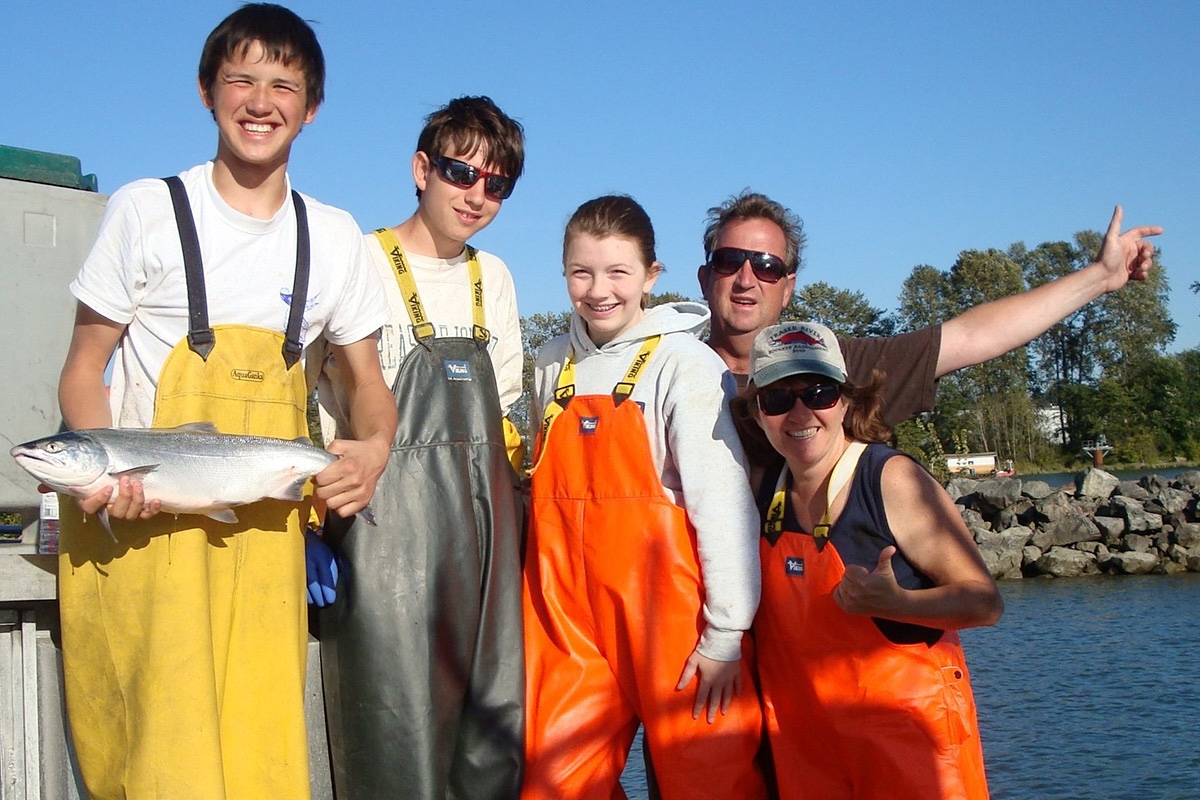
Both Kershaw and Johnston believe that one factor in the high returns is the removal of fish farms from the Broughton Archipelago and Discovery Islands in the northern Georgia Strait.
“Those are part of why we've got these big returns. It really is something to celebrate,” Johnston said.
Advocates claim victory following fish farm removal
Fraser sockeye have been on a “downward trend” since 1992, marine biologist Alexandra Morton told The Tyee.
Then, in 2009, the Fraser saw the lowest returns in more than 50 years.
The federal government responded by ordering the Cohen Commission. Three years later, the commission’s report included a recommendation to curtail fish farms in the Discovery Islands if they “pose more than a minimal risk of serious harm” to Fraser River sockeye salmon.
Since then, about 50 per cent of fish farms on the Pacific coast have been closed, said Morton, who has spent years advocating against the operations. Open-net fish farming is expected to be fully phased out by 2029.
In 2023, DFO announced it would not renew 15 open-net pen Atlantic salmon fish farms in the Discovery Islands. Shortly after, First Nations successfully shut down aquaculture in the Broughton Archipelago.
The operations, which have been accused of introducing viruses, pathogens and sea lice into wild salmon populations, were on key migration routes for Fraser sockeye.
“The interesting thing is that the fish that are coming back this year are the same family of fish that went missing in 2009,” Morton said. “I think this is probably the most successful government environmental policy ever.”
Hereditary Chief Homiskanis, Don Svanvik, of the ʼNa̱mg̱is First Nation is a retired fisherman. He said the returns in recent years have been “dire.”
“It was terrible,” said Svanvik, who has worked on the test fishery in the past. But in late July of this year, he said, the number of returning sockeye suddenly spiked.
“That was incredible,” he said. “That was the most fish that’s ever been caught on that date, since test fishing began.”
While the nation was still waiting to hear on a commercial fishery, Svanvik said that each household was able to get 15 fish to fill their freezers — still a far cry from more than 100 in previous decades.
“We virtually have no commercial fishermen anymore,” he added. “To hang on, you had to really love fishing.”
Svanvik also credits the spike in salmon to the removal of more than 40 fish farms from the salmon’s migration route.
While Taylor cautioned that “correlation is not causation,” he did say that this year’s positive returns shift responsibility onto government to prove that the aquaculture industry hasn’t been harming wild salmon.
“You don't want to go back to those poor returns,” he said. “I think the onus shifts with this, and I think that's the most important part of it.”
In a statement, the BC Salmon Farmers Association denied any connection between the removal of fish farms and increase in wild salmon numbers, calling claims by Morton and Svanvik false.
“No supporting scientific evidence links high returns to the removal of salmon farms,” the association said. “Additionally, the Cohen Commission of Inquiry into the Decline of Sockeye Salmon in the Fraser River concluded that salmon farms pose no more than minimal risk to migrating Fraser River Sockeye salmon.”
Other favourable conditions in the ocean, such as the beginning of the dissipation of the Blob, a mass of warm water that formed in the Pacific more than a decade ago, could also be contributing to the strong returns.
DFO credited work on the Big Bar landslide, which blocked salmon access in the Fraser River in 2019, and the Salmonid Enhancement Program for improving salmon numbers.
“While it is not possible to attribute the scale of the returns to any single factor, it is certain that this large return would not have occurred without the combined efforts of First Nations, the federal government and the Government of British Columbia to restore fish passage,” it said.
Burridge of the BC Seafood Alliance said she believed the improvement in ocean conditions was key.
“There may be other contributing factors,” Burridge added. “Fish farms could be one, but I don't think the science is very clear on that yet.”
If the DFO doesn’t open an adequate commercial fishery, Burridge said, fish would be “wasted” and too many decomposing carcasses could affect the viability of spawning beds.
Taylor of the Watershed Watch Salmon Society said it was important to proceed with caution — other conditions that make salmon runs more difficult, such as higher-than-normal temperatures in the Fraser River, persist.
Conservative management measures, Taylor said, could offer an opportunity to rebuild stocks.
“Climate change is real. We're going to have another blob. We're going to have another El Niño,” he said. “Things are going to change. They're going to be way worse than they are now. So, we've got to be really precautionary.”
Any commercial fishery that does go ahead is unlikely to have a significant impact on salmon returns, Johnston said, with Canada’s west coast fishing fleet reduced to less than 10 per cent of what it was in the 1990s.
“Coastal communities, coastal First Nations, have gone through tremendous sacrifice for 20 years now,” he said. “It’s a much different industry.... We could fish day and night and have very little impact.”
He fears that, by the time DFO confirms actual numbers for the late sockeye run, the opportunity will be lost.
“Time is really, really crucial,” he said.
*Story updated on Aug. 15 at 10:15 a.m. to include more information about the loss of Fraser sockeye and the recommendations of the Cohen Commission report. ![[Tyee]](/design-article.thetyee.ca/ui/img/yellowblob.png)
Read more: Indigenous, Environment







Tyee Commenting Guidelines
Please note that email notifications for replies are not currently working due to a software issue which may be resolved in a future update.
Comments that violate guidelines risk being deleted, and violations may result in a temporary or permanent user ban. Maintain the spirit of good conversation to stay in the discussion and be patient with moderators. Comments are reviewed regularly but not in real time.
Do:
Do not: