



 SHARE:
In parallel events held Monday in Vancouver and Smithers, B.C. medical professionals and First Nations leaders called on the provincial government to do a comprehensive study into the health impacts of LNG production before forging ahead with plans to expand the industry.
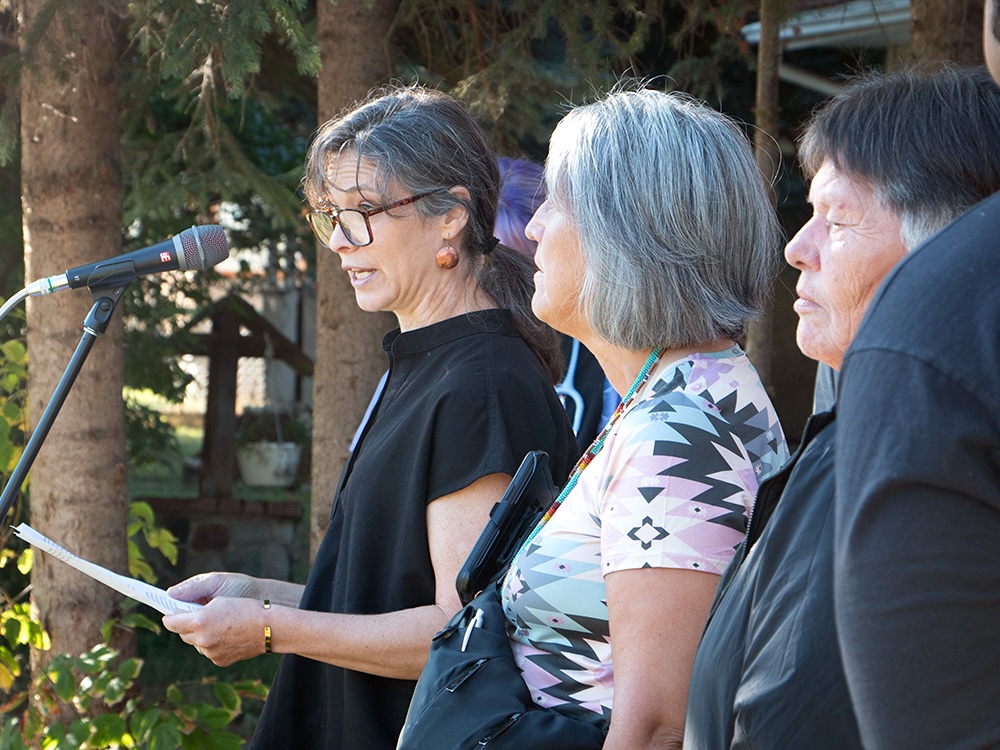
Standing outside a medical clinic in Smithers, radiologist Dr. Sally Harvie said the group was there to “ring alarm bells,” particularly in the north, where several gas pipelines and export facilities are currently under construction or consideration.
The fact that a comprehensive study hasn’t been done yet is “mind-boggling,” said Harvie, who is also a volunteer with the Canadian Association of Physicians for the Environment, an organization that advocates for improved health through environmental protection.
Together with other organizations, including the Canadian Association of Nurses for the Environment and the Union of BC Indian Chiefs, the group issued an 11-page open letter to provincial leaders, which includes three pages of signatures, calling for a moratorium on new LNG projects until a thorough health assessment is complete.
“Allowing expansion of LNG will continue to erode our already stressed health-care system, frankly, past the breaking point,” Harvie told those gathered in Smithers.
The group raised concerns about the gas industry’s health impacts, including air and water pollution from fracking and LNG production. It also pointed to climate issues, noting that increased emissions from methane, a potent greenhouse gas released through the production of LNG, are contributing to the effects of climate change, including record-breaking wildfire seasons, heat domes and atmospheric rivers.
The letter calls for stronger regulations around air and water pollution, better whistleblower protection for oil and gas workers reporting workplace hazards and the phasing out of gas in new buildings by the end of this year.
The group also called on the province to better support the transition to a clean energy economy, particularly for workers and First Nations communities, and implement a legal framework that engages First Nations in the decision-making process around LNG and gas development in a way that better aligns with the Declaration on the Rights of Indigenous Peoples Act.
BC eyes future LNG projects
The province’s gas industry has ballooned in the last two decades, with most of it extracted via fracking in the Montney formation in the province’s northeast.
Until recently, B.C.’s gas had a limited customer base because it had to be transported on land via pipeline.
But the province’s growing LNG industry, which liquefies gas for international shipment, could spell a huge spike in gas fracking and exports from the west coast.
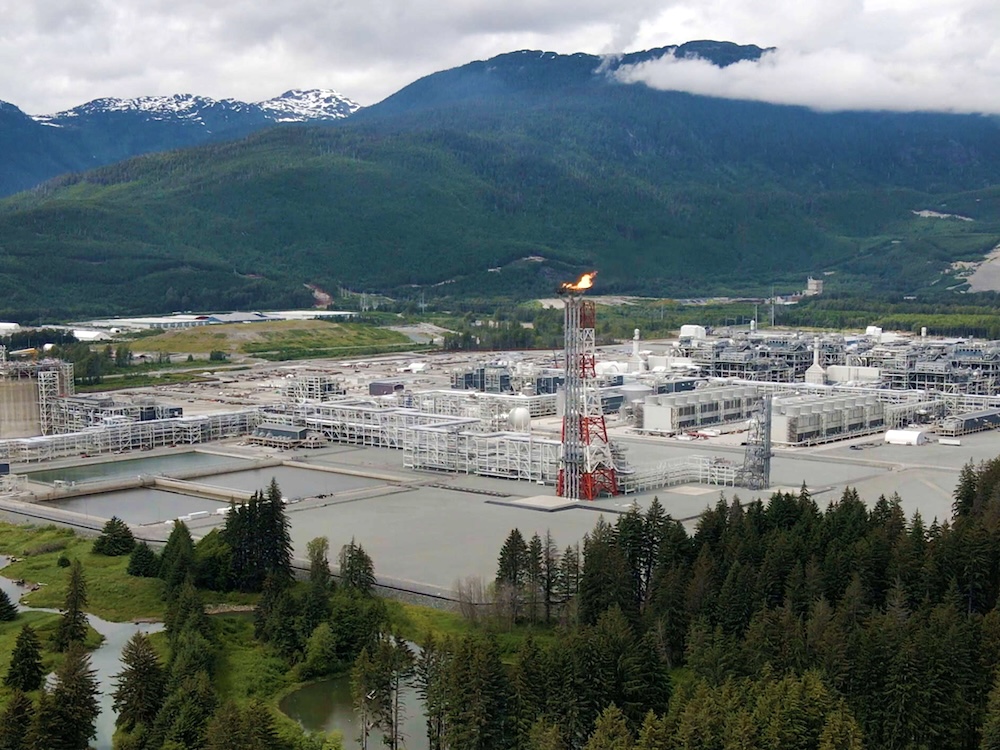
Canada’s first major gas export project, LNG Canada, in Kitimat on B.C.’s northern coast, delivered its first shipment this summer.
Investors are currently contemplating an expansion to double the project’s capacity.
The export terminal receives gas from the Coastal GasLink pipeline, which was completed in 2023 after years of heavy opposition from Wet’suwet’en hereditary leaders.
Attention is turning toward other pipeline projects that have been waiting in the wings — such as the Prince Rupert Gas Transmission pipeline, which is slated to carry gas to the proposed Ksi Lisims LNG terminal.
Air pollutants from LNG facilities
LNG facilities produce air pollutants like nitrogen oxides, sulphur dioxide and fine particulate matter, lung irritants that can worsen asthma and are linked to chronic lung disease, as well as volatile organic compounds, some of which can cause cancer.
Compressor stations, which propel gas through pipelines, also create air pollutants like nitrogen oxides and sulphur dioxide.
A growing body of research points to the harms of these pollutants, said Tim Takaro, professor emeritus of health sciences at Simon Fraser University, in a previous interview with The Tyee.
This year, Canada further tightened its guidelines for sulphur dioxide and nitrogen oxides as improved testing methods reveal the full scope of their impacts.
“We keep adding more information, and then we keep dropping the levels,” Takaro said.
B.C. does not include volatile organic compounds in its health assessment processes for LNG projects.
In Kitimat, flaring at the facility — a process that involves burning excess gas during startup activities — has raised community concerns about emissions.
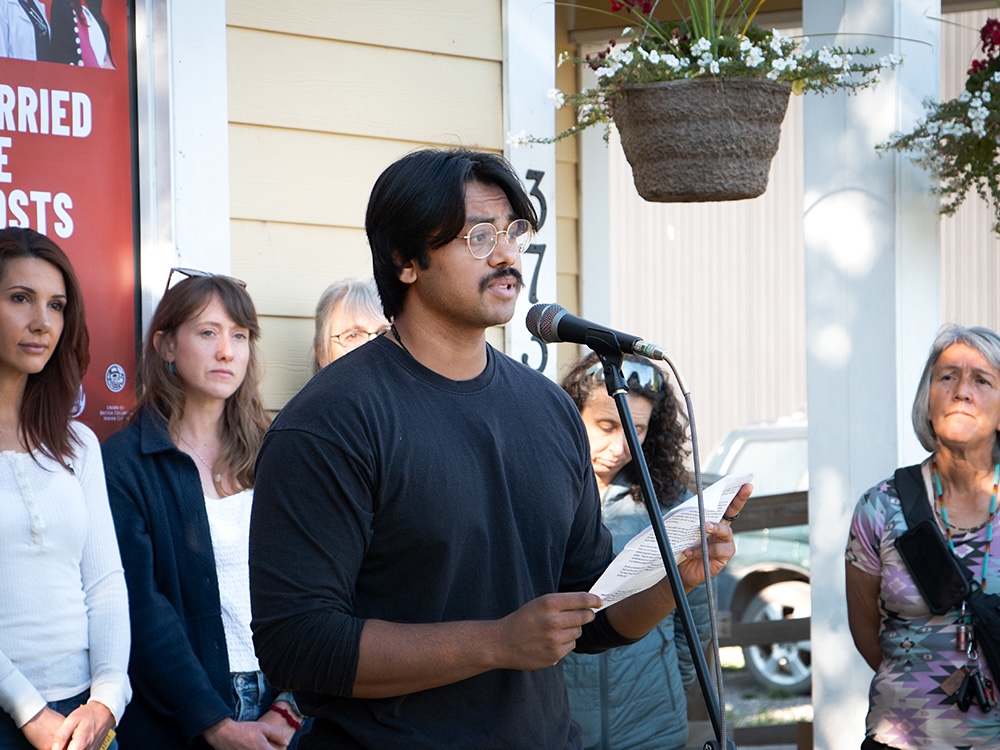
Ankur Patel, a registered nurse in the community, described “noise, visible smoke and various particulate matter” at Monday’s gathering in Smithers, which he said contribute to respiratory illness and cardiovascular diseases.
“In conversations with local residents, especially older adults and those living with chronic obstructive pulmonary disease, I’ve heard first-hand accounts of worsening symptoms that coincide with heavy flaring from LNG operations,” Patel said.
The problem is made worse because the health authority tasked with overseeing B.C.’s biggest share of resource extraction, Northern Health, is also the least resourced, said Takaro.
“It’s sort of like the absence of evidence gives the company the right to say, ‘Oh, well, everything is hunky-dory,’” he said. “But it’s often that we just can't afford to get the evidence and there's no political will to fund the studies needed.”
Patel added that the effects of a warming climate “do not affect community members equally.” Some — such as the elderly, very young or precariously housed — are more vulnerable to heat-related illness and death caused by climate change.
“We are fuelling this crisis,” Patel said. “We cannot separate human health from the health of our climate. The choices being made today about LNG and fossil fuel expansion will directly shape the safety, well-being and future of our communities.”
Water and air contamination from fracking
The industry’s impacts also materialize at the gas wells.
Standing outside the REACH Community Health Centre in a white doctor’s coat and stethoscope, family physician Ulrike Meyer said her small community of Dawson Creek in northeast B.C. has seen a spike in cancer diagnoses such as glioblastoma, a rare and lethal form of brain cancer; lung cancer and a rare lung scarring disease with a median survival rate of three and five years.
Meyer said seven family physicians left a few years ago “due to the environmental and health concerns,” leaving the region with an ongoing shortage.
When companies frack a gas well, they combine millions of litres of water with a soup of sand and chemicals, some of them heavy metals and known or likely carcinogens, including formaldehyde, cadmium and benzene. While some of that resulting mix of water, sand and chemical is effectively contained, some can leak into the surrounding environment, including through cracks in the well or through frack fluids that “flow back” when drilling, spilling into the environment.
A 2020 study found that at least 2,300 of B.C.’s wells have reported leaks but noted the real number is likely much higher. According to previous communication from the BC Energy Regulator, B.C. does not require companies to monitor their wells after closure.
Fracking activity can also release air pollutants like methane and volatile organic compounds.
Research on the impacts of these pollutants remains limited. At least one recent study found that pregnant women living in northeast B.C. likely have a higher exposure to volatile organic compounds from their indoor air and tap water than Canada’s general population. It also found Indigenous women faced particularly disproportionate effects.
Last year, Meyer co-authored the first published review of health impacts from gas fracking that attempted to focus on research in Canada. Only two epidemiologic studies met its criteria.
The lack of comprehensive research and data is “concerning,” the study’s authors wrote, given the industry’s intentions to expand, its almost 20-year history and its “frequent location on the territories of Indigenous communities already disproportionately impacted by health and economic disparities due to the ongoing effects of colonization.”
The study identified a “pressing need for future research.”
While the province did commission a review on the impacts of fracking in 2019, it excluded health impacts from what it asked the panel to examine.
But the panel highlighted health risks anyway, also calling for further efforts to address major research gaps.
Calls come as BC, Ottawa fast-track infrastructure projects
In an email to The Tyee, a spokesperson for B.C.’s Ministry of Energy and Climate Solutions didn’t directly respond to questions about whether the province is considering the request from doctors, nurses and First Nations for an independent health impact assessment of LNG and fracking activities.
Instead, it pointed to existing regulations under the BC Energy Regulator, which it said ensure “activities are carried out safely to protect both communities and the environment.”
“Together with the BCER we’ll continue to support initiatives for enhanced water and air quality monitoring, including participating in research projects with several Canadian universities,” the spokesperson wrote, adding that health impacts are considered through B.C.’s environmental assessment process and ongoing project monitoring.
The ministry also pointed to its conditions for LNG development, which include job creation, a “fair return for our resource,” respect for First Nations, environmental protection and community benefits.
Harvie said the group heard similar arguments during a Tuesday morning meeting with Minister of Energy and Climate Solutions Adrian Dix — a meeting she said “took a lot of pressure” to arrange.
“His argument that it’s being adequately regulated we don’t agree with, because people are getting sick,” Harvie said. “The health of these communities is being swept under the carpet to allow this to go through.”
Both the federal and B.C. governments appear eager to expand the LNG industry.
Last week, the Globe and Mail released an internal-to-government draft list of 32 potential projects marked as candidates for federal fast-tracking, including LNG Canada’s second phase and Ksi Lisims LNG.
The planned North Coast Transmission Line, which would bring upgraded power to electrify industrial expansion — including LNG — on B.C.’s north coast, is also on the federal wish list. The project’s environmental assessment was previously waived by the provincial government, a move that followed heavy lobbying by oil and gas proponents.
Those projects would be expedited with the help of recently passed Bill C-5. The legislation allows the federal government to push through infrastructure projects deemed to be in the national interest, a process overseen by the newly established Major Projects Office.
B.C. rushed to implement similar legislation earlier this year.
While Premier David Eby has said that Bill 15, also known as the Infrastructure Projects Act, wouldn’t be used to expedite “controversial” projects such as pipelines or LNG projects, critics have pointed out that those limits aren’t explicitly reflected in the legislation.
Instead, the law has been described as a “blank cheque” granting sweeping powers to fast-track “provincially significant” projects by, for example, bypassing major parts of environmental assessments and giving industry consultants the power to greenlight permits.
The province is currently undertaking a public consultation to determine what constitutes a “provincially significant” project.
A project ‘forced through’ Indigenous territory
Gitanyow Hereditary Chief Deborah Good, Simogyet Watakhayetsxw, was among the nation’s leaders who signed on to an agreement with the Prince Rupert Gas Transmission pipeline in 2014.
But 10 years later, much has changed, she said at Monday’s event in Smithers.
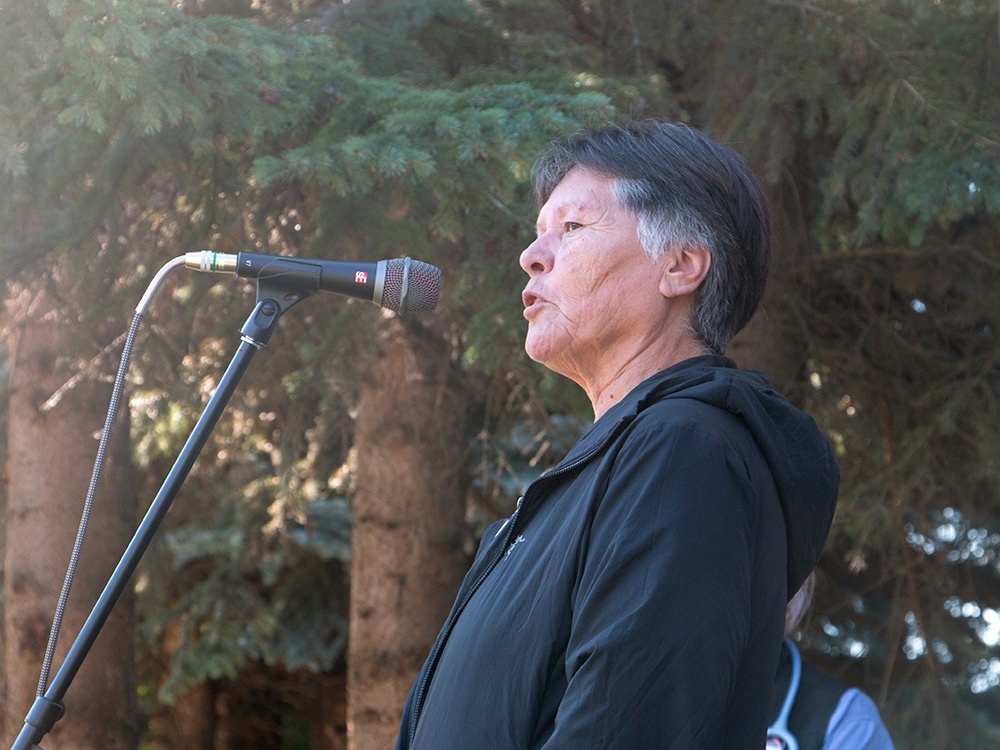
“In 2024, we burned the agreement,” Good said.
While she said the nation was initially drawn to economic benefits promised by the project, “we slowly found out there are no economic benefits — not to First Nations, not to anyone that lives in the northwest. This money is going to all the billionaires,” she said.
Given potential risks to food staples like salmon and moose, the nation no longer supports the project, she said.
Tara Marsden, wilp sustainability director for the Gitanyow Hereditary Chiefs, who spoke at the Vancouver press conference, said the project and its pipeline threaten already-declining chinook salmon populations in the region.
“We have implemented conservation efforts to help rebuild the chinook runs, but the decline has continued, and we are very concerned about the impacts of LNG on this threatened stock,” she said. “Salmon is nature’s gift to our health.”
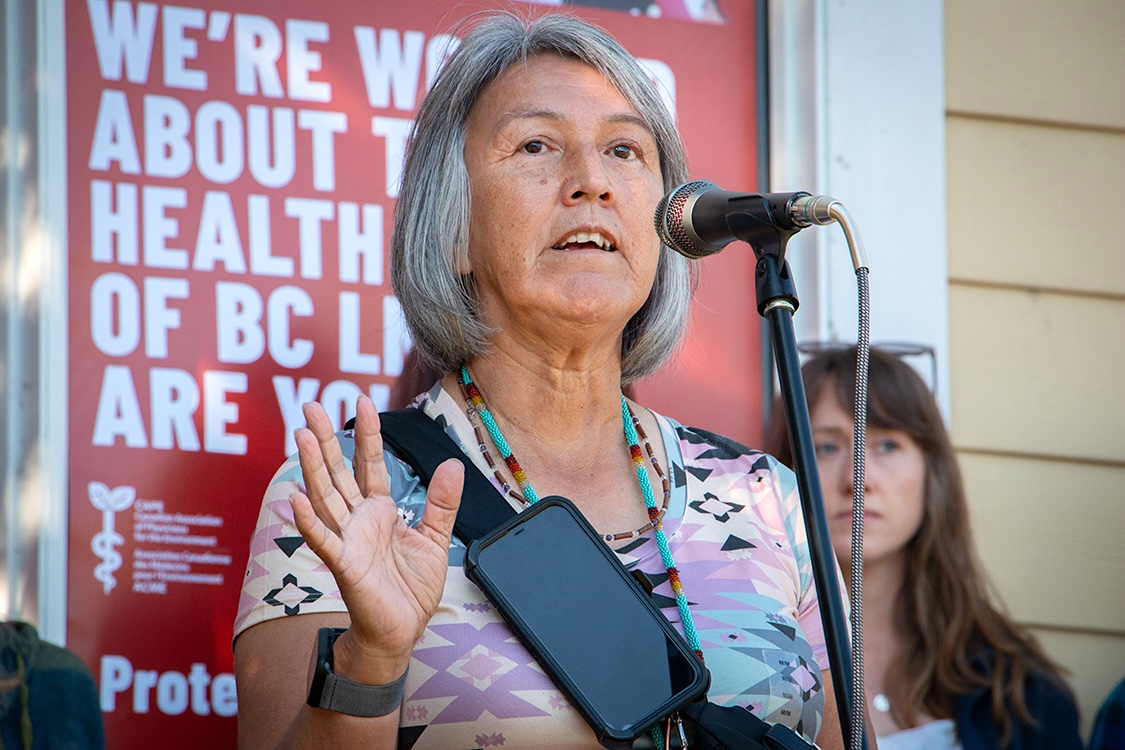
Tsakë ze’ Howilhkat, Freda Huson, spent more than a decade preventing pipelines from accessing the traditional territory of Unist’ot’en, a Wet’suwet’en house group. In February 2020, a decade after she established the Unist’ot’en Healing Centre near Coastal GasLink’s pipeline route, she was arrested with six others after the courts issued an injunction to the pipeline company.
More than five years later, Huson fears that Coastal GasLink was the “Trojan Horse” paving the way for future pipeline development.
“The project that is coming through our territory was forced through. Our people didn't want it, and they used band councils, and the government did this themselves. What we call it is divide and conquer,” she said.
Despite Tuesday’s noncommittal response from Dix, Harvie said members of the Canadian Association of Physicians for the Environment will continue advocating for better studies on the health effects of LNG development.
On Tuesday afternoon, they met with B.C. Housing Minister Christine Boyle to discuss ending gas hookups in new homes.
Harvie hopes the group will continue to gather momentum with health-care workers and others concerned about the health impacts from industrial development and climate change.
“We’re really happy that we’re partnering with Indigenous land protectors,” Harvie said. “I just feel like together we’re going to be stronger.” ![[Tyee]](/design-article.thetyee.ca/ui/img/yellowblob.png)
Read more: Indigenous, Energy, Health, Environment











Tyee Commenting Guidelines
Please note that email notifications for replies are not currently working due to a software issue which may be resolved in a future update.
Comments that violate guidelines risk being deleted, and violations may result in a temporary or permanent user ban. Maintain the spirit of good conversation to stay in the discussion and be patient with moderators. Comments are reviewed regularly but not in real time.
Do:
Do not: