

 SHARE:
Seven weeks after the release of the landmark Cowichan Tribes v. Canada court decision, lawyers and political leaders continue to debate its impact and how to proceed.
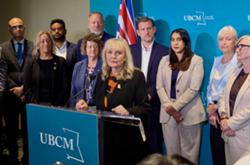
At the Union of BC Municipalities convention in Victoria, the ruling was the subject of both reasoned discussion and alarmist warnings. But there was widespread agreement on its significance.
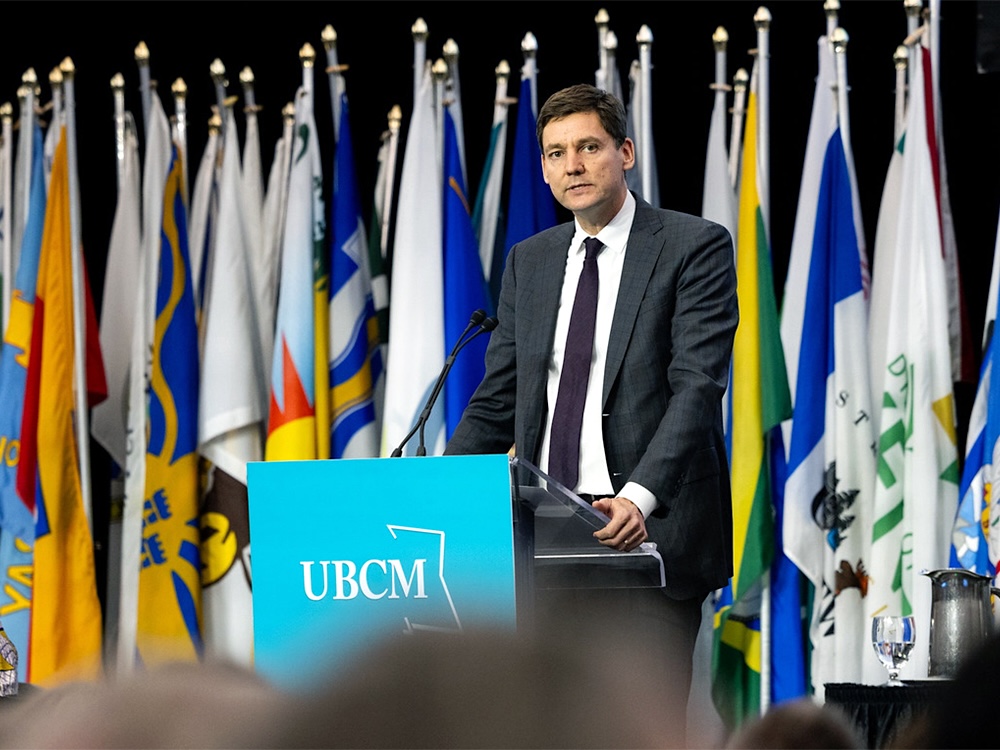
“The ruling is an important one for British Columbia,” Premier David Eby said Friday. “It’s an important one for the Musqueam, it’s important for the Tsawwassen, it’s important for Quw’utsun.”
In a lengthy ruling, B.C. Supreme Court Justice Barbara M. Young found the descendants of the Cowichan Nation have Aboriginal title to part of Tl’uqtinus, their summer fishing village on the south arm of the Fraser River, and have an Aboriginal right to fish for food in the area.
In doing so, she found that the Crown had unjustifiably infringed on the Cowichan Nation’s Aboriginal title and declared the federal government and the City of Richmond’s titles to some of the lands defective and invalid.
Along with the federal government, the government of B.C. and the City of Richmond, the Musqueam Indian Band, Tsawwassen First Nation and Vancouver Fraser Port Authority were defendants in the lawsuit.
“It’s a challenging one for us, obviously,” Eby said, mentioning the First Nations arguing against each other in court. “It’s a challenging position for the provincial government to be in, and I think for many British Columbians [the decision raises] anxiety about how we reconcile Indigenous title with private property rights.”
He said the decision “creates great uncertainty for our province about how Indigenous title relates to private property” and that it’s urgent to clarify it. The province has appealed the decision, as have all of the other participants in the case.
“We’re working hard with other litigants, including the Cowichan, to get it to court as quickly as possible because we want this uncertainty resolved,” said Eby.
The official Opposition Conservative Party of BC has advocated referring the question to the Supreme Court of Canada for a quick decision, an idea Eby dismissed.
“The most important thing to my mind is the full record of the trial court is in front of the Court of Appeal,” he said. “That they’re able to make a decision based on the evidence, based on what the trial court heard, based on what the actual implications [are] for the entire region, including First Nations, and not that it’s decided by one judge out of the Supreme Court of Canada in a non-binding decision in the abstract in a vacuum.”
Earlier in the UBCM convention for mayors, councillors and other local government officials, a panel of lawyers shared perspectives on the case in front of a packed lecture hall.
“I think we can breathe and take it for granted that nothing horrible is going to happen in the short term,” said David Rosenberg, a lawyer for the Cowichan Tribes in the case.
It will likely take more than seven years for the case to go through two levels of appeals, he said, plus the ruling gave the parties 18 months to meet and discuss what will happen on lands where the title was ruled defective and invalid.
He gave a summary of the evidence, which included both oral and written records.
It included that in 1824 there were frames for 108 longhouses on the lands. Ancestors of the modern Quw’utsun would come in by the thousands each summer from 11 communities on southern Vancouver Island and the Gulf Islands, paddling across the strait with their canoes loaded with the wall planks.
There was an assurance in 1853 from then-governor James Douglas that they would be treated “with justice and humanity” as long as they remained at peace with people settling in the area.
“What we know is what happened, in spite of Gov. Douglas’s promise to the Cowichan Nation, was their lands were sold out from under them and they were made trespassers on their own lands,” said Rosenberg.
One of the buyers was Richard Moody, who was chief commissioner for lands and works for the Colony of British Columbia and lieutenant-governor from 1859 to 1864.
Despite complaints made starting in the 1870s, Quw’utsun efforts to get the lands returned and government discussions of options including purchasing the land to return it to them, nothing was ever done, Rosenberg said.
Some of the land eventually became property of the City of Richmond through a tax forfeiture process.
Rosenberg stressed that the lawsuit was originally about fishing rights and land taken from the Cowichan Nation, not about challenging fee-simple ownership and private property, and that the nation had been patient and respectful over 150 years as it tried to get its rights recognized.
Young’s decision is very careful and measured, he said. “I haven’t heard anybody say it’s wrong. I haven’t heard anyone say the reasoning’s faulty. I haven’t heard anyone say the judge didn’t make meticulous arguments of fact.”
Most of the concern has been about the impact of the decision, Rosenberg acknowledged. “I know many people are concerned about a change in the status quo, especially with declarations of defective and invalid title for public title holders,” he said.
“But I think it’s important to recognize and remedy the historic injustice that occurred in this case, and those were the equitable principles that the trial judge applied in reaching the conclusion she did.”
There were two other lawyers on the panel.
Reece Harding, who works for local governments with the firm Young Anderson, said the ruling opens up many unanswered questions, especially with regard to private property and jurisdiction.
“This is a massive case,” he said. “It is really important.”
His questions included whether official community plans would still apply to the lands, who would be responsible for providing services, whether a local government would provide services to lands no longer under its jurisdiction, who the taxing authority would be and who the senior government would be for cities to deal with.
Every time someone applies for a permit, Harding said, the first question is whether they are the registered owner on the land title. With the ruling, those title rights are now in doubt, adding uncertainty to every permitting decision.
“It feels like a reshuffling of jurisdiction,” he said.
He gave the example of Richmond’s flood protection dikes that are on the lands subject to the ruling. What happens with the dikes, he asked, if Richmond no longer has title to the land they are on?
If there are more decisions like the one in Cowichan Tribes v. Canada, many more communities will be wrestling with similar questions, he said.
Robin Junger, a lawyer with McMillan LLP who previously worked as a treaty negotiator for the provincial government, said the ruling raises questions of whether Aboriginal title and private land can coexist.
“I do think there are legitimate issues here,” he said, adding that he believes the questions can be raised and discussed in respectful ways.
The ruling needs to be viewed in the context of the larger movement towards reconciliation, Junger said. There is some confusion when the provincial government is criticizing the Cowichan decision and appealing it but, in another part of the province, is recognizing Haida Aboriginal title.
In his speech to the UBCM, Conservative Party of BC Leader John Rustad amplified those concerns.
“This is going to create a huge, huge problem for all British Columbia,” he said. “It’s not that we don’t need to address title, we do need to address title, but Indigenous rights and private property rights cannot coexist.”
Private property is the foundation of the provincial economy and our societies, Rustad said, adding the ruling raises questions about how to value private property, how to implement laws and how to manage taxation.
“First Nations could also put taxation in place,” he said. “They could write laws and taxation on title land that could impact private property and you don’t get a right, you don’t get a right to vote. Taxation without representation.”
Given that most of the province isn’t covered by treaties, the ruling creates uncertainty everywhere, he said. “One hundred and twenty per cent of British Columbia is claimed by First Nations,” he said. “This is going to be coming to all of your communities.”
The issue needs to be addressed quickly and there needs to be compensation in places where title has been alienated, said Rustad. “This is going to be a big issue and it has to be addressed and we need to know the rules on this.”
The Cowichan ruling is the latest in a long series of court decisions that have moved towards recognizing Aboriginal title, said Adam Olsen, a former BC Green MLA who is now lead negotiator for the Tsartlip First Nation.
“I wished that the leader of the official Opposition would acknowledge that Aboriginal title and private property rights do coexist, and they always have existed since the beginning of this province, since we became a province, and suggesting that they cannot is to neglect reality,” he said.
Amping up the political rhetoric on it is unhelpful, Olsen said. “What I hope for is we depoliticize this issue,” he said. “I think we need to deal with it as a legal issue.... The competition between political parties doesn’t serve this issue, it doesn’t serve the people of British Columbia well, it doesn’t serve Indigenous rights and title well at all.”
B.C. has an extremely complex history and most people know very little about it, Olsen said, and it is best to deal with the questions and injustices that arise from that history in a depoliticized way. “It shouldn’t be an issue that gets moved by public sentiment.”
There’s a lot of rhetoric around reconciliation that distracts, said Olsen. “What it comes down to is we need a government that’s focused on dealing with the legal reality that we face in this province. Anything else is pretty toxic for British Columbia actually.”
The issues are long-standing and were not just created by the Cowichan ruling, he said.
“We’ve been kicking this ball down the road for the last 175 years in this province and here we are and we continue to get court cases,” he said. “We continue to see a government that appears to be confused as they are moving ahead with Haida and appealing the Cowichan case. Where’s the consistency in that strategy or in that policy?”
It’s time for the government to be clear where it stands and to show leadership, he said. ![[Tyee]](/design-article.thetyee.ca/ui/img/yellowblob.png)
Read more: Indigenous, Rights + Justice, Politics






Tyee Commenting Guidelines
Please note that email notifications for replies are not currently working due to a software issue which may be resolved in a future update.
Comments that violate guidelines risk being deleted, and violations may result in a temporary or permanent user ban. Maintain the spirit of good conversation to stay in the discussion and be patient with moderators. Comments are reviewed regularly but not in real time.
Do:
Do not: