



 SHARE:
[Editor’s note: This piece is part of a weeklong series of writing in The Tyee to mark the National Day for Truth and Reconciliation and the 10-year anniversary of the release of the Truth and Reconciliation Commission of Canada’s 94 Calls to Action.]
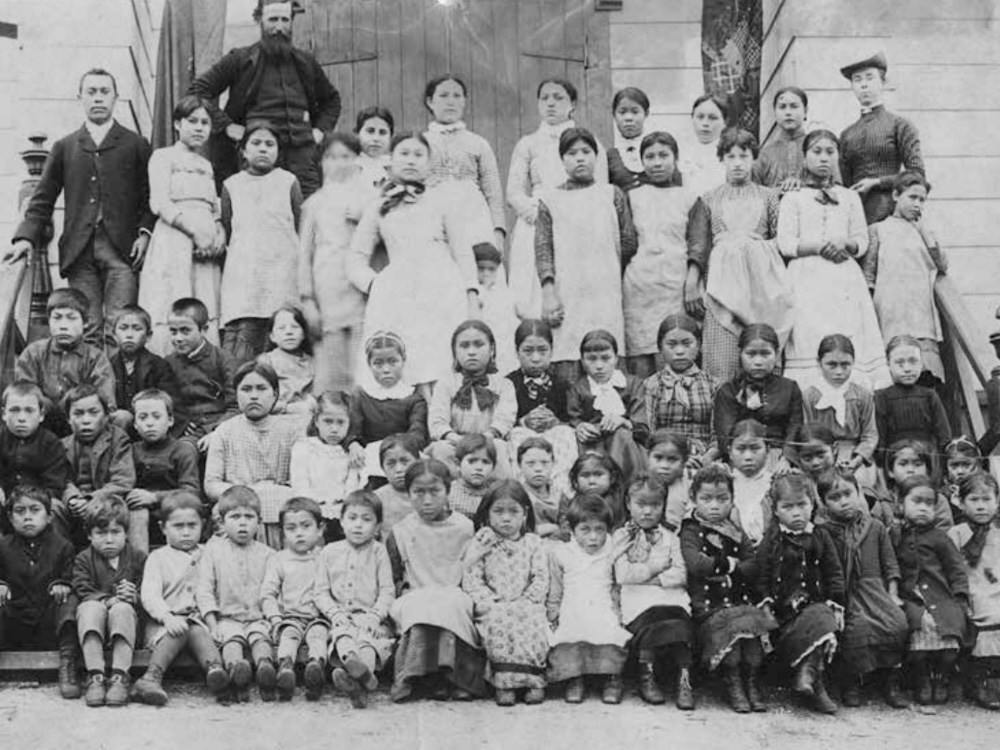
More than a century ago, a Canadian official sat down and wrote one of the first damning reports on his country’s emerging system of residential schools. He warned that the country was needlessly allowing children to die. His report received significant attention across the country. Then it was mostly shelved.
In 1907, Dr. Peter Bryce wrote that the schools were disease-festering death traps and incubators of tuberculosis. And he made a moral case against complacency, complaining that government officials had come to accept rampant tuberculosis in the country’s Indigenous population and had decided to do little to mitigate its toll. At the time, the death rate in residential schools was 20 times higher than that of the general Canadian population.
“So widespread is the presence of tuberculosis or scrofula that its constant presence has almost ceased to excite any surprise or alarm,” Bryce wrote. That, he noted, wasn’t the attitude when it came to dealing with tuberculosis in “civilized societies.”
The report
Ten years ago, when the Truth and Reconciliation Commission of Canada published its final exhaustive report, it began with a two-volume, 1,884-page history of the Indian residential school system. Today, that report remains the definitive history of Canada’s residential schools. Bryce’s statements remain one of many damning pieces of the history.
The TRC report was written based on testimony from survivors and their descendants, along with a library’s worth of archival documentation. It was not an academic or bureaucratic exercise. The history was explicitly for the common reader and, despite its length, is readable throughout.
It includes an array of information related to both individual schools and administrators, and national policy and decisions. Throughout, it contains details, statistics and eyewitness accounts that show how, a century ago, officials within the Canadian government and Indigenous leaders outside of it were already warning about the scale of the misery at the facilities and demanding better.
Modern denialists have attempted to minimize the horror of Canada’s residential school system by playing down the deaths as inevitable and less than criminal. But the report shows, by quoting official documents at length and using statistics, that officials knew the residential schools were flawed and frequently chose not to take sufficient corrective action out of racism, frugality and carelessness.
The history connects the residential schools to a larger strategy to erase Indigenous culture from Canada by denying those who refused to abandon their identity the right to participate fully in Canadian political and economic society. In its introduction, and throughout the report, the authors show that when the government separated children from parents and sent them to residential schools, the goal was “not to educate them, but primarily to break their link to their culture and identity.”
The history repeatedly proves that assertion — often by quoting at length the words of Canadian officials themselves. It also presents a factual case that consistently undermines the arguments of those who have sought to deny the deadly consequences of Canada’s residential school system.
Even as deniers have seized on ambiguities surrounding the detection of burial anomalies at Canada’s residential schools, the TRC report shows, again and again, that thousands of Indigenous children died at the schools and, crucially, that officials knew about substandard schools and repeatedly ignored the consequences.
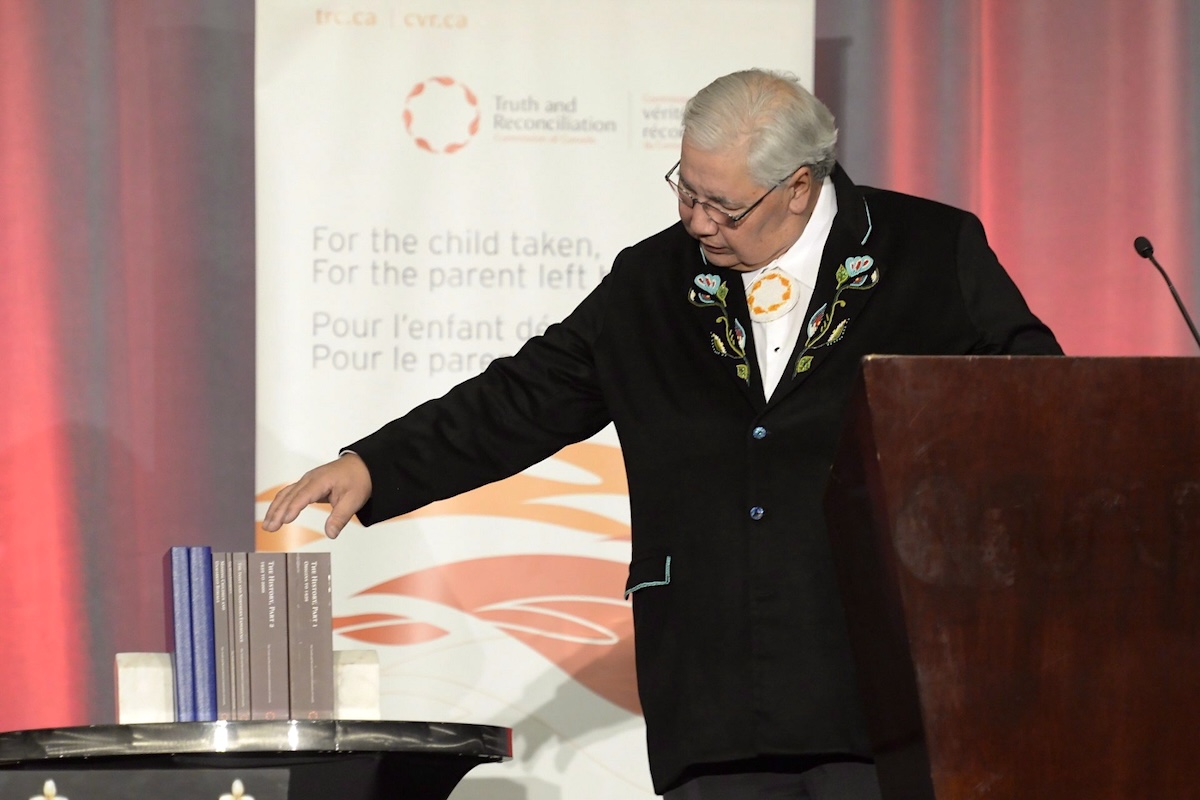
Today, we’re highlighting sections of the report that show the deadly truth of Canada’s residential schools and colonial policies. We have included page numbers for each passage. Those numbers are for the online PDF version of the first volume of the report. You can click each number to go to the specific page. The second volume of the report is available here.
Pre-Canada
The origins of Canada’s residential schools are rooted in both colonialism and Christianity.
In the 1600s, with authorities unhappy that Indigenous people were not being integrated into French authority, Bishop François de Laval sought to house local children at a Jesuit day school. But it was tough slogging because of how much the parents cared for their children.
“This enterprise is not without difficulty, on the part of both the children and the parents; the latter have an extraordinary love for their children, and can scarcely make up their minds to be separated from them. Or, if they do permit this, it is very difficult to enact the separation for any length of time.” [page 61]
The report notes that the French couldn’t dictate terms to local communities, given their low numbers and proximity to the English. Instead, they had to co-operate with local communities. The conquest of French North American forces in 1760 did not immediately change this. In one of the first documents issued by the British following their triumph, the government noted that “Great Frauds and Abuses have been committed in purchasing Lands of the Indians, to the great Prejudice of our Interests and to the great Dissatisfaction of the said Indians.” [page 68]
The English were worried that local Indigenous people would see them as untrustworthy, which would jeopardize their colonial project. Like the French, they needed Indigenous support to stave off potential incursions by a neighbour — in their case, the United States.
But as tensions cooled after the War of 1812 and immigration from Europe increased, the British embarked on a new policy of “civilization.” [page 71] The civilization policy was coupled with a derogation of previous treaties and accommodations, along with policies that were, at their core, fundamentally racist and treated an Indigenous person different from a European. Indigenous people could receive the rights granted to a European, but they needed to prove they were literate and free of debt to receive those rights.
“As historian John Tobias has noted, the standard for Aboriginal people to become ‘citizens’ was higher than for white settlers — many of whom were not literate or free from debt, and whose characters remained unassessed.” [page 77]
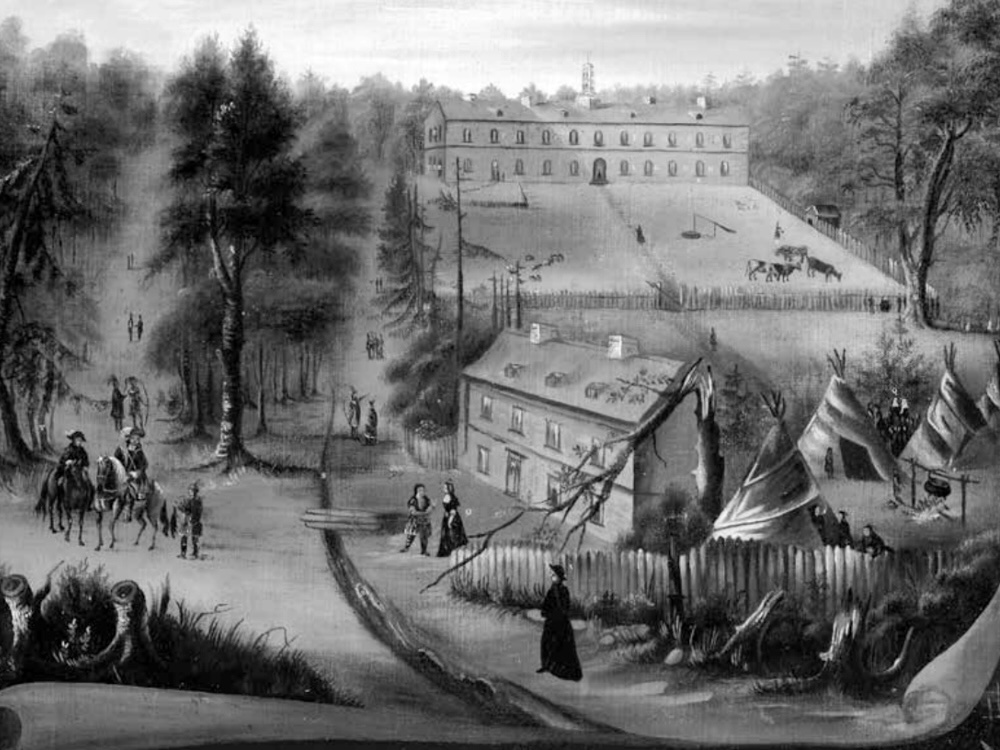
By 1857, “the government no longer sought to create separate ‘civilized’ and ‘Christian’ Aboriginal communities on reserves that were self-sufficient. It now sought to assimilate Aboriginal people into Euro-Canadian society and gradually eliminate the reserves. This was to be done through a process described as ‘enfranchisement.’ The preamble to the Act for the Gradual Civilization of the Indian Tribes in the Canadas stated that “it is desirable to encourage the progress of Civilization among the Indian Tribes in this Province, and the gradual removal of all legal distinctions between them and Her Majesty’s other Canadian Subjects, and to facilitate the acquisition of property and of the rights accompanying it, by such Individual Members of the said Tribes as shall be found to desire such encouragement and to have deserved it.” [page 76]
The act essentially ended any prospect of independence by Indigenous nations — and communities and families themselves.
“The Act for the Gradual Civilization stood in contradiction to the Royal Proclamation, which gave the Indian nations control over whether to sell or otherwise dispose of Indian land. Aboriginal leaders recognized the contradiction, calling the Act a betrayal of the proclamation and an attempt to break their community into pieces. Band councils protested. They petitioned for the repeal of the Act, they removed their children from schools, or they declined to participate in the census. There had been considerable Aboriginal support for policies of education and economic development. There was none for assimilation. Between 1857 and 1876, only one man was voluntarily enfranchised. The government did not interpret this lack of response as an indication of the strength of Aboriginal attachment to Aboriginal identity. Rather, the government blamed the failure of Aboriginal people to seek enfranchisement on the influence of their leaders. This only increased government hostility to Aboriginal self-government.” [page 77]
Early schools
The assimilationist policies were accompanied by early schools in Ontario that presaged the future development of Canada’s residential school system.
Two of the first schools, at Mount Elgin and Alnwick, were located in southwest Ontario and hosted students through much of the 1850s. Early conditions were horrific, even for the time.
“Mount Elgin students had less than one hour for recreation in a day that stretched from 5:00 a.m. until 9:00 p.m. During that day, they were to spend five and a half hours at their desks and seven and a half hours at work. The students at Alnwick, along with one hired man, cared for 105 animals, farmed over 30 hectares of land, cut wood for ten stoves and fireplaces, made their own clothes, and did their own laundry. The Indian Department urged the schools to cut costs and become self-sufficient by taking advantage of the ‘availability of the gratuitous labour of the scholars.’” [page 94]
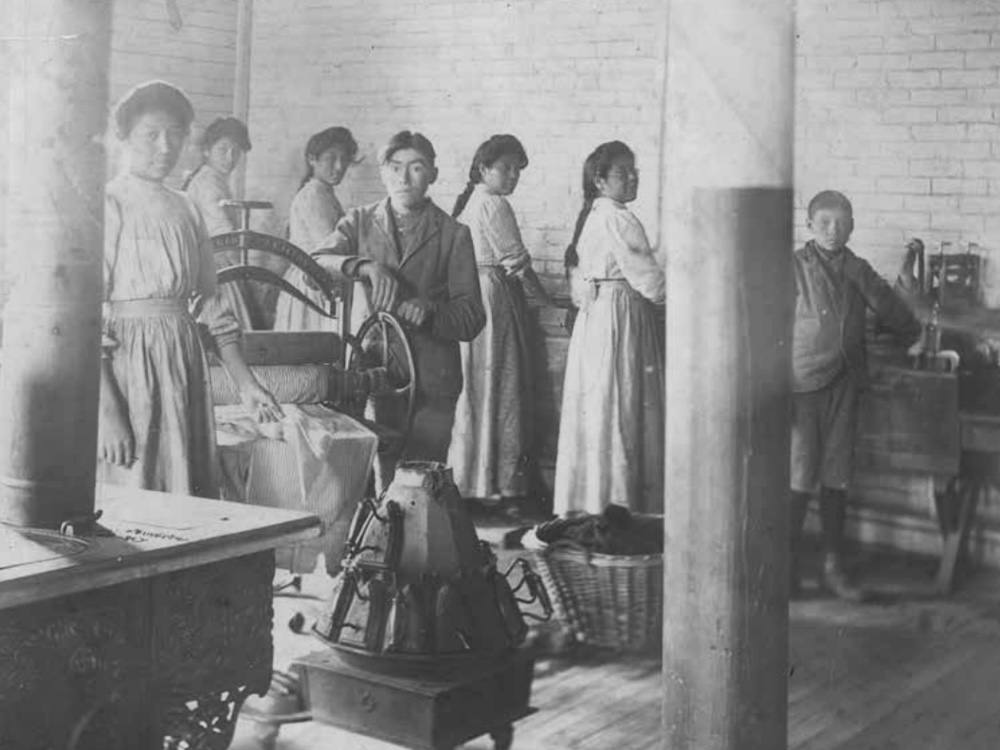
The schools were early incubators for disease:
“The Alnwick school was plagued by health problems. In 1855, a typhus epidemic killed one teacher and four students, leading to the school’s temporary closure. When it reopened in 1856, the school had an enrolment of fifty-one. By the following June, so many had run away that only twenty students were left. The new principal was Sylvester Hurlburt, a missionary who had previously indicated that he no longer wished to work with Aboriginal people. From then on, the school never had more than half its potential enrolment. When thirty-five students from northern reserves were allowed to visit their parents, less than one-third of them returned.” [pages 94-95]
Officials eventually concluded that the schools had failed and closed the facilities in 1858. But they drew none of the necessary lessons. Instead of concluding that residential schools were doomed from the start, they blamed the students, rather than those operating the institutions.
From the report:
“An experiment that had started with high hopes and considerable initial Aboriginal support had been judged, in large measure, a failure. Despite this, within two decades, the newly formed Canadian government would commit to a significant expansion of residential schooling in western and northern Canada.” [page 82]
Expansions and ignored warnings
[Editor’s note: This section contains content related to a child’s body that is likely to be found very disturbing.]
In 1870, the country’s Indian Affairs ministry counted only two residential schools in operation.
Over the coming decades, dozens of schools would open. And the report shows that the government was focused on two concerns, above all else: “civilizing” children, and doing so as cheaply as possible.
From the report:
“In July 1883, Prime Minister Macdonald wrote to Public Works Minister Langevin that the two Roman Catholic schools were to be ‘of the simplest & cheapest construction.’ Macdonald thought that in two or three years’ time, the cost of building materials would have dropped to the point where the government could authorize ‘permanent buildings in brick.’ In reality, once buildings were constructed, they often continued in operation until they burned or fell down. Dewdney closed his July 1883 letter of instructions to Battleford principal Thomas Clarke with the message, ‘I need scarcely inform you that the strictest economy must be practised in all particulars.’” [page 187]
There were immediate consequences.
“In October 1884, F. Bourne, a missionary on the Blood Reserve, raised objections to sending students to schools that were distant from their homes, because ‘from many years experience I find that often when thus treated, they die or pine from sheer home sickness.’ Health problems led to problems in recruiting students. In 1886, the Indian agent at Onion Lake reported that, despite his requests, parents had refused to send their children to Battleford. They ‘did not like the way the boys were treated that had been sent there & that one died soon after & the other had been expelled on account of being a bad boy.’” [page 188]
All along the way, the government was told, both by Indigenous communities and by its own officials, about the horrific conditions and maltreatment of students.
Simon Baker, a boy at a school in Lytton, later told the commission about his brother, Jim, who died of spinal meningitis.
“I used to hear him crying at night. I asked the principal to take him to the hospital. He didn’t. After about two weeks, my brother was in so much pain, he was going out of his mind. I pleaded with the principal for days to take him to a doctor. ‘For god’s sake, you better do something for my brother.’ They finally took him to the small hospital in Lytton. Each day I would ask how he was doing and they’d say he’s doing all right. On the third day, on a Sunday night, the principal’s wife came in, spoke to her husband and they called me into the office. There they told me that my brother had just passed away. I went to the hospital with the principal. There lay my brother Jim in a room that was like a morgue.” [page 217]
The report’s next sentence is a heartbreaking look at how the system treated Indigenous children, even after they had died in their care.
“The school provided a coffin, but, since it was too short, it was necessary to break his knees to fit him into the coffin. When his grandmother came up to collect the body, she made the school order a new coffin.” [page 217]
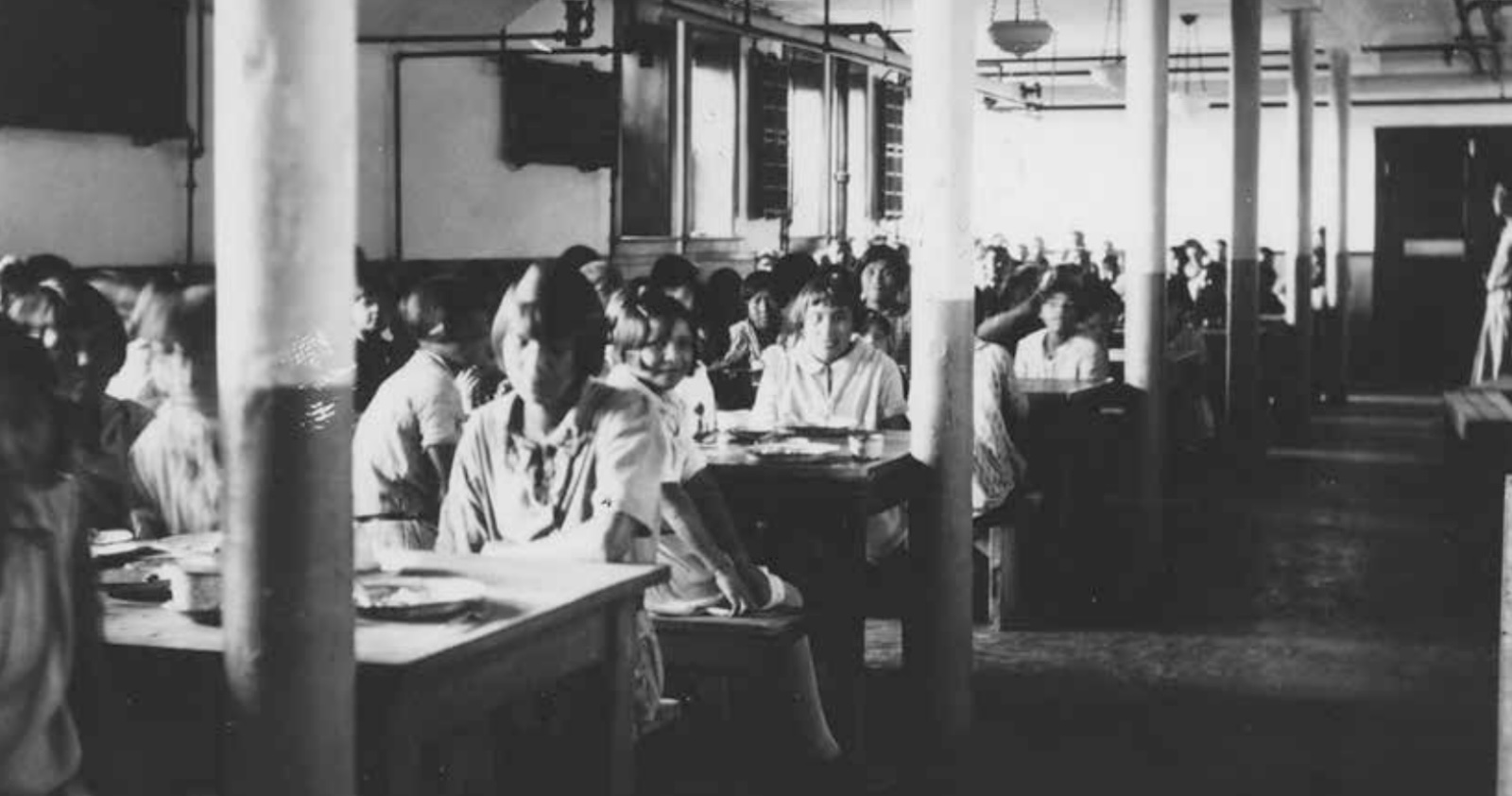
Incubators of tuberculosis
The report continues for over 1,000 more pages. The rest of the document contains repeated detailed information on schools that were poorly designed, cheaply run, and operated under a system that continually failed to adequately respond to warnings and complaints from both parents and administrators.
As time went on, government decisions began to have massive, countrywide consequences that would lead to thousands of deaths. Many of those deaths were from tuberculosis, the deadliest disease at the time.
Governments of the day — like residential school denialists today — painted the deaths as unavoidable, while at the same time signalling that they wished to address the problems being raised. In 1905, Parliament pledged to reduce tuberculosis deaths. [page 425] But it failed to actually fund and follow through on those words, while ignoring warnings from local administrators.
“In 1904, W.R. Tucker, a day school principal in Moose Woods in what is now Saskatchewan, advised the federal government not to rebuild the Qu’Appelle industrial school, which had been recently destroyed by fire. His reason was the high death rate of students in the schools. He provided a list of the number of students from the reserve where he worked who had attended the Qu’Appelle school or other industrial schools and who had returned to die of tuberculosis.” [page 438]
Over the coming years, a series of reports on poor health conditions were filed. They made national news and sparked considerable debate. Some officials had suggested it was futile or pointless to abandon residential schools or do anything really to address the spread of tuberculosis. They noted that the disease also ran rampant in communities themselves. But they failed to acknowledge or show any understanding that “the forced settlement of people in cramped housing on reserves” increased the vulnerability of populations in fairly obvious ways.
As time moved on, few officials seemed to consider that the residential schools might themselves be stoking the spread of the disease, as pupils crowded into dormitories then returned home to their communities. Instead, some blamed First Nations communities themselves. In 1898, Indian Affairs deputy minister James Smart conceded that crowding Indigenous people in “small and ill-ventilated houses” helped spread tuberculosis. But he also suggested that First Nations dances aggravated the problem because they kicked up dust. [page 388]
But there were also plenty of people sounding warnings — usually without any result. One Indian Affairs official in 1897 had noted that the schools were particularly bad incubators of tuberculosis, asking if it was “any wonder that our Indian pupils who have an hereditary tendency to phthisis, should develop alarming symptoms of this disease after a short residence in some of our schools, brought on by exposure to draughts in school rooms and sleeping in over-crowded, over-heated and unveltilated [sic] dormitories.” [page 440]
A doctor observed that “sick pupils who are allowed to go home, invariably improve, notwithstanding the fact that at home they are not nearly as well fed as at the school.”
The report’s authors wrote: “It is important to recognize that the impact of these diseases was intensified by the disruption that colonialism exerted on every aspect of the lives of Aboriginal people. It was not government policy to spread tuberculosis; however, it is clear that government policies of the 1880s created the conditions for the outbreak of an epidemic and that the government response to that epidemic was shamefully inadequate.” [page 427]
In the early 1900s, the government tasked Dr. Peter Bryce with investigating the poor health of students in the residential school system.
Bryce found the death rate of residential students was 20 times that of the general Canadian population. He recommended to the government that they turn the schools into sanatoriums focused on the health care of children, rather than on their education. The government rejected the plan, however, with Indian Affairs education superintendent Duncan Campbell Scott writing that “the Churches would not be willing to give up their share of the joint control.”
Scott said: “If the schools are to be conducted at all we must face the fact that a large number of the pupils will suffer from tuberculosis in some of its various forms.” [page 453]
Bryce was furious.
From the report:
“He vented his frustration in his annual report for 1913. He wrote that government attitudes towards the First Nations tuberculosis death rate reflected a belief in ‘the inevitable presence of disease amongst men, as to its more or less incurable character, as to the limited allotted span of human life, and as to unavoidable death as the logical termination of an organism whose work and functions as a part of organized society have been fulfilled and are ended.’ This, he pointed out, was not the attitude taken towards the presence of disease ‘in civilized societies.’ In effect, he was accusing Indian Affairs of taking tuberculosis among First Nations people for granted.” [pages 454-455]
Tuberculosis wasn’t the only deadly disease that killed children in residential schools. Influenza, pneumonia and other epidemics tore through the facilities. Officials knew about their impacts but resisted wide-scale changes to the system. And the problems were magnified by other choices of school administrations and the Canadian government.
One Indian agent, F.J.C. Ball, wrote to Ottawa about a school in Squamish where students were being “insufficiently fed.” [page 502]
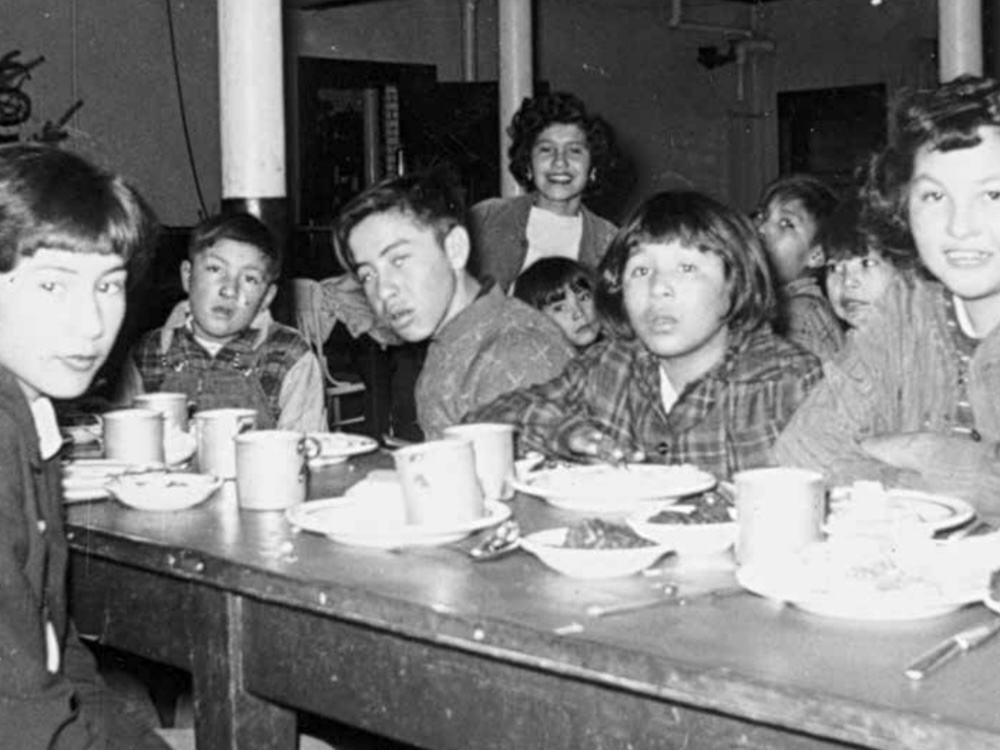
From the report:
“Ball said, ‘The only meal I have actually seen was one at mid-day which consisted of a piece of bread and a raw carrot. It may have been a fast day, and I have not since been successful in actually seeing a meal on the table.’ Agent Ball noted that Chief William of Squamish had informed him that his son lost ten pounds in one month at the school, adding, ‘The chief is quite reliable.’”
Such complaints and warnings continued for decades and comprise one of the recurring themes of the report.
Into the 1940s, death rates remained apocalyptically high. But even as tuberculosis rates declined in the 1950s and 1960s, the report chronicles the other dangers that the schools presented to children. And as was the case decades earlier, administrators and officials tended to blame the kids in their care for their own failings. [page 545]
In 1950, when a seven-year-old girl died after being struck from ice falling off the roof of a school near Cranbrook, a report said she must have “momentarily forgotten the danger,” while a coroner declined to hold an inquest because “the children had been well warned of the danger and there did not appear to be any negligence as far as the staff of the school was concerned.” [Volume 2, page 255]
Across Canada, local administrators warned their buildings were fire traps. Parents, meanwhile, complained of overly zealous corporal punishment. And often, officials did nothing.
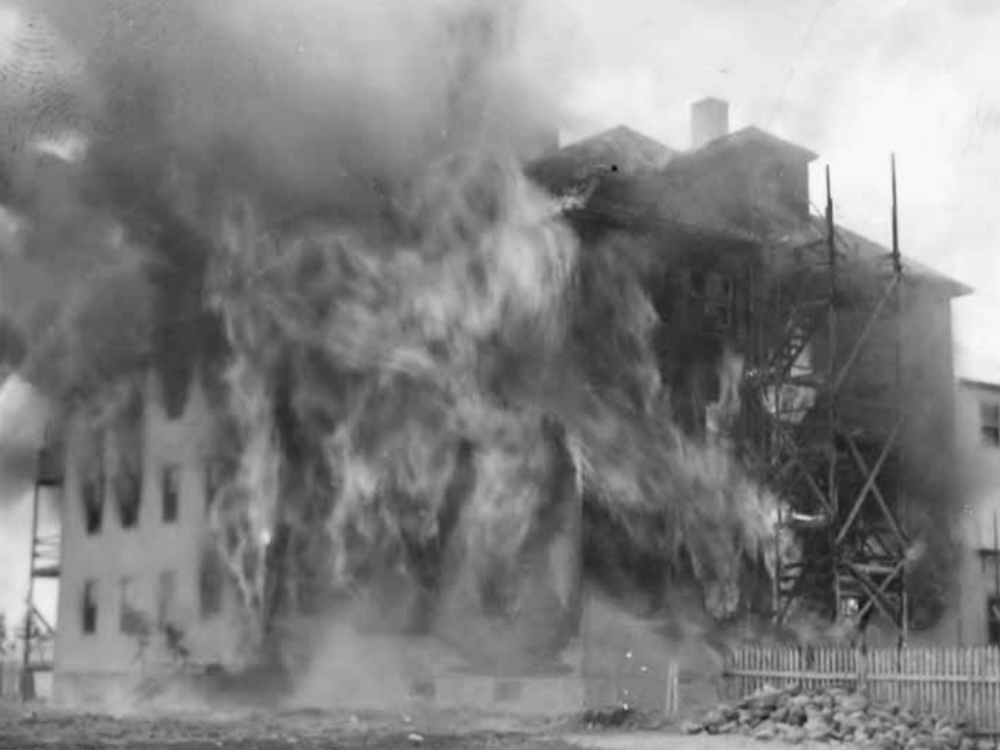
The legacy
The TRC report is exhaustive and detailed and touches on issues in every province. It spans centuries and, in doing so, lays the foundation for an understanding of the present-day impacts of the residential schools. It is too much to read in one sitting.
The breadth and detail of the report provide evidence that, even 10 years after its publication, is still used to refute those who try to deny what happened at Canada’s residential schools and the legacy of the system.
The history today sits at the core of calls for “truth before reconciliation.” And it formed the core of the statement from Truth and Reconciliation Commission Chair Murray Sinclair in his opening statement to the TRC report.
He wrote:
“Reconciliation also is not an Aboriginal problem. It is about creating a relationship of mutual respect as was promised in the Royal Proclamation of 1763 and in the assurances given at, and reflected in, the many Treaties signed between the Crown and Canada’s Aboriginal people, most since Confederation. All people in Canada, including newcomers, have a role in this relationship-building process. While we may not all share a past connected to the residential schools, we share a future. We must all call for an ongoing process of reconciliation, regardless of political affiliation, cultural background, or personal history.
“We must all accept the challenge of enacting effective solutions to the disproportionate cycles of violence, abuse, and poverty experienced by Aboriginal people. We must strive to become a society that champions human rights, truth, and tolerance by confronting, not avoiding, the history recounted in the following pages.
“To achieve this, we must bear witness to the past and join in a vision for the future. Our Calls to Action, therefore, should not be viewed as a national penance, but as a second chance at establishing a relationship of equals. This final report marks not the close but the beginning of a journey towards a more just, fairer, and more courageous country. We all have the opportunity to show leadership, courage, and conviction in helping to heal the wounds of the past.” [page 9] ![[Tyee]](/design-article.thetyee.ca/ui/img/yellowblob.png)
Read more: Indigenous, Rights + Justice








Tyee Commenting Guidelines
Please note that email notifications for replies are not currently working due to a software issue which may be resolved in a future update.
Comments that violate guidelines risk being deleted, and violations may result in a temporary or permanent user ban. Maintain the spirit of good conversation to stay in the discussion and be patient with moderators. Comments are reviewed regularly but not in real time.
Do:
Do not: