


 SHARE:
[Editor’s note: This piece is part of a weeklong series of writing in The Tyee to mark the National Day for Truth and Reconciliation and the 10-year anniversary of the release of the Truth and Reconciliation Commission of Canada’s 94 Calls to Action.]
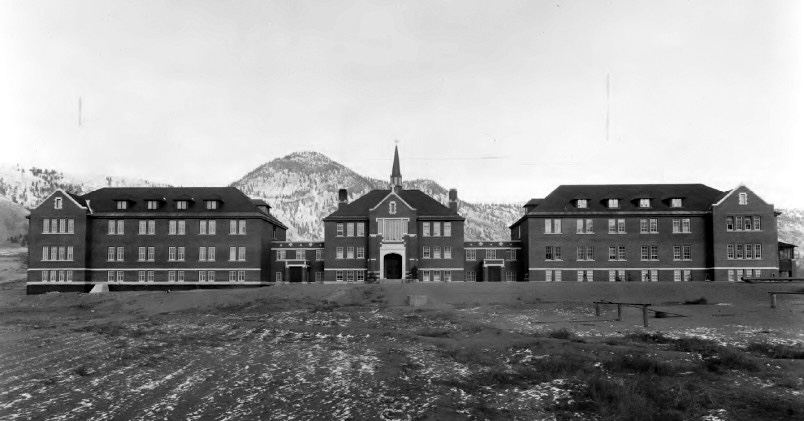
Soon after Tk̓emlúps te Secwépemc First Nation publicly announced the confirmation of suspected unmarked burials at the former site of the Kamloops Indian Residential School four years ago, its members were harassed on social media, and people went to the former residential school, at night, with shovels, to “‘see for themselves’ if children are buried there.”
Digging up potential burial sites, of course, contravenes Indigenous, Canadian and international laws, and echoes the ways settlers have violated and desecrated Indigenous burial sites throughout history.
But this detail — noted in the 2023 interim report from the independent special interlocutor for missing children and unmarked graves and burial sites, Kimberly Murray — also highlights the ways in which denialism about Canada’s residential school system has grown more pronounced over the years.
Even before the last residential school closed in the 1990s, Canadians were already becoming more aware about this dark chapter in their history and the horrors the system presented.
Prime Minister Stephen Harper’s 2008 apology for Canada’s role in the residential school system shifted public understanding, as did the work of the Truth and Reconciliation Commission, completed in 2015. Pope Francis apologized in 2022 for the Catholic Church’s role in what he described as genocide against Indigenous Peoples in Canada.
Through testimony and extensive research, the Truth and Reconciliation Commission established that thousands of children died at residential schools between 1831 and 1996. The National Centre for Truth and Reconciliation, which took charge of the commission’s archives, has documented over 4,000 Indigenous children who died within the residential school system; it maintains a memorial register that it continues to update. Across the country, work continues at sites like Kamloops to confront the existence of potential unmarked burial sites — and navigate how best to handle the discoveries.
As many Canadians reckon head-on with their country’s history, a loud and organized group of people continues to minimize and deny the harm residential schools and other colonial policies did to Indigenous Peoples. Canada’s actions, this group insists, do not constitute genocide.
Advocates and academics say the federal government should be doing more to address denialism.
The special interlocutor’s final report on missing children and unmarked graves and burial sites, they say, can be used as a road map for moving forward.
That report included recommendations for civil and criminal legal remedies to curb residential school denialism.
When Liberal Leader Mark Carney was asked during the 2025 federal election campaign about his own father’s comments on Indigenous people and residential schools, he said, “I love my father, but I don’t share those views.”
Advancing truth and reconciliation, he added, “is a fundamentally and deeply held personal commitment of mine.”
So far, however, the Liberal government has taken no new steps to address the special interlocutor’s recommendations, or combat the threat of residential school denialism in Canada.
Public support, but no action
One reason why Harper’s apology in 2008 came when it did was that Paul Martin’s previous Liberal government — along with survivors, churches and various First Nations, Indigenous leaders and groups — approved the Indian Residential Schools Settlement Agreement in 2006. It was considered the largest class-action settlement in Canadian history.
That agreement had requirements that were legally binding, including the establishment of the Truth and Reconciliation Commission of Canada, or TRC.
“It just seemed like the Harper government decided that, politically speaking, apologizing was probably the most prudent and safe thing to do,” said University of Victoria professor Matt James, who researches autocratic atrocities and government responses to this history, and who is one of the many scholars and academics who contributed research to the TRC.
The government was forced “to put some basic facts about residential schools on the historical record and in doing so made some of the most outrageous denialism that we’d seen prior to the apology just untenable,” James told The Tyee.
Justin Trudeau accepted the TRC’s final report a decade ago, early in his term as prime minister.
Since then, movement has been slow. Only 15 of the report’s 94 Calls to Action have been completed, for example.
And though then-justice minister Arif Virani received last year’s special interlocutor report with thanks “for her crucial work,” the government hasn’t yet said how it plans to implement her recommendations or when to expect further developments.
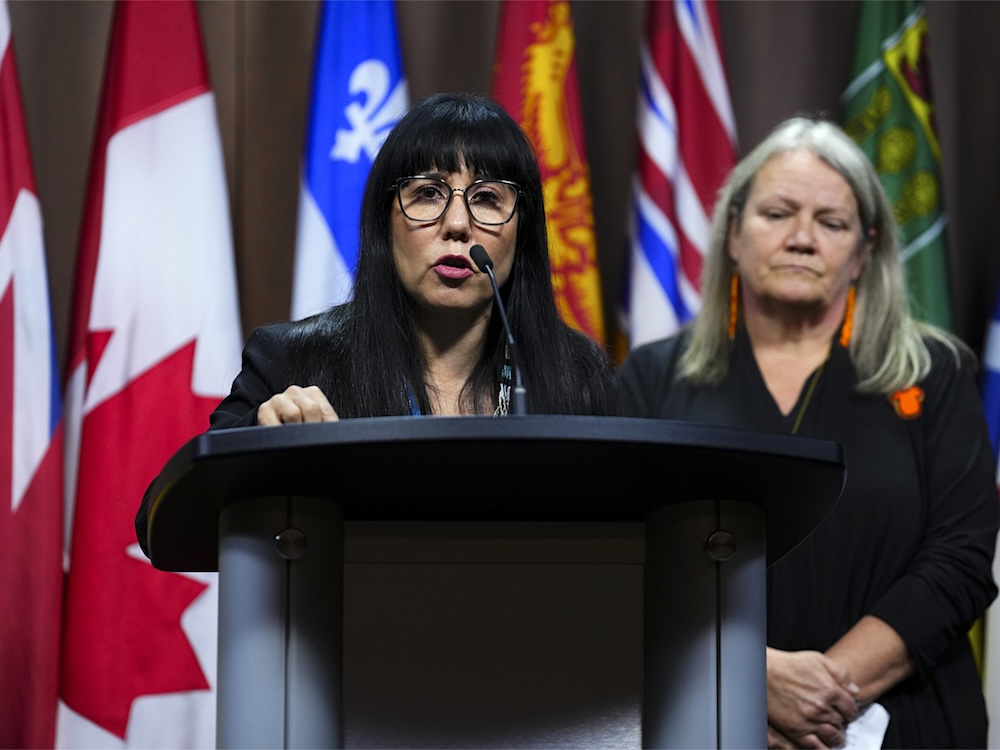
Last fall, NDP MP Leah Gazan put forward a bill that, if passed, would recognize residential school denialism as a form of inciting hate in the Criminal Code. The bill had strong public support.
A section of the Criminal Code already “recognizes Holocaust denialism... as a form of inciting hate,” Gazan told The Tyee. Gazan has spoken before about losing relatives to the Holocaust.
The goal of Gazan’s bill would have been to add residential school denialism to that section, she says.
Gary Anandasangaree, the Crown-Indigenous relations minister at the time, publicly backed the legislation, but the Liberals did not adopt the bill or pass it, so it didn’t go anywhere. By the time the Liberals had prorogued Parliament in January, Gazan’s bill had died on the order papers.
Following backlash, the Trudeau government reversed a cap it had placed on funding for searches of missing children and unmarked burials, and more recently, the Survivors’ Secretariat was denied funding from the government to find missing children and unmarked burials.
Groups and advocates for residential school survivors continue to urge political parties to fully support school burial investigations.
For Gazan, this ongoing issue with government funding “is demonstrative of [the government] saying one thing around reconciliation and making decisions that absolutely put the ability to reconcile in this country in jeopardy,” Gazan said.
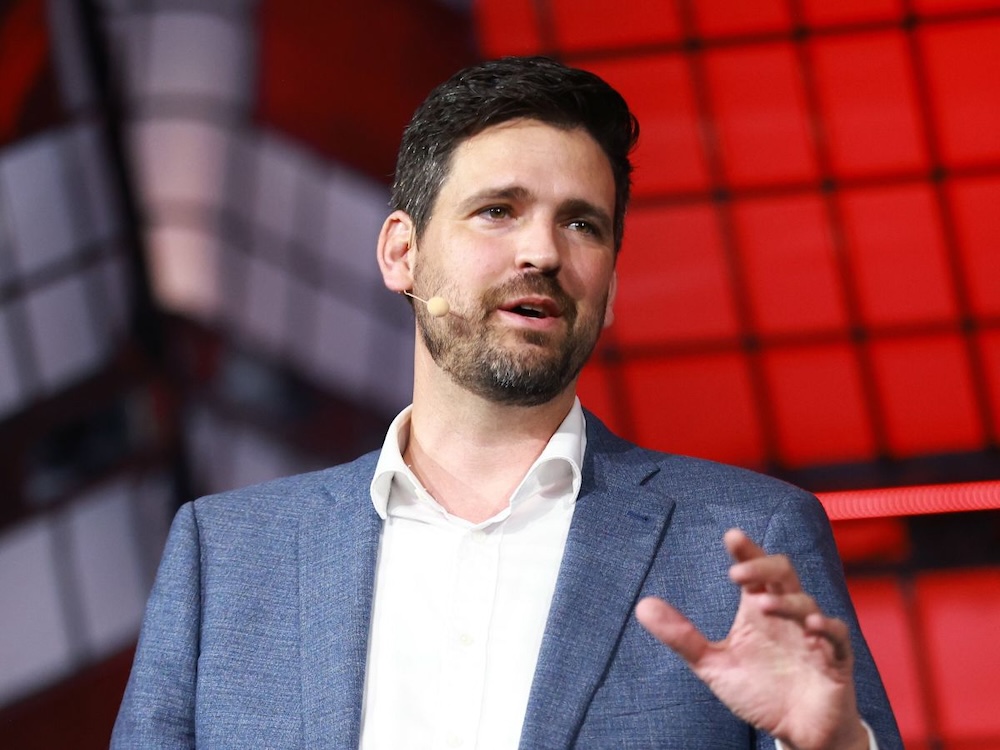
When The Tyee reached out to Minister of Justice and Attorney General of Canada Sean Fraser in July to ask about the government’s plan to address residential school denialism, spokesperson Maha Jawass sent an emailed statement.
“Minister Fraser is thoughtfully reviewing the four volumes of Kimberly Murray’s final report to inform work going forward. We owe it to the children who never came home, to Survivors, their families, and communities to get this right,” Jawass wrote.
“We thank MP Leah Gazan for raising this important issue through her past private member’s bill, C-413, and for her advocacy. We continue to be open to discussions on making it a Criminal Code offence to wilfully promote hatred against Indigenous Peoples by condoning, denying, justifying or minimizing the facts about residential schools.”
Why is denialism growing and spreading in Canada?
The book Grave Error: How the Media Misled Us (and the Truth about Residential Schools), published in 2023, has been a flashpoint for residential school denialism. It’s co-edited by C.P. Champion, who has called the inclusion of Indigenous perspectives in school lessons a “fad,” and Tom Flanagan, a former Stephen Harper adviser with a sizable list of gaffes.
In Quesnel, the spouse of Mayor Ron Paull was alleged to have distributed copies of Grave Error, and Paull was censured and removed from committees as a result. (He later won a lawsuit against the city on procedural grounds, and his wife is now suing the Union of BC Indian Chiefs for defamation.)
Frances Widdowson, one of Grave Error’s contributors, was invited to speak at the Powell River Public Library last year, as the town reconsidered its name and colonial legacy. (Israel Wood Powell was the superintendent of the Department of Indian Affairs for B.C. from 1872 to 1889 and pushed for the first residential schools in the province.)
As Flanagan notes in a summary of Grave Error published by the Fraser Institute, many of the contributors to the book wrote about residential schools “mainly in specialized journals... whose raison d’être is to challenge conventional wisdom.”
These include publications like Western Standard, Quillette and True North, which published the book. These outlets continue to publish articles that downplay and minimize the history of residential schools.
Various political figures have also participated in forms of denialism. True North columnist and former Conservative Party of BC board member Lindsay Shepherd has repeatedly dismissed First Nations investigations that have pointed to unmarked grave sites at residential schools. Vancouver-Quilchena MLA Dallas Brodie was kicked out of the Conservative Party of BC caucus “as a result of her decision to publicly mock and belittle testimony from former residential school students.” And North Island-Powell River MP Aaron Gunn sidestepped previous social media comments he’d made denying that Canada had perpetrated genocide against Indigenous Peoples, calling criticism of them “misinformation.”
Conservative Leader Pierre Poilievre — who defended Gunn when his previous social media comments resurfaced during April’s federal election — embroiled himself in scandal after delivering a speech at the Frontier Centre for Public Policy, where Flanagan is a senior fellow, in 2023.
There’s always been a kind of denialism baked into Canadian identity and assumptions from the very beginning, James of the University of Victoria told The Tyee.
“If the starting point for thinking about this country and belonging to it is that we’re a benevolent multicultural paradise of peacekeepers, a lot of denialism is going to follow from that,” James said.
“If that’s the starting point for people’s belief systems, it’s going to be pretty difficult to accept some basic historical facts.”
Inertia and lack of urgency from successive governments on the history of residential schools and denialism also leave room for the distortion of history, James said.
Dismissing, minimizing and downplaying testimonies about residential schools can be “the end of the wedge that can be used to raise greater doubts about paying attention to Indigenous voices, greater doubts about questions around land return and sovereignty,” James said.
“If you can get out there the narrative that none of this stuff really happened or didn’t happen the way people said it did, or that it’s not that bad, we don’t have any reason to doubt ourselves morally,” he added.
James also noted how mainstream sowing of doubt about the harms of residential schools and colonial policies has become in Canadian politics.
“There are a lot of people who do not identify as far right and would not even want to be identified with the far right who are in some cases being successfully persuaded to give some credence to some of this distortion,” he said. “It’s a real concern.”
How should the government be responding?
In the executive summary of the independent special interlocutor’s report, under the heading “Fighting Denialism and Rewriting Canada’s History,” Murray wrote that the federal government should track the spread of residential school disinformation and misinformation, regulate tech companies to stop and remove denialism on their platforms, and provide support to communities subjected to online hate and harm.
Murray also recommended including provisions in Bill C-63: An Act to Enact the Online Harms Act to address the harms associated with residential school denialism.
And similar to Gazan’s proposed legislation, Murray suggested amending Canada’s Criminal Code to make it “an offence to wilfully promote hatred against Indigenous Peoples by condoning, denying, downplaying, or justifying the Indian Residential School System or by misrepresenting facts relating to it.”
James noted that Gazan introduced another motion in 2022, calling for the government to recognize what happened in Canadian residential schools as genocide.
More could be done to raise awareness among Canadians about what genocide means, James told The Tyee.
“It’s not just mass killing,” he said. “Genocide can take much slower forms.”
The release and preservation of records regarding residential schools have faced roadblocks, and many important records of testimonies given about residential schools in the Independent Assessment Process — one of the components of the Indian Residential Schools Settlement Agreement — are also in danger of being imminently destroyed.
There should be robust government outreach and engagement to have these records preserved and protected, Ry Moran, who is Red River Métis and the inaugural associate university librarian for reconciliation at the University of Victoria, told The Tyee. Moran was the former director of statement gathering for the TRC and founding director of the National Centre for Truth and Reconciliation.
What’s next?
Gazan, who is now one of only seven federal NDP MPs left in the House of Commons, told The Tyee in July that she plans to reintroduce her 2024 bill to criminalize residential school denialism.
Gazan criticized the Liberals’ lack of progress on the TRC’s Calls to Action and their lack of a formal response to the special interlocutor’s report.
But she added she’s had a positive relationship with Sean Fraser, Canada’s attorney general, in the past and looks forward to discussing this issue with him soon.
Moran emphasized that denialism harms and dehumanizes survivors and Indigenous communities — and presents dangers to Canada’s rule of law and the pursuit of justice.
“When cultures of impunity thrive or are allowed to sustain themselves, the overall human rights fabric of the community or culture is placed at risk,” Moran said.
“It just really weakens some of the core and foundational pillars on which we try to build and maintain respectful and healthy and human rights-oriented societies.” ![[Tyee]](/design-article.thetyee.ca/ui/img/yellowblob.png)
Read more: Indigenous, Rights + Justice, Politics




Tyee Commenting Guidelines
Please note that email notifications for replies are not currently working due to a software issue which may be resolved in a future update.
Comments that violate guidelines risk being deleted, and violations may result in a temporary or permanent user ban. Maintain the spirit of good conversation to stay in the discussion and be patient with moderators. Comments are reviewed regularly but not in real time.
Do:
Do not: