


 SHARE:
As the federal government works toward a deal with Alberta to ship crude from the oilsands through northern British Columbia, it will have to navigate a long-standing agreement to keep oil tankers away from B.C.’s north coast.
It’s a debate many in B.C. believed long settled.
While the Oil Tanker Moratorium Act became law in 2019, its history dates back more than 50 years to Canada’s first Prime Minister Trudeau, plans for an Alaskan oil pipeline and fears about what a spill on the west coast could mean for the economy and First Nations communities of B.C.'s northwest.
Federal insiders reportedly told the Globe and Mail this week that the government is considering a “limited exemption” to the law. That suggestion, however, brought words of warning from within the prime minister’s own party, with some west coast Liberal MPs saying it would hinge on consent from the province and First Nations.
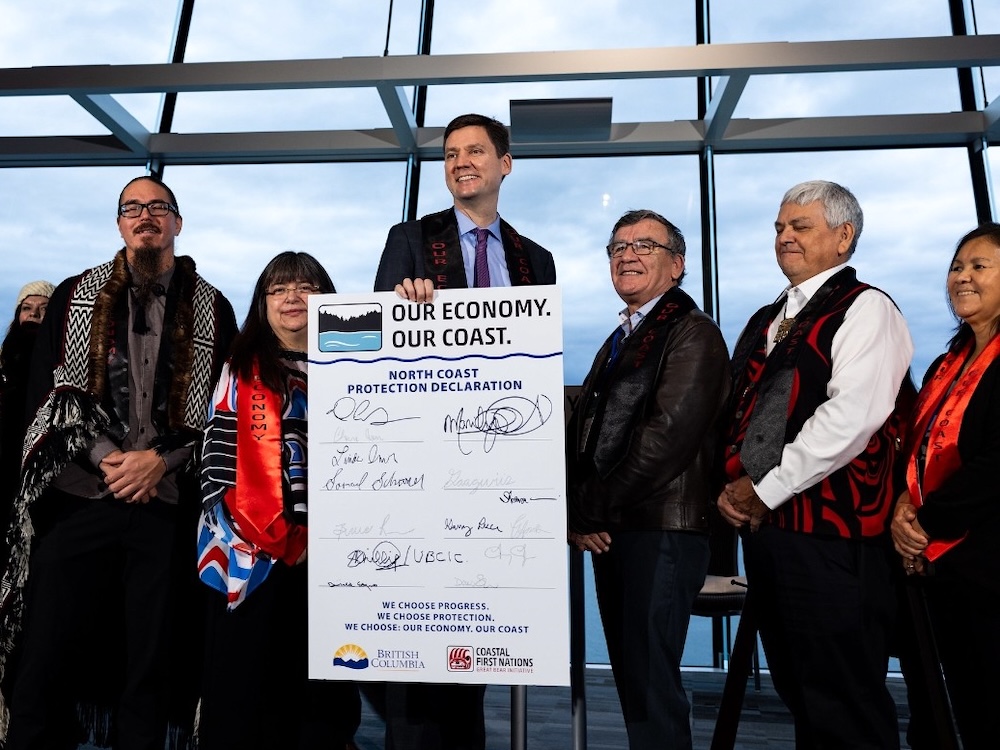
That consent currently appears unlikely. Earlier this month, B.C. Premier David Eby and coastal First Nations leaders signed a declaration urging the federal government to uphold the ban, calling it “the result of over 50 years of advocacy from First Nations and coastal communities, and supported by federal and provincial governments of all political stripes.”
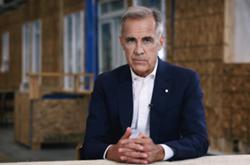
Despite the opposition, Prime Minister Mark Carney recently told reporters during a visit to northern B.C. that a deal with Alberta could come within weeks.
Carney visited the region to announce federal support for a new slate of “nation-building” resource projects. Of 11 projects the government is considering fast-tracking, four are in northern B.C. They include a mine expansion, two LNG export facilities and a power transmission line.
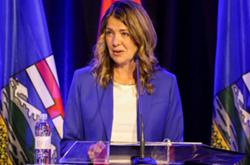
Carney didn’t announce an oil pipeline — despite pressure from Alberta Premier Danielle Smith. Here’s why any move to overturn, or at least circumvent, the Oil Tanker Moratorium Act is likely to meet resistance on the coast.
The Alaska pipeline that triggered a 50-year-old ban
It was 1972 and Pierre Trudeau was Canada’s prime minister.
The United States was preparing to build the Trans-Alaska Pipeline System, one of the world’s largest oil transportation networks, with capacity to move more than two million barrels of crude a day. While the system now transports roughly a quarter of that, down substantially from its 1980s peak, about 20 tankers still leave the port in Valdez every month carrying oil to the lower 48.
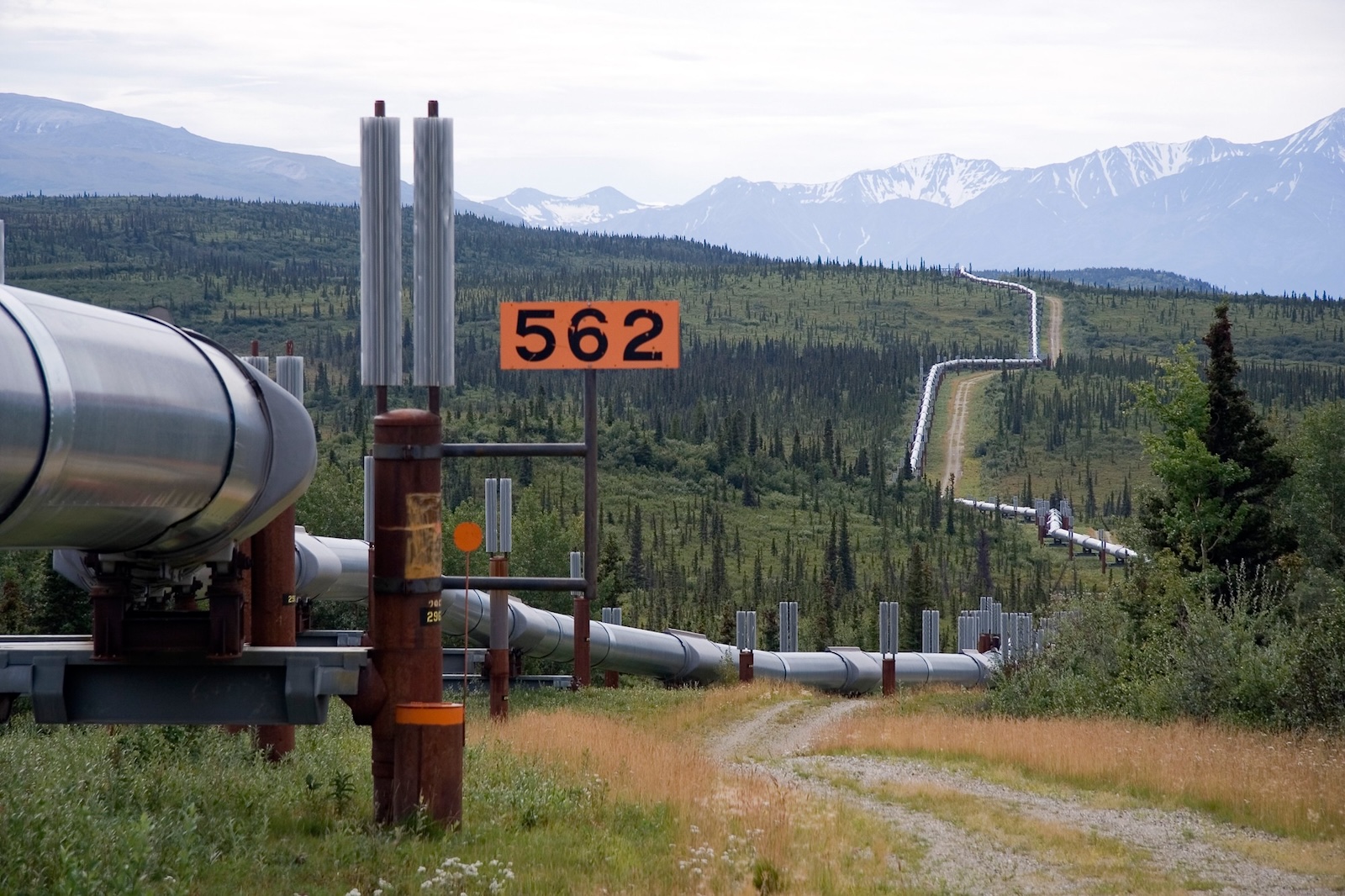
Alaska’s plans met with concern from Canadian politicians, particularly on the west coast, that those tankers would travel dangerously close to the B.C. coastline — and potentially pass through Hecate Strait and the narrow Inside Passage. The issue was frequently raised in the House of Commons.
The Liberals had a majority. But politicians worked across party lines to ensure B.C.’s north coast was protected from oil spills.
In May 1972, NDP Skeena MP Frank Howard proposed a motion that declared “the movement of oil by tanker along the coast of British Columbia from Valdez in Alaska to Cherry Point in Washington is inimical to Canadian interests.” It passed unanimously.
A month later, as if to underscore the point, oil began washing up on Surrey’s Crescent Beach after 21,000 gallons spilled from a tanker at the Cherry Point refinery in northwest Washington. Another B.C. NDP politician, MP Barry Mather, crafted another motion calling for Canada to invite representatives from the United States to visit and view the damage. That motion didn’t succeed.
It would take more than a decade, until 1985, to formalize a Tanker Exclusion Zone with the United States. The agreement requires tankers shipping oil from Alaska to stay 70 nautical miles from B.C.’s coastline, a distance calculated based on the “worst possible drift of a disabled tanker with a cargo.”
The agreement doesn’t apply to tankers travelling from Canadian ports.
But David Anderson, a Liberal MP for Esquimalt-Saanich in 1972 and later the federal environment minister, maintains that a government policy covered all oil tankers.
“It was not a formal Order in Council, but it was policy statement of the government at the time,” Anderson previously told The Tyee. “It was the whole coast, and it restricted all crude oil movements to the level of 1972.”
Oil tankers on the south coast of B.C. weren’t new. The Westridge terminal in Burnaby had been shipping crude transported through the Trans Mountain pipeline since 1953. The policy was meant to cap oil tanker traffic at existing levels — although it didn’t stop Trans Mountain’s expansion nearly 50 years later.
Enbridge tests the north coast tanker ban
The ban was tested when Enbridge, a Calgary-based multinational energy company, proposed the 1,170-kilometre Northern Gateway pipeline from the Alberta oilsands to the B.C. coast in 2008.
The pipeline would have followed a similar route later taken by the Coastal GasLink pipeline, which was completed in 2023. But the two projects were very different.
While Coastal GasLink now delivers gas to the LNG Canada export terminal at Kitimat, Northern Gateway proposed to transport diluted bitumen or “dilbit.” The tarry substance is created when bitumen mined in the Alberta oilpatch is mixed with condensate to create a slurry that can be transported by pipeline.
Reaction to Coastal GasLink was mixed — the Haisla Nation, where LNG Canada is now located, supported the project, while neighbouring Wet’suwet’en hereditary leaders opposed the pipeline through their territory. But Northern Gateway faced a near-solid wall of opposition. Opponents argued that a spill could be catastrophic in a region where the economy relies on fishing and tourism.
The federal government approved the project in 2014 despite the opposition. The decision was later overturned by the Federal Court of Appeal, which said the government failed to adequately consult First Nations. In 2016, then-prime minister Justin Trudeau formally cancelled Northern Gateway.
The following May, Trudeau’s government introduced Bill C-48, the Oil Tanker Moratorium Act. It restricts oil tankers carrying more than 12,500 tonnes of crude oil or persistent oil products from stopping, loading or unloading at ports between the northern tip of Vancouver Island and the southern tip of the Alaska Panhandle. The bill received royal assent on June 21, 2019.
The Conservative party opposed the bill and, in the years since, has repeatedly tried to overturn the legislation.
In 2020, Edmonton Centre MP James Cumming tabled Bill C-229, an “act to repeal certain restrictions on shipping.” The bill was defeated in February 2021, with only Conservatives voting in favour.
Later that year, during the federal election, then-Conservative leader Erin O’Toole promised to overturn the tanker ban.
Conservative Leader Pierre Poilievre again raised the tanker ban during the federal election this spring, repeatedly accusing the federal Liberals of killing Northern Gateway and other energy projects through restrictive legislation, including Bill C-48.
Any mention of the Oil Tanker Moratorium Act or an oil pipeline to B.C.’s north coast was conspicuously missing during a Poilievre campaign stop in Terrace, where the Conservative leader instead promised an expansion of the LNG industry.
“If you want these monstrous, big, beautiful projects to go ahead, you are going to need a change in government, with a ‘Canada first’ Conservative prime minister,” Poilievre said.
Not all tanker shipments present equal risk
Conservative MP Ellis Ross represents Skeena-Bulkley Valley, a riding that roughly overlaps the area covered by the tanker ban. Ross, who flipped the longtime NDP riding during the spring election, previously served as a Haisla Nation chief councillor and a B.C. MLA for the region.
As Haisla Chief, Ross expressed strong opposition to Northern Gateway, telling the Financial Post in 2013 that federal support for the project had only hardened his resolve.
“I’m just not willing to actually put the Haisla in that position,” he said at the time.
Five years later, as a BC Liberal MLA, Ross appeared to soften his stance, telling Senate committee hearings on Bill C-48 that the moratorium unfairly singled out one industry and had the potential to damage the Canadian resource industry.
As he ran for the federal Conservatives this spring, Ross told The Tyee that he wouldn’t rule out repealing the tanker ban legislation and suggested that decisions about resource projects on the north coast should be made based on First Nations consultation.
“It’s not a simple answer,” he said, pointing out that two nations, Nisg̱a’a and Lax Kw’alaams, originally opposed the tanker ban because of what they said was inadequate consultation. Lax Kw’alaams is among those currently calling on Canada to uphold the ban. The Tyee attempted to contact Ross for this story but did not receive a response.
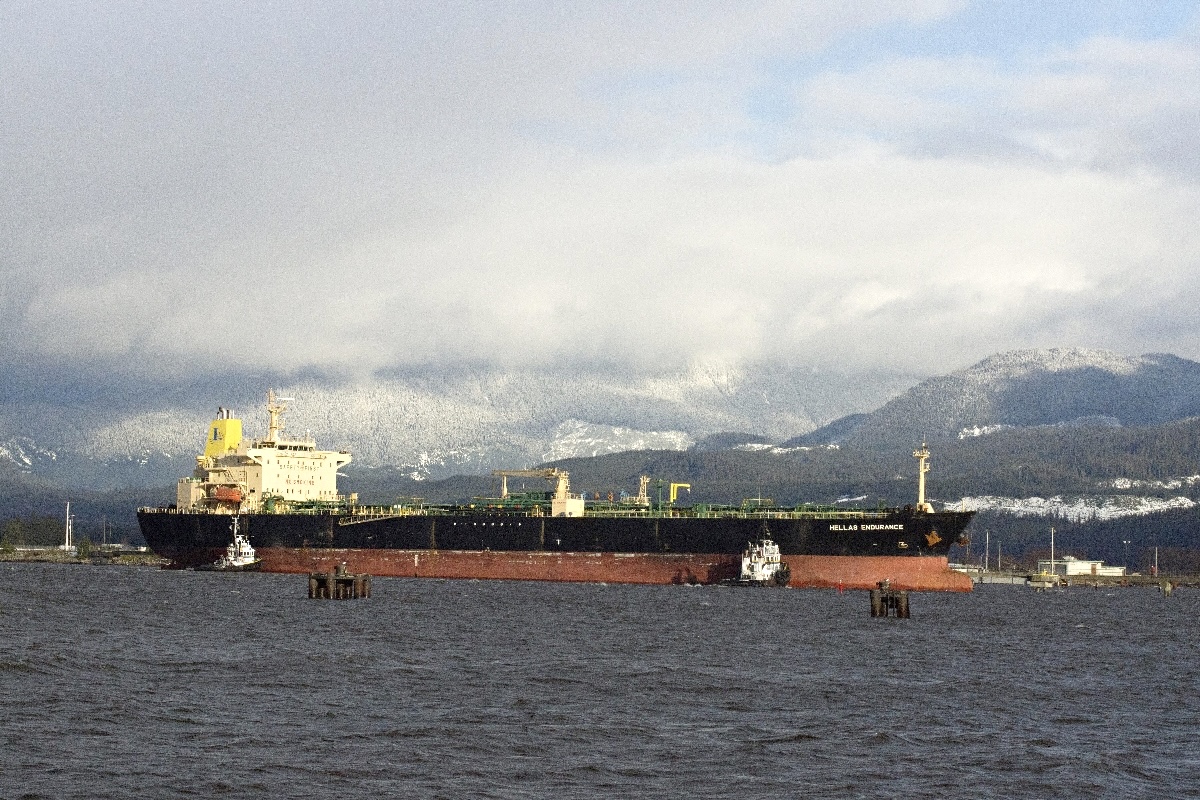
Kitimat Mayor Phil Germuth told The Tyee that while there are those who strongly oppose or support the tanker ban, many locals fall into a third camp that would support the right project if there were sufficient environmental controls in place.
“I think it would have to have a lot to do with what’s in the tanker,” he told The Tyee recently. “If it’s a tanker with a refined product in it where, if an incident were to happen there’s a lot less environmental risk, then they’d be OK with something like that.”
According to the federal government, the ban includes crude or persistent oil products like bitumen and synthetic crude oil but allows for refined products like LNG, gasoline and propane.
Could Bill C-5 provide a workaround to the tanker ban?
The federal Liberals could be poised to undo their own work to keep oil tankers off the north coast. In June, the government passed Bill C-5, which includes the Building Canada Act, allowing government to push through projects determined to be in the “national interest.”
The law grants sweeping powers to expedite federally regulated projects that cross provincial boundaries — such as pipelines. It has been criticized for steamrolling environmental reviews and First Nations consultation.
Liberal insiders told the Globe that a memorandum of understanding between the federal government and Alberta could result in an exemption that allows oil tankers in a limited area on the coast where a pipeline would emerge.
Sources also said that would require a private sector proponent, First Nations consent and environmental approvals.
So far, there appears to be little appetite from industry for another oil pipeline battle.
Enbridge, which lost hundreds of millions on Northern Gateway, told The Tyee earlier this year that it has “no plans to develop Northern Gateway.” However, the company’s CEO, Greg Ebel, also suggested that regulatory amendments could change that.
Meanwhile, Alberta is forging ahead without a private industry proponent. Smith said the province will spend $14 million to craft an application for an oil pipeline to the Major Projects Office. Enbridge is among the companies her government is consulting on the plan.
B.C. Premier David Eby said the lack of private interest makes discussion about an oil pipeline a non-starter, calling it a “figment of a communication person's mind in Alberta.” The declaration he signed Nov. 5 with First Nations leaders, including Lax Kw’alaams, Heiltsuk and Haida, points to the jobs created by conservation efforts in the region.
“In the past 15 years, the conservation economy has generated nearly $2 billion in economic value for British Columbia and for Canada,” it said. “Over the long term, the consequence of a crude-oil spill in these waters would be generations of lost livelihoods and irreversible ecological damage.” ![[Tyee]](/design-article.thetyee.ca/ui/img/yellowblob.png)
Read more: Indigenous, Energy, Alberta, Environment






Notice about commenting changes
The Tyee’s commenting system will be moving to a new platform on Nov. 12. If you’re already a Tyee commenter you must register with the new system on or after Nov. 12 with your preferred username.More information can be found here.