


 SHARE:
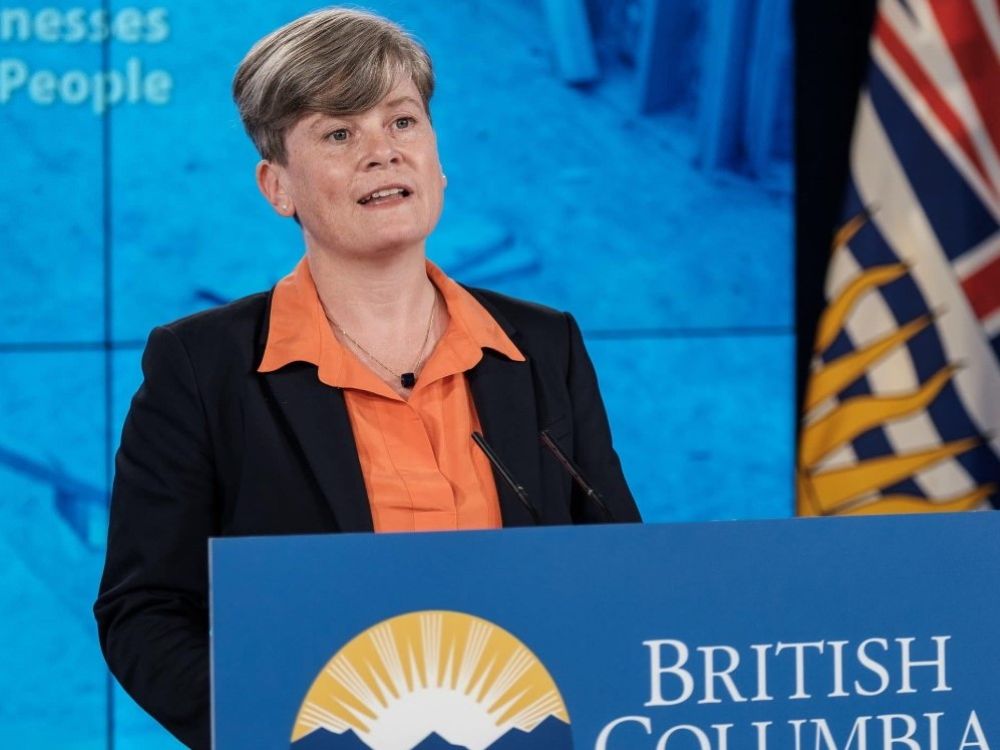
British Columbia’s health ministry is reorganizing to make delivering services more efficient, but it’s unclear how much money may be saved and how many jobs will be cut.
"It’s about reducing the administrative burden on health authorities," Health Minister Josie Osborne said Wednesday. "It’s about eliminating redundancies and duplication to help ensure that every dollar possible goes to the front line so that our health professionals in B.C. can concentrate on the work that they do best, that’s providing care directly to patients in B.C."
Since the 1990s the province has had five regional health authorities plus the Provincial Health Services Authority.
The PHSA’s mandate, according to its website, includes working to share services with other health authorities and being "responsible for regional and provincial support services including supply chain, digital health and information services, lab medicine, revenue services, employee records and benefits, among others."
The PHSA had been delivering some shared services provincewide, but participation by health authorities has not been mandatory and some did not opt in, said Osborne. "The result is there are duplicated services that contribute to inconsistencies and inefficiencies across the health system."
The government is creating a new stand-alone body that will deliver those services, she said, adding that participation will be mandatory and the new organization should be operating by spring. "It will essentially be a one-stop shop for services like legal, supply chain, finance, human resources."
Asked how it will be organized, Osborne had few details. "The governance and structure of this, we’re still developing that, so we know that it will be a stand alone organization, that’s important."
Nor was it clear how much money might be saved, though Osborne said every one per cent cut from the health budget saves about $350 million. "It will take some time to develop a precise figure of what we will save moving forward as these services are consolidated and amalgamated."
Along with leveraging economies of scale, the new organization will be able to negotiate better prices with vendors for personal protective equipment and other supplies, she added.
The health budget for the current year is $39 billion, which is about 41 per cent of the province’s total operating expenses.
According to the most recent quarterly update, the province is anticipating a deficit of more than $11 billion.
Osborne said the planned changes come out of feedback from an ongoing review of the health authorities that has already engaged with tens of thousands of workers. "What we heard was the need to remove bottlenecks, to reduce redundancies, strengthen supports and better create better consistency, coordination and accountability."
So far that review has led to about 1,100 positions being cut or left vacant, which Osborne said is expected to save about $60 million a year.
The PHSA will continue to exist and will have a clearer focus on delivering services that directly benefit patients, she said. Among its responsibilities are cancer care, ambulance services and BC Women’s Hospital and BC Children’s Hospital.
A government background document says that according to the Canadian Institute for Health Information the province’s health-care system already has one of the lowest levels of administrative spending in Canada and spends less than the national average on corporate services.
"The health authority review aims to further lower B.C.'s corporate services expense ratio," it said. ![[Tyee]](/design-article.thetyee.ca/ui/img/yellowblob.png)
Read more: Health, BC Politics










Notice about commenting changes
The Tyee’s commenting system will be moving to a new platform on Nov. 12. If you’re already a Tyee commenter you must register with the new system on or after Nov. 12 with your preferred username.More information can be found here.