

 SHARE:
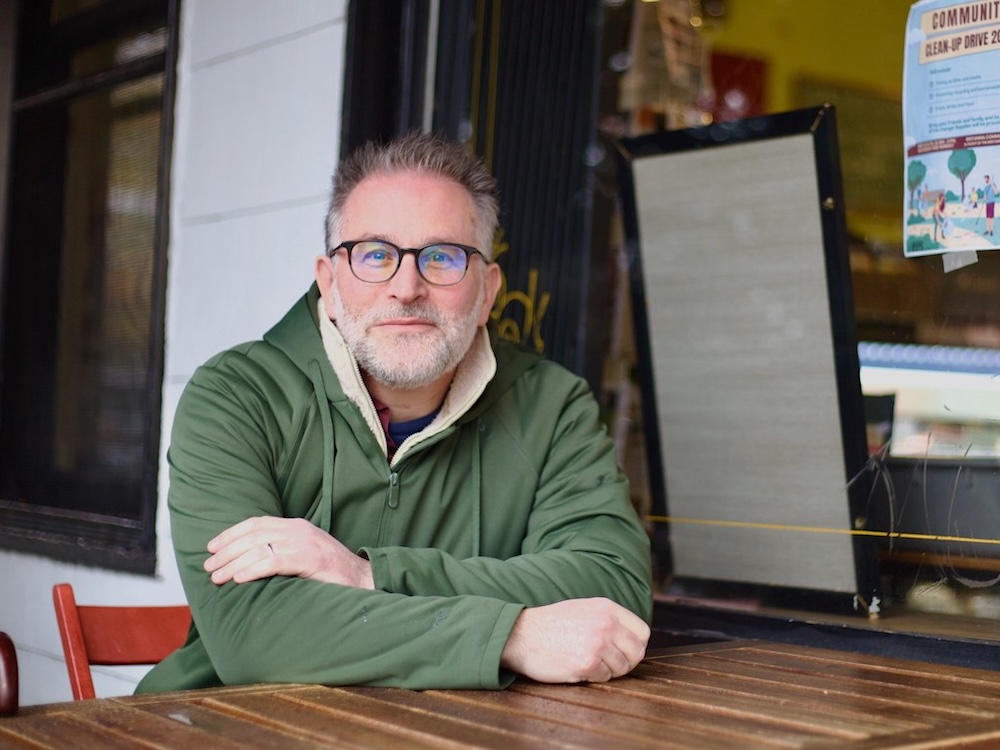
William Azaroff doesn’t have time to be bored. Just look at all the non-profit boards in Vancouver he’s served on.
In addition to his day job as CEO of Brightside, a non-profit housing provider with more than 1,100 units of housing in Vancouver and Burnaby, Azaroff serves on the Vancouver International Film Festival board and is board president for Community Housing Coverage, the property insurance service provider for the BC Non-Profit Housing Association.
Previously Azaroff was an executive at Vancity credit union for over a decade, as well as board chair for Modo Carsharing Co-op, board chair and treasurer for the BC Non-Profit Housing Association and board chair for the Vancity Community Foundation. Full disclosure: for six months in 2025, he sat on The Tyee’s board, too. (Board members do not have any involvement in editorial decisions at The Tyee.)
Azaroff, born and raised in Vancouver, started his career in the arts. An Eric Hamber Secondary graduate, he took advantage of the school’s television production and drama programs to break into indie filmmaking.
“I started making short videos in high school with a group of theatre and film geek friends,” Azaroff said. “So for the next dozen years, my life was basically having whatever jobs in order to make independent films.”
His credits include a 1999 feature film called The Engagement Party, described as “a comedy about a young Jewish couple trying to maneuver through a disastrous engagement party their families have thrown for them,” and a 1996 short film called CheckMating, “a romantic comedy about a woman who tests her dates by playing games of chess with them.”
Eventually Azaroff realized he was better suited to production than writing and directing. But even as he transitioned into the non-profit world, he saw parallels with his indie filmmaker experience. So in 2021, Azaroff self-published a book about it.
“It was called Everything I Learned about Leadership I Learned from Filmmaking,” he said.
“I was good at bringing people together around a vision, so that's what I continue doing.”
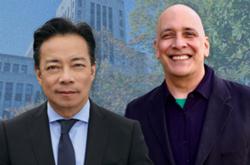
For his next act, Azaroff has his eye on Vancouver’s top leadership position: mayor. He was scouted by OneCity’s executive director, Giovanna Orecchio, and is now one of two nominees for OneCity’s mayoral candidacy. He’ll face off against Amanda Burrows, another prominent figure from Vancouver’s social housing and non-profit sector. Burrows is the executive director for First United.
OneCity members will vote for their mayoral candidate of choice, with the winner announced at the party’s Feb. 11 annual general meeting. Candidates for council, school board and park board will be announced later in the spring.
If it's Azaroff, he will take unpaid leave from Brightside during the campaign period of June until the election on Oct. 17, 2026.
This is the first municipal election in which OneCity has run a mayoral candidate since forming in 2014. While the 2026 race is still shaping up, whoever becomes the candidate will face off against Mayor Ken Sim, who started the ABC Vancouver party after losing the 2018 mayoral race as the Non-Partisan Association candidate, and Kareem Allam, Sim’s former chief of staff, who founded the new Vancouver Liberals party.
“Must be nice to start your own little vanity political party so you can run for mayor, but I like being part of a party that precedes me and will live on beyond me,” Azaroff said about his choice to run with OneCity.
In late November, just a few days after city council passed the 2026 budget, Azaroff sat down with The Tyee for an interview at the Wilder Snail grocery and café in Strathcona to talk housing, how he’d budget for the city, responding to the ongoing mental health and toxic drug crisis, and the future of the independent park board. This interview has been edited for length and clarity.
The Tyee: Everyone has their own story of what Vancouver is. What is your Vancouver?
William Azaroff: My answer is evolving. I'm 55. I remember when this was a sleepier city, a cheaper city, but a less vibrant city. All kinds of unaffordability have made this a more exclusive city, which is not good.
We need a city where artists, single parents and people who may not be earning executive-level salaries can have a good life. At the same time, the art scene here is really strong, there is a lot of vibrancy. It's obviously a beautiful place to live, that hasn't changed.
Vancouver is at a crossroads where there are forces at play that want it to remain kind of a small city, stay the way it's been. Other people want Vancouver to expand rapidly. I'm more in the latter camp: not necessarily expand rapidly, but lots of people want to move here. This is a growing city.
Why run for mayor?
The experience I've gotten being an executive at places like Vancity, Brightside, board positions at Modo, etc., are really relevant experiences to being mayor. You're building coalitions, bringing people together, getting things done and making decisions.
But the other reason is, I was asked. This was not part of my plan. I like my job, I was happy with my life and I wasn't looking to disrupt things. But once that seed was planted, I couldn't stop thinking about it. So I went from “No” to “Maybe” and then through a long and good process with my wife, getting to “Are we really going to do this?” And then we got to “Yes,” like six, seven weeks ago.
What appeals to you about running with OneCity?
I've been a member for several years. My son turned 18 on election day in 2022. He was fairly engaged with wanting to understand the different parties and the different people running, and we just found a home at OneCity.
I already had voted OneCity with [former Vancouver councillor] Christine Boyle and [current Vancouver school trustee] Jennifer Reddy, but we ended up meeting a lot of the candidates running for council that year. I became a monthly donor.
So when they reached out to talk to me, ostensibly about housing policy ahead of the next election, I wasn't terribly surprised because I was a member and engaged with the party. There's no other party that I would have entertained.
There are other progressive parties in town. What is it about OneCity that speaks to you over the others?
That pragmatic progressive side of things. Obviously I'm a progressive, I care about moving the city forward in a way that residents and citizens who are struggling to get by, that the city is a place that helps them get by.
But OneCity, I like their pragmatism. Often, unfortunately, it's not like the mayor and council are presented with a great option and a poor option; it's two options with pros and cons. And you're picking the one that will help or positively impact the most people.
How should the city deal with Vancouver's housing crisis?
Right now the choices we have are single-family homes that virtually no one can afford, and towers. How do you create smaller-scale and medium-scale apartment buildings in every neighbourhood of the city?
We haven't allowed that kind of building in many decades. If we're in a housing crisis, it doesn't make sense that we rezone the city parcel of land by parcel of land; that is not a way to address a crisis.
We need to make some sweeping changes to allow for choice in every neighbourhood: higher density around transit hubs, but smaller-scale apartment buildings, like we used to see before they were outlawed.
And then allowing community housing — non-profits and co-operatives — to skip the rezoning process. To give them every advantage to speed up, have extra floors or floor space, and do everything we can to promote that kind of housing, which is going to be more affordable and only become more affordable over time.
What should the city do about the park board?
This is an example where the current ABC mayor and council has really botched this on two levels. At a time of people being worried about democracy around the world, to abolish a democratic structure at this particular time just feels like bad timing.
And the way they've done it, without consultation, without warning, means this debate, to me, is over. We're going to keep the park board for the foreseeable future, and if in the future we want to do something different with it, that's an engagement process.
You don't end democratic institutions without democratic involvement. That, to me, is very basic.
What is your take on the city’s 2026 budget process?
I think for this budget to be debated literally while chunks of the concrete are falling off the [Vancouver] Aquatic Centre — you couldn't ask for better symbolism.
I'm pretty appalled. The city needs to invest in core services: we have good parks, community centres, libraries. Those are the three things the city operates that I think about a lot, in addition to housing.
We know we have a big infrastructure deficit. To do this election-year marketing gimmick of “zero means zero” budget means that it's going to be even harder to improve the city. We've got to think about the city we want to live in in 20, 30 years, more than just today. That means investing.
It's fine if your vision is “We want to cut back.” But ABC have been in power for three years — they should know specifically what they want to cut back. But you don't start with the end in mind. You start with “What do we need to invest in? And then how close can we get to that?” But there is no vision behind this budget.
Why would anyone vote for a budget, even if they agreed with it, if they don't know exactly what's going to be cut? That is not how we run organizations. You have a vision; the budget reflects that story you're trying to tell. Then you build consensus and you approve that budget.
Are you a renter or a homeowner?
I'm an owner.
How do you feel about property taxes?
I love this city, so property taxes are a way that I pay my debt to keep improving and maintaining the city. I have zero problems with property taxes. I also know that I'm privileged enough to be able to afford them. But it's not a major cost of home owning.
This is very much a renter city. The city's big levers are around what we build, not what we already have. I'm more focused on building rentals, so more people can afford to live here, more people can move here.
There's going to need to be a rebalancing of where revenues come from at the city. We went from charging fees for condo development to pay for amenities, but over the last several years rentals have been the dominant form of construction.
We're asking renters to pay for the amenities of the city, and that's something we're going to have to look at really closely.
How would a budget process be different if you were mayor?
You figure out what you want to pay for, how much it's going to cost. You engage the public in priorities, because we can never do it all, and your budget is a reflection of both a vision of what you want to invest in and the feedback you've gotten from citizenry.
That works. That's the way every mayor has done it, until this mayor, as I understand it.
How would you respond to the police board’s request for a budget increase?
When budgets are approved and not adhered to, or there are significant cost overruns that weren't approved, there's a level of accountability the citizenry is right to insist upon to find that balance.
We need a strong policing force. But investing in other services helps reduce the need for policing, which is good. And when everyone else is cutting their budgets right now, for the police to be the main increase without the proper oversight, it's troubling. We need to restore balance to having community and citizen oversight into a huge expense for the city.
What other services would you consider investing in?
Libraries, parks and community centres, that's what always comes to mind for me. I know how hard it is to raise a kid. We relied on those libraries, parks and community centres a ton, and we were a two-parent household.
In a single-parent household, people living paycheque to paycheque, those services are essential to raising a kid, having a family, being connected to community. They keep our communities engaged and safe.
We have good services. But anything you build starts to deteriorate as soon as it's done, so we have to keep investing to make sure that they're maintained well, improving and, at the right time, replaced.
How should the city be responding to the mental health and toxic drug crisis?
So many cities around the world are struggling with the same thing, and I don't know that Vancouver has any unique solutions. I live in Strathcona, where I have neighbours who are doing just fine, and I have neighbours who are clearly struggling.
We have to have a very human-centred approach to this. It's easy to walk by people on the streets who are struggling with mental health, addictions, poverty, all these compounding factors. We need to keep seeing each other as human beings. So things like street sweeps — we need to treat people with dignity.
I watched the decampment at Strathcona Park, which is a block and a half from where I live. Because of my work, I had communication with BC Housing and understood what was going on. They really worked with each individual person to do everything they could to find a place where they could go. There were a handful at the end that they really couldn't, but the vast majority, there were places they could go and they stayed housed, as far as I know.
It takes time and people can get impatient. But we have to take that approach of dealing with people as people, with dignity, providing whatever options we possibly can for them to get housed and have a secure place for their stuff. And then move forward from there.
How would you respond to people who pit services for low-income and vulnerable people against public safety?
I have empathy for people who are worried about public safety and who see this through a public safety lens. Not saying I necessarily agree. It's very hard to live amongst what feels like chaos and disorder we didn't see on the streets 10, 20 years ago. But we can't jail our way out of this.
Ultimately, it comes down to well-funded services that do their best to help individual people get into a better place and live the best life that they can, given their circumstances. There is a public safety component, we can't lose sight of that. In Strathcona, Chinatown, I see elderly Chinese folks, immigrants walking around, and I worry about them. They can be easy targets of attack.
So many of these issues are about balance. We can't ignore the public safety angle, but we also can't ignore that the people in the streets are human beings in very difficult circumstances, trying to get by.
Vancouver politics can get really partisan. How would you work with people from different parties?
I have a track record of working with different levels of government on contentious issues, bringing people together and finding common ground and advancing goals. I don't think it's any different.
Having said that, I want to get a progressive mayor and council in office. Knowing the way our system operates, I would be very excited to work across political parties, or anyone who wants to join in on advancing a progressive agenda to get things done for our city.
When it comes to the other two progressive parties [the Coalition of Progressive Electors and the Vancouver Greens], I have good relationships with them, and there's obvious intersections where we can do a lot together. But there are also people in ABC who I have a great relationship with, I would like to work with to get things done.
If OneCity ended up with a majority on council, would you require people to vote along party lines?
No.
Why not?
What I've seen in the OneCity party is the values and the platform are such that if we're on the same page on those, I don't think it'll happen that often.
But if somebody had a strongly held belief, let's talk about that. I want to understand why, I want you to understand my point of view, and it's rare I have to use my authoritative power to make things happen. I engage and I talk, and often I learn something and the end result gets better.
People need to be able to both be a part of a party that has a certain set of standards and values, but also express themselves. ![[Tyee]](/design-article.thetyee.ca/ui/img/yellowblob.png)
Read more: Housing, Municipal Politics



Notice about commenting changes
The Tyee’s commenting system will be moving to a new platform on Nov. 12. If you’re already a Tyee commenter you must register with the new system on or after Nov. 12 with your preferred username.More information can be found here.