

 SHARE:
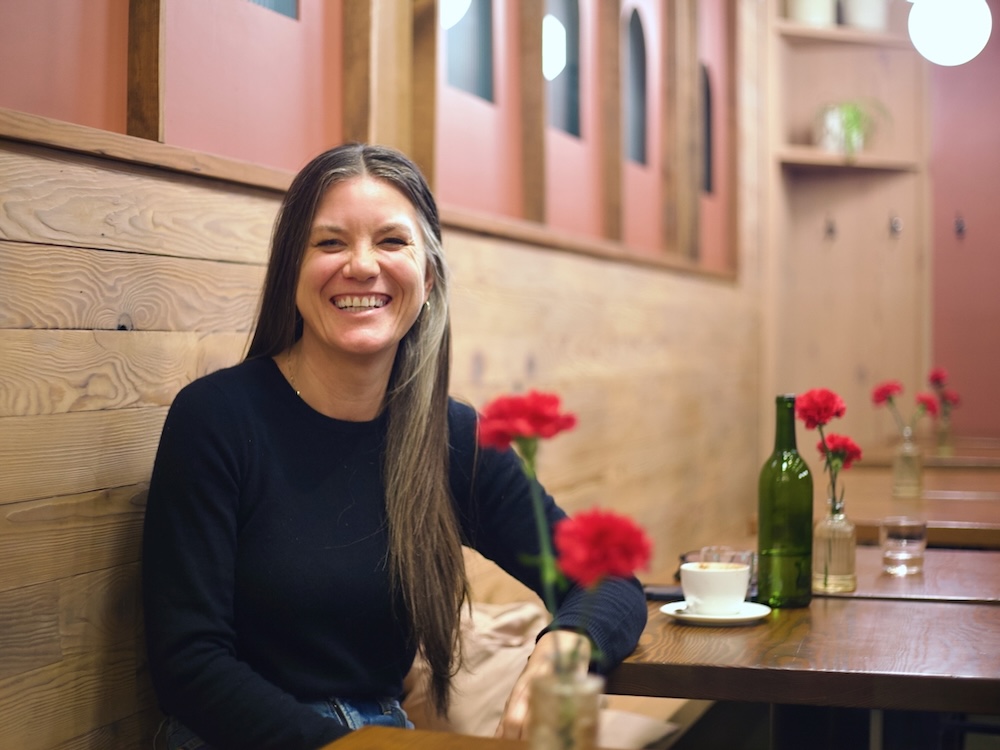
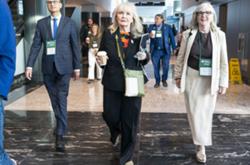
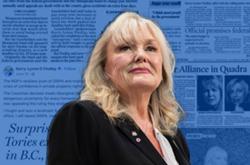
If Amanda Burrows wins the OneCity mayoral nomination on Feb. 11, the executive director of First United will be in the running to achieve a Vancouver first on election day next fall: a woman as mayor. And one of the few mayors in the city's history who rents, not owns, their housing.
“More than half the demographic in Vancouver of residents are renters, and it's growing, right?” Burrows said when she sat down with The Tyee earlier this week at a Chinatown coffee shop around the corner from her purpose-built rental apartment.
“Having a stronger voice of renters in city hall is imperative with the type of lived experience we have.”
Burrows has been with First United Church Community Ministry Society since 2020 and has been executive director since 2023. The faith-based service provider, which is affiliated with the United Church, is currently in the midst of redeveloping its church and shelter building into a four-storey, 100-plus-unit, below-market rental for Indigenous tenants, with 40,000 feet of public program space.
Burrows, who identifies as a renter, community builder and non-profit leader — in that order — made connections with for-profit businesses to secure the necessary philanthropic donations that helped make the ambitious redevelopment possible. (Burrows is also a lay preacher with the United Church.) First United is partnering with Lu’ma Native Housing Society on the project.
That ability to work across income levels and even ideological lines primes her for the mayoral role, she said.
“I'm really good at finding alignment and common ground to try and push projects forward,” said Burrows, who has 15 years of non-profit experience on her resumé.
“That's what you would need in a council, to get some work done, and it has to come back to the people and what the people want, and not just trying to save your own position.”
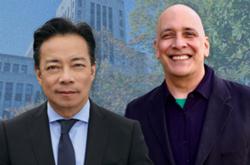
Like fellow OneCity mayoral nominee William Azaroff, Burrows was approached by the party’s executive earlier this year to run for mayor.
“I became a OneCity member officially on Sept. 30, Truth and Reconciliation Day, as a reminder to always put equity and reconciliation in our work and embed it,” she said, adding she had never joined a civic party before OneCity.
If she becomes the nominee, Burrows will take an unpaid sabbatical from her job in the Downtown Eastside, or K’emk’emeláy, the Sḵwx̱wú7mesh name for the area before colonization, which she said means “land of broad or tall maples.”
“I am a community builder. Spent my life listening to people, showing up for people, working alongside people in complex environments to get stuff done,” she said.
This interview has been edited for clarity and length.
The Tyee: Why do you want to be mayor?
Amanda Burrows: Because Ken Sim has to go. Honestly, it's because of what I see every day: people. The workers, seniors, artists, students, the people who use drugs and the people living in poverty — the people in this community.
We need to put people first: building a city for everybody and not just the few privileged and wealthy. I've spent decades connecting with people on the frontlines, managing complex projects, scaling arts and culture organizations. And it's time for a leadership change that puts people back at the centre.
If you win, you would be the first mayor who is a woman and who rents. How do you feel about that?
Great, let's do it. I have been evicted before, which is so many people's stories in this city: being severed from the community and not finding a place to live because there's barely any vacancy and it's so expensive. I couldn't even find a place if I wanted to. Can I share my story about why I live where I do?
Yeah, please.
I lived in Hastings-Sunrise. Loved it. My landlord was — tale as old as time — selling his property. It was so competitive, so hard to find a one-bedroom. I go up to Mount Pleasant for a viewing, and the landlord’s like, “Oh, so sorry, I've already rented it.”
I was on the bus on my way home, and [the place where I live now] in Chinatown had balloons out front, it was an open house. So I hopped off the bus, went in, and said, “Do you have anything left?” And they said, “We have two.”
I didn't even ask the price, because I was so stressed. They were kind of studios, or what they call “junior one-bedrooms” — it's like the Plexi[glas] around the bed.
[Laughs.] Yeah.
I said yes. I was so relieved. I know, with my privilege, I could have couch surfed or found something, but it was a really stressful time. And I know people still go through that. I wanted to make sure that I was contributing to this community and not displacing it. I've lived there almost 10 years now.
People get evicted because the market wants to charge more, and I've lived that. I do that work tremendously right now around tenants’ and renters’ rights. That voice in city hall is just a layer that has been missing, especially with Broadway Plan.
Why do you want to run with OneCity?
Here are some of the major reasons: [former city councillor] Christine Boyle, [current school trustee] Jennifer Reddy and [current city councillor] Lucy Maloney. Strong women in leadership, where a party has lifted up women and created help and pathways for them to get elected.
I have a lot of friends in OneCity. I am aligned with their mandate, values and their commitment to the environment, affordability, transit. I think that OneCity is in a position to move forward and win. And I have deep respect for the other parties, too.
Why not the other progressive parties in town?
A lot of COPE [Coalition of Progressive Electors] members are in the Downtown Eastside. I have such tremendous, deep respect, care and love for so many of them, and I am very committed to unity and not splitting the left. I can help participate in that conversation for unity, just based on the relationships I've built and the alignment in some of our work.
All my heart wants for Christmas is a progressive majority at city hall, and I believe OneCity is the pathway for that.
What sets you apart from William Azaroff?
I'm a renter and a woman, and I built my career on creating movements and helping mobilize and amplify voices on the frontlines, not in executive boardrooms. I have a lot of respect for him. Nomination races are hard because you're in a party that is attracting values alignment, which is amazing.
However, my mandate and where we're showing up in the movement would be definitely around housing and creating a great amount of supply that would impact a variety of income levels. But really needing to lift up the conversation of renters and how the city impacts renters and affordability.
I hope to have unity behind me; it's like a fight among family when you're in contested nominations. But I have respect for his work. He's more technocratic and executive, I'd say, and my work’s more community-rooted. He's a really nice guy.
So how should Vancouver deal with the housing crisis?
Let's start with listening to what the people want and wanted: to get social housing across Vancouver. That was struck down last week by ABC, no social housing everywhere. But [they] want market [housing] in the Downtown Eastside. We have to be building the type of housing that's going to impact all income levels, especially when it comes to renters.
There are about 2,700 unhoused people in Vancouver right now. And those are always undercounts. About 6,000 people living in single-room occupancy stock, and the conditions are deplorable, and need to be replaced. But even the replacement strategy is quite underwhelming.
We need about 10,000 shelter-rate units in the DEOD [Downtown Eastside Oppenheimer District]. That's $500 a month, deeply affordable units, to actually be able to impact the crisis before us.
Three hundred people signed up for the public hearings to say, “No, don't change the zoning to make less social housing and shelter rates in this community. No to 32-storey towers.” Not because we're NIMBYs, but because this is going to increase land values here, which would lead to speculation and displacement.
Then we see ABC closing the renter service office [in 2023]. How are we protecting tenants? Especially when we're having conversations around the Broadway Plan: What kind of housing are we building? Who are we building it for? How are we protecting the tenants that are currently there?
I am a total advocate for building more housing. Absolutely, and all types of housing, not just from the towers to the single homes, but actually having more density on single-family lots. OneCity has some really great platforms around that: six floors and corner stores. I really like that idea of a community that's connected, more affordability and different ages living together.
I remember door knocking in Shaughnessy for a candidate a few years ago.
Was this for Jody Wilson-Raybould?
Yeah. I helped out on her campaign in 2019, and Shauna Sylvester in 2018. Anyway, in Shaughnessy you can only get to 10 doors because you have to walk so far, and no one is home. Other communities like Mount Pleasant, there's several doors on one lot. You're seeing the kids’ tricycle and balls outside, and there's a dog. Activity and animated spaces.
Even on the west side, where the trees are so beautiful and lush, the streets just seem so much more empty. People would love to see children out and about again, right? So there's just a lot of opportunity to develop — meaningful development that is in context to the neighbourhood that it's being proposed. But we need to build that space.
We also have a mental health and toxic drug crisis happening right now. How should the city address that?
Our No. 1 priority should be saving lives, and that's why harm reduction is still such an important part of the conversation. We need to continue our work and advocate for that. What we have not fully done is implement prevention and treatment. I'm referring to the four pillars approach — we need to refresh that.
That is: addressing poverty, homelessness, trauma and then treatment when it comes to actual recovery. We need more spaces for detox, for treatment — voluntary, which feels so redundant to have to say. But here we are.
People come up to me often asking for detox opportunities, and there are wait-lists and it's hard to navigate a complexity of systems. We have to have navigators.
That actually excites me, because if we could have more political will behind that, automatically, what would happen? We are going to see public disorder decrease, because often what we're seeing right now is survival-based poverty. People are stealing because they're hungry, they're poor, there's addiction. That doesn't mean that it's OK, but this is why it's happening.
We're not gonna arrest ourselves out of this. But certainly enforcement as a focus on where the drugs are coming from, gangs, etc.
When we think about Riverview being closed in the ’90s, that was great, we aligned on that. And yet the implementation was supposed to have community care for mental health support in every neighbourhood. We didn't do that.
When we look at the evidence of how people can get support, get treatment, live stable, fulfilling lives, we have never fully implemented those policy strategies that come also from community and people with lived experience. If we could actually implement that across the city, it would solve a crisis that we're just not being urgent enough about. I bet they would benefit everybody in the city.
There’s been a lot of emphasis on crime and safety, and on policing as a solution to those fears. How would you respond to voters who support the current mayor’s focus on more policing as a solution?
What we're trying to build here is safety rooted in care, not criminalization. A lot of people across Vancouver don't feel safe, whether that is because the media or whoever tells us not to. How do we come alongside that conversation?
It comes back to prevention, care and community. And if we were to invest in housing, in mental health supports, in treatment, in increasing incomes, whether that's social assistance or living wage... we would absolutely see a decrease in what is being called public disorder.
We need to fund it, which means probably diverting some money away from the police budget into these areas of prevention and care. And a diversion of resources into prevention, too, because of the downstream costs that are loaded onto emergency response, not just police, but our ERs, etc.
How would you tackle the police asking for more money? Because that does seem to happen every year.
Yes, I think Vancouver has one of the highest per capita police budgets. When the police budget has increased the last three years from basically $350 million to $500 million, from 19 per cent to 22 per cent of our entire city budget, that's a huge increase. Why?
But then also, when the police came back with the $17 million that they overspent, I've been talking with people from across the political spectrum on this one — that seems irresponsible in a fiduciary and accounting perspective. Not having accountability to the budgeting process and transparency.
And then that $5-million Task Force Barrage — but nobody from the city is taking responsibility or ownership of who approved it. Why are we investing so much into this one line item when so many other areas are suffering?
It's a nuanced conversation, and I have definitely helped save a life with a cop beside me in an overdose. They are there, they come and help save lives. I want to pay respect for the service that they do. We can still, though, be critical of that system, of the money that we are spending in this area when we know that prevention and housing and all these other areas could help.
There are some really great pilot projects out there about diversion, alternatives to emergency response. So that if you were to call 911, instead of police, fire, ambulance, you get mental health supports. We have amazing groups and organizations, how are we not scaling those up?
What did you think about this year's budget process?
What process? For starters, titling a budget process as a slogan is a red flag. “Zero means zero,” when you have been an administration that increased property taxes your first year in office more than anyone. Budgets are political, so I get it. But to create an opportunity in an election year is not a great approach.
And second, it didn't feel transparent. The budget is supposed to be hundreds of pages, and then the ones that elected officials received was so redacted, vague and high-level. This is billions of dollars we're talking about. The lack of trust in the process should alarm everybody.
And then to see, of course, police get more and then other areas need to be slashed, essentially. We're seeing that workers are losing their jobs, and we're going to see it with services.
How would you approach the budget if you were elected?
Exactly the opposite. I would hope that 631 people would sign up to speak in favour of a budget, because people are so excited about the vision that we're putting in front of the residents of Vancouver. That this is a city that is meant for them, built for everybody, and there are going to be more trees, parks, services, access, equity and more pools and rink time.
What are your thoughts on Vancouver's environmental plans?
When you're going to close the environment and sustainability office, it doesn't sound like it's a priority, and it needs to be. Climate cannot be a barnacle to our plans; it's embedded in everything. And so in my economic and social justice work I do, we can't just have climate as an afterthought, because climate resiliency is an equity issue.
The heat dome and the 619 people that died, 97 per cent of them indoors, who were they? Our most vulnerable: seniors, people without access to air conditioning and cooling devices. When our city is getting hotter, how are we having these conversations and building with that climate resiliency in play? How are we retrofitting buildings? How are we being leaders that we've been before as a green city? It needs to be an integrated conversation with everything we do.
The director of Indigenous relations at the city just stepped down. How would you approach a relationship with urban Indigenous people, but also the host nations: xʷməθkʷəy̓əm, səlilwətaɬ, Sḵwx̱wú7mesh?
Listening in meaningful ways and convening together. When we closed the equity office, too, it sends a signal that these types of conversations aren't a priority. And when someone leaves that office in the director role, I think we should all come together and figure out what is going on.
But an important conversation around our relationships with host nations on unceded and stolen land: how are we convening with xʷməθkʷəy̓əm, Sḵwx̱wú7mesh, səlilwətaɬ?
How are we managing our parks? How are we having conversations around land in general?
In my decades of community building and engagement, when we convene people together to actually listen, not prescriptively and say “Here's our plan. What do you think?” but to start with “Something needs to happen. What could that be? What's possible?” And then we create a plan from that conversation and continue to refine, and come back to the people.
Even better yet, the people are the ones that are making the plan to begin with, being paid, too, for labour to help shape our city.
I was looking at your LinkedIn profile, and one of your descriptions was faith leader. Can you talk about that?
I am the executive director of an organization that's part of the United Church, and so I am part of the United Church. I am actually occasionally a lay preacher, [which] means that I'm not ordained; anyone can talk about love. So on Sundays, I go across the city and I'm a guest preacher.
Whether it's in Kerrisdale or Shaughnessy, I'm having these chats about how we can have a more inclusive neighbourhood for all income levels, and people who have substance use addiction. It's just an absolute honour to be able to go into spaces and places and talk about justice and how you can participate in the conversation.
I'm part of a church that is very inclusive. Their values are all about belonging, inclusion, love who you want, worship how you want. Even in our new building, the sacred space is called the sacred space, not the sanctuary, just so all religions can feel like they're included.
It's a really important step in our work in reconciliation and action, and to be very mindful of how complicit the church was in colonization and residential schools.
How would your faith play into the work you do as mayor?
My faith is about my values: love, compassion, courage and impact. There is no misalignment between my values and faith, because that's so interconnected. I show up for people, I listen to people, and I'm motivated by love and a more inclusive city.
Story edited on Dec. 18 at 12:45 p.m. to correct information about Vancouver's first mayor (Kennedy Stewart) who rented their home. ![[Tyee]](/design-article.thetyee.ca/ui/img/yellowblob.png)
Read more: Housing, Municipal Politics


Notice about commenting changes
The Tyee’s commenting system will be moving to a new platform on Nov. 12. If you’re already a Tyee commenter you must register with the new system on or after Nov. 12 with your preferred username.More information can be found here.