

 SHARE:
It was a speech that transfixed many Canadians and sparked international headlines.
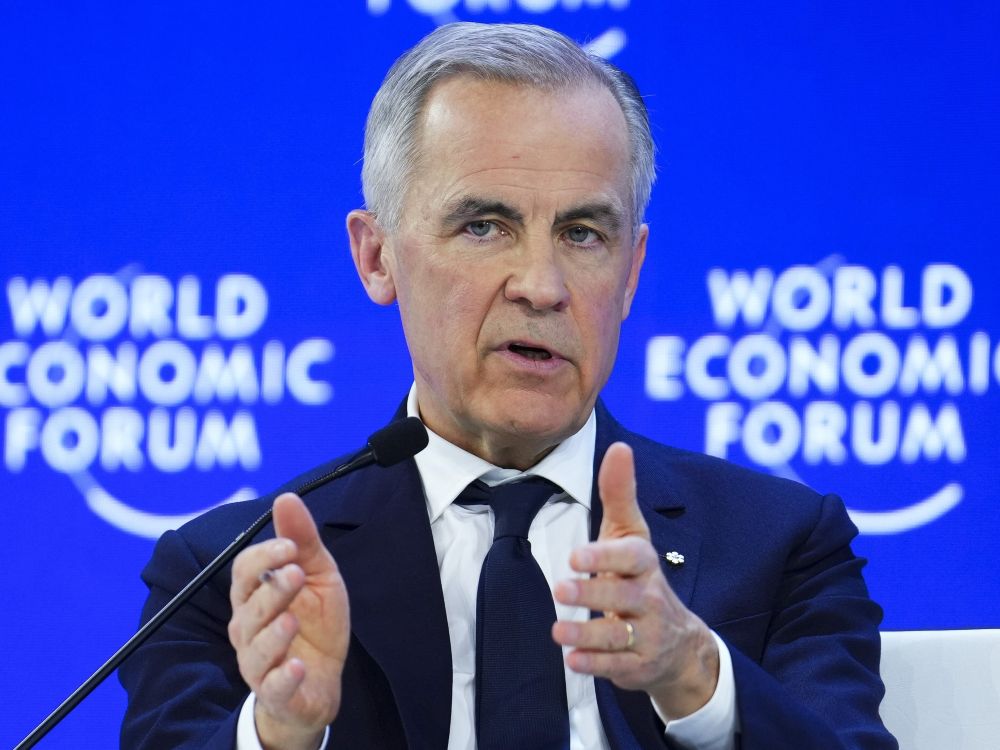
At the World Economic Forum in Davos, Switzerland, Tuesday, Prime Minister Mark Carney said a “brutal reality” had begun, one where the “rules-based international order” that held sway since the Second World War period no longer applies.
But one expert cautions that Canada has a history of brave claims and little action on the world stage.
Without naming the United States or President Donald Trump, Carney said the world’s great powers were no longer bound by any constraints. Quoting the Athenian historian Thucydides, Carney said we’re now living in a reality where “the strong do what they can, and the weak must suffer what they must.”
Carney laid out a plan for Canada’s place in the world among the “middle powers,” saying his government would be pragmatic about developing economic partnerships, including with countries with poor human rights records like China and Qatar. He highlighted Canada’s commitment to NATO and trade and security agreements with the European Union, and said Canada is negotiating trade agreements with India, Thailand and the Philippines.
In his own speech at Davos today, Trump warned Carney that “Canada lives because of the United States. Remember that, Mark, the next time you make your statements.”
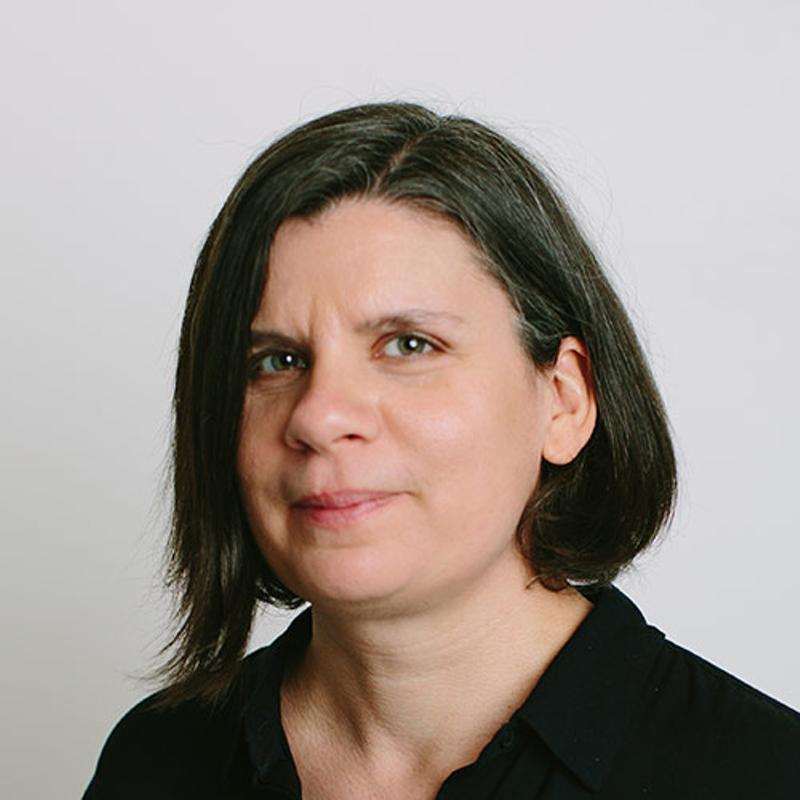
Stephanie Carvin, an associate professor of international affairs at Carleton University, said Carney’s blunt speech was refreshingly honest and spoke to the reality that many ordinary people are witnessing.
Since his re-election in November 2024 Trump has continually threatened other countries’ sovereignty and economies and attempted to bypass international organizations like the United Nations and World Health Organization.
But while Carvin praised the speech, she said Canada has a history of talking tough on the world stage but not following through when it comes to real commitments.
Carvin said one troubling recent development has been the government’s decision to cut the budgets for both global affairs and international aid — two key areas for developing international partnerships and heading off global crises.
She pointed out that in 2017, then-foreign affairs minister Chrystia Freeland gave a feisty speech about Canada’s place in the world at a time when longtime international relationships were being tested.
“She said basically that Canada was going to have to learn to step up, and other countries are going have to learn to step up and do things,” Carvin recalled. “But that didn’t amount to anything — the federal government didn’t do anything.”
Canada is going to have to do a better job of following verbal promises through with real commitments to its partners, Carvin said.
In his speech, Carney highlighted that his government has committed to double defence spending by 2030.
Carvin added that the prime minister also needs to do a better job of explaining to Canadians why trade deals with China, India and Qatar are now a good idea.
When it comes to China, Canadians have been immersed in two years of news about the federal foreign interference inquiry, which raised concerns about election interference. Canada has also had a rocky relationship with India after former prime minister Justin Trudeau accused the Indian government of allegedly carrying out an assassination on Canadian soil.
During his speech, Carney said his government’s new approach to foreign affairs can be described as “values-based realism,” a term he attributed to Finland’s president, Alexander Stubb.
Stubb has said he defines “values-based realism as a set of universal values based on freedom, human rights and international rules that take into account the realities of global diversity, culture and history of the nation-states, regions and continents.”
But the approach also acknowledges that “global problems cannot be solved only with those who share the same views with us.”
Realism is a political theory that holds that states are self-interested and motivated by a struggle for power. (Thucydides, who Carney quoted in his speech, is considered to be the father of political realism.) Carvin explained the concept as “when your state dials 911 and no one picks up the phone — it is a self-help world.”
Carney indicated he wasn’t ready to completely abandon values like a commitment to human rights, Carvin said, but in the midst of a world where “material gain, transactionalism and brute power are going to dominate the conduct of international affairs,” middle powers are going to have to make pragmatic choices with countries that may not share all of the same values.
“Carney spoke about what powerful countries are doing, and how unless the middle power countries of the world are able to act in ways where there are concrete acts and concrete benefits, then we're in for a rough ride,” Carvin said. “And this is the world we have to ready ourselves for now.” ![[Tyee]](/design-article.thetyee.ca/ui/img/yellowblob.png)
Read more: Politics


Notice about commenting changes
The Tyee’s commenting system will be moving to a new platform on Nov. 12. If you’re already a Tyee commenter you must register with the new system on or after Nov. 12 with your preferred username.More information can be found here.