


 SHARE:
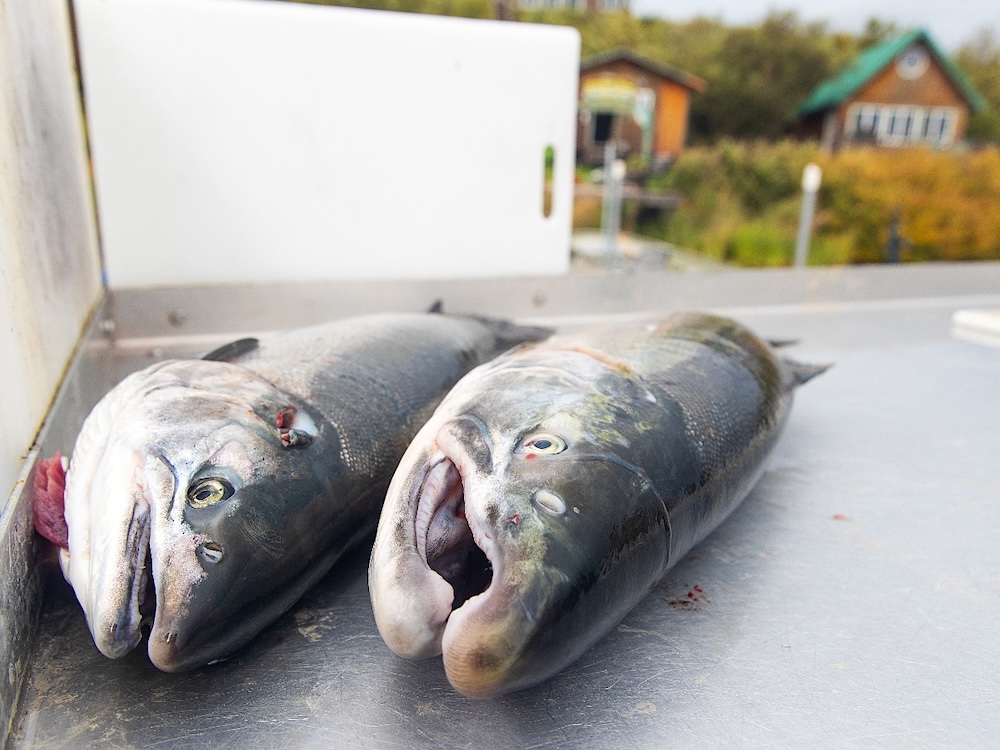
A federal government effort to update a decades-old policy that governs how salmon are allocated among fisheries on the West Coast is creating waves with recreational fishers who fear they’ll face reduced access.
Canada’s existing salmon allocation policy was created in 1999 and guides decisions about how many fish First Nations, commercial and recreational fisheries are allowed to catch. While the policy addresses food, social and ceremonial First Nations fisheries, it does not specify the conditions in which First Nations commercial fisheries are allowed to operate. The policy also gives priority to the recreational fishery ahead of commercial operators once conservation and First Nations’ requirements are met.
But that could change if the federal government decides to proceed with a plan that would remove priority access for recreational fishers and define the amount of chinook and coho salmon allotted to the sector. The proposal has been supported by First Nations and commercial fishing stakeholders but heavily criticized by recreational fishery groups, including the BC Wildlife Federation and the Sport Fishing Institute of BC.
The Sport Fishing Institute of BC is “deeply concerned” with some of the proposed changes and doesn’t believe the review is necessary, said Owen Bird, its executive director.
“The 1999 policy has actually been effective,” Bird said. He said the policy has allowed Fisheries and Oceans Canada — commonly known as DFO — to manage fisheries despite significant changes in recent decades, including the decline of salmon stocks and the increased acknowledgment of Indigenous rights.
Various recent court cases uphold First Nations’ fishing rights in the province, including a B.C. Supreme Court ruling that declared existing fisheries management infringed on the right of five First Nations to catch and sell any species of fish within their territories on Vancouver Island.
“To accord priority to the recreational fishery over the plaintiffs’ aboriginal commercial fishery is not justified,” the court ruled in Ahousaht Indian Band and Nation v. Canada.
After conservation, Canada’s existing policy prioritizes the allocation of salmon to meet treaty obligations and First Nations’ food, social and ceremonial use needs. However, it does not meet the court’s call to prioritize a First Nations rights-based commercial fishery ahead of recreational anglers.
After the federal government lost its appeal of the decision in 2018, then-fisheries minister Dominic LeBlanc launched a review of the salmon allocation policy with the goal of aligning it with First Nations’ fishing rights.
Beginning in 2023, the government consulted with stakeholders through a First Nations-DFO committee and a separate multi-party working group that includes representatives from First Nations and the commercial and recreational fishing industries.
Last month, DFO released a discussion paper outlining the proposed changes, including recommendations that the recreational sector lose priority over the commercial sector when it comes to chinook and coho salmon — a significant component of the sport fishery. The paper suggested setting specific allocations for recreational fishing.
The recommendations are supported by First Nations and the commercial sector but opposed by recreational fishers who say they should get priority after the First Nations’ rights-based and treaty fisheries, but before commercial fishing.
The public has until Friday to provide feedback to the federal government on the proposed changes. After the public consultation period, DFO plans to meet with the working groups to finalize recommendations, which will then be sent to Fisheries Minister Joanne Thompson for a final decision.
Bird said he expects the process to conclude by March 31.
He said there was “full support” for prioritizing conservation and that anglers recognized the need to accommodate First Nations’ access to fish. But he fears that the proposed changes could lead to recreational fishery closures “right across the coast” and create uncertainty for the recreational fishing industry.
“In our view, the best approach to including Indigenous rights-based fisheries would have been to add those to the hierarchy of access of priority,” Bird said. “Instead, [the fisheries minister] said, ‘Let’s take this opportunity to review the salmon allocation policy,’ and what flowed from that is the process that is unfolding now.”
Greg Taylor, a fisheries adviser with Watershed Watch Salmon Society, told The Tyee that updates are desperately needed 27 years after the policy’s implementation.
“The world has changed since 1999,” said Taylor, who worked in the commercial fishing industry when the salmon allocation policy was adopted. He pointed to the collapse of B.C.’s salmon stocks and the ability of First Nations to have a voice in fisheries decisions.
“It needed to be revised and rethought in the context of all these changes,” he said.
Taylor said a new policy should also take into account the number of fish caught by recreational anglers but returned to the ocean because they are species at risk. Although returning the fish to the ocean is meant to give the salmon a second chance at life, many eventually die.
Given the scope of the changes, DFO should be doing a broader review, Taylor said. He hopes that a First Nations recommendation for more localized regional management of fisheries, which also has support from the commercial fishing industry, offers a jumping-off point for further discussion.
“That might lead to a place where we have better conversations about what the future of salmon in different watersheds and different areas are,” he said.
He doesn’t believe that the changes would lead to the end of the recreational fishery.
But he said the recreational fishing industry may need to experience the painful adjustment that commercial fishers have experienced as salmon stocks have declined.
“I think the recreational industry likes the status quo, would prefer the status quo, but the world’s changed,” he said. “It's not a fair allocation. It's not a correct allocation. It's not one based on good science and good conservation. The status quo won't hold anymore, and it has to be changed.”

Groups like the Sport Fishing Institute of BC are emphasizing the economic value of recreational fishing in British Columbia. In 2023, the value of the recreational fishery industry was estimated at more than $1 billion — more than the wholesale value of the catch of all B.C.’s commercial fisheries. Last year, the recreational fishery accounted for less than one-fifth of all B.C. salmon caught, according to data provided to The Tyee.
Although the proposal suggests recreational fisheries would get a set amount of fish each year, Bird said monitoring recreational catches for each salmon species would be onerous.
“They're going to have to monitor in real time what is being caught — and where and how many... and open and close fisheries accordingly,” he said. “It would be a huge undertaking.”
Recreational fishing groups opposing changes to the salmon allocation policy have also raised concerns about a proposal to remove the “common property resource” principle from the policy.
The principle, which is among several “overarching principles” contained in the original policy, states that “salmon is a common property resource that is managed by the federal government on behalf of all Canadians, both present and future.” The DFO discussion paper says there is “some agreement” to remove common property as a “stand-alone principle,” while keeping the policy consistent with case law, constitutional requirements and federal responsibilities.
First Nations have suggested the principle is a “colonial concept which has been harmful to First Nations, salmon, and ocean ecosystems” and is no longer relevant given DFO’s management of the fisheries, according to the discussion paper.
Recreational fishers are asking DFO to keep some form of the principle in the updated policy. A Jan. 12 statement issued by the BC Wildlife Federation said removing it would represent a “radical shift” from a federal, conservation-based management approach to an “optional privilege granted by First Nations.”
“Non-Indigenous Canadians would be last in line for fishing opportunities under this approach,” it said.
Bird said removing the principle “really throws the ability for DFO to manage fisheries on behalf of all Canadians totally in question.” He suggested that without the principle, First Nations could claim ownership.
“You now no longer can easily and arguably make the case that these fish belong to all Canadians and must be managed on behalf of all Canadians,” he said.
A spokesperson with the First Nations Fisheries Council, which represents First Nations in the review, declined to comment, saying the terms of reference prevent public discussion about the review.
Stó:lō Tribal Council president Tyrone McNeil says changing policies reflect constitutional rights to fish for First Nations — and court decisions related to the lack of treaties in B.C.
“What the courts and the Crown are doing nowadays is resetting the relationship to the way it should have been at the onset,” he told The Tyee.
He also suggested that if First Nations had more control over fish stocks, they would manage the nation's fisheries better than DFO, and that better management would bring increased fishing opportunities for all.
“When we rebuild all stocks, everybody has access,” McNeil said. “Decisions on the salmon, sustainability, viability should not be based on money [but] should be based on the health and genetic diversity of the stocks.”
DFO declined The Tyee’s interview request to discuss the proposed changes and did not respond to most questions in an emailed statement.
“The discussion paper outlines the key principles and feedback received to date to guide upcoming decisions on changes to the SAP [salmon allocation policy] and priority of allocation of salmon among First Nations, the recreational and commercial sectors,” DFO communications adviser Michelle Rainer wrote. “Current commercial and recreational allocation policies remain in effect. Discussions on this topic continue as part of the SAP process currently underway.”
Bird said his organization is hoping for a “clear-eyed decision” from the federal government.
“We’re leaning into the Government of Canada to say, ‘Please make the right decision to protect the interests, values and benefits that come from all fisheries,’” he said. “Of course, we’re interested in protecting the values, benefits, social, cultural and economic, for recreational fisheries in coastal B.C.”
With files from Tyler Olsen. ![[Tyee]](/design-article.thetyee.ca/ui/img/yellowblob.png)
Read more: Environment












Notice about commenting changes
The Tyee’s commenting system will be moving to a new platform on Nov. 12. If you’re already a Tyee commenter you must register with the new system on or after Nov. 12 with your preferred username.More information can be found here.