


 SHARE:
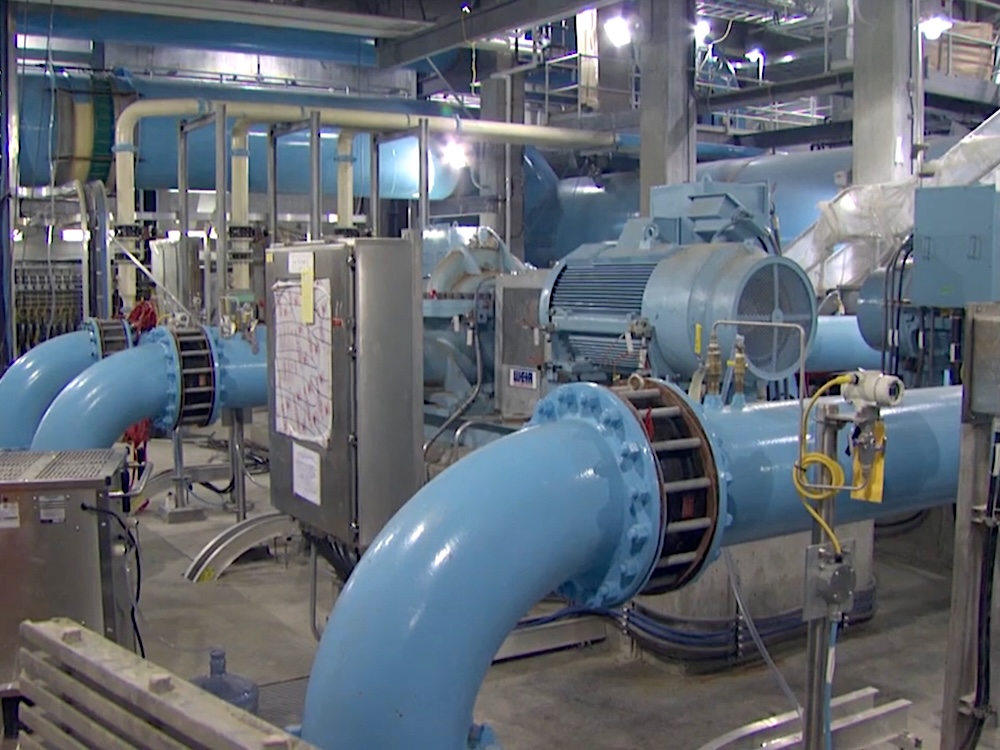
After reaching an impasse following almost a year of failed negotiations, Metro Vancouver’s outdoor workers are continuing to escalate job action.
The Greater Vancouver Regional District Employees’ Union represents more than 700 workers who operate and maintain Metro Vancouver’s water treatment plants, parks, construction sites and other infrastructure.
Bill Tieleman, a union spokesperson, said workers are prepared to head to a full strike, which could mean water restrictions, closure of some parks and construction delays.
Talks broke down primarily over non-monetary issues.
Tieleman said the employer asked the union to accept a set of conditions before bargaining that would bar it from negotiating improvements on key issues like health and safety and the amount of work going to non-union employees.
“Imposing preconditions isn't bargaining. It isn't negotiation; it's capitulation, and the union is not going to capitulate to management demands,” he said. “The Metro board should drop the preconditions and go back to the table.”
The employer says it can’t bargain on health and safety because it’s regulated by WorkSafeBC and disagrees with what happened at the bargaining table.
“Metro Vancouver remains ready to return to the bargaining table immediately, and has made no preconditions on bargaining,” spokesperson Amanda McCuaig said in an email.
“We have also repeatedly requested the appointment of a mediator — again, without preconditions — to support progress. To date, the union has not agreed.”
The two sides remain at an impasse. Tieleman said the union plans to continue escalating job action. Meanwhile, Metro Vancouver filed a labour practice complaint in April accusing the union of bad-faith bargaining. The complaint is still unresolved and the union strongly rejects the allegation.
Disagreement over what’s on the table
Metro Vancouver and the union started bargaining last July.
“After such a long time period of bargaining, their list of conditions is still very long, and some of the things on it are things that we wouldn't bargain,” McCuaig told The Tyee.
She said the employer can’t bargain on health and safety.
“We're beholden to WorkSafe, so that's not on or off the table for us,” she said. “We have to meet safety standards.”
She added the employer does not see safety as a bargaining trade-off and has one of the strongest workplace health and safety records in the province.
“Our injury rates are consistently lower than our peers in local government and our experience rating has continued to improve steadily over the past five years,” she said.
But Tieleman said workers have seen Metro Vancouver put crews at risk several times in the past decade, raising concerns about their safety.
He noted Metro Vancouver failed to take the proper precautions to keep crews safe during sewer work in 2017. And he said that in March 2024 a worker was seriously injured while working on a New Westminster water main.
“This is not an employer who has proven to have a good record on health and safety,” he said. “It doesn't matter how much money you get paid or what your hours and working conditions are if you can't be assured that you'll be safe on the job.”
Non-union workers
Tieleman added the union also wants to see the employer commit to reducing the amount of work going to non-union employees, including contractors. Neither side offered a clear answer on how many non-union workers were in the workplace. But the union estimates it’s nearly half.
“It’s work that the union believes much could be done internally by union members, and that they should be hiring more people to do that rather than contracting it out,” he said.
McCuaig said Metro Vancouver is committed to reducing the amount of non-union work. She said that in 2025 Metro Vancouver’s board identified $364 million in savings that include less outsourcing and more work for unionized employees.
“A key outcome of that work is reducing reliance on external consultants and contractors, and, where it makes sense, bringing work in-house and creating more union jobs,” she said.
More than 60 per cent of the staff who are exempt from the union are professional engineers and fewer than 20 per cent are managers, she added.
Escalating job action
Tieleman said the union will continue to escalate job action until the employer agrees to bargain on these issues.
On May 24, unionized workers refused to work overtime or be on standby. Each day since, the union has had members abstain from their duties at different water treatment plants, air quality sites and other public infrastructure sites to picket.
Tieleman said it’s unclear just how many workers are on strike. On Monday, the union removed members from their jobs at the Capilano Watershed, the Seymour Watershed, the Coquitlam Watershed, the Lower Seymour Conservation Reserve, the Seymour-Capilano Filtration Plant and the Coquitlam Water Treatment Plant.
Union president Jesse Medeiros said in an emailed statement Monday that job action may start to affect drinking water.
“Unfortunately it’s possible that water turbidity — brown water or cloudy water — could come out of drinking water taps in Metro Vancouver municipalities,” Medeiros said in an emailed statement.
“We want to assure the public that our members are respecting essential services designations and there is no health concern — just potentially brown or cloudy water at the taps.”
He added the union remains committed to maintaining essential service levels and job action will not put public health and safety at risk.
On Wednesday, the union temporarily suspended picket lines.
Meanwhile, McCuaig said residents can be assured they will not experience any changes to their drinking water, wastewater treatment, solid waste management, air quality monitoring and housing. ![[Tyee]](/design-article.thetyee.ca/ui/img/yellowblob.png)
Read more: Labour + Industry




Tyee Commenting Guidelines
Please note that email notifications for replies are not currently working due to a software issue which may be resolved in a future update.
Comments that violate guidelines risk being deleted, and violations may result in a temporary or permanent user ban. Maintain the spirit of good conversation to stay in the discussion and be patient with moderators. Comments are reviewed regularly but not in real time.
Do:
Do not: