


 SHARE:
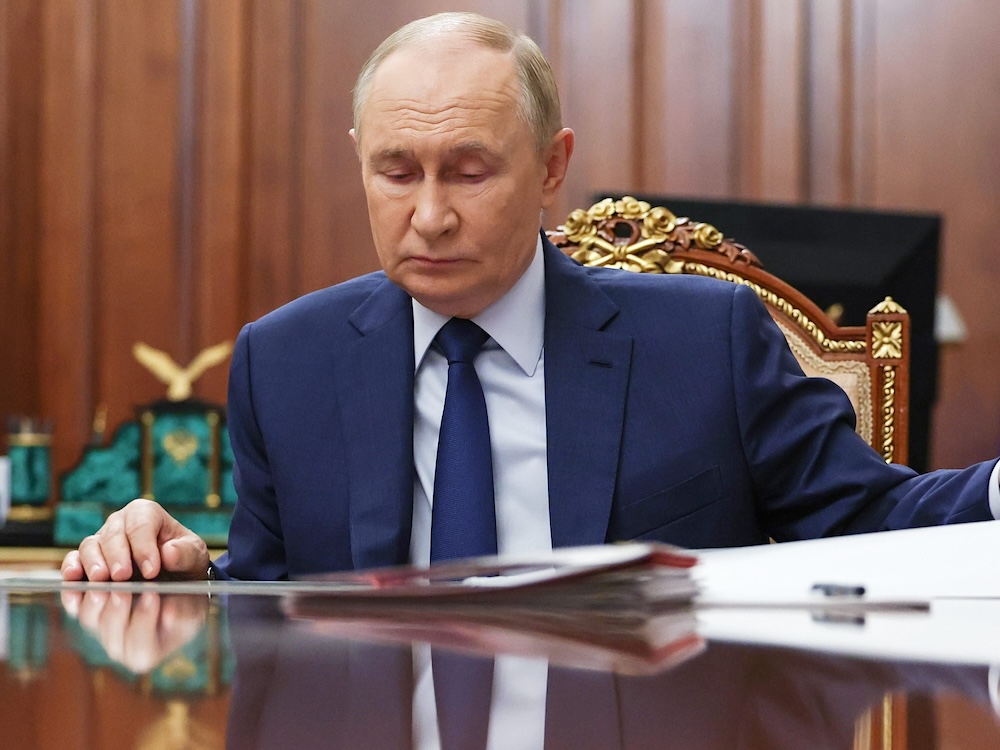
In the last weekend of September, Ukrainian President Volodymyr Zelenskyy scared the hell of out me.
Reporting for the Guardian from Kyiv on Sept. 27, Luke Harding wrote that Zelenskyy claimed Russian President Vladimir Putin would soon attack another European country.
“Putin will not wait to finish his war in Ukraine. He will open up some other direction. Nobody knows where. He wants that,” Zelenskyy said.
Recent Russian drone sightings in Denmark, Poland and Romania were careful tests of European countries’ ability to detect and respond to violations of their airspace.
German Chancellor Friedrich Merz scared me again when he said on Sept. 29 that Europe is not at war with Russia, but it is not at peace with Russia, either. That’s been the case ever since Putin first invaded Ukraine in 2014, and his full-scale “special military operation” in 2022 only widened the war.
Putin himself didn’t lower my anxiety when he said it was “nonsense” to suppose Russia planned to attack NATO. He had said almost the exact same thing early in 2022 before he invaded Ukraine.
A military attack on some other European country could lead to the first general European war since 1945, and perhaps to a third world war. It is in everyone’s interest here in the West to forestall such an attack.
Moldova a likely target
The likeliest target might seem to be Moldova. It’s a small country with a population of about three million people, partly occupied by pro-Russian groups, and it just re-elected a pro-European government. Moldova isn’t part of the North Atlantic Treaty Organization, so Russia could invade it quickly and without much fear of reprisals from NATO.
But Moldova shares borders with Romania to the west and Ukraine to the north, east and south. Russia would have to stage a coup or invade from the breakaway Moldovan region called Transnistria, ruled by pro-Russians. Otherwise Russia would have to fight its way across western Ukraine before invading Moldova.
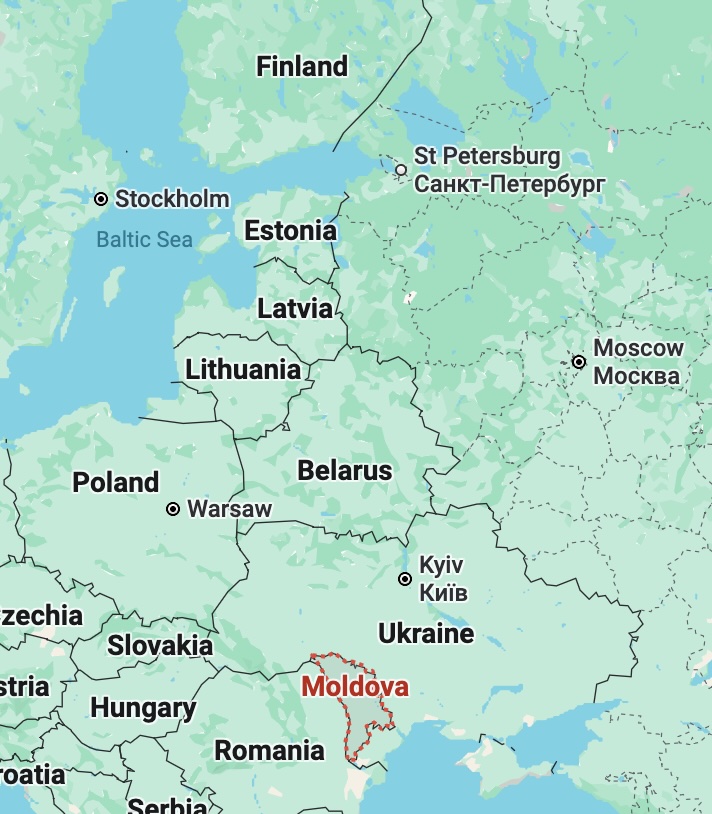
Facing a pro-Russian coup, Romania and Poland might well move into Moldova to help defend its pro-European government. So might Ukraine, which would not want to be outflanked by a pro-Russian Moldova just a few kilometres from the Ukrainian port of Odesa.
Small countries, long memories
It’s more likely the Russians would move west and southwest against the Baltic republics of Estonia, Latvia and Lithuania. Those were conquered by Joseph Stalin in the Second World War and incorporated into the Soviet Union. They are small countries with long memories of a half-century of Russian oppression. They now have small but reasonably well-armed armies capable of rapid mobilization of reserves.
The Russians also have the advantage of Kaliningrad, a Russian enclave of about a million people tucked between Lithuania, Poland and the Baltic. It’s a major Russian military base for both army and naval forces and was involved in the recent Russia-Belarus exercises called Zapad 2025. An attack from Kaliningrad, while the Russian army was moving west, would put Lithuania in a pincer.
Most seriously, for us, Canada has 2,000 troops stationed in Latvia as part of Operation Reassurance. They are there with contingents from other NATO countries to deter a Russian attack.
That deterrence is based on NATO’s Article 5, which stipulates that an attack on one member is an attack on all. But each member is free to decide for itself what it will contribute to the NATO response.
Would Trump chicken out?
The core of NATO for 75 years has been the readiness of the United States to come to the defence of its other members. But under U.S. President Donald Trump, that readiness is questionable. He might just decide to pull the United States out of NATO, while offering to sell European members all the weapons they could afford.
And without the United States, the rest of NATO would face agonizing decisions. Do they engage with a Russian attack anyway? Can they switch to war production if Russia cuts off supplies of natural gas? If a Russian blitzkrieg takes the Baltic republics in a weekend, and Putin then declares an end to yet another “special military operation,” should NATO accept this as a fait accompli or continue the war to liberate those republics?
Russian incursions with drones and jet fighters have been testing NATO responses, especially in the Nordic and Baltic countries. It seems likely that a serious attack on the Baltic republics would begin with cutting off Russian gas supplies to Europe, severing cables on the sea floor, hacking government computer systems and jamming radio frequencies used by both civilians and military.
Effective interception of Russian merchant ships capable of both launching drones and cutting cables might cool Putin’s eagerness for another war — or give him a pretext for starting it in earnest.
When deterrence doesn’t deter
Deterrence works fine, until it doesn’t. If NATO and its member states have been bluffing, Putin calling their bluff would break the alliance into small, conquerable pieces.
Canada’s contingent in Latvia would inevitably be involved and would almost instantly need resupply and reinforcements amid still more jamming and drone attacks.
But it would not be easy, and little of such support would come from Canada. Weapons and personnel would have to move from other NATO countries to Latvia — but not all NATO countries might be willing to contribute.
Hungary would surely declare neutrality, if not become an outright ally of Russia. The Czech Republic has just elected Andrej Babiš, a right-wing populist billionaire who sides with Russia. Other countries might hesitate to commit troops to defend the Baltic republics when the Russians might attack them next — perhaps with tactical nuclear weapons.
A Russian assault on Canadian and other NATO troops in Latvia would batter our economy and finish off Prime Minister Mark Carney’s plans for nation building. The Liberals might have to form a union government, with Conservatives, Bloquistes and even a New Democrat or two in the cabinet. Carney might also have to discourage China’s President Xi Jinping from taking the opportunity to invade Taiwan.
Before a single Russian submarine surfaced off Vancouver Island or the Gaspé, Canada would be scrambling to recruit and train thousands more personnel, acquire weapons systems and co-ordinate plans with whatever NATO allies would still resist the Russians. And in the meantime Trump might be issuing executive orders imposing yet more sanctions and tariffs on his former allies.
One way to prevent the chaos of fighting a regional war with Russia would be to tell Vladimir Putin that it would indeed be nonsense to attack NATO or any of its member states, because we were now doubling or tripling our personnel and firepower in Latvia. That would turn Operation Reassurance from a speed bump into a porcupine, making our troops far more of a deterrent than they are today.
If Putin does start a Baltic war, we will have to fight him. And the best way to prevent a Baltic war is to make sure Putin knows we and our allies really will fight it.
* Story updated on Oct. 11 at 2:30 p.m. An earlier version said Canada had troops in Estonia rather than Latvia. The Tyee regrets the error. ![[Tyee]](/design-article.thetyee.ca/ui/img/yellowblob.png)
Read more: Politics









Tyee Commenting Guidelines
Please note that email notifications for replies are not currently working due to a software issue which may be resolved in a future update.
Comments that violate guidelines risk being deleted, and violations may result in a temporary or permanent user ban. Maintain the spirit of good conversation to stay in the discussion and be patient with moderators. Comments are reviewed regularly but not in real time.
Do:
Do not: