


 SHARE:
Vancouver’s auditor general this month issued his “2025 Whistleblower Report.” Section 5.4 of the report, “Procurement of Advice Regarding False Creek South,” is a damning indictment of “serious mismanagement of public funds” in the awarding and administration of a consulting contract.
In my view, this episode fits into the overall narrative of staff disregarding council direction and city policies in their handling of the False Creek South file. Be your own judge, as I provide here additional information and context to supplement the report by the Office of the Auditor General, or OAG.
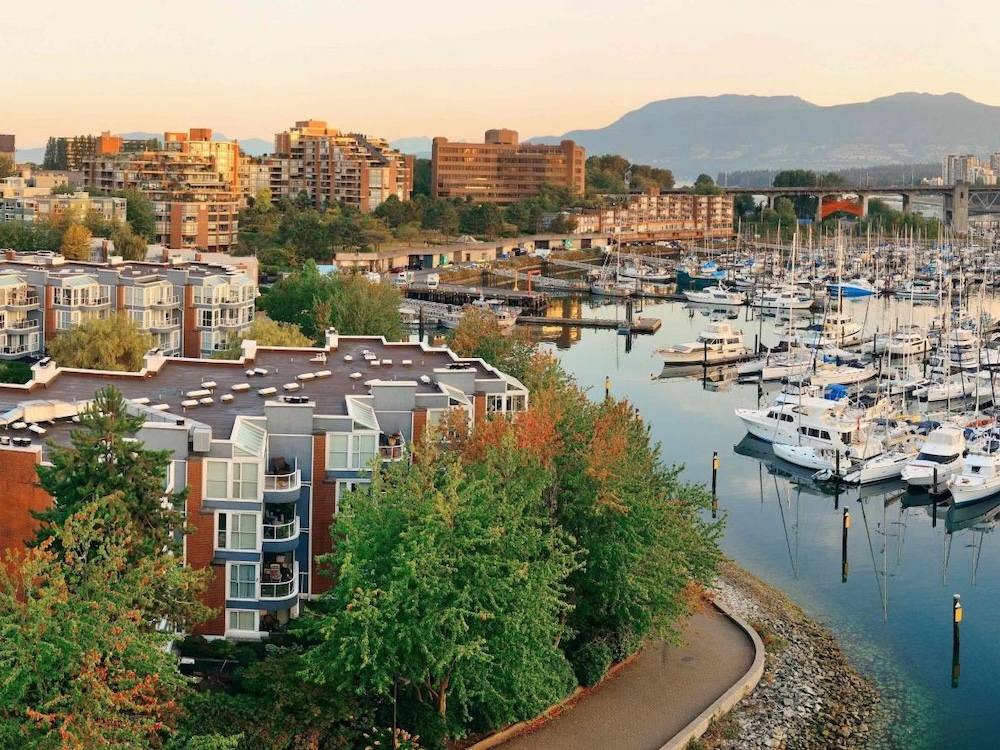
False Creek South is both an important part of Vancouver’s history and a living, breathing successful community. It was created by the City of Vancouver in the 1970s in the face of widespread skepticism that people would want to live on what was then an industrial wasteland. It was a great success that paid its own way and created a destination park and magnificent seawall, amenities enjoyed by residents of the entire city.
False Creek South also was the catalyst for high-amenity development on previously industrial land all around False Creek and at Coal Harbour.
Much of False Creek South is on land that the city leased for 60 years to co-ops, stratas and both market and non-market rental housing. As the city is poised to regain control of it, city staff appear to see it primarily as valuable real estate that should be wiped clean to be redeveloped in emulation of the high-density development on False Creek’s north shore. Others, including the residents’ group RePlan, a committee of the False Creek South Neighbourhood Association, are trying to determine how best to respond to the city’s current crisis of affordable, sustainable housing, while remaining true to the original vision of False Creek South.
The project
The investigation by the OAG stemmed from my whistleblower complaint based on documents obtained through freedom of information, or FOI, requests. I flagged concerns about apparent irregular procurement in the purchase of consulting services regarding False Creek South from Harris Consulting in 2019 to 2021.
Payments for the services totalled $945,438.79 and largely consisted of professional fees for two individuals, Gordon Harris ($287,375) and Chuck Brook ($330,181.25), billed initially at $325 and later at $350 per hour.
The OAG found many violations of the city's procurement policy. No request for proposals nor competitive bidding were pursued for this project. In violation of policy, it was sole sourced by the city’s Real Estate and Facilities Management department, or REFM. There was no documentation that sole sourcing represented “best value” to the city, a requirement under the policy, nor to obtain three bids or prices from internal price records, an alternative option for avoiding a public call for contracts under $75,000. Nor was the approval of the city manager to the procurement obtained, although required by city policy.
Harris Consulting’s services and billing commenced in June 2019, before the purchase order was issued on July 30, and continued until May 30, 2020, although a final deliverable date of Dec. 23, 2019, had been specified. The purchase order did not state an hourly rate or other basis for billing.
Following this first phase of the project, a second phase was again sole sourced, without posting the required notice of intent to contract. There was an after-the-fact attempt to justify this, after the formal contract was signed, according to the OAG, based “on an assertion that the engagement needed to be kept confidential because of its subject matter, a view which was not formally documented or subject to independent scrutiny.” The OAG, skeptical of this, wrote:
The process of sole sourcing the consultants to provide advice on the future of False Creek South shielded the selection decision and related information about the scope of the work from scrutiny or engagement by stakeholders. The approach appears at odds with Council’s approved public Vision Statement and Provisional Guiding Principles for False Creek South, which contained a commitment to engage community and stakeholders in a meaningful way.
The OAG found “serious mismanagement of public funds” in how the consulting contract was both awarded and administered. The project was undertaken as a “time and materials” contract with no total or fixed price, which is not an option in the city's procurement policy. This avoided approvals required by procurement policy for spending increases that occurred during the engagement.
The consultants
No explanation or rationale for why REFM chose Harris Consulting for this project can be found in the OAG’s report or in documents received through FOI.
The contract was basically awarded to two individuals, Gordon Harris and Chuck Brook.
Gordon Harris has run a real estate and planning consultancy for some 30 years. At the time he was engaged for this project, he was also president and CEO of the SFU Community Trust, the landlord of UniverCity, which, like False Creek South, is a leasehold community. (Disclosure: As senior development planner for the City of Burnaby with responsibility for UniverCity, the author worked closely with Harris from 2007 to 2015.)
Chuck Brook, after working in Vancouver’s planning department for a year and a half, began development consulting in 1992 as Brook & Associates. This evolved into Brook Pooni Associates after Gary Pooni joined the firm. In 2013 Brook began to work independently as a real estate adviser, leaving the firm that was eventually rebranded as the Pooni Group.
Context
It is informative to view the work undertaken by Harris and Brook for REFM in the context of the city’s overall planning for the future of False Creek South.
In May 2017 council had directed the city’s planning department to initiate a False Creek South neighbourhood planning process, to create a plan to address “land use, density, built form and character, transportation, housing, sustainability, public amenities and the public realm... and associated proposed ODP [official development plan] amendments” for the largely vacant “community edge” area. This plan was never prepared.
Staff were also instructed to report back to council in fall 2017 with nominations for a False Creek South planning advisory group. Although staff solicited applications for the advisory group, it was never established.
Then, in May 2018, council “approved a pause in the neighbourhood planning process so that strata, co-op, and non-market lease negotiations can take place with residents before further detailed planning work for the area takes place.” Staff did not pursue lease negotiations, until much later with stratas, in 2022.
Instead, as outlined above, Harris Consulting was secretly hired in June 2019 to pursue a new real estate planning process, with no citizen participation. On May 29, 2020, Harris and Brook presented their “final draft of the False Creek South Report dated May 25th, 2020” to select city staff including Deputy City Manager Karen Levitt as well as a secret Property Endowment Fund Expert Advisory Panel.
Notes from this meeting released through FOI have been heavily redacted, according to Levitt, to avoid any negative impact on the reputations of advisory panel members and on the city’s ability to attract and negotiate with a development partner in the future.
Subsequently a public consultation and survey about landowner real estate planning for False Creek South was initiated, without revealing that planning had already been secretly underway for two years, and using misleading and incorrect demographic information to portray the community in a bad light.
In October 2021 a report, authored by Deputy City Manager Levitt based on Harris and Brook’s planning work, was submitted to council recommending a plan for wholesale demolition of existing buildings for redevelopment at triple the density with a higher proportion of market housing.
Local residents, housing experts and advisory bodies overwhelmingly opposed this plan, and council unanimously rejected it.
Instead council directed the city’s planning department “to undertake an open and transparent community planning process... through a robust consultation process” based on specified parameters, including:
- Retain existing non-market and co-op housing for as long as possible to maximize affordability.
- Build additional affordable and co-op housing.
- Target an income mix based on Vancouver renter household income of one-third lower income, one-third middle income and one-third higher income.
Staff did not initiate any such community planning, due to “a lack of staff resources arising from competing priorities,” according to Levitt. Out of the public eye, however, Brook was again working as a development consultant for REFM. Together with Levitt, he arranged a False Creek South walking tour in the fall of 2023 for the newly elected mayor and council (who were advised by Levitt that “the community has not been informed of this tour”).
Following this, according to Levitt, “on March 13, 2024, city council issued direction to staff to develop an enhanced False Creek South Development Plan, that superseded council’s October 2021 direction”. Curiously, that direction was included as Clause C of a motion entitled “The Future of Co-op Housing — a Path to Delivering More Co-op Homes in Vancouver,” submitted by Coun. Sarah Kirby-Yung.
Staff moved quickly. On June 6, 2024, Levitt sent a memo to council saying “city staff are advancing council’s March 2024 direction to develop an updated and enhanced False Creek South landowner’s development plan for council’s consideration, and to this end next week we will be publishing a Request for Expressions of Interest (RFEOI) for consultant services to support this work.” An RFP subsequently issued included the statement that “minimal stakeholder/public engagement will be required.”
This led to the award in January 2025 of a contract for landowner real estate planning worth $4 million to the Canadian subsidiary of the multinational professional services firm Arup Group.
The OAG has concluded that this work will not duplicate the previous work by Harris Consulting, “as a different consultant was selected... and the scope of work for the 2024 project appears materially different from the one undertaken in 2019.”
Epilogue
The auditor general’s report includes eight recommendations intended to improve the city's procurement practices, all of which have been accepted by supply chain management, who are responsible for oversight of procurement.
Beyond this, however, remain questions about the role of staff for the city’s Real Estate Facilities Management in the “serious mismanagement of public funds” in this procurement. Nor is there a clear path to avoid the land sales issues the OAG has also just reported on.
The time has come for decisive action by council and the city manager to achieve REFM accountability and reform. A good place to start would be to end the practice of running it directly from the city manager’s office. ![[Tyee]](/design-article.thetyee.ca/ui/img/yellowblob.png)
Read more: Municipal Politics, Urban Planning









Tyee Commenting Guidelines
Please note that email notifications for replies are not currently working due to a software issue which may be resolved in a future update.
Comments that violate guidelines risk being deleted, and violations may result in a temporary or permanent user ban. Maintain the spirit of good conversation to stay in the discussion and be patient with moderators. Comments are reviewed regularly but not in real time.
Do:
Do not: