


 SHARE:
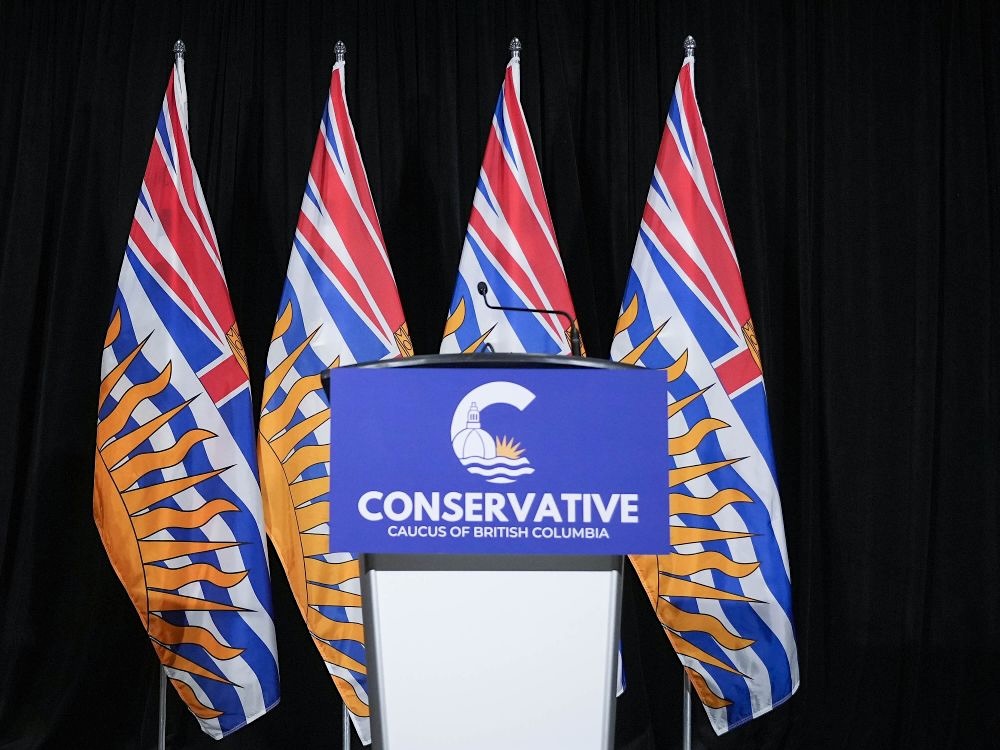
Out of the gate, the Conservative Party of BC’s leadership race feels less like a search for the next premier and more like a purity test to identify the party’s most uncompromising conservative. This right-wing virtue signalling buries the party’s central challenge of broadening its appeal beyond its base.
In a recent poll conducted by Clear Impact Strategy, two-thirds of B.C. Conservative members appear haunted by worries their party could choose a closet liberal who does not lead with conservative principles.
Unsurprisingly, leadership candidates leaned into this fear. Yuri Fulmer, Caroline Elliott, Kerry-Lynne Findlay, Harman Bhangu, Bruce Banman and Sheldon Clare marketed themselves as some variation of a “real,” “reliable,” “strong” and “proud conservative” to “repel the centrist shift” “without apology.”
This is navel-gazing at its most parochial — a debate that forgets general-public normies outside of the conservative bubble.
For starters, conservatism is a broad, amorphous term. More damagingly, this kind of purity spiral encourages both members and leadership candidates to embrace an ideological maximalism focused on scoring cheap conservative cred in two ways.
The first is a candidate’s distance from any association with the defunct BC Liberal Party, despite how that party was the main electoral vehicle for conservative voters in British Columbia for nearly three decades.
The second scrutinizes past alignment with so-called “woke” liberal ideology, from reciting land acknowledgments to supporting sexual orientation and gender identity, or SOGI, resources in schools — an anti-woke version of cancel culture.
But while B.C. Conservatives weaponize “liberal” as a political slur, the liberal brand surges, especially in British Columbia. That pejorative labelling could alienate the very voters the party hopes to attract.
Moreover, this focus on ideological authenticity conveniently scrolls past the pertinent debate about who belongs in the party.
Will more centrist-minded, former Conservative MLAs — Elenore Sturko and Amelia Boultbee — be welcomed back? What about the more right-wing, former Conservative MLAs Dallas Brodie, Tara Armstrong and Jordan Kealy?
The leadership candidates will likely punt that question to caucus. But, if ideological purity defines legitimacy, the next leader will have to signal how much ideological difference will be tolerated. Who gets left behind when, historically, moderates and fundamentalists have not coexisted within the party?
Ultimately, the shallow exercise of conservative chest-thumping may galvanize membership, but it shrinks the party’s flexibility to adapt to the broader electorate — a risk being demonstrated, in real time, by Pierre Poilievre.
A Conservative brand in trouble
Under John Rustad’s leadership the B.C. Conservatives caught the tailwind of the federal Conservatives under Pierre Poilievre at their mid-2024 peak. That informal association was always a double-edged sword: just as Poilievre’s popularity helped lift the B.C. Conservative brand, his declining favourability could just as easily weigh it down.
Rebranding is an option. But it is risky, as leadership candidate Caroline Elliott knows first-hand, having helped engineer the disastrous BC Liberals’ makeover into BC United, which wiped out decades of brand equity almost overnight.
More importantly, Poilievre’s Conservative Party of Canada demonstrates how ideological maximalism can consolidate a party’s most committed supporters, while making it harder to win voters beyond that base.
With a historic mandate of an 87.4 per cent approval from federal Conservative delegates, Poilievre’s leadership review in January confirmed his fever-pitch popularity among party faithful. A “true conservative” who rejected a moderate approach, Poilievre understands his base and satiates their appetite for ideological conviction.
Yet Poilievre's net favourability among the broader public has sunk to its lowest point. In British Columbia, his overall impressions are even more negative than the national average.
Since his 2022 leadership campaign, Poilievre focused on attacking Justin Trudeau, repeating tacky and hollow slogans and so relentlessly framing Canada as a country in decline that it sounded like contempt for Canada itself. But when a new, more serious prime minister took office amid an existential threat from a Donald Trump presidency — a moment that revived Canadian national pride — Poilievre desperately flailed, trying to pivot and meet the moment.
He struggled to shake comparisons to Trump, especially as more than a quarter of Conservative voters viewed Trump favourably, leaving Poilievre politically tethered to a base he could not afford to alienate. Similarly, B.C. Conservatives may struggle to shake comparisons to Poilievre, with whom they once so eagerly chased association.
The cautionary tale is that ideological intensity can unify a base while repelling voters needed to win a general election. But B.C. Conservative leadership candidates appear intent on retracing Poilievre’s footprints, with some even borrowing the aesthetic (and personnel) of a movement now in decline.
The real strategic danger is mistaking internal enthusiasm for wider electability. By the time that illusion fades, the political landscape may already have shifted, leaving the new B.C. Conservative leader bogged down in the same political quagmire engulfing Poilievre, and increasingly at the mercy of whoever leads the BC NDP.
Conservatives cannot rely on voter fatigue
Political conditions rarely stay still. Nimble leaders and parties are more likely to outmanoeuvre opponents boxed in by ideological purity and the rigid demands of their base.
In B.C., just 37 per cent of respondents in a recent Leger poll say the province is “moving in the right direction.” However, growing dissatisfaction with the BC NDP has not materially benefited the Conservatives.
In that same poll, Premier David Eby and the BC NDP lead the Conservative Party of BC 44 per cent to 38 per cent. A recent Pallas Data poll shows a nearly identical result.
Even as the premier’s approval sinks to new lows, B.C. Conservatives cannot rely on voter fatigue alone. At some point, they must convert voters, not just wait for the NDP to lose them.
Worse still for the B.C. Conservatives, as the federal Liberals demonstrated last year, an unpopular incumbent government can swap leaders to reset its brand, broaden its appeal and dramatically reshape an election.
Any replacement for a gassed Eby would still have to match the moment. While the BC NDP may not find a Mark Carney-calibre technocrat, there are options who could reassure nervous centrists and hold the party’s coalition together.
Ravi Kahlon could emerge as a fresh, likable, pragmatic and business-oriented leader with policy credibility and stronger appeal to suburban voters.
If Eby’s brand damage demands a deeper reset — similar to what Carney offered federal Liberals after Justin Trudeau — the party could turn to the ultimate external disrupter, Port Coquitlam Mayor Brad West.
West combines labour and working-class credibility with populist instincts, media savvy and a hands-on style that give him the cross-spectrum appeal to pull disaffected centrists back into the BC NDP tent.
The calculation for the NDP is whether Eby’s unpopularity requires an internal refresh under a well-liked, experienced cabinet minister like Kahlon, or a full reset signalled by a high-profile yet credible outsider like West. Either path requires a solutions-oriented, ideologically flexible leader with strong retail politics skills to immediately expose the limits of a B.C. Conservative leader chosen primarily through ideological purity.
The paradox for the Conservatives is that leadership races reward insular ideological intensity inside the party, even though winning general elections requires flexibility outside of it.
The more bitter truth is that the B.C. Conservatives will eventually need the support of the swing-vote liberals they are demonizing.
They may still get it if Eby’s popularity collapses without a credible replacement able to pull those liberals back into the NDP fold. But if the BC NDP successfully resets — like the federal Liberals did in 2025 — the B.C. Conservatives may discover that they were fighting the wrong battle all along. ![[Tyee]](/design-article.thetyee.ca/ui/img/yellowblob.png)
Read more: BC Politics





Tyee Commenting Guidelines
Please note that email notifications for replies are not currently working due to a software issue which may be resolved in a future update.
Comments that violate guidelines risk being deleted, and violations may result in a temporary or permanent user ban. Maintain the spirit of good conversation to stay in the discussion and be patient with moderators. Comments are reviewed regularly but not in real time.
Do:
Do not: