


 SHARE:
In Vancouver politics, sometimes what one municipal party sees as an “ultimatum,” another sees as a “cheeky” way to inspire faster inter-party negotiations in the hopes of achieving a progressive win in the coming fall election.
Since last fall, negotiators for the Green Party of Vancouver, OneCity Vancouver and the Coalition of Progressive Electors, better known as COPE, have been privately deliberating on co-operating to defeat the centre-right ABC Vancouver incumbents, who swept the 2022 municipal election.
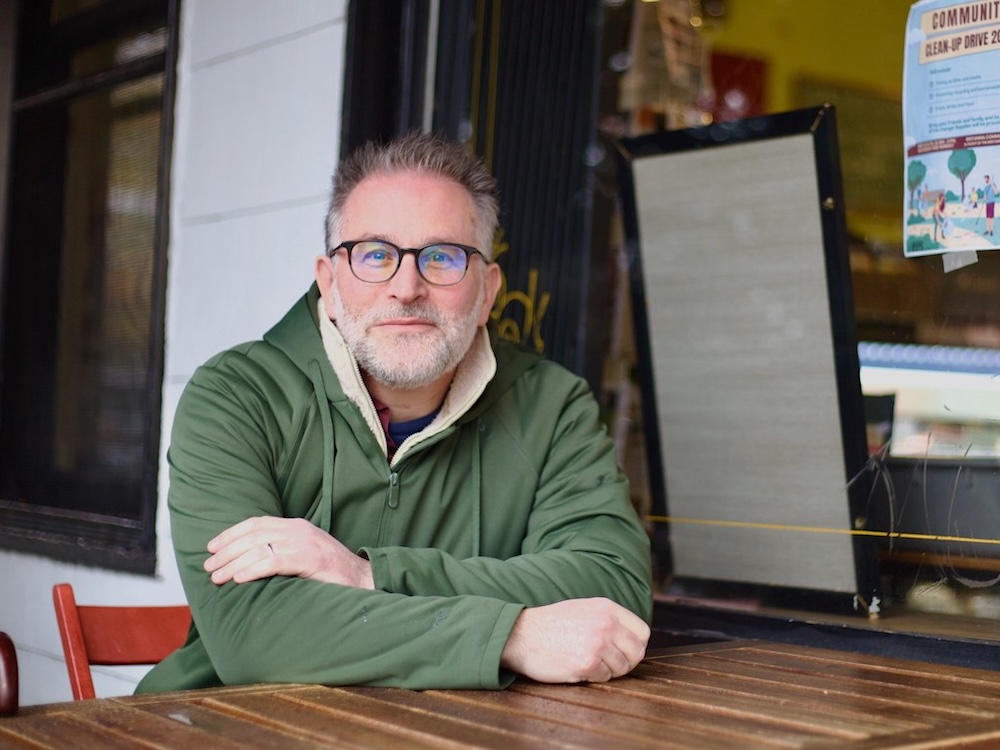
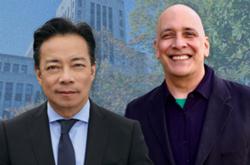
But on Feb. 17 OneCity mayoral candidate William Azaroff surprised the other parties by holding a press conference to announce his proposal for unity with the Greens and COPE.
Under OneCity’s proposal, both COPE and the Greens had until 11:30 a.m. on Feb. 20 to decide whether they would participate in a “progressive primary” within 45 days. One mayoral candidate would be elected through primary votes from existing parties’ memberships, overseen by an independent electoral officer.
That deadline has now come and gone, but according to an email OneCity sent out to members on Saturday, COPE has reached out to provide “thoughts” on the proposal. According to the same email, the Greens have declined to participate but have restarted negotiation talks.
In conversation with The Tyee, COPE confirmed it followed up with OneCity after Friday’s deadline with its concerns about the party’s “progressive primary” proposal. The Greens told The Tyee negotiations among the parties haven’t restarted because they never stopped, but that the Greens “rejected the specific terms and timing for a primary described in the OneCity ultimatum.”
According to news reports, OneCity has the most members at 2,700, followed by COPE’s just over 1,000 members, giving OneCity a distinct primary advantage.
The Greens would not disclose their membership numbers to The Tyee, saying it would not be a fair comparison because unlike COPE and OneCity, only people who live in Vancouver and the University of British Columbia endowment lands may join the Greens.
Neither COPE nor the Greens knew this OneCity announcement was coming. Both referred to the proposal as an “ultimatum” in interviews with The Tyee.
“It certainly wasn’t in a light tenor, and some of the details were so onerous that it couldn’t be attributed as anything but aggressive,” said Pete Fry, the sole Green Party councillor and a mayoral nominee. “If it was cheeky, it fell very short of the mark.”
In an interview with The Tyee, Azaroff disagreed.
“I admit the move I made was a bit of a cheeky action to try and drive, ‘OK, let’s have a primary, let’s do this.’ Because I was worried for the next several months we’d play this out on social media, and we need to get back to talking,” he said.
But even people outside of partisan politics looked sideways at OneCity’s proposal.
“It’s a very small runway for the other parties. They are rightfully-so dissatisfied with the idea of having to figure out whether they want to do this or not, in a span of less than a week,” said Mario Canseco, president of Research Co. polling company. (Disclosure: Canseco has been hired by the Vancouver Liberals, a new party that hopes to capture voters in the centre of the political spectrum, to do one opinion poll.)
Unlike OneCity, which recently held a mayoral candidate primary that Azaroff won over fellow nominee Amanda Burrows, COPE and the Greens wouldn’t have had the chance to consult their members on OneCity’s proposal by deadline, he noted.
It’s not uncommon for progressive parties in Vancouver to recognize their shared values and a desire to unify in order to defeat more conservative parties, Canseco said. But these coalitions more often than not don’t get off the ground, he said.
If the parties cannot agree on how many candidates to run for mayor, council, park board and school board, the progressive vote could splinter enough to allow Mayor Ken Sim and his ABC Vancouver party a second term.
Canseco’s own recent polling shows approximately 27 per cent of Vancouverites support Sim, while another 27 per cent want him and his policies gone.
It’s the 32 per cent of voters who want a change in leadership, but not necessarily policies, who are up for grabs, he said.
“Whoever defines that vision is going to emerge as the de facto challenger for Ken Sim,” Canseco said. “Because I think the worst-case scenario for people who don’t want Ken Sim elected is to see the vote splintering away because you have so many candidates.”
People’s vs. progressive primary
The progressive primary is not a new idea: COPE’s Jan. 30 press release credits COPE with a concept known as “the People’s Primary.”
COPE suggested the voting public would decide the best progressive candidate for a “unity mayor” among the parties, although no details, deadlines or agreement among the parties is mentioned. But it did reference COPE’s ongoing debate around whether it will have its own mayoral candidate.
Canseco believes this is related to the success of COPE solidly defeating the Green, ABC and TEAM for a Livable Vancouver candidates in the spring 2025 byelection.
“I think COPE rightfully feels because they did so well in the byelection, they have a chance to do something more meaningful and maybe run a candidate, try to replicate the way things were for them in 2002, maybe run a full slate,” Canseco said.
A Feb. 2 OneCity press release confirmed there were ongoing “unity talks” among the three parties, and that OneCity was “pushing them toward a resolution as quickly as possible.”
Representatives from both OneCity and COPE acknowledged COPE shared a more detailed People’s Primary proposal on Feb. 12. But who stopped talking to whom first depends on whom you ask.
“My understanding is that OneCity had been less amenable to any of the negotiations, and that COPE and Greens had been having conversations,” said Fry, who has not been directly participating in the negotiations.
OneCity maintains it responded with questions about COPE’s proposal that went unanswered.
Shawn Vulliez, COPE’s campaign director, said OneCity did not acknowledge COPE’s offer before issuing the Feb. 17 primary idea.
COPE laid out the details for the People’s Primary, which was accepted by COPE members at their recent annual general meeting, publicly in another press release on Feb. 17.
Unlike OneCity’s proposal, COPE’s included limits on the number of school board, park board and city council candidates each party would run. Instead of holding a vote by members, candidates’ popularity in voter polls over the summer would determine who should stay in the race and who should drop out.
“The premise of the offer was what is the minimum viable offer that is going to prevent a ballot blowout and is going to have a path to reduce mayor [candidates],” Vulliez said. “It’s not our dream scenario, but we think it’s good enough.”
The Greens agreed to COPE’s proposal in principle, Fry told The Tyee, but they still need their membership’s approval.
COPE is invested in getting a deal among the parties and has been working hard towards that goal, said Vulliez.
“The primary process that [OneCity is] proposing, we’re not against it in principle. But we first pitched a variation on this before their mayoral race,” he said, adding it was dropped over concerns it violates the Local Elections Campaign Financing Act by potentially sharing costs among parties.
“We want to find ways to work together, but now we’re talking to the media about this ultimatum.”
OneCity doesn’t think COPE’s People’s Primary will be successful, or timely enough to defeat Sim and the rest of ABC. It would also leave the door open for conservatives to join any of the parties to have influence over candidate nominations.
“This is about progressives deciding who should be the standard bearer moving forward,” Azaroff said. “Come to the table and explain, because maybe there’s a brilliant explanation I don’t understand.... But any specificity around a public poll makes no sense to me.”
Azaroff told The Tyee his party’s primary proposal is not set in stone, and OneCity is open to negotiations with the Greens and COPE to make it more amenable to them.
Vulliez noted conservatives could have signed up for any party already to affect candidate selection. He said COPE may be able to agree to OneCity’s proposal if COPE knew for sure the proposed OneCity primary did not violate the Local Elections Campaign Financing Act’s prohibitions on sharing expenses, discussed limits on how many candidates to run for other parties, and wouldn’t be held for at least two months so the parties can grow memberships.
“We reject the premise that we need to accept or reject a specific offer made at this time. We have an outstanding offer at the table, as well,” Vulliez said.
Fry was somewhat optimistic about the future of negotiations among the three parties.
“Hopefully we can move past this one,” he said, “and cooler heads prevail.”
Election 2002, Take 2?
Canseco is annoyed OneCity’s primary press release claims the chosen “progressive” mayoral candidate will sweep the election with half a million votes.
“There’s no possibility of a candidate gathering half a million votes,” Canseco said, adding the highest vote count for a mayoral candidate in Vancouver was the 85,732 votes cast for Ken Sim in 2022, with just a 36 per cent voter turnout.
Every Vancouver resident eligible to vote would need to be registered and cast a ballot, he said, which feels unlikely.
“As an aspirational message, it’s interesting,” Canseco said. “But it also shows a little bit of naiveté on their part to think that they can get to half a million votes if there’s unity between COPE, the Greens and OneCity.”
The highest voter turnout in Vancouver municipal elections in the last 25 years was the 50 per cent of eligible voters who cast ballots in the 2002 municipal election. In that election, COPE’s mayoral candidate and eight COPE councillors won, holding a majority on a council that included just two Non-Partisan Association, or NPA, council members.
COPE hasn’t been able to recapture that glory for a few reasons. The first is the 2005 COPE split between the more “pragmatic” and dogmatic wings of the party, what news media referred to at the time as “COPE Lite” and “COPE Classic,” respectively.
In 2005, “COPE Lite” became Vision Vancouver. Although there were attempts to come to a non-competition agreement between Vision and COPE for that year’s municipal election, the plans fell through and both parties were trounced by the NPA.
In 2008, Vision swept the mayoral, council, park board and school board races. COPE had more seats than the NPA but were dwarfed in comparison to Vision.
In 2011, COPE split again, with disgruntled members forming OneCity Vancouver.
Despite having criticism for both COPE and Vision at the time, as OneCity’s prominence has increased while Vision faded into oblivion, critics have accused OneCity of being the new Vision: an elitist, faux-progressive party in bed with real estate developers.
Geoff Meggs is a former Vision Vancouver city councillor and current OneCity member. He disagrees with that characterization.
OneCity was “certainly proud not to take any corporate donations,” Meggs said, adding Vision did take money from real estate developers and other big businesses, as was allowed under election laws at the time. OneCity “saw themselves as a more pragmatic option than COPE.”
The wider political landscape is also different than in 2002, when the province was a year into a new BC Liberal majority government under Premier Gordon Campbell. Despite the party name, BC Liberals’ policies were fiscally conservative and alarming to Vancouver progressives.
“You had that opportunity to coalesce around the idea that Vancouver needs to remain lefty,” Canseco said.
With both the BC NDP and federal Liberals — allegedly more progressive than the BC Liberals — now in power, “I just don’t see the same type of situation happening now,” he said.
As well, COPE was the only option for progressive voters in 2002, Canseco added.
“Part of what hurts the chances of this happening again is the fragmentation, and this is one of the reasons for these discussions to be happening right now,” he said. ![[Tyee]](/design-article.thetyee.ca/ui/img/yellowblob.png)
Read more: Municipal Politics





Tyee Commenting Guidelines
Please note that email notifications for replies are not currently working due to a software issue which may be resolved in a future update.
Comments that violate guidelines risk being deleted, and violations may result in a temporary or permanent user ban. Maintain the spirit of good conversation to stay in the discussion and be patient with moderators. Comments are reviewed regularly but not in real time.
Do:
Do not: