


 SHARE:

I didn’t want to write this essay.
I was born in Alberta. I graduated from St. Francis High School in Calgary, then earned two degrees down the street at the University of Calgary. I wrestled for the Dinos, the university’s wrestling team, and for Team Alberta at the Canada Summer Games, where I lost the gold medal match in overtime to a kid from Newfoundland. The memory still haunts me. I got married in Cochrane, Alberta, to a woman from Fairview, Alberta. We had a son and, eventually, a divorce in Calgary. Alberta has always been my home.
So, when I’ve been asked in the past to write about the Alberta independence movement, I’ve said no. As a lifelong Albertan, I’ve grown weary of the rest of Canada’s fixation on my province’s conservative excesses, and I didn’t feel the current separatist tantrum warranted the nation’s attention. Or maybe I was just embarrassed. In any case, I thought Canadians were hearing enough about this already.
I changed my mind when I realized what people outside of Alberta — or even those within the province — weren’t hearing. The economic and political grievances expressed by the movement’s leaders obfuscate what’s really going on. I wanted Canadians to understand that Alberta separatism, at its heart, isn’t motivated by equalization policies, Senate seats, carbon taxes or oil. These tired complaints may ride shotgun on independence, but bigotry drives the truck.
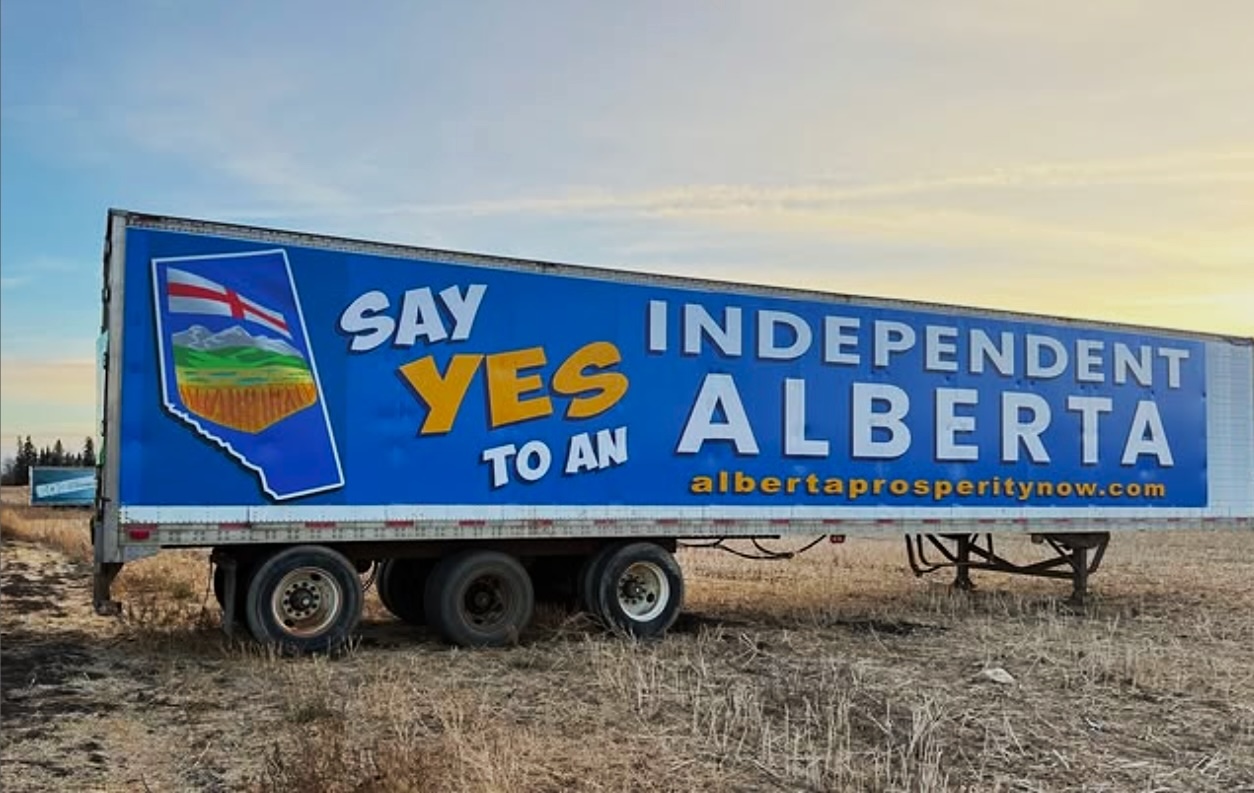
On Jan. 26, I attended the “Alberta Independence Rally” at Calgary’s Big Four building on the Stampede grounds. Three weeks earlier, canvassers started collecting signatures on a petition asking, “Do you agree that the Province of Alberta should cease to be part of Canada to become an independent state?” Canvassers need to collect about 178,000 signatures, a tenth of the number of votes cast in the last provincial general election, to trigger a referendum on separation.
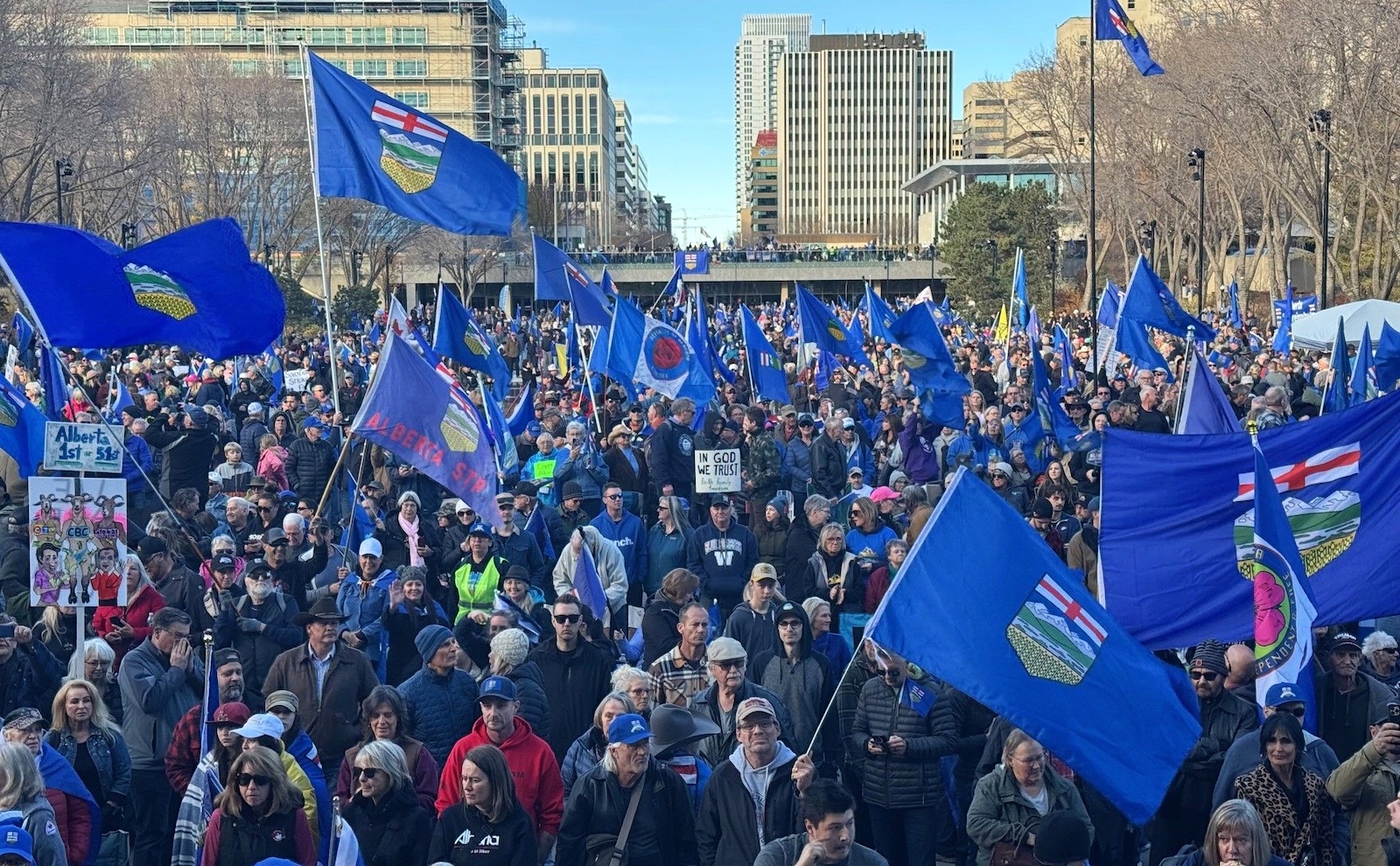
The Big Four rally was the separatists’ largest indoor gathering to date. More than 3,000 people filled the hall to sign the petition and listen to independence leaders speak. The crowd was diverse. I saw young white people and old white people. Tall white people and short white people. Many wore Alberta-blue ball caps, draped themselves in Alberta flags and carried independence lawn signs they had purchased at the merchandise tables. The whole place seemed to seethe with a weird concoction of triumphalism and entitled anger.
The most revealing moment of the three-hour program came before any of the night’s speakers took the stage. The MC invited audience members to scan a QR code projected onto a screen and participate in a live poll. People voted on what issue interested them most about an independent Alberta. They chose from a list of about a dozen topics including taxes, military funding, finances and oil pipelines. The screen updated the results in real time.
“Immigration and deportation” shot to the top of the list immediately. This surprised only me. “I can only guess where this is going,” the MC joked as the red bar stretched across the top of the screen. “Look at that line for immigration. Who knew?”
“We all did,” a man shouted from the middle of the room.
The woman sitting next to me clenched her fist and shouted, “Deport! Deport! Deport!”
In May 2025, the Alberta Prosperity Project released an updated document laying out the rationale for separatism. The 20-page carnival of grievance, conspiracy and misinformation could be named “What If the Trucker Convoy Were a Country?” All the right-wing obsessions are represented. Critical race theory, communism and the climate hoax. Wokeness and the World Economic Forum. Quarantine camps, whatever those are. “Promoting the teaching of transgenderism to children who are not yet at the age of consent,” whatever that means.
The document takes some wild swings. It claims Canadian governments have “actively sought” to harm the economic interests of Albertans for the sake of Canadians in other provinces, and that Ottawa considers Albertans “colonials to be exploited” rather than citizens. It also posits that the federal government intends to change Canada into a Marxist post-national state, relinquish our sovereignty to the United Nations and implement a “Chinese-style social credit score system that allows the government to turn on and turn off access to your life based on your compliance with whatever they think serves the greater good of society.”
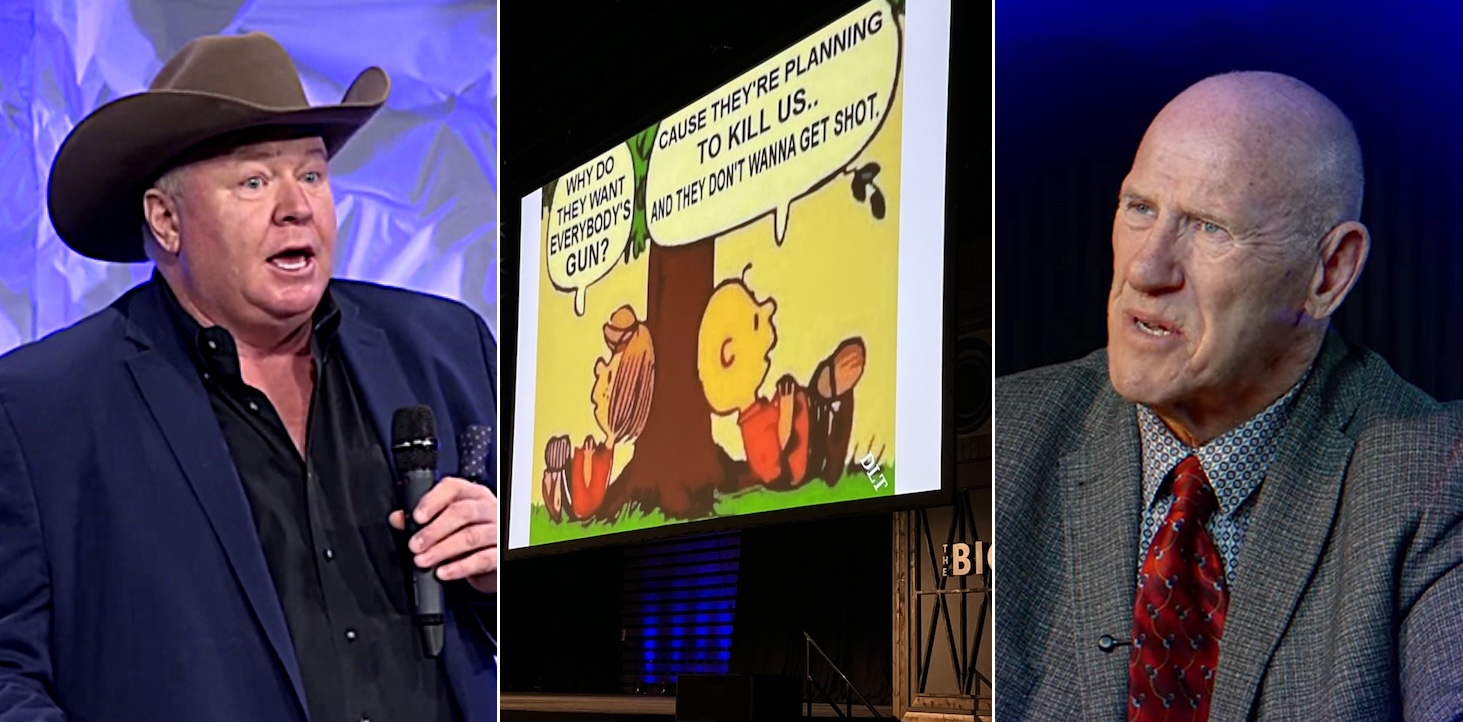
Similarly unhinged claims came from the stage at the Big Four — especially from Mitch Sylvestre, a gun and sporting goods shop owner and the Alberta Prosperity Project’s CEO. Sylvestre told the audience that not only did the Liberals spend “11 thousand million dollars” on “overseas gender programs,” but Trudeau skimmed off $900 million out of every billion for himself. “I’m not going to pretend I know that happened,” Sylvestre said by way of caveat. “But I think it did.”
Sylvestre said Canada leads the world in “assisted suicide,” then alleged that “they take and sell the organs.”
Regarding the two million immigrants Canada welcomes every year, Sylvestre asked, “Would it be unreasonable to think that maybe 200,000 of them could be foreign soldiers?”
Yes, Mitch, that would be unreasonable. The audience, though, obediently swallowed Sylvestre’s theories. (The entire rally can be viewed online.)
Lawyer and separatist leader Jeff Rath, who acts as the project’s legal counsel, addressed the crowd last, grunting out insults and accusations from beneath his cowboy hat like a drunk uncle during Stampede.
According to Rath, Prime Minister Mark Carney and the federal Liberals are agents of the Chinese Communist Party. He also asserted that the Liberals are destroying our culture with foreign workers who overrun our emergency rooms, overcrowd our classrooms and overwhelm our water systems.
Apparently, Ottawa wants to “destroy our children” by paying them $2,000 a month to “smoke government-legalized marijuana and play video games” instead of going to work and wants Albertans to stop eating meat “because cows fart too much.”
The audience loved Rath’s bloviations. He earned the loudest applause, however, when he said their project’s fiscal plan for a sovereign Alberta makes it clear that Alberta’s immigration department will be “our immigration and deportation department.”
I’ve read that plan. In June 2025, the Alberta Prosperity Project released its fully costed blueprint for an independent Alberta titled “The Value of Freedom.” According to the plan, a sovereign Alberta would implement a points-based immigration system with preference given to Canadian applicants. “They understand Canada and its winters and have at least a fighting chance of being able to drive acceptably on snow and ice,” the document reads, a tidy version of the “Immigrants can’t drive” trope.
Potential immigrants will earn points under criteria such as education and work experience — as they do now — but they’ll score points only for language proficiency in English. Aspiring Albertans should be healthy, too, free of serious illnesses and “experimental mRNA injections.”
Importantly, not only will an independent Alberta implement new policies for future immigrants; the new government would reassess people who are already here. Permanent residents who entered under “the extremely unsatisfactory policies implemented by Canada since 2015” would need to reapply under the new system. Those who fail will face removal. The project has already done the cruel math on this strategy. They intend to kick between 65,000 and 106,000 individuals out of Alberta during the first three years of independence, at an annual cost of about $1.6 billion. Deport, deport, deport.
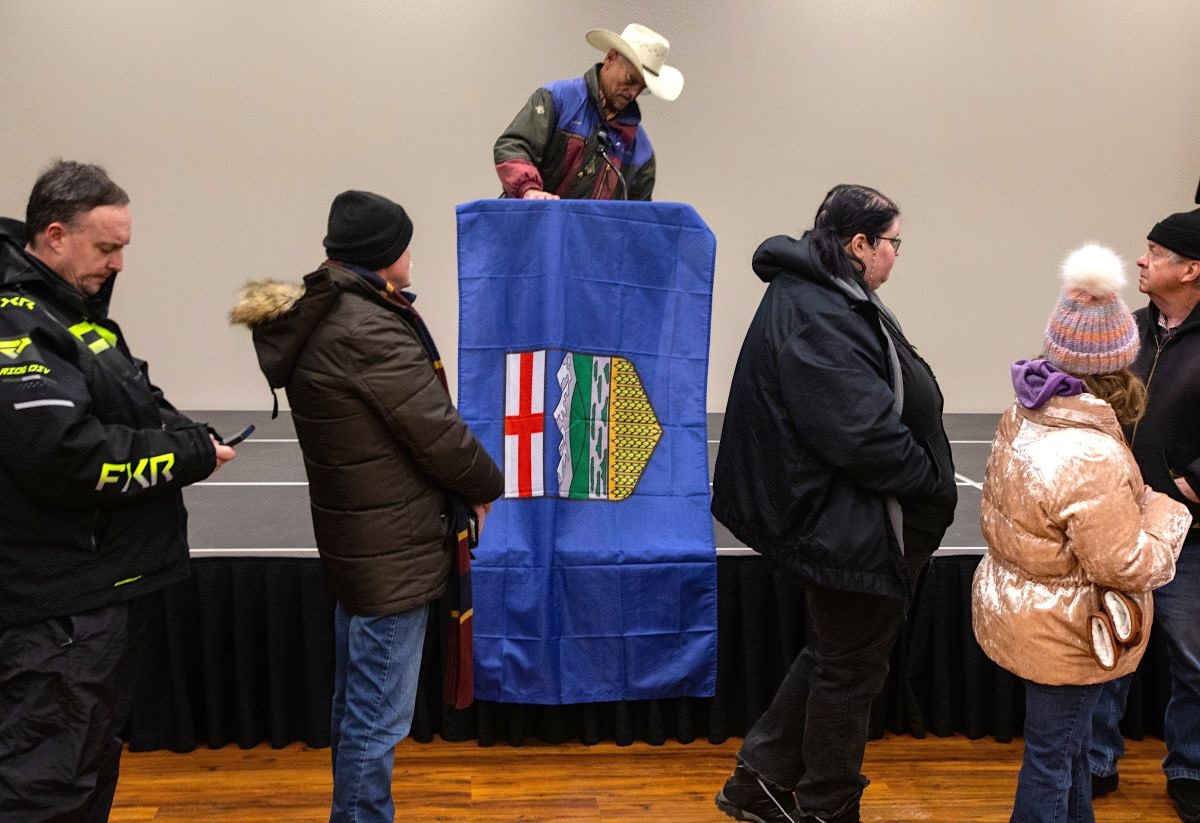
A few days after the Big Four rally, I joined about 500 people at Fairview Baptist Church to hear why God wants Alberta to be free.
The event, titled “A Christian Perspective on Alberta Independence,” and preserved online, began with Fairview Pastor Tim Stephens enumerating a tired list of Alberta’s gripes with Ottawa. Blocked energy projects. The tanker ban. Carbon taxes. The “no new pipelines” bill (i.e., the Impact Assessment Act and the Canadian Energy Regulator Act). Nothing I hadn’t heard before.
But Stephens interpreted the “groaning” for independence as a longing to live in a Christian society with Christian principles. “Every single political issue comes down to a religious issue,” Stephens said. He bemoaned the ideas of “Marxism and Enlightenment” that apparently define Canada’s Liberal government, and which have allegedly led to such anti-biblical concepts as “cradle-to-the-grave care.”
Michael Wagner, an “independent researcher” and father of 11 home-schooled children, followed Pastor Stephens. Wagner argued that Canada had much to be proud of until the 1960s when Liberals remade Canada into a country “that prioritized leftist social engineering over the country's historic identity and achievements.” Wagner considers symbolic Lester Pearson’s decision to change the Canadian flag, replacing one that included the three overlapping crosses of the Union Jack, an “explicitly Christian flag,” with one featuring a leaf that “is essentially a pantheistic symbolism of a tree that doesn’t grow in Western Canada.” (Maples do, but never mind.)
Wagner blamed Canada’s ruination on Pierre Trudeau, particularly his enactment of the Charter of Rights and Freedoms in 1982. The Charter, Wagner claimed, banished Christianity from the public square, struck down the 1906 Lord’s Day Act that outlawed business transactions on Sunday and removed prayer from public schools and town council meetings — among other indignities.
The destruction continues. “Each and every day, courts across Canada enforce Trudeau's vision using his Charter of Rights,” Wagner said. “In this sense, Pierre Trudeau rules Canada from the grave.” The father, his son Justin and his unholy ghost aim to replace Canada’s original character “with abstract, universal concepts: diversity, tolerance, equality.” God forbid. Literally.
Nobody at the church mentioned immigration or deportations at all, perhaps because Stephens’ congregation was decidedly less white than Sylvestre and Rath’s. Still, the scripture-sanctioned demonizing of social programs and health care startled me. In Wagner and Stephens’ ideal Alberta, not only do you have to pay for your doctor’s visits; you can’t fill your prescriptions on a Sunday. I shuddered, too, to hear concepts like diversity, tolerance and equality framed as social ills unsuited to the Christian nation these separatists seem to groan for. I wouldn’t want to live in their Alberta.
I smiled, however, when Stephens questioned the conduct of Jeff Rath. “He’s done a great job at collecting all the angry Albertans, and their anger is fuelling them, but that doesn’t build a nation.” Stephens doubted Rath’s ability “to bring people to his position even though they might agree with independence in principle.”
This reminded me of a conversation I’d had with University of Calgary political scientist Lisa Young. I wanted to know her thoughts about the similarity of the language employed by the separatist movement’s leaders to that of the trucker convoy. Young believes that the way separatism is communicated might persuade people who live in an “online version of reality” to “get in their pickup truck, drive to the Big Four, attend a meeting and sign something.” But not enough of these people exist to vote Alberta out of Canada, she says. Independence organizers will need to dial back the crazy.
“I don’t know whether the leadership of the separatist movement has the capacity to make that strategic shift,” Young told me.
Rath loves saying Mark Carney is the best salesman for separation. Rath himself might be the worst.
In May 2025, Bloc Québécois Leader Yves-François Blanchet said of Alberta independence, “I am not certain that oil and gas qualifies to define a culture.” This blunt dismissal by the Quebecker triggered the Alberta separatist leaders to describe our province’s unique culture.
“Albertans work hard” was the best they could come up with. “We wake up in the morning,” Rath said at the Big Four. “We make money. We take care of our kids. Raise our families. Take care of our parents. Live good industrious lives. That’s Alberta culture.” No doubt every society in the world makes this same claim. For someone who identifies Albertans by their work ethic, Rath seems to have put scant effort into crafting this definition.
The independence movement’s own policies better reveal the separatist view of Albertan culture. According to their 2023 “Proposed Policies and Governance for a Sovereign Alberta,” Alberta will be a land of freedom that, among other things, guarantees the right to carry guns and drink alcohol in public. Alberta’s students will learn the “merits of the hydrocarbon industry” as well as lessons in farming, fishing, hunting, basic home repairs and firearms knowledge. Schoolkids will embark on school outings to oilfields, gas plants and wood mills to “get a real-world experience of what drives our economy.” (The document also calls for the future Alberta military to include a navy. I look forward to seeing battleships on Edmonton’s mighty shores.)
For more insight into Alberta separatists’ culture, I spent some time in their strange corner of the internet. I listened to “Alberta Unleashed,” a grievance anthem with lyrics like “Mass immigration leads to decline / Net zero shove where no sun will shine.” In fact, Stay Free Alberta has an entire playlist of AI-generated country, disco and R&B songs on its YouTube page — some complete with fake audience singalongs. I found AI-sloppy “art” on independence Facebook groups featuring images like clenched fists rising out of canola fields and muscled rig workers breaking chains.
In the “home decor” section of a separatist merch website, I browsed metal wall art depicting vintage rifles advertised with ChatGPT descriptions like “It settles into the background but draws the eye when someone steps closer, the way a remembered road trip or a cold morning in camp does.” The separatists’ favourite type of intelligence seems to be artificial.
In addition to illustrating what separatists consider their culture, the social media posts also show their bad-faith arguments and sloppy arithmetic. The separatist Facebook pages all post graphics showing how Ontario has more seats in the House of Commons than Alberta, Saskatchewan and Manitoba combined. This is true, but per capita the Prairie provinces are better represented in Ottawa than Ontario. And current seat allocation is based on the 2021 census, back when Alberta had 780,000 fewer citizens than the province has now.
Using those numbers, Alberta has more per capita seats than Ontario — 8.7 seats per million versus Ontario’s 8.2 — and only slightly fewer than the national average of 9.2. When I posted these facts on Facebook, commenters generously reminded me that I’m a libtard cuck.
Separatists cry foul that federal elections are often decided before many Albertans have cast a ballot. Yes, but this is due to time zones and the large population of Central Canada. Are Albertans persecuted because Toronto isn’t on Vancouver Island? Or because the sun rises in the east instead of the west? And they complain that Albertans contribute more to the Canada Pension Plan than we receive. Also true, because we have more workers, higher wages and fewer retirees. This isn’t injustice. It’s math.
The independence social media accounts are often unintentionally hilarious. There’s a frequent poster on one of the Facebook separatist groups who refers to transgender people as “Tran’s” as if they belonged to some guy named Tran. On X, Rath reposted a claim that the Oilers and Flames will rack up Stanley Cups, and suggested Alberta Olympians will “own the podium” because of favourable tax rates. I wonder how anyone can take these people seriously.
Still, there is something more sinister going on amid all the misspelled nonsense.
On the “Unapologetically Albertan” Facebook group, which boasts more than 30,000 members, someone asked, “Do you support an immediate halt to all immigration from Muslim nations?” Commenters were unanimously in favour.
Another “all-star contributor,” according to their Facebook contributor badge, suggested euthanizing Edmonton’s unhoused Indigenous people. “It would be really a nice city if they wernt [sic] there.”
On X, Marty Belanger, separatist darling, retiree and self-described “unacceptable fact checker,” wrote, “I’ll admit that I’ve become racists [sic] in the last year. I’m sick and tired of all these immigrants from sh*thole countries invading us, and I’m letting them know at every opportunity. You’re not welcome here. Mot [sic] all cultures are compatible with each other.” The Western Standard was so repulsed by Belanger’s racism they gave him his own talk show.
Belanger has a point, though. The Alberta that he, Rath and the rest of their movement yearn for isn’t compatible with most other cultures. Or, indeed, with reality. The separatists envision independence not for the Alberta that currently exists, but for an Alberta of their imagination. An Alberta spooned from a churning cauldron of conspiracy theories and right-wing fantasies.
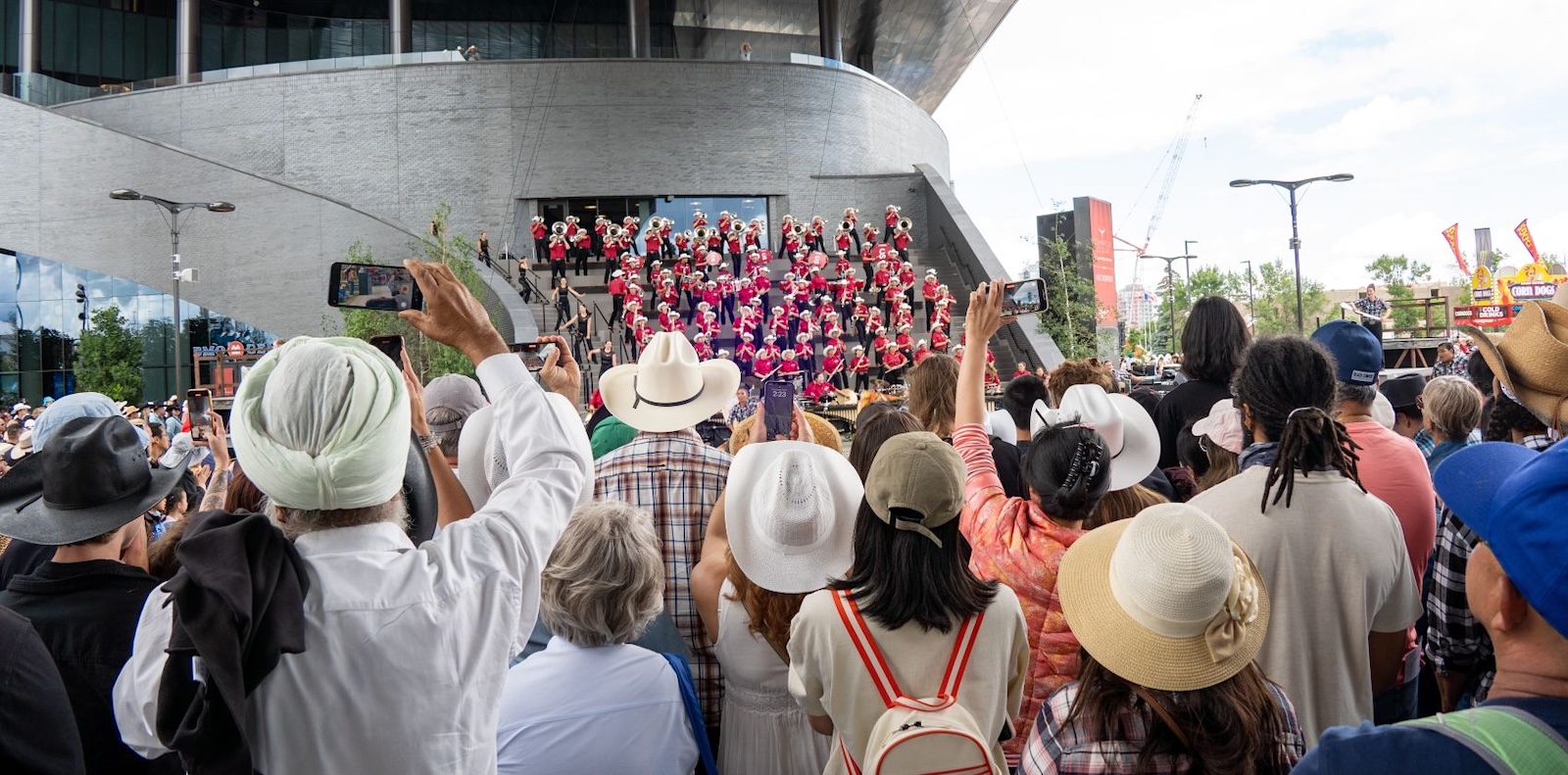
The actual Alberta doesn’t resemble this fever dream. In 1975, Alberta became Canada’s second province (after Quebec) to establish Culture as a government ministry, and only Quebec has funded the arts better per capita. Toronto and Montreal might have a larger percentage of visible minorities than Edmonton and Calgary, but only Albertans sent Muslim and Punjabi mayors to city hall. Calgary’s Ismaili community hosts the city’s most politically important annual Stampede breakfast where premiers, prime ministers and other leaders glad-hand over plates of pancakes and curried pigeon peas. We are a better and more interesting place than the separatists want us to be.
Indigenous communities in Alberta have reminded the separatists that the land isn’t theirs to swap out, anyway. In early January, the Sturgeon Lake Cree Nation filed a lawsuit against the Alberta government arguing that allowing the referendum petition to proceed violated First Nations’ constitutional rights. Later that month, the Piikani Nation, the Siksika Nation and the Blood Tribe filed similar court challenges. The nations argue that the referendum violates treaties between First Nations and Indigenous groups that predate the creation of Alberta itself.
“The treaties represent a sacred agreement to share the land between the Crown and Indigenous signatories,” University of Alberta assistant professor Matthew Wildcat told me. “Alberta doesn't have standing to alter the terms of that agreement, because it's not a party to the agreement.” As a result of these legal actions from Indigenous groups, some separatist leaders have spurred canvassers to accelerate their efforts and collect as many signatures as possible before the courts potentially stop them.
Yesterday Rath claimed that the separatist group Stay Free Alberta had collected the necessary number of signatures to hold a referendum asking the province's citizens if they want to secede from Canada. The referendum, if it happens, will fail. Likely spectacularly. In a poll conducted in February, less than a fifth of Albertans supported independence, and five per cent favoured joining the United States. More than 70 per cent of Albertans said the province should stay in Canada. A clear majority of Albertans don’t want to live in a Christian ethnostate powered by hydrocarbons and hatred, and conceived by people we wouldn’t trust to sit the right way on a toilet. My greatest hope is that the separatists will feel as embarrassed and angered by their inevitable failure as I feel by their movement’s existence.
But the same poll showed nearly 60 per cent of Albertans are concerned about the separatist movement. I am, too. I worry the exercise has already emboldened Alberta’s worst people — our separatist-coddling premier chief among them. In acquiescence to the sovereignty agitators who populate her base, and to camouflage the failings of her own cruelly incompetent government, five of the nine referendum questions Danielle Smith will put to Alberta voters this fall target immigrants.
Smith wants Alberta to exert greater control over immigration, require temporary migrants to reside in the province for a year before receiving social support programs, and deny health care and education to those who lack “Alberta-approved immigration status” — a qualification that doesn’t exist.
These ideas feel cribbed from the Alberta independence policy documents. They echo what the separatists have been saying, both onstage and online: foreigners are to blame for Alberta’s ills.
Even when the independence referendum fails, the damage will be done. By legitimizing a movement built on bigotry, we’ve legitimized the bigotry itself. Alberta won’t emerge from this exercise as the bad place separatists yearn for. Thankfully. But I fear we’ll be a worse place than we were before. ![[Tyee]](/design-article.thetyee.ca/ui/img/yellowblob.png)
Read more: Alberta







Tyee Commenting Guidelines
Please note that email notifications for replies are not currently working due to a software issue which may be resolved in a future update.
Comments that violate guidelines risk being deleted, and violations may result in a temporary or permanent user ban. Maintain the spirit of good conversation to stay in the discussion and be patient with moderators. Comments are reviewed regularly but not in real time.
Do:
Do not: