

 SHARE:
The Pantone 2026 colour of the year is a whiter-than-white shade called Cloud Dancer. When the colour was revealed at the end of 2025, universal derision popped up across the internet as pundits rolled their eyes and hooted about the tone-deaf — or, maybe more correctly, colour-blind — choice.
The idea that colour is political isn’t new, but in the year 2026 it’s taken on even greater resonance.
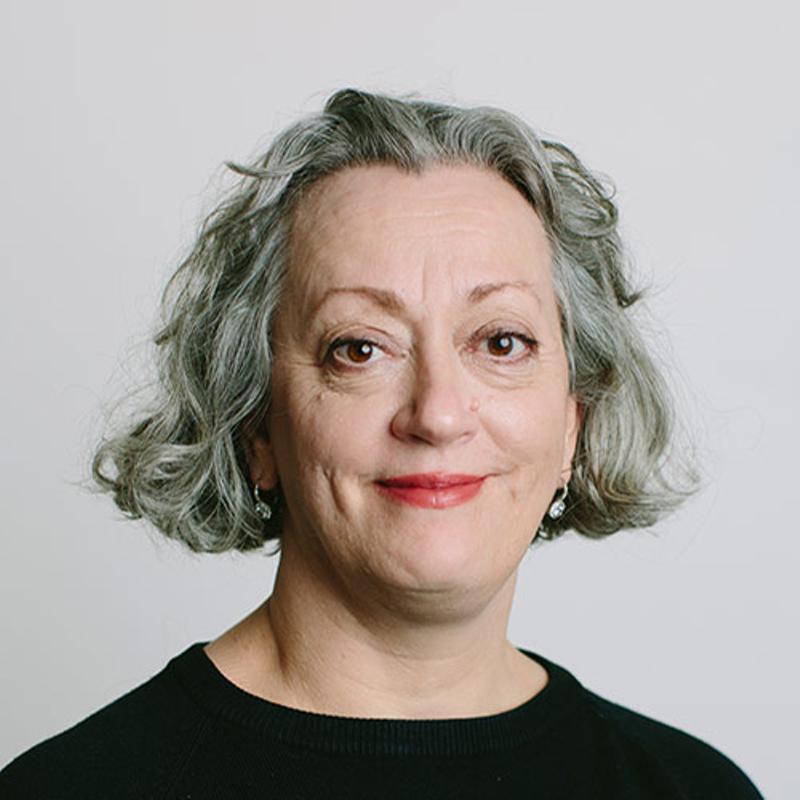
The controversy over Cloud Dancer did not come as a surprise to Zoë Chan, curator for the Richmond Art Gallery’s new exhibition The Chromophiliacs.
The exhibition derives its title from David Batchelor’s Chromophobia. Published in 2000, the book addressed the fear of colour in western culture. The manifestations of this are myriad.
The idea that white, grey and beige are synonymous with good taste is everywhere, from Gwyneth Paltrow’s Goop empire to the so-called quiet luxury of fashion houses like the Row.
Absence, restraint and minimalism are still regarded as high culture, whereas colour is tarred with associations of gaudiness, cheapness and lower culture, Chan explains.
In his book, Batchelor makes the case that this extinguishment serves a couple of different functions: “In the first, colour is made out to be the property of some ‘foreign’ body — usually the feminine, the oriental, the primitive, the infantile, the vulgar, the queer or the pathological. In the second, colour is relegated to the realm of the superficial, the supplementary, the inessential or the cosmetic.”
The result is self-evident and ubiquitous. If you walk down any major street or shopping district in Vancouver, you realize how little colour people wear. It’s a veritable ocean of black, grey or navy, all topped off by an Arc’teryx logo. Acid green, neon orange or fiery scarlet are very rare. Is this depressing? You bet your dun-coloured boots it is.
Add in any number of other descriptors: boring, drab, homogeneous, dull as greyish dishwater, and you begin to get a sense of how much our collective banishing of colour has affected us. It is a repudiation of joy.
In the blandish pond of Metro Vancouver, The Chromophiliacs explodes like a paint factory demolition, and it is glorious.
Whiteness, a colonizing force
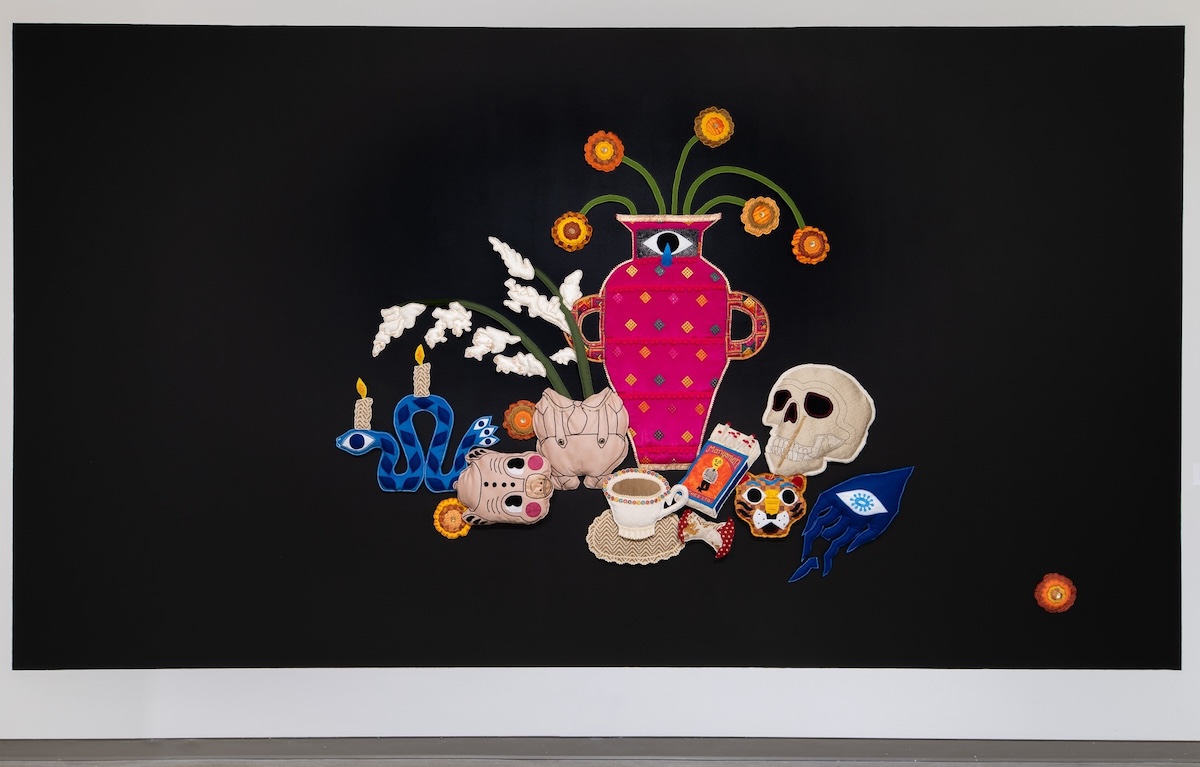
The 10 artists in the show use colour not only to celebrate diversity, pleasure and inclusion but also to draw attention to the colonizing whiteness that is often central to art history. By celebrating non-European aesthetics, the show opens up a broader, infinitely more encompassing view of contemporary art practice.
In addition to contending with the issue of colour, The Chromophiliacs also takes aim at the division between high art and craft.
Craft has long been viewed as a second-class relative to high art: functional, practical and somehow not as serious. But the show throws off these binaries and makes a resounding case that different craft practices, from quilting to embroidery, are as valid as painting, drawing or sculpture.
In the press materials for the show, Chan says that colour and craft, far from being lesser, are in fact fundamental to global cultures: “The Chromophiliacs is hugely inspired by material practices, handwoven textiles like crochet and felt objects, and handmade books and prints — as well as non-Euro-American aesthetics like Persian carpets, Caribbean tropical landscapes, and pre-Hispanic mythology. The artists use these visuals as starting points for artworks that embrace the politics of colour.”
And with that, let the great colouration begin!
A joyous outpouring
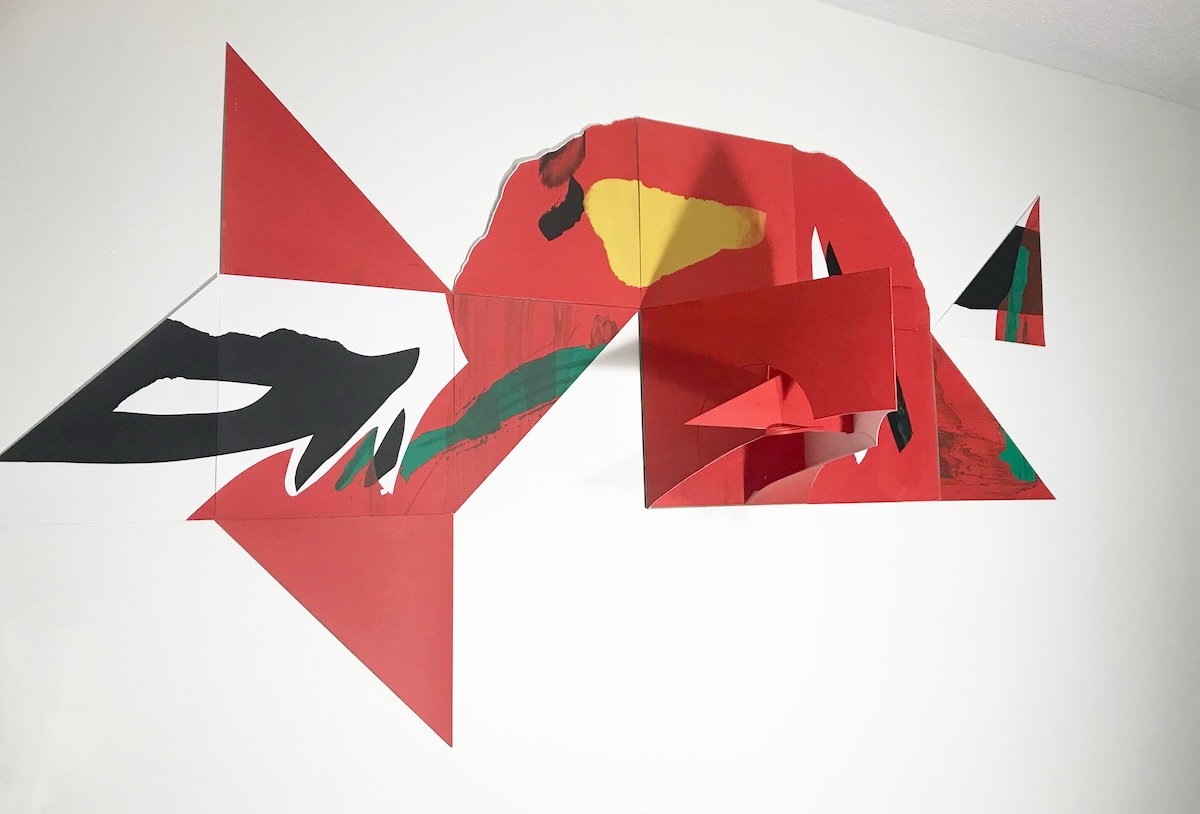
The exhibition starts with a bang, heralded by a spectacular title wall hand-painted by Yaimel López Zaldívar.
The Cuba-born, Vancouver-based artist embraces a multiplicity of different media, from screen printing to animation, but his work is united by his spectacular use of colour. One of the most fascinating works in the exhibition is his deconstructed book project.
As Chan explains, the installation and placement of different works, whether hung on a wall or placed on plinths in the centre of the gallery, manifest different kinds of relationships.
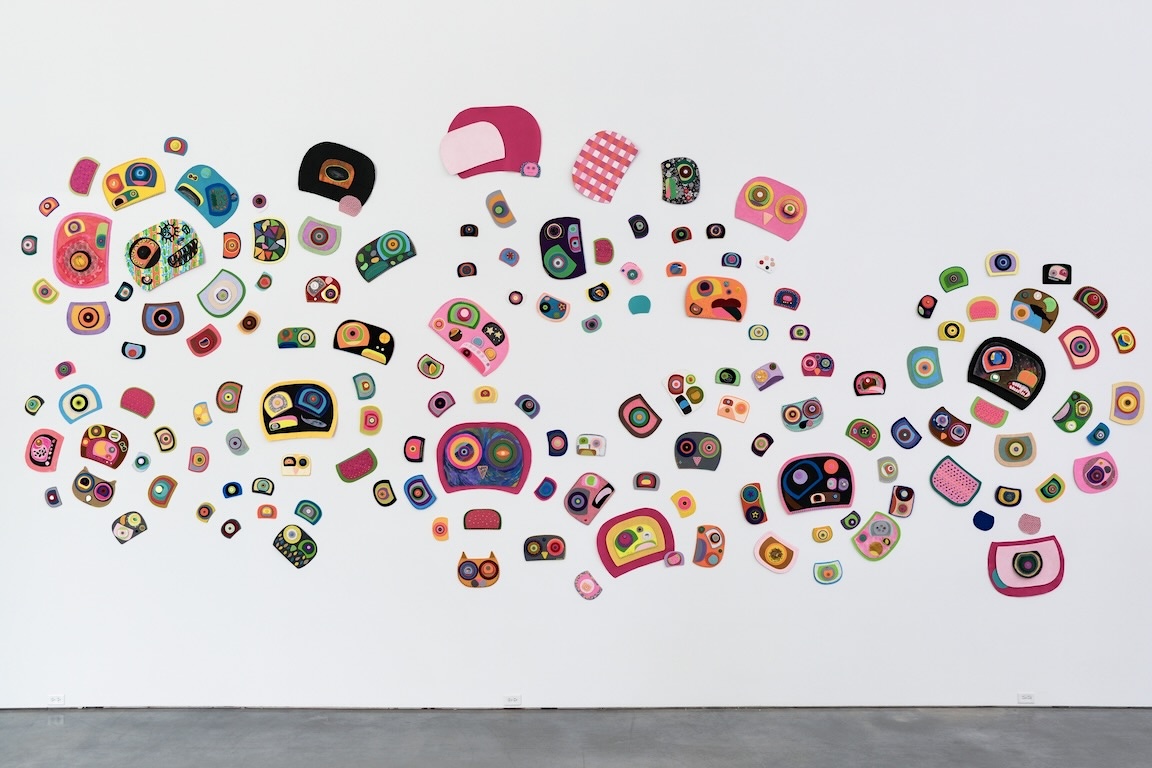
In this fashion, Charlene Vickers’ “hybrid ovoids” lead viewers into the rest of the show. The work bounces along the gallery wall, offering a path that is accessible, fun and immensely charming. The artist makes cheeky and delightful use of her Anishinaabe heritage to celebrate colour and form while creating a bevy of quirky characters.
Owls, fish and the occasional little odd face pop out from the greater whole. Colour, shape and embellishment come together to create a joyous outpouring that is confectionary in its sweetness and pleasure.
Arranged across from Vickers’ work, Jan Wade’s sculptural installation composed of cast-off materials like old buttons, worn-out toys and figurines stands guard. The thrift store assemblages become something quite different from kitschy combinations when painted matte black and ensconced in glass plinth cases. The tactility remains, but suddenly these creations are granted authority, weightiness and ostensibly value by their very presentation.
Wade grew up in Hamilton, Ontario, and her family has deep roots in the southern United States.
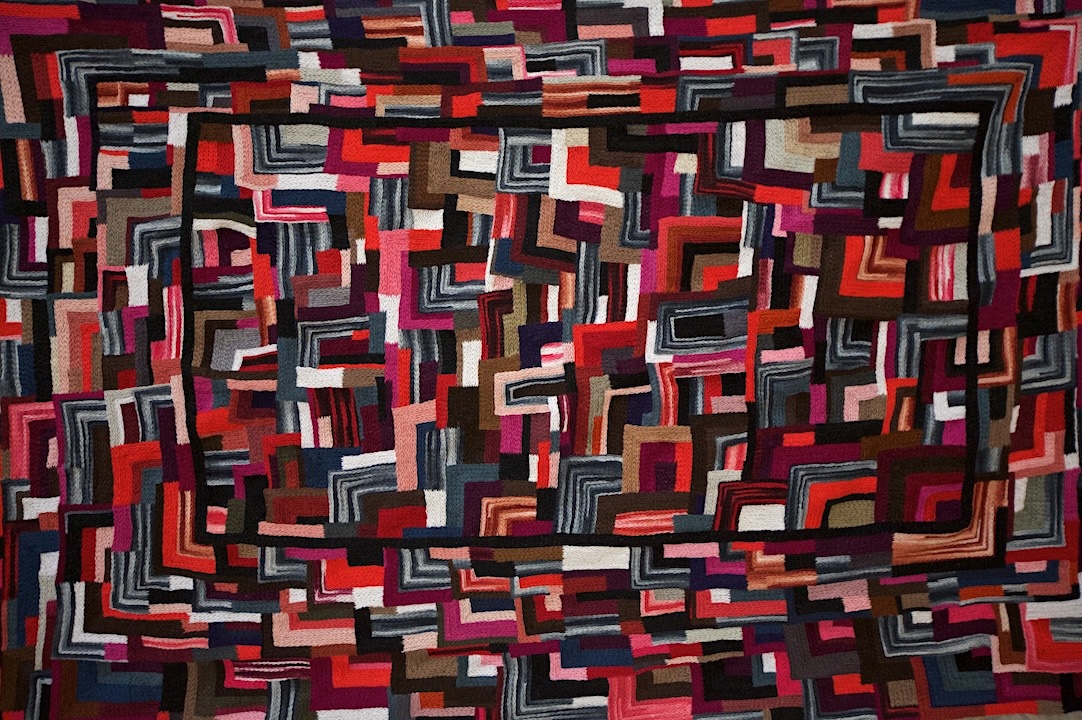
Her Breathe installation that runs the entire length of a gallery wall in the Richmond show is extraordinary. A previous iteration of the work as part of Wade’s 2022 solo exhibition at the Vancouver Art Gallery, the first ever by a Black female artist, made clear that the artist’s commitment to colour was foundational to her practice.
Wade’s painstaking embroidery uses colour and shape, squares and oblongs, bordered thickly by deep black lines, to fashion a mesmerizing whole. The undulating pattern of the different panels recalls the act of respiration, the most foundational act of life.
While some of the artists in the show use colour almost for its own sake, it serves a particular purpose and function in other works.
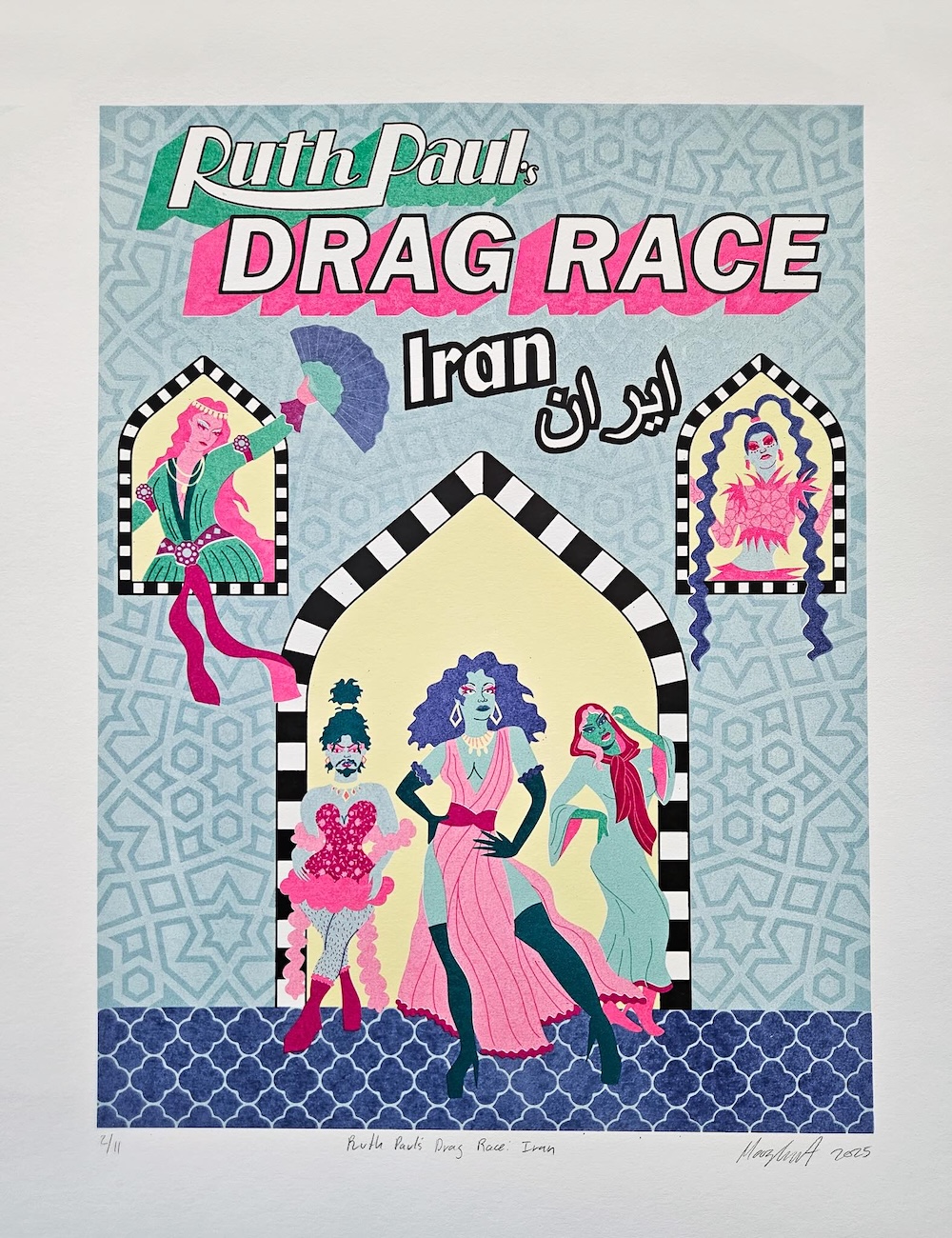
Moozhan Ahmadzadegan’s work mixes bright hues such as hot pink and baby blue with the tradition of Persian miniatures to offer a full-throated celebration of queer culture.
From depictions of bathhouse scenes to a poster-style image for something called Ruth Paul’s Drag Race: Iran, it is both witty and pointed, making implicit reference to Iranian laws that limit LGBTQ2S+ rights, strictures that range from banning drag shows to criminalizing same-sex activity.
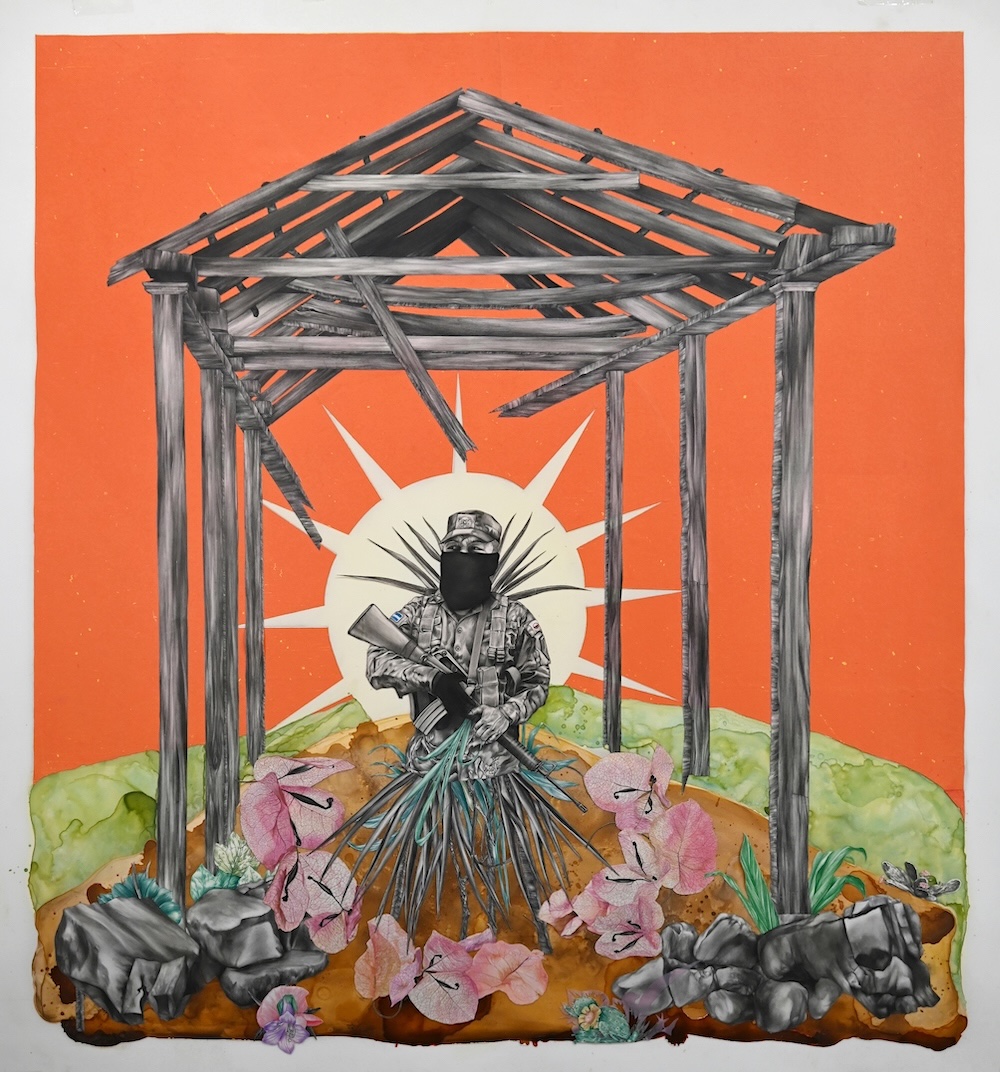
Osvaldo Ramirez Castillo employs colour to bring home horrors that might otherwise be forgotten, covered over by time and distance, as well as more purposeful obliteration.
Ramirez Castillo moved to Canada from El Salvador at age 11, but his work makes direct reference to that country’s brutal civil war in the 1980s that marked his early life. In a series of collaged work, Ramirez Castillo uses exquisitely observed renderings of flowers, fauna and military armaments to recall the deep trauma that has scarred his home country.
One of the most horrific of these was the 1981 El Mozote massacre, the largest civilian massacre in contemporary North American history.
The atrocities started on the afternoon of Dec. 10, 1981, when army units, backed by the U.S. government, entered the rural village of El Mozote. In the following days, the village was divided into groups of men, women and children. They were tortured, raped and murdered. Additional killings took place in neighbouring communities. When the story broke in the international press, the Ronald Reagan administration tried to bury U.S. involvement.
In Ramirez Castillo’s work, the weight of these crimes leaks through in piles of abandoned shoes, details of military uniforms and weapons, all curled over and around by the tendrils of jungle growth. Beauty and nightmare mingle into a body of work that uses colour to mediate between these two polarities, offering a way to contend with the worst moments in history.
Colour can also be used to explore and contend with more intimate suffering.
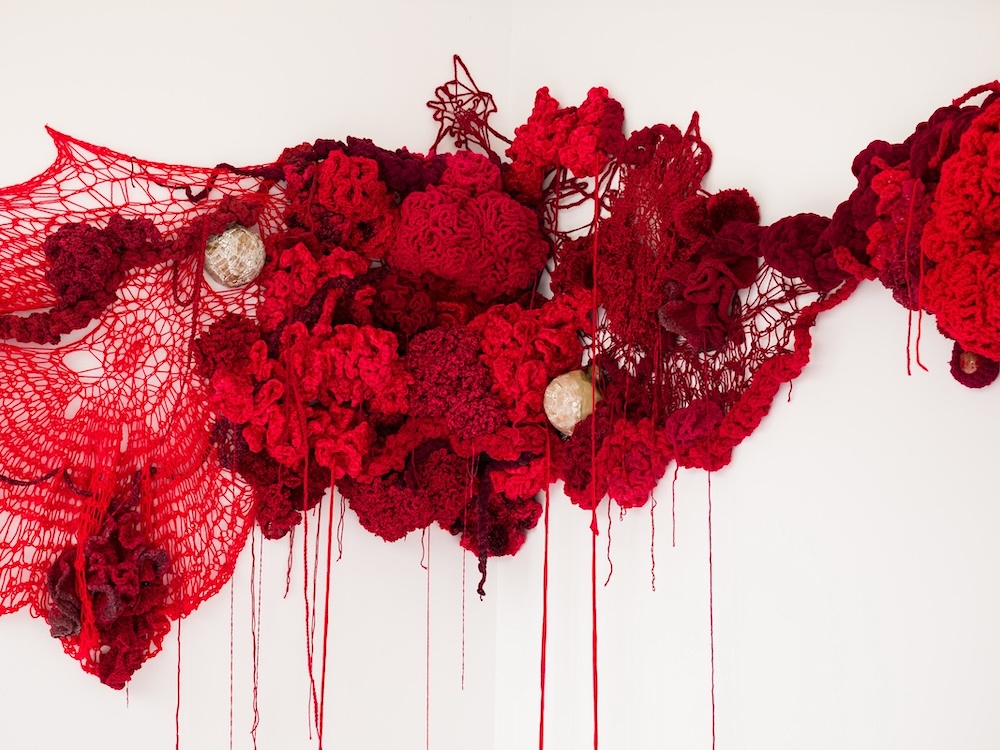
Malina Sintnicolaas’s “hyperbolic crocheted sculptures” move easily between corporeal things — think veins, uteruses and other fleshy, meaty stuff — and other natural forms like coral reefs. It is impossible to resist wanting to touch these installations that make use of tactile, almost luscious materials like velour and wool in deepest carmine, scarlet and burgundy.
But even as the texture draws you in, there is something profoundly disquieting, even unnerving about these works as deep red tendrils snake across the floor, and overstuffed forms spill out and over, like metastatic growth gone wild. The push-pull of attraction and repulsion creates a strange frisson that is positively riveting.
The show’s artists also include Maru Aponte, Sandeep Johal, Laura Meza Orozco and Diyan Achjadi. They offer work that throws off the suppressing boredom of blandness and lets colour run riot.
A reminder of our own vibrancy
The idea that whiteness is seeking to drown out and dominate other, more vibrant stuff is everywhere right now.
In her statement about the show, Chan makes the argument that Batchelor’s words about the erasure of colour are particularly critical “with the amplification of so-called ‘neutral’ hues in fashion, architecture, and interior design on social media, and the rise of white supremacist movements, where whiteness is equated with racial purity, to be protected at any cost.”
I thought about this during the recent Super Bowl halftime show. Bad Bunny’s performance was a full-on celebration of colour, from Lady Gaga’s sky-blue dress to the chartreuse hue of the politically symbolic sugar cane fields to the pink and yellow casita that functioned as a stage for dancers and singers.
If colour was a song, we were all singing along.
Into this thin, pale moment, when whiteness feels a bit of a death sentence, colour offers a return to evolving, growing, vibrant life.
‘The Chromophiliacs’ is on view at the Richmond Art Gallery from Jan. 24 to April 5. Information about ancillary events taking place at the Richmond Cultural Centre is available online. ![[Tyee]](/design-article.thetyee.ca/ui/img/yellowblob.png)
Read more: Books, Rights + Justice, Art






Tyee Commenting Guidelines
Please note that email notifications for replies are not currently working due to a software issue which may be resolved in a future update.
Comments that violate guidelines risk being deleted, and violations may result in a temporary or permanent user ban. Maintain the spirit of good conversation to stay in the discussion and be patient with moderators. Comments are reviewed regularly but not in real time.
Do:
Do not: