


 SHARE:
[Editor’s note: This piece is part of a weeklong series of writing in The Tyee to mark the National Day for Truth and Reconciliation and the 10-year anniversary of the release of the Truth and Reconciliation Commission of Canada’s 94 Calls to Action.]
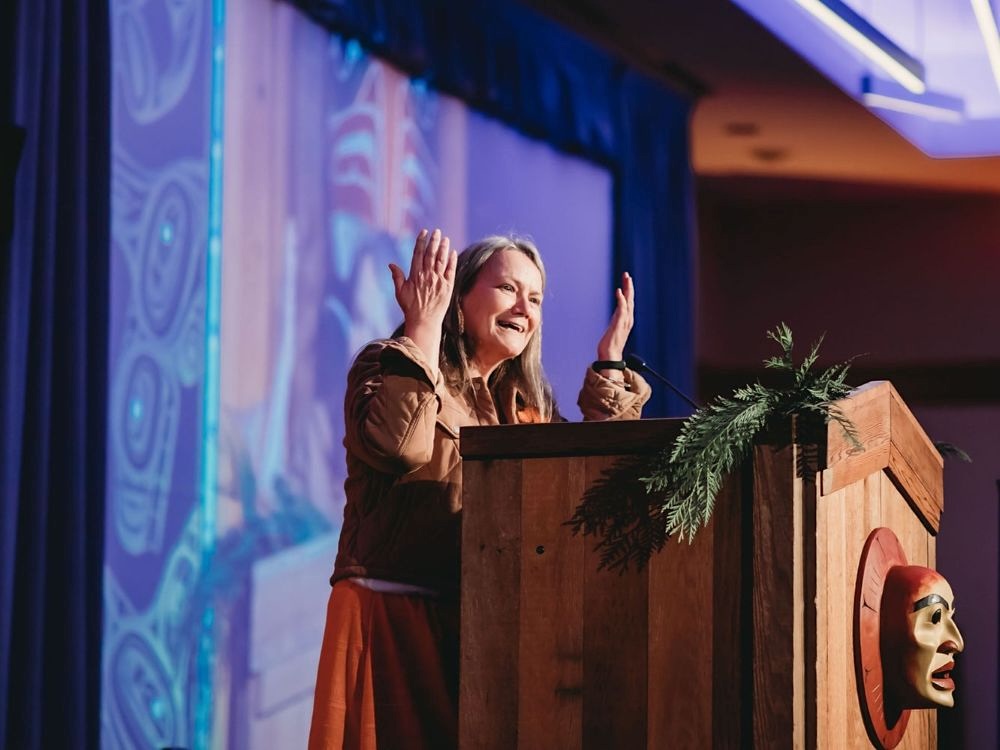
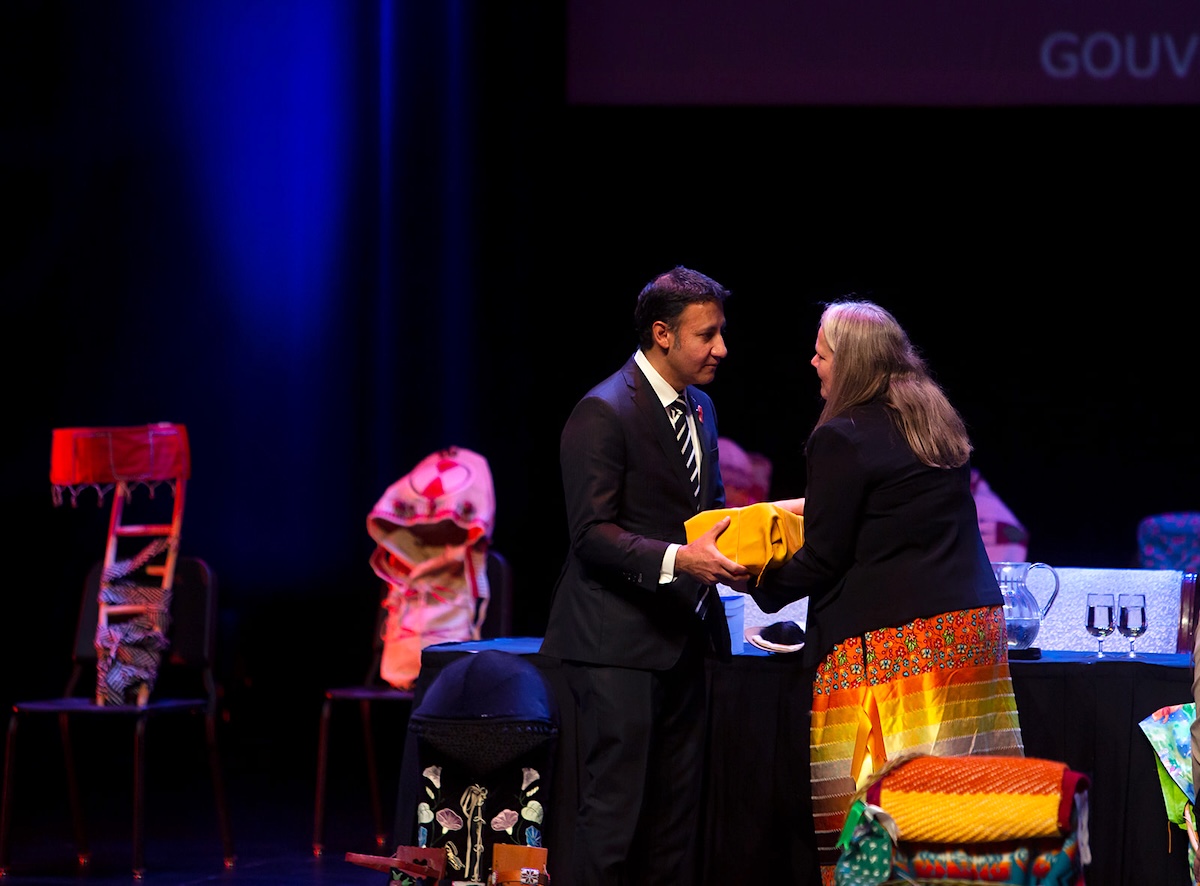
Last year, on a cool October day in Gatineau, Quebec, Kimberly Murray presented her final report on burial sites and missing children associated with Indian residential schools. It marked the culmination of over two years of work tasked to her as independent special interlocutor by the government of Canada.
Days after meeting with survivors, Elders and youth, releasing her report and talking to media, the lawyer met with Canada’s Minister of Justice and Attorney General Arif Virani and Minister of Crown-Indigenous Relations Gary Anandasangaree over a video call.
On that call, Murray told The Tyee, she found the federal government evasive about what would happen next. “When it came to the actual obligations,” she said, “they had nothing to tell me. They had nothing to commit to.”
Murray, a law professor at Queen’s University and its national scholar for Indigenous legal studies, has quite the resumé. Before she was the independent special interlocutor, she worked for the Ontario Ministry of the Attorney General, was executive director of the Truth and Reconciliation Commission of Canada, or TRC, and practised law at Aboriginal Legal Services of Toronto.
As she considered whether or not to take the interlocutor role in 2022, Murray had reservations. She asked for assurances that the Canadian government had consulted with Indigenous leadership and that this role was something these leaders wanted; as a member of the Kanehsatà:ke Mohawk Nation, she sought the support of her nation’s Chief and council because of the high-profile nature this national role would take.
And she wondered about the Canadian government’s motivations for creating the role. Around the time of her appointment, there were calls for an international investigation into Canada’s residential school system. “International bodies tend to only get involved when the domestic government isn’t doing anything,” she said.
Murray hoped the government wasn’t creating the position “to appease people and to pretend that they’re doing something around the missing and disappeared children.”
Nearly a year after Murray delivered her final report to the Canadian government, she has still not heard back on her report’s major recommendations, which include calls for an Indigenous-led reparations framework and access to residential school records and data sovereignty for Indigenous communities.
Murray does not know if the Canadian government will implement any of the obligations outlined in the report or how soon any action will come.
But she does hope she made progress in helping Indigenous communities with the ongoing work of finding out what happened to their loved ones who went missing from residential schools — and bringing them home.
In a September interview, Murray talked to The Tyee about the key points of her final report, how to combat residential school denialism and why it is tricky to achieve justice when the perpetrator is being called to administer justice. Our interview has been edited for length and clarity.
The Tyee: What were your goals and aims going into the role of independent special interlocutor?
Kimberly Murray: It was a couple of things. When Tk̓emlúps te Secwépemc announced to the world about the findings that they had of their investigation, I remember obviously being upset like the rest of everyone in Canada — and Indigenous people in particular — about the thought of these children being buried on those grounds.
Then I was really angry. I was angry because none of the Calls to Action that the Truth and Reconciliation Commission had issued around the missing children have been implemented. And I was really disappointed with the National Centre for Truth and Reconciliation. They hadn’t added to the work in relation for the missing children and unmarked burials. They hadn’t done any further research on the kids that died, on identifying where they’re buried.
Taking on this job, I really saw it as an extension of the work that I had done with the Truth and Reconciliation Commission team when we first identified the 4,000 children that had died in the institutions, knowing that there were many, many more, knowing that we didn’t know where they were buried and that they were likely buried on the grounds of the institutions.
More importantly, if I could take this role on, be able to meet with communities and survivors that were doing the investigations and finding and hearing from them about the barriers they were facing and helping them remove those barriers, then I felt that I was doing my job.
I had a mandate. I was supposed to make recommendations for a new legal framework [for the appropriate treatment of unmarked graves and burial sites of children at former Indian residential schools and associated institutions]. But my day-to-day work was talking to families, survivors and communities, finding children and where they’re buried, and helping families get to the sites of where their children or their family member was buried. That work, I think, was the most important to me and for me.
Seeing the relief in families finding answers that they’ve been searching for for 30, 40, 50 years and now know where their loved one is buried. Some exhuming the child and bringing them back home. That was something that I see as a success.
Have you heard from the government about your work in the form of a formal response, what it has committed to doing and what its timeline is like?
No. When I released the report, the attorney general was at the closing, along with the minister of Crown-Indigenous relations and the minister of Indigenous Services Canada.
Sometime after, I did meet with the attorney general and the minister of Crown-Indigenous relations over Zoom and I expressed some concerns about some things. I expressed some things that I wanted to happen in relation to the shutting down of my office, where my records go, what happens with the sacred chair and the bundle — because I had gifted it to Tk̓emlúps te Secwépemc and I wanted to make sure Canada paid to transport it. There were those logistical things that we talked about.
But then when it came to the actual obligations, they had nothing to tell me. They had nothing to commit to. I haven’t heard from any of the new Liberals, the new government.
In your report, you write about the inherent tension of the perpetrator of an injustice — Canada — being tasked with the administration of justice. Could you talk about that? How is justice achieved in that dynamic?
That’s the difficulty, and the reason why there’s no justice or accountability in this country, because we’re having to go to the perpetrator to provide proper reparations.
There’s the idea of trying to engage with the international bodies, whether that’s the working group at the UN Office of the High Commissioner for Human Rights or the International Criminal Court — who I think got it wrong when they said that they had no jurisdiction to investigate disappeared children here, because the crime of enforced disappearance is an ongoing crime until we know the whereabouts of the child. The fact that the ICC didn’t exist when the children were disappeared doesn’t matter. I sent my report to the ICC and wrote them a letter and suggested that they need to take a second look at this.
This is the difficulty that we have, and that’s why I call [for] an Indigenous-led reparations framework. And that’s why I called for a commission of investigations into missing and disappeared children that is Indigenous-led, because communities have said we can’t count on the RCMP, we can’t count on these police services that were involved in apprehending and disappearing the children, and we can’t count on the government, because they’ve shown over and over and over again — and the TRC writes about this [in Chapter 22 of the TRC final report] and with Justice-related Calls to Action — how they are spending more resources on protecting themselves and the perpetrators in the churches than protecting the children.
They appointed me, and they just used me. “We appointed Kim Murray. We’re waiting for her report. We’re waiting.” That was always their response, but they wouldn’t do anything because they were waiting for my report. Well, they’ve had my report now for almost a year, and they still haven’t done anything.
But I think that the report itself helps communities to further push for justice and accountability. And I know I delivered something to Canada that they did not expect I was going to deliver.
Talk to us about the legal grey areas that exist when it comes to protecting the graves of Indigenous people.
We have a number of the cemeteries or burial grounds where the kids are buried that aren’t on reserve lands and aren’t on Crown lands, that are privately owned. I write a lot about the Sioux Valley Dakota Nation, and the fact that the Brandon Indian Residential School, one of the cemeteries — there was more than one involved in that one — is now a campground, privately owned, and there were people camping on top of the actual burials of the children.
The community has been trying to resolve that matter, protect those burials, and the landowner has not been very co-operative. The community has said, “Expropriate those lands.” But the province won’t do it. [The province] did it for the Lemay Forest in Winnipeg, where we know there’s burials. Premier Wab Kinew expropriated the Lemay Forest, but he hasn’t taken any steps to expropriate this land where we know there are children buried there.
There’s no legislation in the provinces or nationally that protects these types of situations, there’s no legislation that gives access to First Nations to actually go on those lands to do searches or to put protections up. I have a whole chapter on this problem. We just have all these different legislations that have different possibilities, but ministers are reluctant to use them, like stop-work orders, to stop construction when we believe there’s burial ground.
I’ve said in the past, and a lot of community members have taken this up: the laws that we have often only get triggered when a shovel hits the bones of the ancestors, which is too late. When we have dogs, ground-penetrating radar, light detection and ranging [LiDAR], all saying that we believe there’s burials here, there’s nothing we can do with the law. You can go to court and try and get an injunction, which the Mohawk Mothers did, but there’s no legislation that triggers anything.
What needs to happen next?
I think it needs to be in the hands of the communities. They need to have control and decision-making authority, which they do not have, unless it’s on-reserve. We need to shift the power to Indigenous people to decide what’s going to happen with these grounds. Clearly, there should be immediate protection, and there are laws that provide protection, if we can get them triggered.
We also have no program or process to repatriate the remains of those people that are buried in these unmarked graves. So there’s no process to follow. Like Percy Onabigon, whose family wanted to exhume him and bring him back to the community in Ontario. They had to go back and forth between the federal government and the provincial government. Finally, the provincial government agreed to pay for the exhumation.
There is no program to bring children or Indigenous ancestors home, and there’s no program in Canada in relation to cultural belongings, artifacts as well. There should be a national repatriation strategy.
Of ancestors and cultural belongings housed in institutions across the country — we don’t know how many — there’s no obligation on these institutions to report that they have them. There’s no obligation on them to return them to Indigenous communities. So we see this piecemeal approach as always, where it’s up to the institution whether they’re going to do the right thing.
We need national bodies to take steps, but we also need provincial bodies to take steps. For example, when it comes to churches, there’s not a lot provincial governments can do to enforce churches to return ancestors, but the federal government could actually remove their charitable status. You need to have some kind of teeth in the legislation, because of division of powers and who’s responsible for what. We need both levels of government to take steps to create repatriation and legislation.
What’s the most important thing you learned from this whole process?
One of the things that will always sit with me is the resistance of Indigenous people to what Canada was trying to do to them. That continues. The fight that people have and how they won’t step down. It doesn’t matter how many barriers Canada puts in front of survivors and communities. They’re going to continue to fight to find their ancestors, to find their children. They just won’t give up.
The other thing is how all these institutions — the Indian residential schools, the Indian hospitals, the homes for unwed moms, their reformatories — were just transferring and trafficking the kids between each of the institutions.
When we talk about disappeared kids, they weren’t just disappeared by Canada to the residential schools. It goes beyond that. Even interprovincially and among international borders. There’s so much more work that communities are doing and need to do to find all the children that were taken from their communities, beyond just the Indian residential schools.
What’s your take on residential school denialism? What do you want to say to non-Indigenous people and settlers who are still not getting the picture?
First of all, the denialists, they’ve been around. They were around during TRC days. They were around during the negotiations of the Indian Residential Schools Settlement Agreement. They’re a group of people that have a strategy, a goal. They want to take the land from Indigenous people. I would say that’s a small group of people with a loud voice.
We need Canadians to do their homework. We need Canadians to educate themselves. Part of my “Sites of Truth, Sites of Conscience” report was to make it easier for Canadians to educate themselves. Instead of putting a footnote, I actually reproduced the document and the image of the cemetery, of kids being buried, of the cemeteries on Indian residential school grounds. How can you dispute that there are burials on these sites when we have photographs of them? It was a very difficult decision whether to produce these photos, but the survivors that I consulted with and the Elders said we have to do it.
Murray Sinclair always used to say we need to focus on that group of people that just don’t know enough to make a decision for themselves. And so that’s who we have to focus on, and that’s who we have to get the message to about educating themselves and doing their homework. I think that the curriculum in schools is helping, and we see a far more educated younger people in this area than we do in the older people.
There are people in positions of power now — MPs, MLAs, party leaders — who have engaged in or are enabling forms of denialism. What do you make of that?
I don’t even know that they believe half the things they say. It’s just they have a plan.
In my chapter on denialism, I list all these high-profile people that have come out and said ridiculous things, and then I also highlight in my chapter that eventually the institutions that they work for got rid of them, or sort of disciplined them for what they were doing.
That gives me hope, and we need to continue to hold people to account when they’re spewing misinformation and disinformation for these negative purposes of trying to demean, undermine Indigenous people. This priest, this senator, this politician said these things, but look what happened to them eventually. But it took a lot of work to get to that point where they were stopped.
It requires a lot of work, and a lot of people actually doing something for that arc of justice to eventually work.
Yeah. And what I call in my report “upstanders to reconciliation.” The more people get educated, the more they’re going to become upstanders to reconciliation, and they’re going to take the steps to put a stop to these deniers. ![[Tyee]](/design-article.thetyee.ca/ui/img/yellowblob.png)
Read more: Indigenous, Rights + Justice



Tyee Commenting Guidelines
Please note that email notifications for replies are not currently working due to a software issue which may be resolved in a future update.
Comments that violate guidelines risk being deleted, and violations may result in a temporary or permanent user ban. Maintain the spirit of good conversation to stay in the discussion and be patient with moderators. Comments are reviewed regularly but not in real time.
Do:
Do not: