


 SHARE:
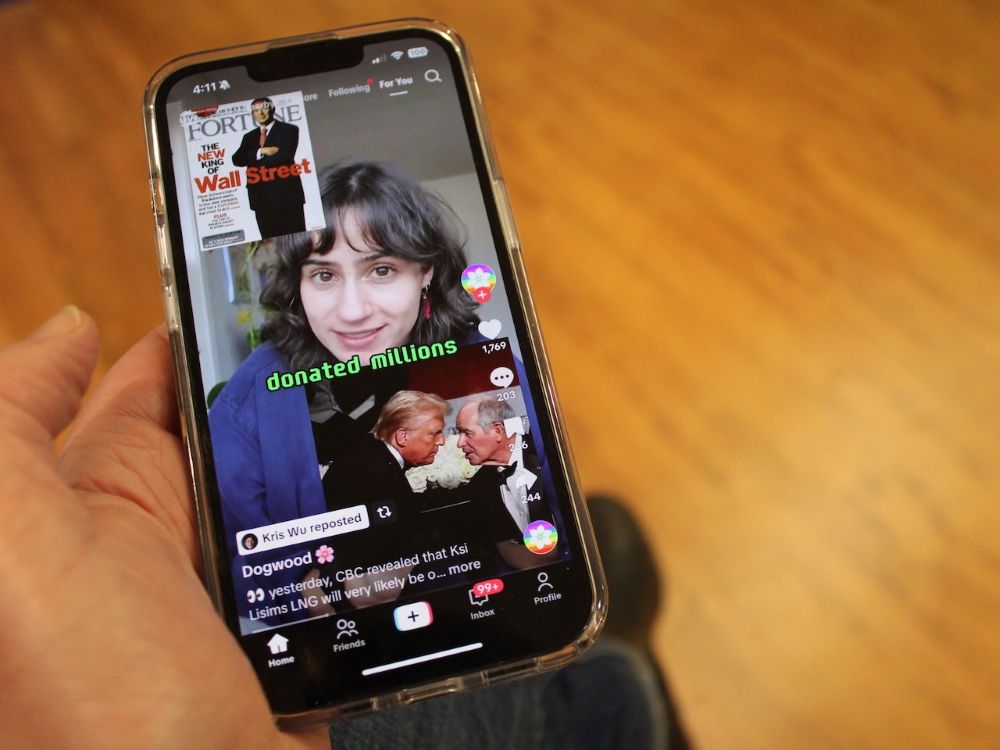
Influencers have overtaken news media and political campaigns in leading public engagement with political issues on social media, according to a study by the Media Ecosystem Observatory.
The study found that during the 2025 federal election, influencers accounted for 47 per cent of political content, compared with 28 per cent from news outlets and 18 per cent from politicians.
The analysis also found that during the B.C. provincial election in 2024, political influencers “generated 63.9 per cent of all engagement” on social media, compared with other accounts — like posts from news outlets and politicians — that were also producing political content.
“Influencers have become the information brokers of the internet, setting the pace for political conversation that traditional political parties, media outlets and advocacy organizations struggle to match,” the report authors say. The Media Ecosystem Observatory is a collaboration between the University of Toronto and McGill University that is “dedicated to analyzing the complex web of online harms and digital threats to democracy.”
Zeynep Pehlivan, a data scientist who worked on the study, emphasized the big role political influencers now play in the online information environment.
“Over half of the political content and nearly two-thirds of all engagement in Canadians’ online information ecosystem are going to influencers,” Pehlivan said.
What exactly is an influencer? They can be an activist, a journalist or a social media user who has carved out an audience niche by creating political posts and videos.
But they tend to be individual content creators rather than an organization, although some are journalists or academics who are employed by large organizations.
Political influencers produce frequent content and have a growing power to shape public debate.
They also move quickly, often using commentary and strong emotion — including “call outs and mockery” — to push out content that conventional journalism would be slower to produce.
Even though some politicians are adept at using social media and produce a lot of content, the researchers did not define politicians as influencers. The study looked at social media content from January 2024 to July 2025, a period that included five provincial elections and one federal election.
The researchers used an opinion poll survey and data analysis of accounts that focused on politics to develop a picture of how Canadians are getting political information on social media.
“I don’t think we should see it as a kind of a danger or something bad, because this can also open a door to the new opportunities like grassroots mobilization, direct voice, and direct citizen engagement,” said Pehlivan.
But researchers and content consumers need more transparency about how social media algorithms work, Pehlivan said, and how those recommendations are creating echo chambers that can lead to political polarization and increasing misinformation.
The researchers consider a wide array of social media accounts to fall under the umbrella of “political influencers,” from well-known journalists like Chantal Hébert, Andrew Coyne and Elizabeth Renzetti to far-right commentators Keean Bexte and Gad Saad. Other examples included the Indigenous activist and commentator Pam Palmater, the far-left writer Yves Engler and even Quick Dick McDick — a TikTok creator who makes videos about living in Saskatchewan.
In one category called “alternative media politics,” the researchers grouped a number of commentators whose narratives “overlap with U.S. far-right online spaces,” with common themes including “vaccine conspiracies, election fraud and general institutional distrust.”
Younger Canadians are more likely to be getting their news from political influencers accounts. The researchers found that 42 per cent of Canadians are interacting with political content accounts, but that rises to 64 per cent for people 18 to 34.
Across the political spectrum, Canadians are consuming less information from “institutional” sources like political parties and news organizations and are increasingly turning to individual accounts to get information about politics.
This shift is also happening when news organization accounts and news links are banned from Facebook and Instagram, two of the biggest social media platforms, because parent company Meta refuses to comply with a Canadian law that requires platforms to pay news producers for content.
“What influencers are doing, they are adding a kind of a commentary layer,” Pehlivan said.
“They are also emotional and they are native to the digital culture. So their more personalized and more emotional [content] is making people react, to engage, to like, to comment.” ![[Tyee]](/design-article.thetyee.ca/ui/img/yellowblob.png)








Notice about commenting changes
The Tyee’s commenting system will be moving to a new platform on Nov. 12. If you’re already a Tyee commenter you must register with the new system on or after Nov. 12 with your preferred username.More information can be found here.