


 SHARE:
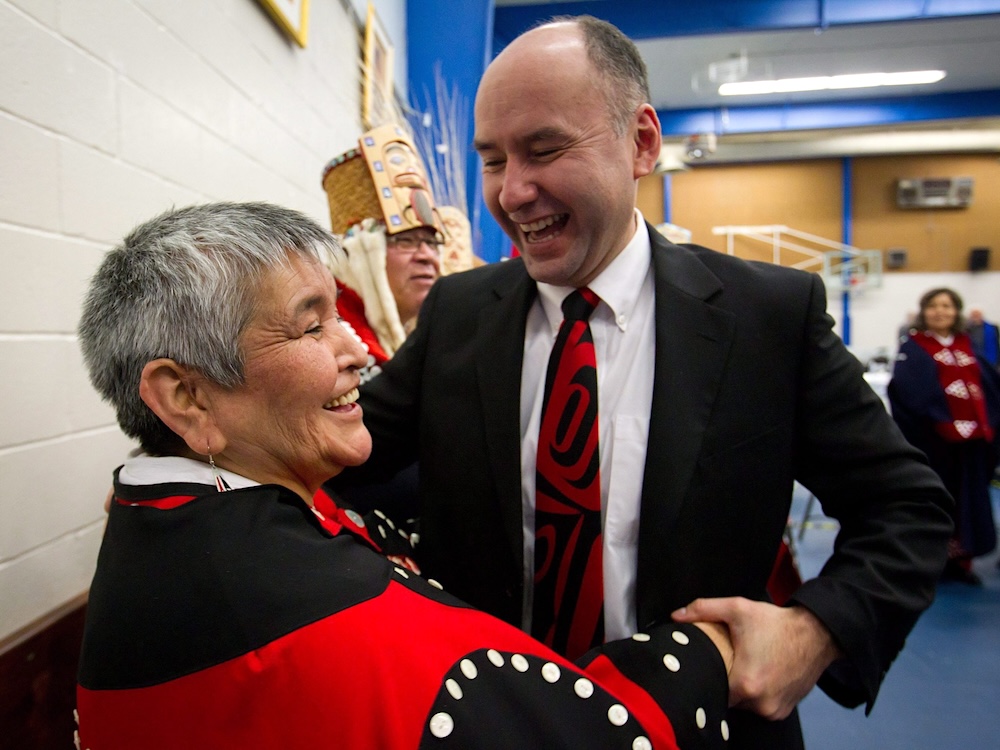
Conservative member of Parliament Ellis Ross stood in the House of Commons Tuesday and took aim at the federal government’s “confusing” position on an oil pipeline to the B.C. coast.
Ross was speaking on a Conservative motion designed to expose division within the federal Liberals by forcing a vote on the government’s recent agreement with Alberta that supports an oil pipeline to the B.C. coast.
But the Conservatives’ motion may also have pushed Ross into a corner.
A decade ago, Ross served as chief councillor for the Haisla Nation and opposed the proposed Northern Gateway pipeline between Alberta and B.C.’s northern coast. Now a federal MP, his Skeena-Bulkley Valley riding is directly in the path of a similar project, and Ross has avoided taking a clear stance on plans for an oil pipeline through the region — even as his party has thrown its forceful support behind such a project.
On Tuesday, Conservatives and Liberals voted along party lines, with Conservatives supporting the motion and the Liberals voting against. Ross sided with his colleagues in support of the motion, which called for “the construction of one or more pipelines... including through an appropriate adjustment to the Oil Tanker Moratorium Act.”
In a debate that preceded the vote, Ross told the House of Commons that Canadians “deserve an answer yes or no” on whether the government supports Alberta’s pipeline plans.
“This is the first opportunity for the Liberals to tell the truth and their intentions to build Canada strong, to turn us into an energy superpower, to turn us into the best-performing country in the G7,” Ross said. “But what we're watching is Liberals argue with Liberals.”
Ross voted in support of the pipeline motion, but he has yet to take a clear position on the memorandum of understanding that Prime Minister Mark Carney signed last month with Alberta Premier Danielle Smith. And one of his predecessors says Ross’s party may have left their own local member of Parliament to reconcile his past positions with his party’s commitments.
‘I’ve never seen this before’
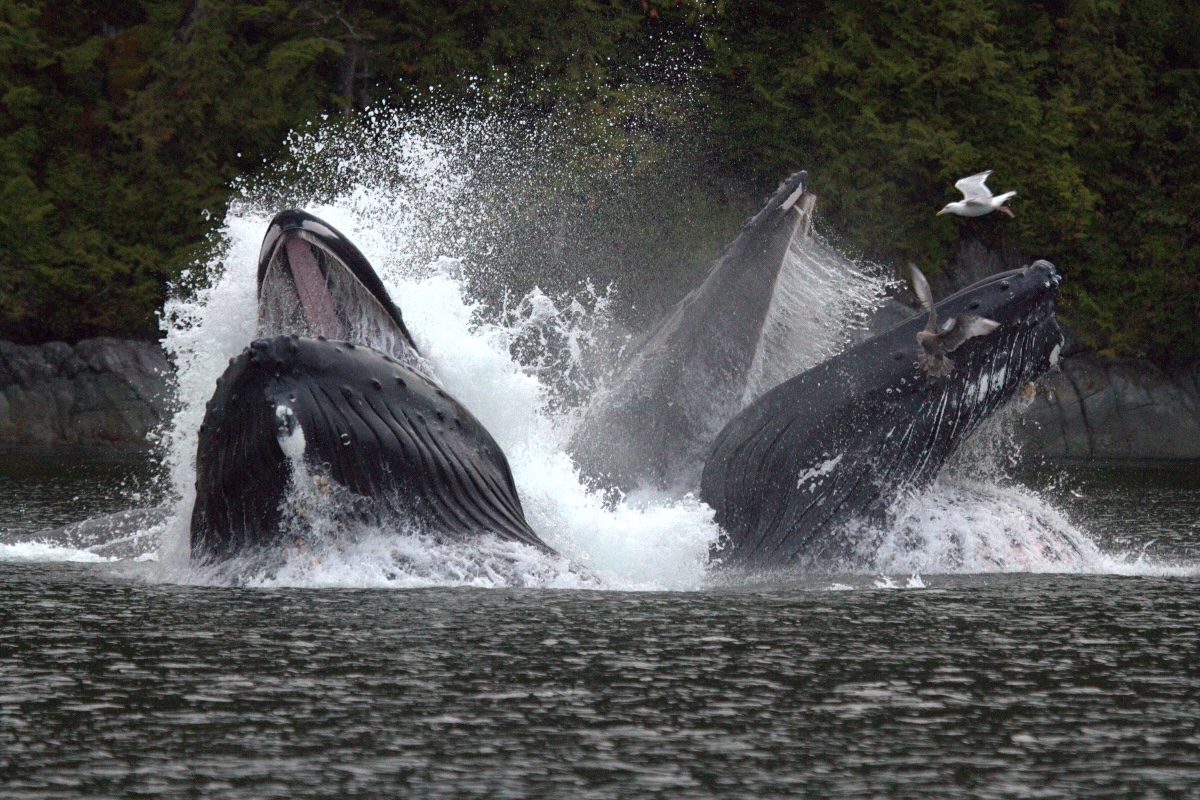
Last month’s memorandum of understanding was met with swift rebuke from B.C. Premier David Eby and coastal First Nations, who said an oil pipeline and associated tanker traffic would put fragile coastal ecosystems and existing economies on the coast at risk.
In a video he recently posted to social media, Ross called the MOU “unusual” and said he would be doing more research before commenting.
“There’s a whole pile of conditions attached to it. I’ve never seen this before. That's why I'm not commenting on this right away,” he said, adding that there was “no proponent” for the project and no defined route. Alberta said it’s preparing an application for the federal Major Projects Office as it seeks a private sector proponent for the project.
“The language keeps changing day to day,” Ross said. “You never know what the government's thinking or doing.”
The Tyee has made multiple attempts to reach Ross and discuss his position on the MOU, which promises to prioritize a bitumen pipeline through northern B.C. and “adjustments” to a long-standing tanker ban on the province’s north coast.
Ross has not yet made himself available for an interview. A Conservative spokesperson who emailed The Tyee in advance of the party’s motion did not respond to a request to speak to Ross.
Communities on B.C.’s north coast have long opposed oil transportation through the region, and several Liberal MPs have expressed concern about the MOU and opposition to the agreement from the provincial government and coastal First Nations.
In a statement last week, the Conservatives highlighted pushback on the MOU from within the Liberal caucus as the reason for forcing a vote in the House of Commons. The statement accused dissenting Liberal MPs of “hiding behind premiers or non-existent vetoes” and called on the party to clearly “declare their support for a pipeline” to the B.C. coast.
The motion included phrasing taken directly from the MOU.
Liberals accused the Conservatives of “cherry-picking” portions of the agreement in their motion while excluding some commitments from Alberta, including pledges to strengthen industrial carbon pricing, reduce methane emissions and commit to “net-zero greenhouse gas emissions by 2050.”
In response to the criticism, Conservative Leader Pierre Poilievre introduced a last-minute amendment Tuesday that added carbon capture, engagement with the B.C. government and Indigenous consultation and project ownership to the motion.
“We in the Conservative caucus are united,” Poilievre said. “We believe that Canada needs a pipeline to the Pacific and that we need to override the discriminatory anti-Canada ban on shipping Canadian energy overseas.”
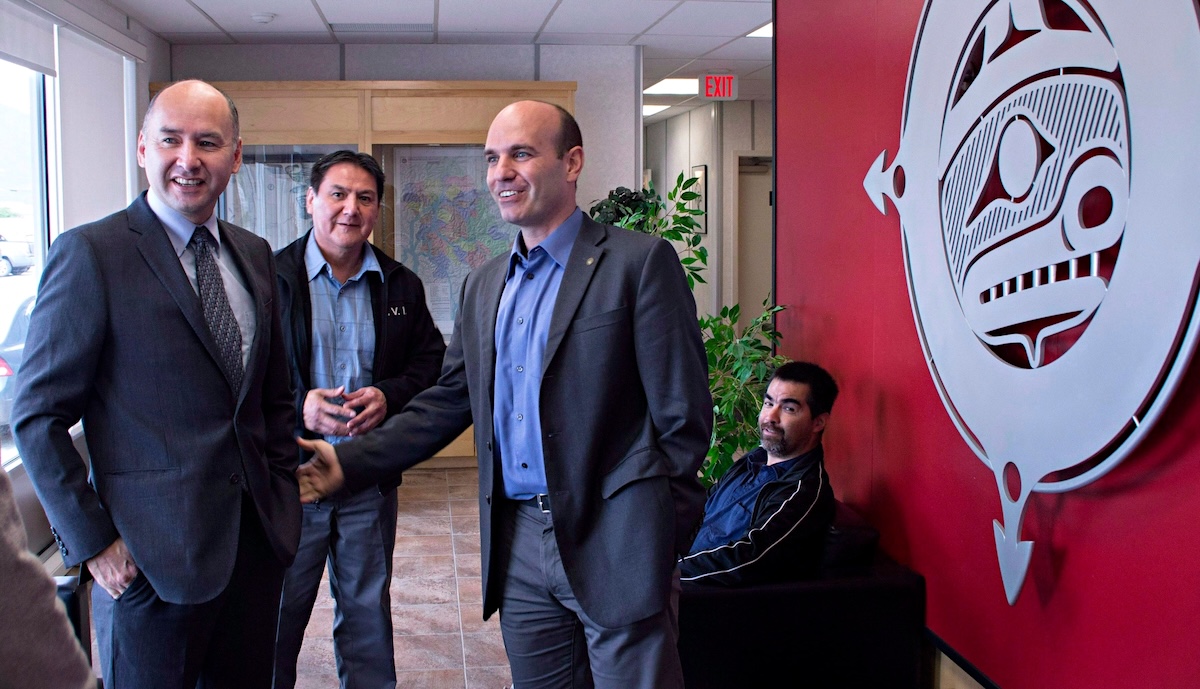
Nathan Cullen, who spent 15 years representing the Skeena-Bulkley Valley riding as an NDP MP, described Tuesday’s motion as a “pressure campaign on the entire B.C. Liberal caucus — and one Conservative MP.”
“I understand the power of party politics, but if it means going back on who you are and lying to people that put you there, then it isn’t worth it,” Cullen said in an interview with The Tyee.
Cullen could relate to Ross’s position. He recalled voting against his party on the federal firearms registry 15 years ago, a decision he said was “about keeping my word” to constituents.
But he described a “different party culture” within the Conservative party.
“I don’t think they considered Ellis [Ross] at all,” he said. “He ran for a party that campaigned on putting our coasts at risk. He should be known for what he thinks about that, I think. It’s only fair.”
A long history of opposition
A bitumen pipeline from the oilsands through northern B.C. has long been sought by Alberta but has faced fierce opposition from communities on the west coast.
In 2008, Calgary-based Enbridge proposed the Northern Gateway pipeline, which would have carried diluted bitumen from the oilsands to B.C.’s coast at Kitimat. The project was roundly opposed in the region, including by the Haisla Nation on whose traditional territory the export terminal would have been built.
As Haisla Nation chief councillor, Ross told a federal joint review panel looking at the project in 2010 that “projects like the Northern Gateway pipeline project cannot be simply imposed on our territory without meaningful consultation first taking place.”
“The result of such consultation may be that the potential adverse impacts of the proposed project are so extreme that for the project to proceed would be an illegal and unjustified infringement of our rights,” he said. “The Haisla Nation is not here as a stakeholder. We are here with constitutionally protected rights.”
Northern Gateway’s federal approval was overturned in 2016 by the Federal Court of Appeal, which found that the government had not adequately consulted First Nations. The project was cancelled by former prime minister Justin Trudeau later that year.
The Haisla and other coastal First Nations continue to oppose the project.
In a joint statement issued last month by current Haisla Chief Councillor Maureen Nyce and Kitimat Mayor Phil Germuth, the coastal communities said their positions haven’t changed — something they added was clearly conveyed in a call with Alberta Premier Danielle Smith.
“Over a decade ago the community of Kitimat voted to oppose the Northern Gateway project,” the statement said. “The Haisla Nation, who were firmly against that proposal at that time, still maintain that same position today regarding an oil pipeline and export facility in their territory.”
B.C. coastal First Nations leaders were in Ottawa for Tuesday’s vote, saying they had made the trip because they were excluded from Canada’s discussions with Alberta over its pipeline plans.
Haida Nation President Gaagwiis Jason Alsop said that Tuesday’s motion “ignores the important duty to consult and the need to work together and reach consent” from nations affected by a pipeline.
He called on MPs to “stand with the coastal First Nations to uphold the Oil Tanker Moratorium Act to protect our coast, our coastal economy, our way of life, from the catastrophic risks of an oil spill.”
Asked about Ross’s support for the motion, Gaagwiis encouraged the MP to “talk to the people in the riding, to visit the communities, the nations.”
“It's not just our Indigenous governments who are opposed to this project,” he said, adding that Haida elected leaders and local municipalities are also aligned. “I think it's important that the MP really represents all the voices in the riding and not just the party position.”
Coastal First Nations, an alliance of nine nations in the region, has continued to oppose oil tankers, saying it could affect thousands of existing jobs and billions of dollars in economic activity.
“Any discussions around an exemption to the current ban on oil tankers triggers the Honour of the Crown and requires our consent,” Coastal First Nations CEO Christine Smith-Martin said.
On Tuesday, as debate on the Conservative motion neared its conclusion after nearly seven hours, Ross asked Wade Grant, the Liberal MP for Vancouver Quadra and a member of the Musqueam Nation, why there had been “no involvement of First Nations” during eight months of discussions with Alberta on the MOU.
Grant responded that conversations with First Nations “are going to be important as we move forward.” He then put the question back on Ross.
“I’d like to ask the member opposite, who represents many of those coastal First Nations in northwestern British Columbia, if he goes and speaks to them about how they want him to vote on the MOU,” Grant said.
Ross didn’t answer the question. The motion was defeated with only Conservatives voting in favour.
*Story updated on Dec. 11 at 8:15 a.m. to clarify the position of Coastal First Nations. ![[Tyee]](/design-article.thetyee.ca/ui/img/yellowblob.png)
Read more: Indigenous, Energy, Politics, Environment









Notice about commenting changes
The Tyee’s commenting system will be moving to a new platform on Nov. 12. If you’re already a Tyee commenter you must register with the new system on or after Nov. 12 with your preferred username.More information can be found here.