
 SHARE:

The RCMP is asking the Federal Court to overturn a finding that its officers discriminated against Indigenous people when they investigated historical abuse allegations at two northern B.C. schools.
The force says the decision infringes on police independence — and that police investigations are not a “service” under Canadian human rights law.
Last month, the Canadian Human Rights Tribunal ruled that race and ethnic origin were likely factors “in some of the adverse differential treatment or denial of service” experienced by First Nations former students who shared accounts of physical, sexual and emotional abuse with police during an investigation more than a decade ago.
On April 1, the RCMP filed an application for judicial review of the decision. In the appeal, a federal Department of Justice lawyer wrote that the tribunal strayed beyond its jurisdiction in determining that RCMP criminal investigations constitute a “service... customarily available to the public” under the Canadian Human Rights Act.
The force is arguing that investigations are a public good, not an individual service, and is asking for the court to quash the entire ruling.
“Core law enforcement functions such as decisions made by police in the course of a criminal investigation are not a ‘benefit’ extended to any individual member of the public but rather are in the general public interest,” Department of Justice lawyer Whitney Dunn wrote in the application. Dunn also represented the RCMP at the inquiry, which held hearings from May 2023 until February 2024.
Dunn said complaints against the RCMP should be handled and adjudicated by the Civilian Review and Complaints Commission and the courts, rather than the tribunal.
One legal expert told The Tyee she has heard that argument before.
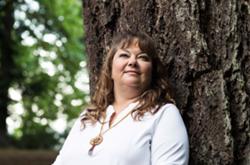
Jessica Buffalo, an assistant professor at the University of British Columbia’s Peter A. Allard School of Law, said the RCMP’s appeal fits a pattern of resistance within the force to changes in policing.
Buffalo is not involved in the tribunal case, but she said it’s similar to others she’s worked on, including in her role as academic director at the Indigenous Community Legal Clinic, which pairs UBC law students with Indigenous people seeking free legal advice in Vancouver’s Downtown Eastside.
The clinic is currently handling a case against the RCMP that’s before the Canadian Human Rights Tribunal, and Buffalo said the tribunal’s ruling will be helpful.
“We get that with other files that we have, too — that ‘No, this is not a human rights issue,’ so I really appreciated the tribunal’s take on that,” said Buffalo, who holds the traditional name Bear Woman and is from Samson Cree Nation.
“This is something that is happening over and over again,” said Buffalo, who disagrees with the argument that police aren’t serving individuals in the course of investigations. “You are providing a service that requires people to come and talk to you, to trust you and be very vulnerable with you.”
She said practices that are discriminatory and make victims feel disbelieved erode trust between Indigenous communities and police.
The complaint that led to the recent tribunal decision was first brought to the Canadian Human Rights Commission by six members of the Lake Babine Nation in 2017. The commission investigated and referred it for inquiry in 2020.
In a statement of particulars filed with the tribunal in June 2020, the complainants wrote that RCMP investigators held “stereotypes and biased attitudes” against Indigenous people that, when coupled with favouritism toward “a powerful non-Indigenous individual,” resulted in a flawed and incomplete investigation, contrary to the Canadian Human Rights Act.
The man at the centre of the allegations was a former gym teacher who taught at Immaculata school in Burns Lake in the late 1960s before moving to Prince George College in the early 1970s. He cannot be identified under a confidentiality order issued by the tribunal in 2022.
At hearings that began in Burns Lake in May 2023, the tribunal heard that a former Immaculata student shared her stories of abuse with the RCMP in July 2012. During the interview, the officer who took the former student’s statement — which included allegations that she had been sexually assaulted by the teacher when she was 11 years old — asked her nearly a dozen times to take a polygraph test, also known as a lie detector test.
Two days later, the RCMP circulated a briefing note about the complaint that described the former teacher as a “well-known Canadian” and said that the allegations, if substantiated, would be “an embarrassment at a number of levels of government.”
The internal document was sent up the chain of command to then-RCMP commissioner Bob Paulson and was also emailed to the accused’s lawyer, according to evidence presented at the inquiry. The RCMP concluded its investigation 18 months later without recommending charges.
While the recent tribunal decision determined that the RCMP investigation did not fall “below the standard of a ‘normal’ police investigation,” it found that police officers had discriminated in several specific ways against some complainants and witnesses, including through the repeated request for a polygraph test.
The discrimination also included the failure by investigators to inform some witnesses of their legal options and the failure to update them on the investigation.
The complainants’ lawyer, Karen Bellehumeur, recently told The Tyee that the tribunal’s finding that RCMP officers discriminated in their investigation may be the first ruling of its kind.
Asked for comment on the appeal, Bellehumeur said in a statement that her clients are “very disappointed” with the RCMP’s judicial challenge to the tribunal decision.
“We view the RCMP’s election to continue this litigation as contradictory to their highly touted objective of seeking reconciliation with Indigenous people,” she said. She added that an “inherent imbalance in resources” to fund the litigation, along with harms from further delaying the case, “results in unfairness to the Indigenous individuals involved and is unbecoming of the national police force.”
The RCMP has also asked the court to quash an order that it pay $7,500 each to four witnesses — those who testified at the inquiry but are not named complainants — regardless of whether the decision is overturned, saying that the financial compensation order breached procedural fairness because the RCMP was unaware that it had to defend itself “against findings of discrimination and compensation awards to the witnesses.”
The RCMP was also ordered to pay $7,500 in compensation to four complainants, including the estates of two complainants who have died since the complaint was filed nearly a decade ago.
While the RCMP’s appeal argued that police oversight should be limited to the Civilian Review and Complaints Commission, or CRCC, and the courts, rather than Canada’s human rights commission or tribunal, the tribunal already ruled on the matter in its original decision.
Colleen Harrington, the tribunal member who heard the case, wrote that oversight by the CRCC “shows that police investigations can be reviewed by an independent body, which can consider issues of discrimination.”
Complaints before the CRCC currently face a lengthy backlog, CBC recently reported. The police watchdog, which investigates public complaints about the RCMP, has been without a chairperson since January 2025.
That has left some investigations lingering with no resolution. In one ongoing case, a years-long investigation into a controversial RCMP policing unit known as the Community-Industry Response Group, or C-IRG, has been completed but cannot be finalized until the federal government appoints a new chair — something the Public Safety Ministry said last October it was in the process of doing. More than five months later, the government has still not announced a new chair for the CRCC.
Buffalo said she believes the RCMP is appealing the tribunal decision in an effort to quash a legal precedent that could open the door to significant changes within the force.
She said those changes would benefit everyone.
“There’s that resistance, I’m assuming, because they believe that there’s going to be even more change. There’s going to be more of a burden,” she said. “But, actually, in the end it’s going to end up making everything a lot better.”
We have closed comments for this story due to the legal situation in relation to the piece. Thanks for your understanding. ![[Tyee]](/design-article.thetyee.ca/ui/img/yellowblob.png)
Read more: Rights + Justice