


 SHARE:
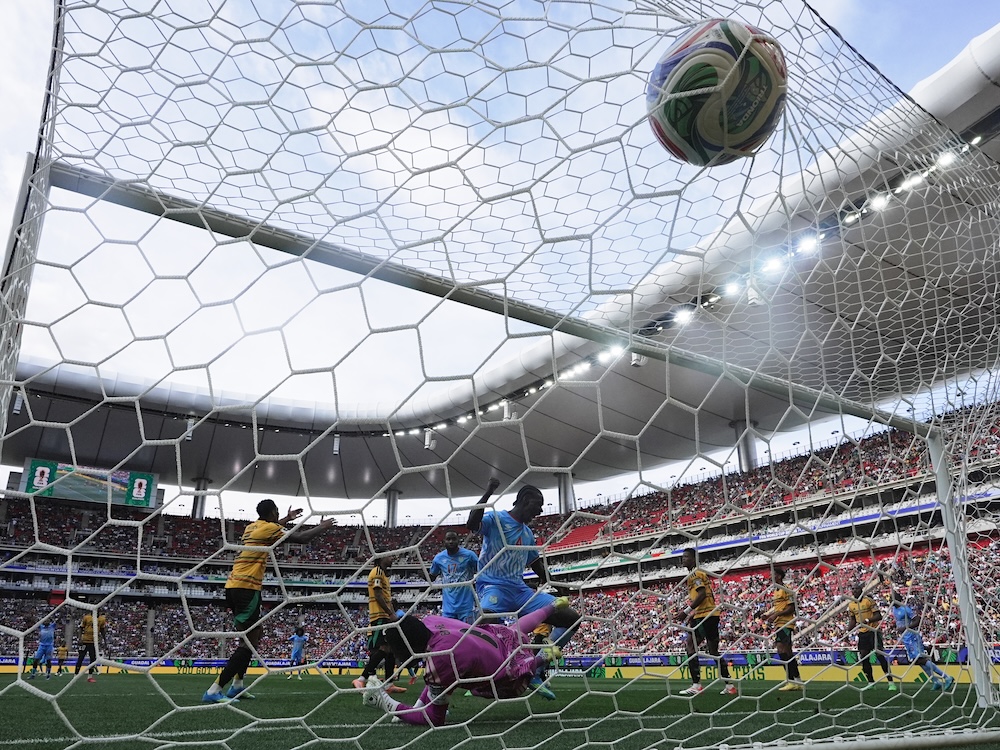
Growing up in Mexico, Sergio Meana listened to his father describe memories of the World Cup being played in the country in 1970 and 1986.
Meana, who today lives and works in Mexico City, couldn’t imagine it happening again. After all, no country has ever hosted the world’s largest sporting event three times, and Mexico didn’t seem like an obvious upcoming destination.
So he and many others were enthusiastic in 2018 when FIFA announced it had chosen Mexico, the United States and Canada to host the 2026 World Cup.
“The news came with great excitement,” Meana recently told The Tyee from Mexico City.
Eight years later, some of the joy remains — but it has also been joined by feelings of anxiety, frustration and sometimes anger as the country prepares to welcome the world. The host cities of Guadalajara, Mexico City and Monterrey feel like continuous construction zones, and traffic is even more of a nightmare than normal in many places.
“People, we arrive at Mexico City’s international airport and we think, ‘This is a complete mess. It’s a disaster,’” Meana said.
Across North America, the world’s most global tournament has suddenly become a very local matter.
Americans are fretting about public transit.
Canadians are obsessed with governmental spending and FIFA’s weird rules.
And Mexicans are worried about getting everything done on time.
In 2018, Mexico, Canada and the United States celebrated a global partnership to jointly welcome the world to North America.
But today, as the tournament rapidly approaches, geopolitics, a disruptive U.S. president, an unpopular international sporting organization and local realities have combined to leave the three hosts and their residents focused less on teamwork and more on their own affairs.
And just as the act of hosting Christmas might shine a light on familial tensions, the impending arrival of the World Cup provides a peek at how Canada, Mexico and the United States feel not just about soccer, but about their governments — and their neighbours.
The procrastinators
For Meana, the upcoming World Cup is an opportunity for Mexicans to demonstrate why they’re so famous for their hospitality.
“I think we coined the phrase ‘Mi casa, su casa,’ so we love to have people here,” Meana told The Tyee. But like any host who cares about putting on a good show, hospitality brings pressure — and a desire to do as much as possible to spruce up the place in preparation for visitors. That has brought more than a few headaches for locals in the form of massive construction projects, especially surrounding the airports in host cities.
“The parts that are ready are looking pretty fine, they look good, but we complain a lot about our government and how they started all the repairs so late,” Meana said.
Traffic in Mexico’s host cities can be an endurance sport at the best of times, and this spring has not been the best of times. In particular around the airport, traffic has been a slog.
In Mexico City, incoming tourists are greeted by the buzz of saws, said Adam Williams, a U.S. journalist who has lived in Mexico City for more than a decade. It’s a “big, hot mess,” he told The Tyee.
Elsewhere, potholes are being filled and roads improved. In Monterrey, authorities are building a new monorail that isn’t expected to be fully ready by the start of the World Cup, although limited service may be possible in some areas.
Then there is the matter of the U.S. president, and the shadow Donald Trump’s policies and rhetoric have cast over the relationship between Mexico and the United States.
“I definitely don’t sense a unifying vibe, like ‘Oh, we’re North American and we’re hosting this together,’” Williams said.
Adding to the stress was violence in the Guadalajara area following the killing of a drug kingpin in February. No tourists were killed following the incidents, but they made international news and increased local angst, Williams said.
“A joke here after that arrest was ‘Why don’t we just have Canada host this alone?’”
The doubting cheapskates
Canada, though, doesn’t actually seem all that excited by the upcoming World Cup. Instead, like a host gritting their teeth at the cost of appetizers, much of the pre-tournament discussion has surrounded how expensive it is to host 13 soccer games — an estimated $1 billion.
Of that billion, about $128 million is going towards updating Vancouver’s BC Place stadium, Toronto’s BMO Field and a handful of other infrastructure projects that could be considered capital costs with long-term benefits. But one of the selling points of Canada hosting games was the lack of new infrastructure that would need to be built, and so most spending will be to facilitate security and other activities specifically related to the games.
British Columbia’s provincial government has said the spending will bring matching economic benefits to Canada. For many, the finances, not the games themselves, are what will determine the World Cup to be a local success.
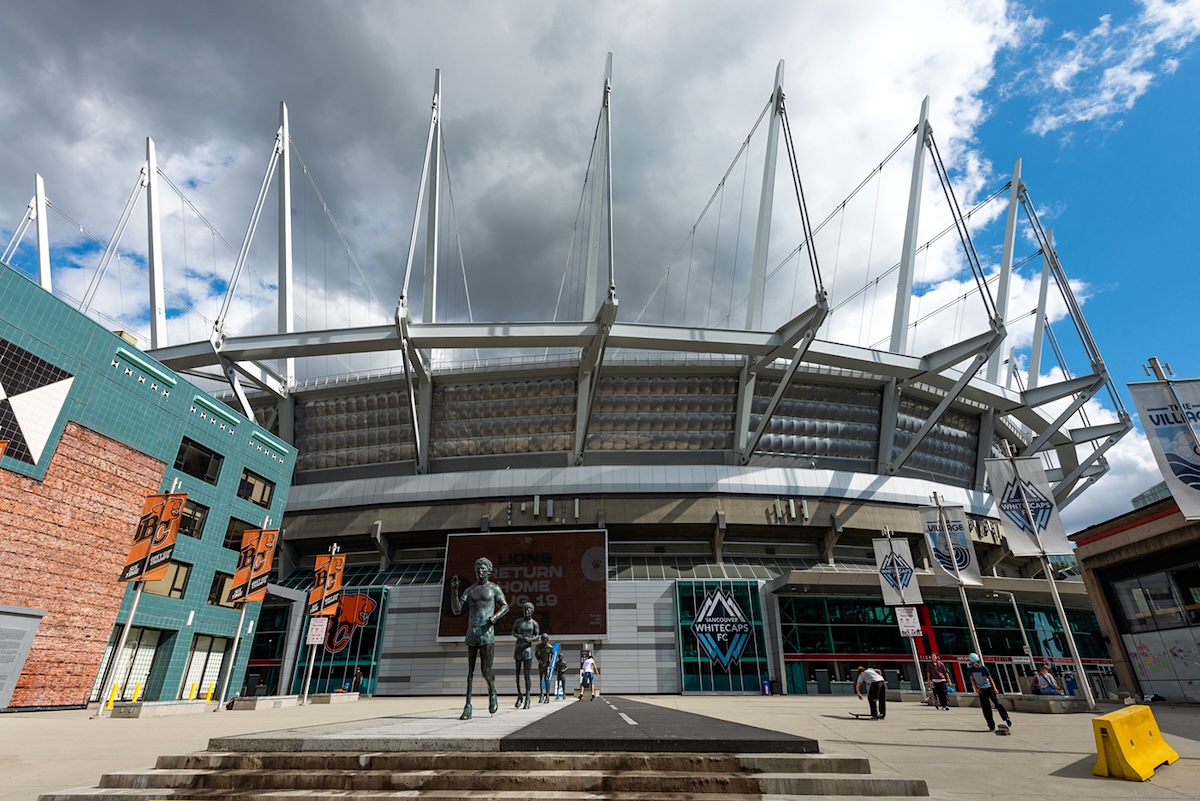
In Vancouver, one recent survey found 56 per cent of respondents supported the city hosting World Cup games. But another poll last November found most people thought the World Cup would be worth the expense only if governments broke even.
Augmenting cost concerns, FIFA has faced tensions and criticisms from locals.
In April, Vancouver police denied a request for FIFA’s president to be given a formal motorcade on par with that of heads of state. FIFA recently kicked the BC Sports Hall of Fame out of its space in BC Place. And in May, advocates and residents of the Downtown Eastside said they worried the event would lead to a crackdown on low-income people within the two-kilometre “game zone” around BC Place.
“I know of one person who is part of our group, who was told back in February... that he had to move because there was a no-go zone,” housing advocate Fiona York recently told The Tyee.
Meanwhile, officials say that June hotel bookings have declined from last year, despite the upcoming games.
People will show up, the province insists. But the excitement is not yet palpable.
While many tickets have been sold, most were bought in lotteries before the teams playing in the individual games were determined. That has left fans with tickets to watch teams they don’t really care about.
The feuding family
Then there’s the United States, where the vast majority of games will be hosted.
Instead of spotlighting its close relationship with its neighbours, the World Cup has served only to highlight the country’s alienation from much of the world community.
President Donald Trump’s rhetorical jabs at Mexico and Canada have soured the vibes associated with jointly hosting the games. And his immigration policies have posed an ongoing and constant concern for individuals and organizers alike.
Williams, whose wife is Mexican, said Mexicans who travel between the two countries have seen the changes first-hand.
“Every time we go through customs, it’s like, ‘Brace yourself,’” he said. “It’s like, ‘What are they going to ask us this time?’”
Last month, Amnesty International issued a travel advisory for the United States, warning that visitors — especially those from minority groups or who are LGBTQ+ — could be arbitrarily detained or deported. Last October, Canada issued its own warning for travellers with gender-neutral passports.
The location of many games at far-flung stadiums has also been highlighted, with European travellers who are habituated to walking to matches being warned that many game locations have no pedestrian access.
There have also been quarrels between different jurisdictions. Games in the New York area, including the final, will actually be held in New Jersey, and that state has decided to hike the cost of train tickets on game days, with the governor arguing that the state shouldn’t be subsidizing World Cup transportation. Some of those fees have been cut following a backlash, but they remain far higher than the normal cost to take the train.
Ticket cost angst, but excitement too
More broadly, fans are irate about ticket prices, which vastly exceed those of previous tournaments. European organizations have accused FIFA of a “monumental betrayal.” FIFA, meanwhile, has insisted the prices align with what the market is willing to pay.
In Mexico, Meana said local fans are eyeing their neighbours as the culprit — people in the United States are used to paying top dollar to attend events.
“I don’t have tickets because the ones I saw were, I think, $4,000 for the inaugural game,” Meana said.
Still, despite traffic, ticket prices and difficult neighbours, Meana is excited about the arrival of an event he once thought he’d never see again in his country.
“I’m really looking forward to the atmosphere and the ambience of a party and a World Cup in Mexico,” he said.
And he hopes others will find joy in his country.
“The people that come here into Mexico, they can be sure Mexicans will treat them the best way possible.” ![[Tyee]](/design-article.thetyee.ca/ui/img/yellowblob.png)








Tyee Commenting Guidelines
Please note that email notifications for replies are not currently working due to a software issue which may be resolved in a future update.
Comments that violate guidelines risk being deleted, and violations may result in a temporary or permanent user ban. Maintain the spirit of good conversation to stay in the discussion and be patient with moderators. Comments are reviewed regularly but not in real time.
Do:
Do not: