



 SHARE:
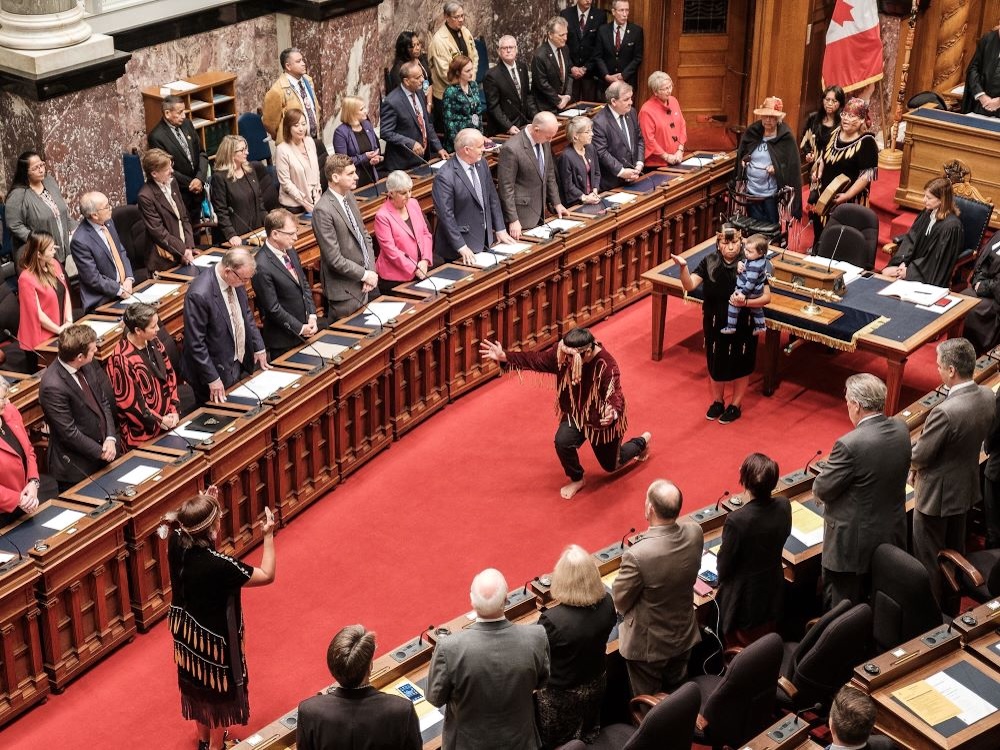
[Editor’s note: This piece is part of a series of writing in The Tyee to mark the National Day for Truth and Reconciliation and the 10-year anniversary of the release of the Truth and Reconciliation Commission of Canada’s 94 Calls to Action.]
How much do we value our heritage in British Columbia? And how can we do a better job of preserving it?
Those questions are at the heart of a years-long process of revising the Heritage Conservation Act, or HCA. That the act needs to be modernized is beyond question. It is over three decades since it was last amended, and the law has not done a good job of protecting heritage property in B.C.
For years, First Nations have been advocating with the B.C. government to change it, and that is now happening and has been over the past four years. The process has been public and transparent, and anyone who wants to get involved in having a say can do so.
If we value our heritage in B.C. we need to update the legal framework thoughtfully, without fear or alarm, and work on what that looks like.
First Nations for many years have wanted changes to the HCA because for too long we have watched our sacred, heritage and cultural sites and objects negatively impacted or destroyed as a result of decisions made by the B.C. archeology branch. For example, Site C destroyed over 330 recorded archeological sites, and construction at Poets Cove destroyed an ancient First Nations village including a burial site.
The HCA is now going through the process of being amended in partnership with B.C. and First Nations while engaging local governments and other interested organizations and parties at every phase.
The transformation of the HCA is intended to be grounded in alignment with the United Nations Declaration on the Rights of Indigenous Peoples, or UNDRIP, and B.C.’s Declaration on the Rights of Indigenous Peoples Act, or DRIPA. Section 3 of DRIPA and Article 19 of UNDRIP require that legislative changes that affect Indigenous Peoples be developed through consultation and co-operation with First Nations. That is exactly what this process aims to do, plus advance reconciliation with Indigenous Peoples.
One intended outcome of amending the HCA is to enhance First Nations’ role in decisions on Crown land that affect their heritage and ensure permitting efficiency, process certainty and transparency, while promoting responsible stewardship.
Towards a clearer approach
Amending the HCA is not just for First Nations; it is for all communities, to protect their valued heritage and history. For property owners, local governments and businesses, this means more process certainty, fewer delays and faster decisions when building a home, rebuilding after a disaster or starting a new project. For everyone, the HCA needs to be modernized, streamlined and more efficient.
The first two phases of the amending process included engagements with the public and First Nations. All feedback from both phases was documented, and that is what has guided the work of what is called the Heritage Conservation Act Transformation Project, or HCATP.
Stage 3 of the amending process is now being led by representatives appointed by the First Nations Leadership Council and B.C. and has been a collaborative effort. This phase is to inform the request for legislation targeting late fall 2025 and legislative drafting.
There has been no legislative drafting, so there is still lots of time to have input.
Six themes
The purpose of the Heritage Conservation Act is to “encourage and facilitate the protection and conservation of heritage property in British Columbia.” It does the following:
- Establishes the provincial heritage register and criteria for heritage protections
- Regulates work at sites with historical or archeological value, including authorizing permits to look for or work within heritage sites, and compliance and enforcement
- Enables the minister to enter into agreements with First Nations for the purposes of the act, subject to certain process requirements
Analyzing the HCA as it now is, and looking for changes, there are six key policy themes for this phase:
- Indigenous rights and values
- Shared decision-making agreements
- Permitting and decision-making
- Protections
- Due diligence
- Compliance and enforcement
These six policy themes cannot be reviewed in any comprehensive way here, but I will highlight some of the important areas.
The HCA, since at least 1960, applies on both Crown and private lands. That won’t change with amendments to the act. While shared decision-making with First Nations can apply on Crown lands, it will not apply on private lands.
The HCA automatically protects a range of sites that contain physical evidence of how and where people have lived. However, not all heritage sites of significance to communities have archeological evidence.
Heritage is wide-ranging in its appreciation by all peoples, and an expanded definition of “heritage” is proposed to reflect that it includes intangible heritage. However, this expanded definition will not increase the scope of what is automatically protected under the HCA.
Under the current HCA, sites that are not automatically protected, such as sacred or spiritual places, can be protected through agreements between First Nations and the province or through formal designations. These tools will continue to exist in the modernized HCA and still be subject to analysis of potential impacts on affected interests prior to those decisions being made.
All cultures revere intangible heritage linked to our landscapes by way of places such as memorial battlefield sites and features of the land that carry historic significance, not needing to be created or modified by human activity. For example, national historic sites and the provincial and national park systems embody significant intangible heritage sites.
For First Nations, Bear Mountain is a good example of an intangible site. A sacred cave that was used for spiritual purposes showed no sign of use as that is how a sacred site is used, leaving no trace. And yet, as archeologists could find no physical proof of use, the sacred cave was allowed to be destroyed. The local First Nation had not revealed to the province that the site was sacred because the nation wanted to protect it by keeping its whereabouts confidential. The sacred site’s destruction was devastating to the First Nation. This is what we want to avoid in the future.
Strengthening the process
The proposal to require review of recorded heritage sites on private land developments is in the best interest of such landholders/developers, strengthening the current due diligence process, which has proved to be problematic at times since protected heritage sites are not included in that process with local governments at this time. This builds awareness of existing limitations on land use.
The HCATP is not a threat but an advancement in the development of the HCA based on the experiences of many. We are learning from these experiences and making recommended changes, furthering and improving relationships with heritage of Indigenous and all peoples throughout B.C.
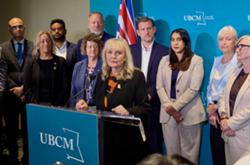
The Union of BC Municipalities issued a press release Sept. 25 asking B.C. to pause the process on the HCA. They claim that they have not been consulted and have not played a key role, and that their level of involvement should equal that of First Nations. They claim their involvement has so far consisted of one three-hour session, when in fact UBCM members have been involved in engagements through all the phases.
UBCM seems to forget that First Nations have rights that are protected under Section 35 of the federal Constitution Act of 1982 and that the B.C. government has obligations to bring HCA in line with UNDRIP.
Given that First Nations, unlike UBCM members, hold these rights to consultation guaranteed by federal law, it stands to reason that the level of engagement for First Nations would exceed that for UBCM members.
In any case, such consultations should be carried out in the spirit of reconciliation. Meaningful consultation with local governments is happening now. B.C.’s government and the working group welcome input from local governments at this stage. This is their opportunity to do so.
Premier David Eby has decided to extend the engagement session by six weeks. My hope is we can still make the spring legislative schedule and finally get a workable HCA for all.
The engagement process is getting good ideas and feedback in some of the engagement sessions that is helping evolve and inform policy work. I encourage everyone to get involved, learn what is being proposed and add to it.
So, let’s return to the original question. How much do we value our heritage in B.C.?
I hope we value it a lot and that people take time to review the material in Phase 3 so we can put forward good proposals for legislative amendments. There is space right now for recommendations, and getting your input in means the heritage you and others value can be protected and conserved for future generations.
Let’s all take responsibility for ensuring our heritage is well protected and conserved. ![[Tyee]](/design-article.thetyee.ca/ui/img/yellowblob.png)
Read more: Indigenous, Rights + Justice










Tyee Commenting Guidelines
Please note that email notifications for replies are not currently working due to a software issue which may be resolved in a future update.
Comments that violate guidelines risk being deleted, and violations may result in a temporary or permanent user ban. Maintain the spirit of good conversation to stay in the discussion and be patient with moderators. Comments are reviewed regularly but not in real time.
Do:
Do not: