

 SHARE:
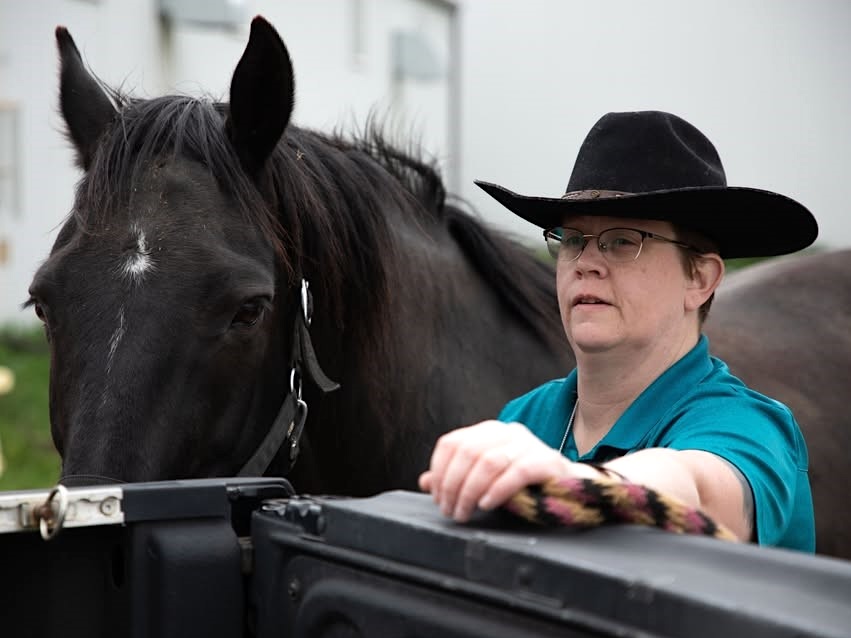
On the face of it, Bonnie Critchley is an unlikely giant killer.
First, she is a rookie politician who is running as an Independent. And she is facing Pierre Poilievre, a national party leader with two decades of experience in federal politics.
Second, Bonnie Critchley is a gay woman running in rural Alberta, the most socially conservative province in the country. Her candidacy has raised a vile ruckus on social media. It forced Critchley to recently reassure Canadians that there have been no death threats against her or her team. The attacks are all the work of internet trolls she called “keyboard warriors.”
“It’s honestly not a thing. I have been door knocking since Day 1 and all of my neighbours, whether they agree with me or not, have been fantastic.... Every conversation has ended with a smile and a handshake,” she said in an Instagram statement.
And then there is the riding Critchley is contesting, Battle River-Crowfoot. The Conservatives have crushed all comers by striking margins in recent federal elections.
The Conservative Party of Canada ran the table with 85.5 per cent of the vote in 2019, 71.4 per cent in 2021 and 82.8 per cent in 2025. By comparison, the Liberals got just over four per cent of the vote in 2019 and 2021, and 11.7 per cent in 2025. If the mainstream parties can’t get votes in this riding it will be even tougher for Independents.
Nor will it help that there are more than 130 candidates on the ballot — part of a continuing protest sponsored by the Longest Ballot Committee against Canada’s first-past-the-post electoral system.
Battle River-Crowfoot is so dyed-in-the-wool Tory blue that the polling agency 338Canada puts the likelihood of Pierre Poilievre winning the riding at 99 per cent.
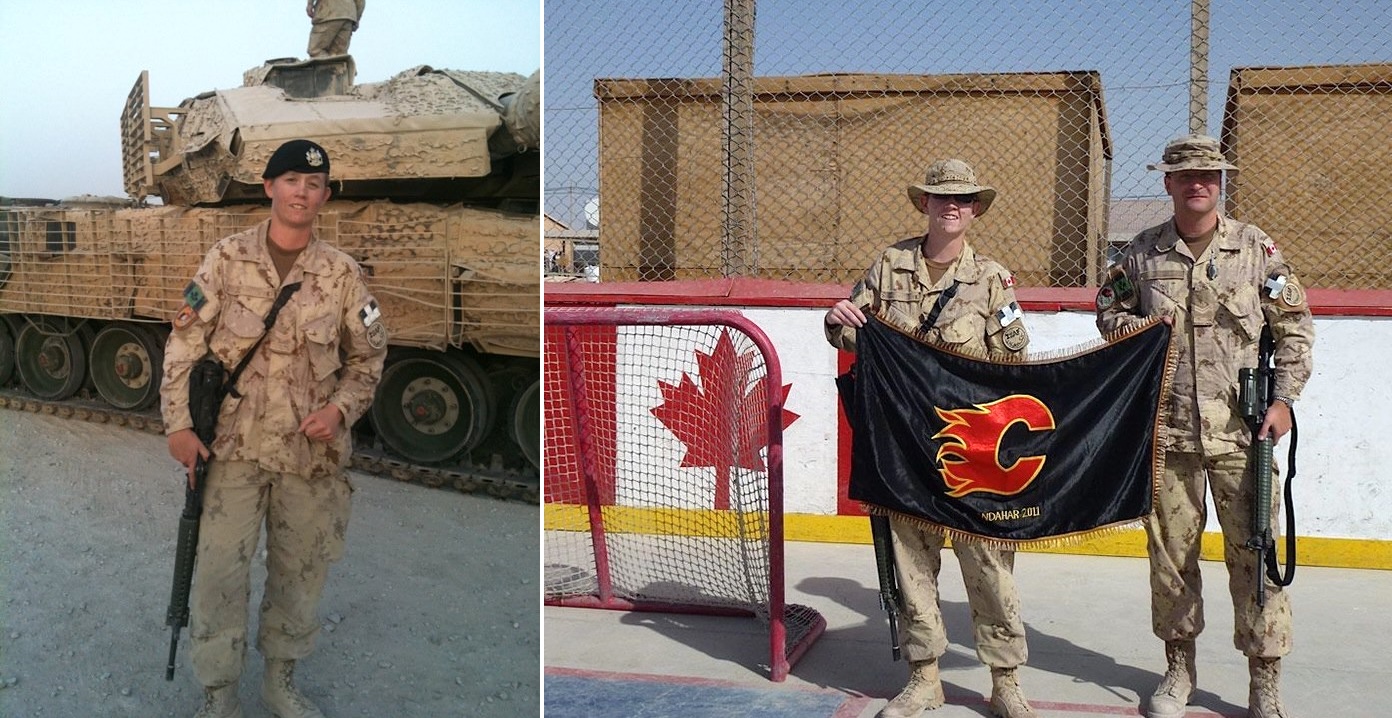
That said, Bonnie Critchley is not a person to shy away from a daunting fight. She is a fifth-generation, 22-year military veteran. She made history as one of the first women to serve in a Canadian combat arms unit, deployed to Afghanistan in 2011 and earned promotion to master corporal.
The cover of her media kit cuts straight to the question she must answer for voters. “Who the heck is Bonnie Critchley?”
The answer is complex. She is the veteran who returned from her combat deployment suffering from operational stress injury.
In the immediate aftermath of her service, she was an irritable insomniac who avoided crowds and fireworks after months of coming under enemy rocket attacks. In her own words, Critchley said she came back from Afghanistan with the “attention span of a squirrel and the focus of a goldfish.”
But she didn’t succumb to her ordeal. Instead, she put it to good use. Despite a diagnosis of a major depressive disorder and anxiety in 2012, Critchley reached out to help others. She volunteered to assist returning veterans when suicide rates were soaring among that group. She was one of the few who had first-hand knowledge of what these returning soldiers were going through. Critchley used horses to help the guys deal with post-traumatic stress disorder.
Critchley’s politics are nuanced. She doesn’t have much time for the partisan game and describes herself as a “centrist” who sees valid arguments from the political right and left.
One of the main reasons she was first out of the blocks to take on Poilievre is how he came to run in the riding. After losing his long-held seat in Ontario’s Carleton riding, he apparently decided to run in Critchley’s backyard because Battle River-Crowfoot voted so overwhelmingly Conservative and its MP, Damien Kurek, volunteered to step aside for the party leader.
“It didn’t sit right with me, and somebody should do something about it,” Critchley said. “Me being the old soldier I am, I said, ‘Well, I guess that somebody is me.’ And here I am.”
Critchley elaborates on her website: “Pierre Poilievre should not be allowed to lose his riding and then come here to remove our duly elected and sworn-in member of Parliament, just so he can run again. To him, Battle River-Crowfoot’s nothing more than a means to an end, and under his leadership, the riding risks losing its chance to be truly heard in Parliament.”
On gender politics and LGBTQ+ rights, Critchley says that no group has the right to impose its will over another. “Respect and dignity must be at the core of how we treat each other.” She believes that government should have no role in regulating how people manage their bodies.
Critchley stands for “common sense” gun laws aimed at keeping communities safe. She believes that “responsible gun ownership is a way of life in Alberta.” She also believes that family farms are the backbone of their communities and should not be phased out by the kind of corporate consolidation that creates mega-farms.
How does she feel about Alberta leaving Confederation? Although she says she understands why many Albertans are frustrated with Ottawa, she is passionately committed to the country, as she made clear in an interview with Red Deer News Now: “I have buried far too many friends under a Canadian flag to ever agree to separatism.”
As for running as an Independent, Critchley sees an advantage rather than a drawback. She can truly represent the community where she lives without being bound by party lines. And in a minority Parliament, her swing vote could be crucial in either keeping the Liberal government in power or not.
So what is the old soldier turned would-be MP hearing at the door? Her neighbours are tired and angry, and the “angry guy” from Ottawa with all his overheated rhetoric isn’t helping.
“People are struggling, living paycheque to paycheque, and now we have another $2-million byelection so that guy who was fired by his previous constituency can run here, and we lose our guy.”
Local voters are very engaged and care about the democratic process. All seats are booked for a candidate debate tomorrow, July 29.
Despite the tremendous odds in his favour, Poilievre, with or without the cowboy hat, faces a reckoning on Aug. 18.
Should he lose, his political career would be over.
But winning isn’t all that is on the table.
If Poilievre comes out on top, his margin of victory will be immediately compared with that of the man who stepped aside to allow him to run.
If that number is lower than this spring’s vote for Kurek, it will reflect badly on Poilievre’s national appeal — just a few months before he faces a leadership review by his own party.
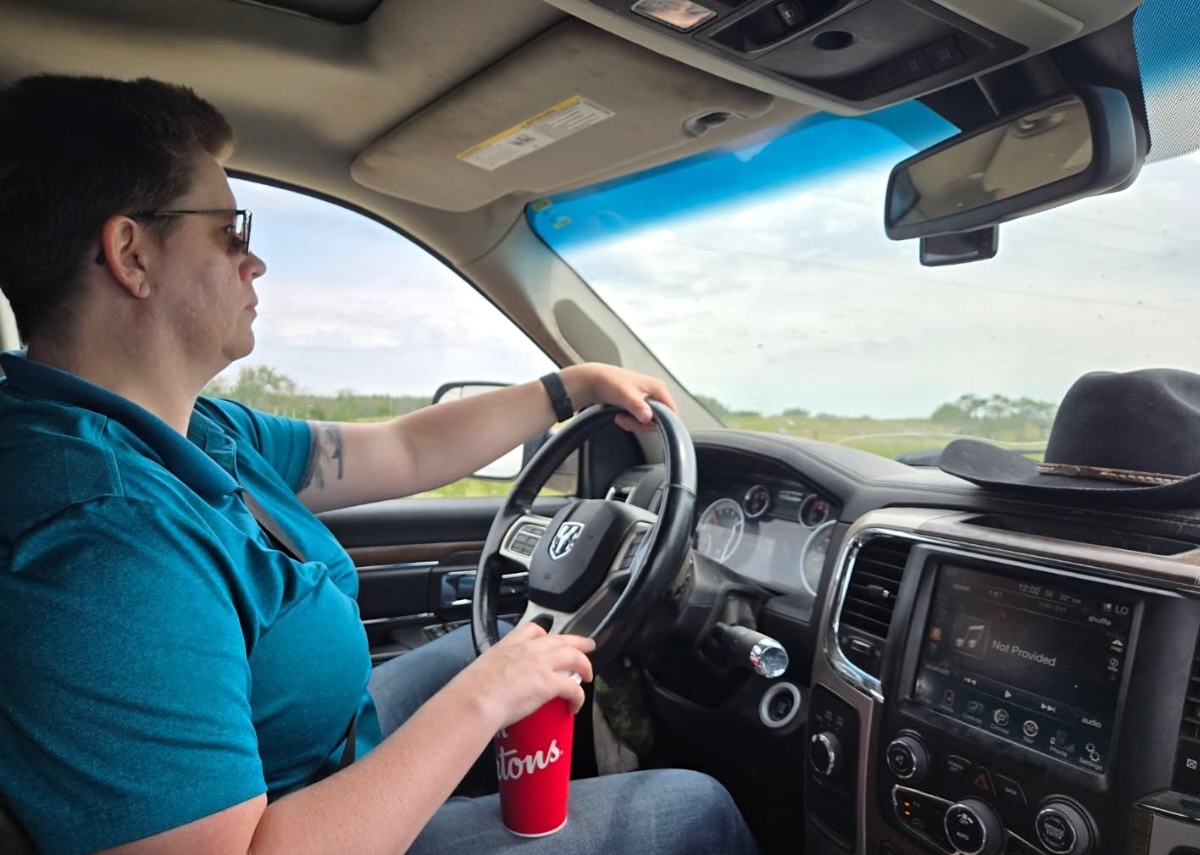
Even if Poilievre wins the riding, Critchley doubts that he will replicate the kind of support Kurek generated.
There is another potential problem for Poilievre. Critchley is right. Parachute candidates always face a potential backlash when they drop into ridings because they have lost their own seats. That’s because there is something fundamentally opportunistic and unfair about replacing a successful local candidate with an unsuccessful national one. Does Poilievre care about the riding or, as Critchley believes, is he just using it as the safest way to become an MP before Parliament is recalled?
To be fair to Poilievre, Kurek did say that no one pressured him and that it was his own choice to step aside to allow the Conservative leader to run in Alberta.
It's for the good of the party, Kurek has explained.
OK, but will his constituents see it that way? Might they resent being reduced to a partisan rubber stamp to accommodate the national plans of an unsuccessful politician from a riding that tossed him out after 20 years?
Might those same constituents be asking what they get in Pierre Poilievre as their MP? He is, after all, a political leader who lost both the recent national election and his own seat in Ontario, and who is facing a review of his leadership.
Tellingly, Poilievre blamed that loss in Carleton on being too honest about his intention to cut public service jobs in an Ottawa-area riding home to a large number of public employees. He claimed that unions ganged up on him. He said his national obligations superseded the interests of the 124,000 voters in his riding.
That sounds like blaming his constituents for not being able to take the truth. How will that logic play out in Battle River-Crowfoot?
Poilievre’s camp will make the case that by choosing him, voters in Battle River-Crowfoot could be electing a future prime minister.
But the numbers suggest that is unlikely to happen. Poilievre’s favourability ratings have fallen to an all-time low, according to Ekos polling, which at the start of this month placed him a net 70 points below Mark Carney.
A recent Nanos poll showed that only 25 per cent of Canadians see Poilievre as prime minister, compared with 51 per cent for Carney.
Poilievre may have been the right leader to take on Justin Trudeau, but chipping away at Carney’s appeal is a different proposition. It likely will require someone cerebral rather than hyper-partisan to gain serious ground against the current PM.
And if Pierre Poilievre is the wrong guy for Canada, could Bonnie Critchley be the right person for Battle River-Crowfoot? ![[Tyee]](/design-article.thetyee.ca/ui/img/yellowblob.png)
Read more: Federal Politics, Alberta


Tyee Commenting Guidelines
Please note that email notifications for replies are not currently working due to a software issue which may be resolved in a future update.
Comments that violate guidelines risk being deleted, and violations may result in a temporary or permanent user ban. Maintain the spirit of good conversation to stay in the discussion and be patient with moderators. Comments are reviewed regularly but not in real time.
Do:
Do not: